
Acquiring a niche bookstore is an exciting venture for entrepreneurs who are passionate about books, community, and specialized retail. Whether you're looking to purchase a rare books shop, a genre-specific store, or a local independent bookstore with a robust inventory, financing the deal is often the biggest hurdle. Fortunately, Small Business Administration (SBA) loans offer a practical path forward. Understanding the requirements for SBA loan to acquire a niche bookstore with inventory focus can help you move from idea to ownership with clarity and confidence. This guide walks you through eligibility, documentation, inventory considerations, and practical tips to strengthen your application.
Why SBA Loans Are a Smart Choice for Bookstore Acquisitions
SBA loans are government-backed financing products designed to help small business owners access capital that might otherwise be difficult to secure through conventional lending. When it comes to acquiring an independent or specialty bookstore, SBA financing offers several compelling advantages.
First, SBA loans typically come with longer repayment terms than standard bank loans. This means lower monthly payments, which can be especially helpful during the early months of business ownership when cash flow may be unpredictable. Second, down payment requirements are often more manageable compared to traditional commercial loans. Third, SBA lenders may be more willing to consider the value of existing inventory as part of the overall deal structure.
The SBA 7(a) loan program is the most commonly used option for business acquisitions. It can cover a wide range of costs including the purchase price, working capital, and yes — inventory. For a niche bookstore, where curated inventory is often a core part of the business's value, this flexibility is especially important.
- Loan amounts: SBA 7(a) loans may go up to $5 million, which can accommodate both acquisition costs and inventory funding.
- Repayment terms: Terms for working capital and inventory may extend up to 10 years, while real estate can go up to 25 years.
- Interest rates: Rates are typically tied to the prime rate plus a lender spread, making them competitive for small business borrowers.
It's worth noting that the SBA does not lend money directly. Instead, it guarantees a portion of the loan made by an approved lender, which reduces the lender's risk and encourages them to extend credit to small business owners who might not qualify otherwise.
Core Eligibility Standards Every Applicant Must Meet
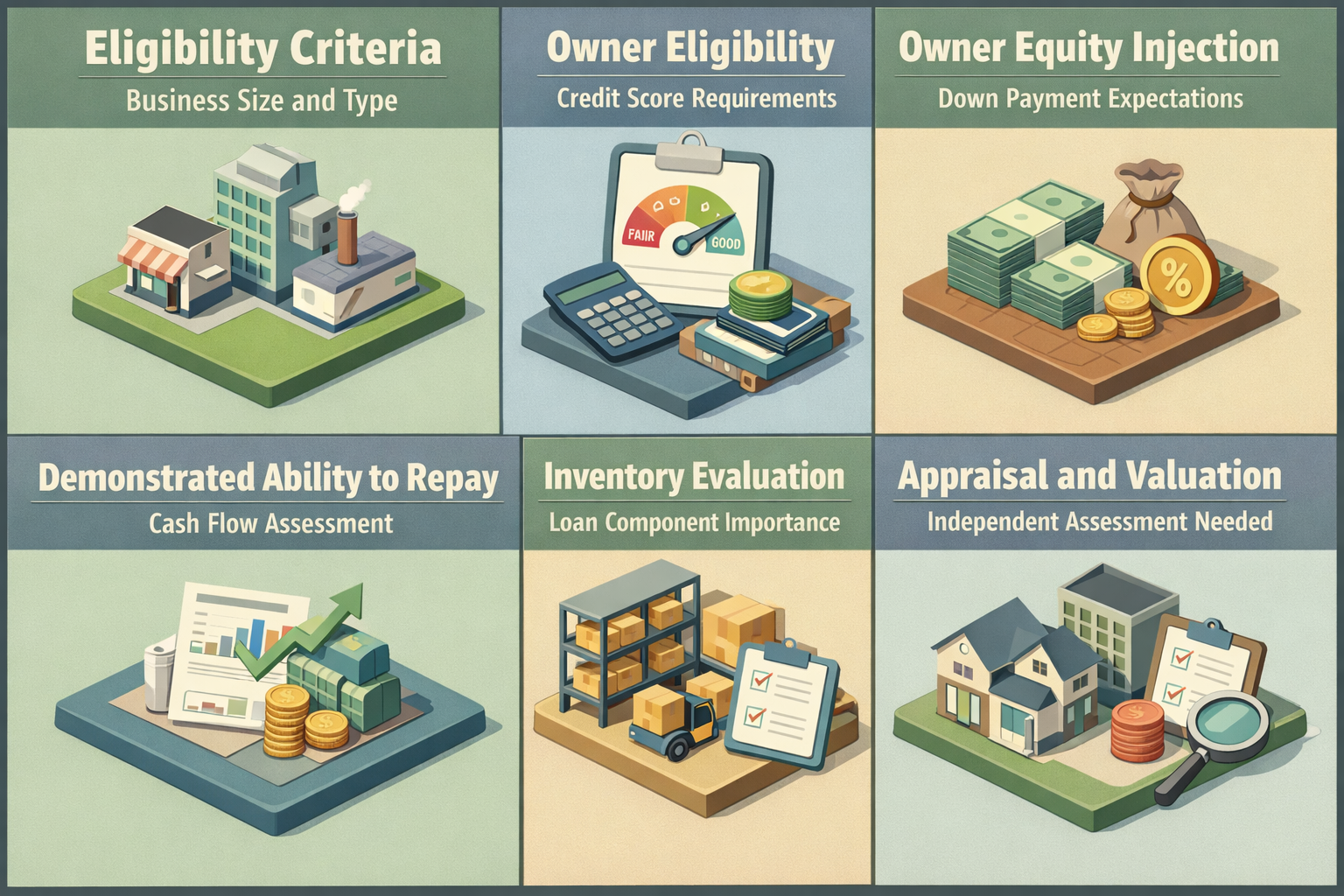
Before diving into documentation and deal specifics, it's important to understand the baseline eligibility criteria that apply to most SBA loan programs. These standards help lenders determine whether a borrower and a business are viable candidates for government-backed financing.
Business Size and Type
To qualify for an SBA loan, your bookstore must meet the SBA's definition of a small business. For retail businesses like bookstores, this typically means annual revenues below a certain threshold set by the SBA's size standards. Most independent and niche bookstores will easily fall within these limits. The business must also operate for profit and be located in the United States.
Owner Eligibility
As the borrower, you'll need to demonstrate good personal character and a reasonable credit history. While there isn't a universally fixed minimum credit score, most SBA-approved lenders prefer applicants with a personal credit score of at least 650, and many look for scores above 680. Strong personal credit signals to lenders that you manage financial obligations responsibly.
Owner Equity Injection
One of the most important requirements for an SBA loan used in a business acquisition is the equity injection — essentially your down payment. For most acquisitions, lenders typically require the borrower to contribute between 10% and 20% of the total project cost. If you're buying a niche bookstore with significant inventory value, this injection may need to reflect a portion of both the business purchase price and the inventory being acquired.
Demonstrated Ability to Repay
Lenders will carefully evaluate whether the business can generate enough cash flow to cover loan payments. If you're acquiring an existing bookstore, the seller's historical financial records become critical evidence of repayment ability. If the store has been profitable, that's a strong indicator. If it hasn't, you'll need a compelling business plan that explains how you'll turn performance around.
How Inventory Is Evaluated in a Niche Bookstore Acquisition
One of the defining features of a niche bookstore acquisition — compared to a generic retail purchase — is the significant role that inventory plays in the overall business valuation. A rare books dealer, a science fiction specialty shop, or a curated children's bookstore may hold inventory that represents a substantial portion of its total value. Understanding how lenders and the SBA approach this is essential.
Inventory as a Loan Component
SBA 7(a) loans can include inventory financing as part of the overall loan package. However, lenders will want to verify that the inventory being acquired is accurately valued and is genuinely relevant to the ongoing operation of the business. A detailed inventory list with itemized descriptions and current market values is typically required.
Appraisal and Valuation
For niche or specialty inventory — such as first editions, out-of-print titles, or rare collectibles — lenders may require an independent appraisal from a qualified expert. This helps establish a defensible value that the lender can use when determining how much of the inventory can be included in the loan structure. Standard book inventory may be valued differently than collectible or antiquarian stock, so being transparent about what's in the inventory is critical.
Inventory Turnover and Relevance
Lenders may also assess how quickly the inventory sells, often referred to as inventory turnover rate. A niche bookstore with slow-moving specialty titles may require additional justification. You should be prepared to demonstrate that the inventory is marketable, that there's a customer base for it, and that the store's historical sales support the claim that the inventory generates revenue.
If you're acquiring a bookstore where part of the inventory is outdated or unlikely to sell, it may be wise to negotiate a lower purchase price for that portion or exclude it from the loan request altogether. Including non-performing inventory in your loan request could raise red flags with underwriters.
Documentation You'll Need to Prepare for Your SBA Loan Application
A well-organized application can make a meaningful difference in how quickly and smoothly your SBA loan is processed. For a niche bookstore acquisition with an inventory focus, the documentation requirements are fairly comprehensive. Here's what you'll likely need to gather.
Personal and Business Financial Documents
- Personal tax returns: Typically the past two to three years of personal federal tax returns for all owners with 20% or more ownership.
- Personal financial statement: A current statement listing your assets, liabilities, and net worth (SBA Form 413 is commonly used).
- Business tax returns: Three years of federal business tax returns for the bookstore being acquired, if it's an existing operation.
- Business financial statements: Year-to-date profit and loss statement and balance sheet for the business being purchased.
Business Acquisition Documents
- Purchase agreement or letter of intent: A signed document outlining the terms of the acquisition, including the purchase price and what assets are included.
- Business valuation: An independent business valuation may be required, especially for deals above a certain threshold. This helps confirm that you're paying a fair price.
- Inventory schedule: A detailed, itemized list of all inventory being acquired, with descriptions and assigned values.
Business Plan
A thorough business plan is especially important if you're a first-time business owner or if the bookstore has had inconsistent financial performance. Your plan should cover your target market, competitive positioning, marketing strategy, staffing plans, and financial projections for at least three years. For a niche bookstore, highlighting your expertise in the specific genre or category — whether that's mystery novels, academic texts, or vintage titles — can strengthen your case considerably.
Building a Stronger Application as a First-Time Business Buyer
If you've never owned a business before, lenders may be more cautious. That doesn't mean you won't qualify, but it does mean you'll need to work a little harder to demonstrate readiness. Here are some practical strategies that may help.
Leverage Relevant Industry Experience
SBA lenders often look favorably on applicants who have direct experience in the industry they're entering. If you've worked in retail, publishing, library services, or any book-related field, document that experience clearly. A resume, reference letters, or professional certifications can all support your application. The more convincingly you can show that you understand the bookstore business, the more confident a lender is likely to feel.
Consider a Mentor or Management Partner
Some first-time buyers partner with an experienced operator or agree to work alongside the seller during a transition period. If the seller is willing to provide seller financing for a small portion of the deal — sometimes called a seller note — this can also reduce the lender's perceived risk and improve your chances of approval.
Strengthen Your Personal Credit Before Applying
In the months leading up to your application, it's worth reviewing your personal credit report for errors, paying down high credit card balances, and avoiding new credit inquiries where possible. These steps can incrementally improve your score and position you more favorably with lenders.
Prepare a Realistic Financial Projection
Overly optimistic revenue projections can actually hurt your application if they appear disconnected from the business's historical performance or market realities. Use the seller's financials as a baseline and build projections that are grounded, explainable, and realistic. If you plan to grow revenue, explain specifically how — through new marketing channels, expanded inventory categories, or community events, for example.
Finding the Right SBA Lender for a Specialty Retail Acquisition
Not all SBA lenders are created equal. While any SBA-approved lender can technically process your application, some have more experience with retail acquisitions or specialty businesses than others. Choosing the right lending partner can make the process smoother and increase your likelihood of approval.
SBA Preferred Lenders are authorized to approve loans without requiring SBA review at each step, which can speed up the process significantly. Working with a Preferred Lender who has financed retail or bookstore acquisitions before may give you a meaningful advantage.
It's also worth considering Community Development Financial Institutions (CDFIs) or mission-driven lenders that specifically support independent retail, arts, and culture-related businesses. These organizations sometimes have more flexible underwriting standards and may be particularly sympathetic to the community value of a niche bookstore.
When evaluating lenders, ask about their experience with similar deals, their typical processing timelines, and what they look for in inventory-heavy acquisitions. A lender who understands the nuances of specialty retail — including how niche inventory is valued and how independent bookstores generate revenue — will be better positioned to advocate for your deal internally.
●Conclusion
Navigating the requirements for SBA loan to acquire a niche bookstore with inventory focus takes preparation, patience, and a clear understanding of what lenders are looking for. From meeting baseline eligibility criteria to documenting inventory value and crafting a compelling business plan, each step of the process builds the case that you're a capable and informed buyer. The good news is that SBA loans are specifically designed to help entrepreneurs like you access financing that might otherwise be out of reach. With the right lender, a well-organized application, and a realistic plan for the business, acquiring your dream bookstore may be closer than you think. At LoanWise, we're here to help you explore your financing options and connect with lenders who understand specialty business acquisitions. Reach out today to start the conversation.