
The rise of remote work has created a new kind of homeowner — one who earns a living from a laptop, crosses time zones regularly, and still holds a mortgage back home. If you've got an adjustable-rate mortgage and your income comes from freelance contracts, consulting gigs, or location-independent businesses, you might be wondering whether refinancing an ARM mortgage with income from nomadic work is even possible. The short answer is yes — but it does require some planning, the right documentation, and a lender who understands non-traditional income. This article walks you through what you need to know, from how lenders evaluate your earnings to which loan products may work best for your lifestyle.
What an Adjustable-Rate Mortgage Means for a Nomadic Homeowner
An adjustable-rate mortgage, commonly called an ARM, starts with a fixed interest rate for an initial period — often five, seven, or ten years — and then adjusts periodically based on a market index. For many borrowers, an ARM made sense when they first purchased a home because the initial rate was lower than a comparable fixed-rate mortgage.
However, once that fixed period ends, your monthly payment could rise significantly depending on where interest rates are at that time. For a nomadic homeowner who already manages variable income streams, the combination of unpredictable earnings and a fluctuating mortgage payment can create real financial stress.
That's exactly why many digital nomads and remote professionals start exploring refinancing an ARM mortgage with income from nomadic work before their rate adjusts. Locking into a fixed-rate loan could give you more payment predictability — which may be especially valuable when your monthly income fluctuates by project or client.
- Rate caps: ARMs typically include periodic and lifetime caps that limit how much your rate can increase, but those caps still allow for meaningful payment changes.
- Index sensitivity: ARM rates are tied to benchmarks like SOFR (the Secured Overnight Financing Rate), which can shift with broader economic conditions.
- Refinance timing: Refinancing before your ARM adjusts may help you avoid rate shock and give you time to organize your income documentation.
How Lenders View Income from Nomadic and Remote Work
One of the biggest challenges in any ARM refinance for digital nomads is demonstrating stable, qualifying income to a mortgage lender. Traditional lenders are built around W-2 employment — steady paychecks, employer verification, and predictable income history. When your money comes from freelance invoices, overseas clients, platform-based gigs, or a combination of sources, lenders need more evidence to feel confident.
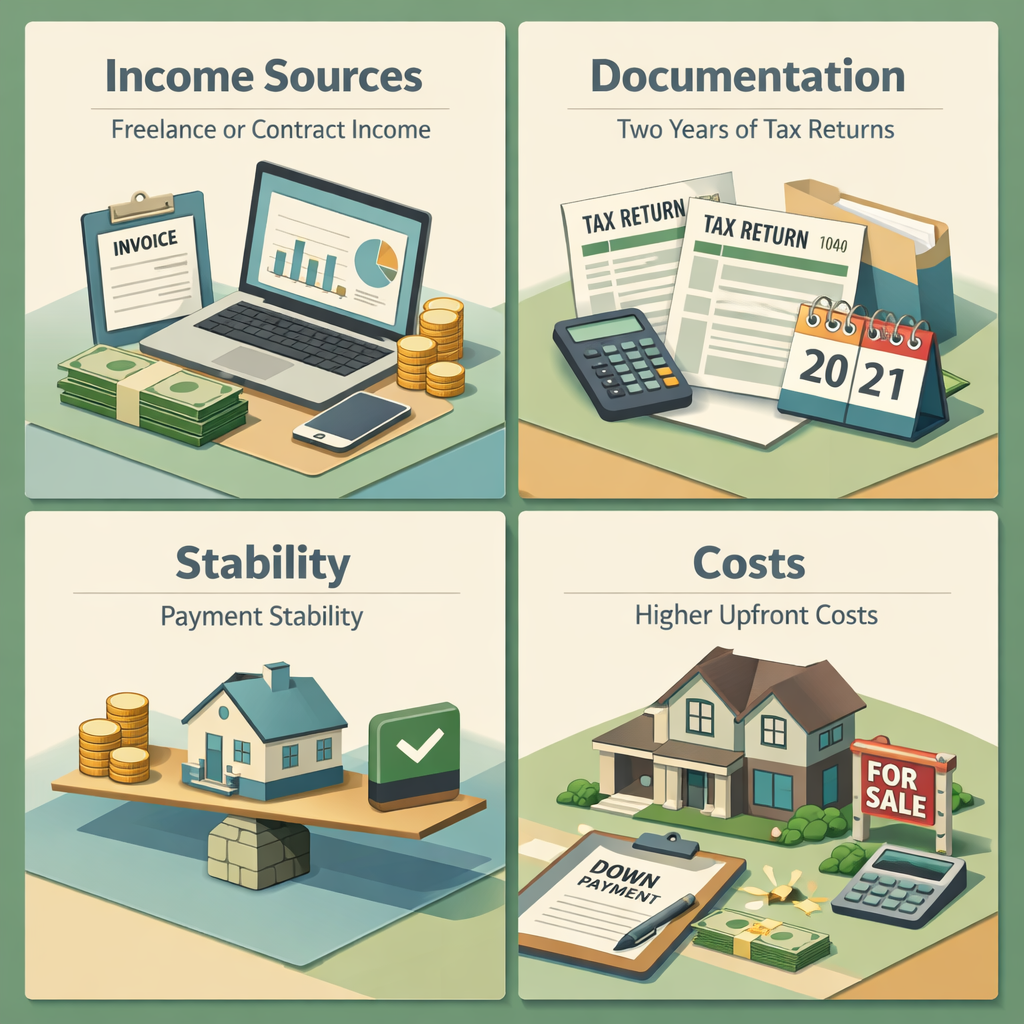
Most conventional mortgage programs require at least two years of self-employment income history, typically verified through federal tax returns. If your nomadic work is relatively new or you've recently transitioned from traditional employment, you may face additional scrutiny.
Types of Income Lenders May Consider
Lenders evaluating a refinance application from a digital nomad or remote worker might consider the following income sources, though requirements vary by loan program and lender:
- Freelance or contract income: Documented through 1099 forms, business bank statements, and signed contracts with ongoing clients.
- Self-employment income: Calculated from Schedule C or Schedule E on your tax returns, often averaged over two years.
- Foreign income: Some lenders accept income earned abroad, but it often requires additional documentation and may be subject to currency conversion considerations.
- Passive income: Rental income, royalties, or dividends may be considered if they're well-documented and consistent.
It's worth noting that tax write-offs — a common strategy for self-employed workers — can significantly reduce your net income on paper. This may lower your qualifying income even if your actual cash flow is strong. Working with a tax professional and a knowledgeable loan officer before you apply could help you plan around this issue.
Flexible Income Mortgage Options Worth Exploring
Not every loan program is built for traditional W-2 borrowers. A growing number of flexible income mortgage options have emerged in recent years to serve self-employed professionals, entrepreneurs, and remote workers. Here are several that may be relevant when you're looking to refinance your ARM.
Bank Statement Loans
Bank statement loans allow borrowers to qualify based on 12 to 24 months of personal or business bank statements rather than tax returns. This approach may better reflect your actual cash flow, especially if your tax returns show reduced income after deductions. These are typically non-QM (non-qualified mortgage) products, which means they fall outside the standard guidelines set by Fannie Mae and Freddie Mac.
Asset Depletion Loans
If you've accumulated significant savings or investment assets, some lenders offer asset depletion loans. They divide your total eligible assets by a set number of months to calculate a monthly qualifying income. This could be useful for nomadic workers who've built up savings but show modest income on paper.
Profit and Loss Statement Loans
Some non-QM lenders accept a CPA-prepared profit and loss statement as primary income documentation. This may be a faster alternative when your tax returns don't tell the full financial story of your business.
Conventional Refinance with Strong Documentation
If you have two or more years of self-employment history and your net income after deductions still meets qualifying thresholds, a conventional refinance through Fannie Mae or Freddie Mac guidelines may still be an option. It's worth running the numbers with a loan officer before assuming you won't qualify.
Documentation Strategies to Strengthen Your Refinance Application
Lenders evaluating a refinance with non-traditional income want to see a clear picture of your financial stability. Preparing your documents carefully before you apply could make a meaningful difference in how your application is received.
- Two years of federal tax returns: Include all schedules. If your income is business-related, both personal and business returns may be required.
- 12 to 24 months of bank statements: These should show consistent deposits that align with the income you're claiming.
- Client contracts or engagement letters: Ongoing contracts can demonstrate income continuity, which lenders value when your work is project-based.
- CPA letter: A letter from a licensed accountant confirming your self-employment status, business viability, and income history can add credibility to your file.
- Profit and loss statements: Year-to-date P&L statements help lenders see how your business is performing in the current period.
- Credit profile: A strong credit score may partially offset income documentation concerns in the eyes of some lenders. Keeping your credit score healthy before applying is always a good idea.
It also helps to reduce your debt-to-income (DTI) ratio where possible before applying. Paying down credit card balances or eliminating smaller debts could improve your qualifying position.
Refinancing ARM Mortgage with Income from Nomadic Work: Choosing the Right Lender
Not all lenders are equally equipped to handle non-traditional income scenarios. A bank that primarily serves salaried employees may struggle to evaluate your file, even if you're financially strong. Seeking out lenders who specialize in self-employed or non-QM borrowers can make the process significantly smoother.
Here's what to look for when evaluating lenders for your refinancing ARM mortgage:
- Experience with non-QM loans: Ask potential lenders directly whether they originate bank statement loans or other alternative documentation programs.
- Familiarity with self-employed borrowers: A loan officer who has worked with freelancers, consultants, or location-independent business owners will know how to structure your file effectively.
- Transparent communication: Look for a lender who explains each requirement clearly and tells you upfront what documentation they'll need.
- Rate and fee comparison: Non-QM loans often carry higher interest rates than conventional loans because they represent more lender risk. Make sure you understand the total cost of the refinance, including origination fees, closing costs, and any prepayment penalties.
Working with a mortgage broker who has access to multiple lenders may also be advantageous. Brokers can shop your scenario across several institutions and find the program best suited to your income profile and refinance goals.
Weighing the Costs and Benefits of Refinancing as a Digital Nomad
Refinancing isn't free — and for nomadic workers, it's important to consider whether the financial benefit justifies the cost and effort involved. A standard refinance can come with closing costs ranging from a few thousand dollars upward, and it may take months or years to recoup those costs through lower monthly payments.
Potential Benefits
- Payment stability: Converting from an ARM to a fixed-rate loan eliminates rate adjustment risk, which may be especially valuable when your income is already variable.
- Lower long-term interest cost: If you refinance to a lower fixed rate before your ARM adjusts upward, you could reduce the total interest paid over the life of the loan.
- Peace of mind: Knowing your mortgage payment won't change — regardless of market conditions — can be a real comfort when you're managing a flexible lifestyle and unpredictable income.
Potential Drawbacks
- Higher upfront costs: Closing costs on a refinance can be significant. Be sure to calculate your break-even point before committing.
- Rate environment risk: If current fixed rates are substantially higher than your existing ARM rate, the math may not favor refinancing right now.
- Documentation burden: Gathering two years of income records, bank statements, and supporting documents takes time and effort — especially if your financial picture is complex.
Using an online mortgage calculator or speaking with a loan officer can help you model different scenarios and decide whether now is the right time to refinance.
●Conclusion
Refinancing an ARM mortgage with income from nomadic work is a real possibility — it's just a path that requires more preparation than a standard W-2 refinance. By understanding how lenders evaluate non-traditional income, exploring flexible income mortgage options like bank statement loans or asset depletion programs, and organizing your financial documentation carefully, you may be able to convert your adjustable-rate mortgage into a stable, fixed-rate loan that better fits your lifestyle.
The key is working with lenders who understand your situation and can match you with the right program. At LoanWise, we connect borrowers with experienced loan professionals who specialize in self-employed and non-traditional income scenarios. Whether you're a freelancer, a remote consultant, or a full-time digital nomad, there may be more financing options available to you than you think. Reach out to a LoanWise lending specialist today and take the first step toward mortgage stability — wherever in the world you happen to be.