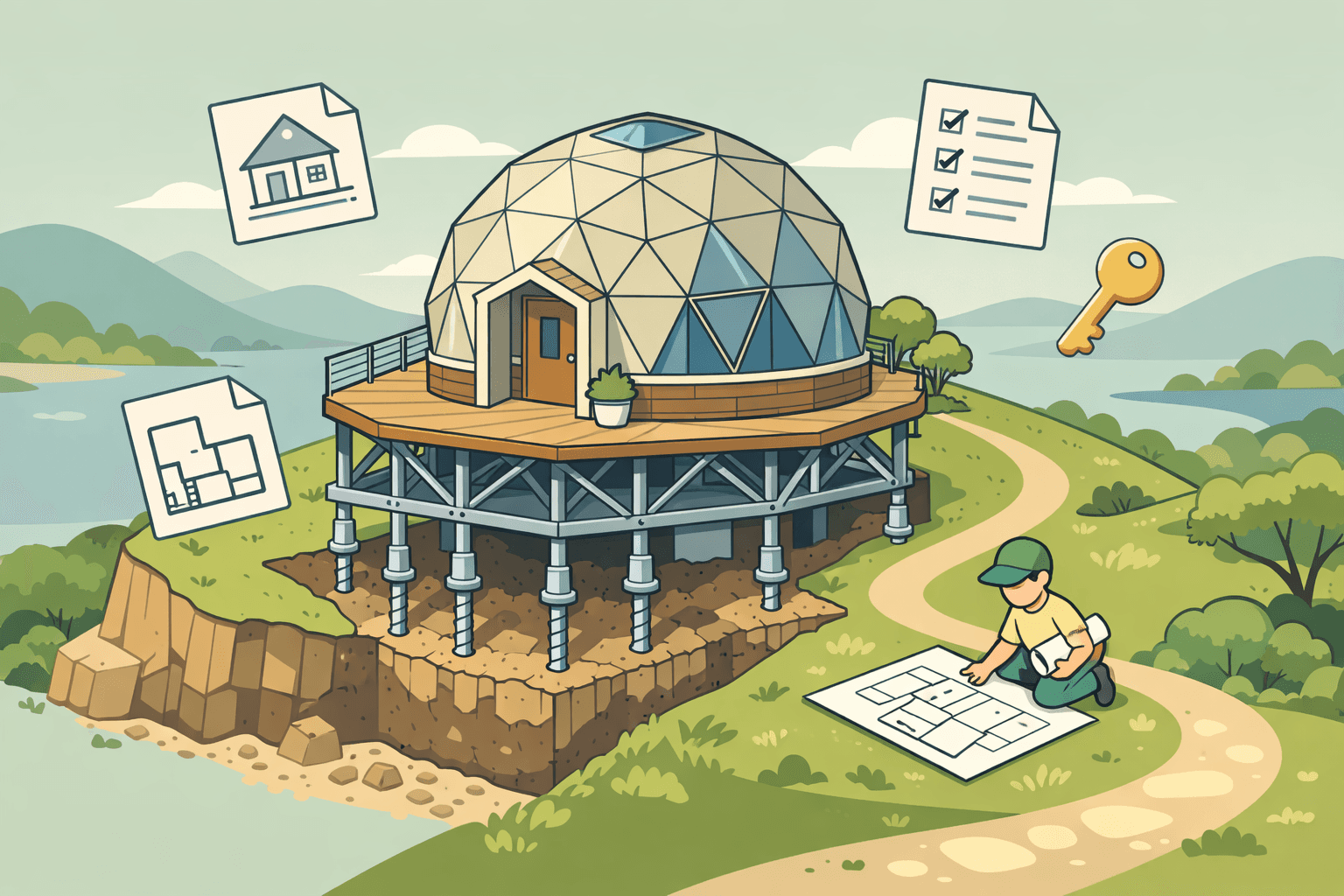
For veterans dreaming of an unconventional home, a geodesic dome can be an appealing choice. These striking, energy-efficient structures offer a unique living experience — but financing one isn't always straightforward. If you're wondering how to get a VA loan for a geodesic dome with non-traditional foundation, you're not alone. Many veterans are surprised to learn that while VA loans are among the most flexible mortgage programs available, they come with specific property requirements that can complicate financing for non-standard homes. The good news is that it's not impossible. With the right preparation, the right lender, and a clear understanding of VA guidelines, you may be able to make your geodesic dome dream a reality using your hard-earned VA benefit.
What Makes Geodesic Domes Unique From a Lending Perspective
Geodesic domes are spherical or partial-sphere structures made from a network of triangular panels. They're known for their structural strength, energy efficiency, and minimal material use. But from a mortgage lender's standpoint, they fall squarely into the category of non-traditional or unconventional properties — and that creates friction during the financing process.
The challenge isn't necessarily the dome shape itself. It's the combination of factors that often come with geodesic dome homes: unusual construction methods, non-standard floor plans, and — most critically — non-traditional foundations. A geodesic dome might sit on a pier-and-beam foundation, a rubble trench foundation, a concrete pad, or even earthen berms. Each of these differs significantly from the poured concrete perimeter foundations that lenders and appraisers are most comfortable evaluating.
Lenders rely on comparable sales data — known as "comps" — to determine a property's market value. When a home is highly unique, finding comparable sales nearby becomes difficult. This can lead to appraisal challenges, valuation uncertainty, and lender reluctance. Understanding these dynamics is the first step toward navigating them successfully.
VA Loan Property Requirements You Need to Know
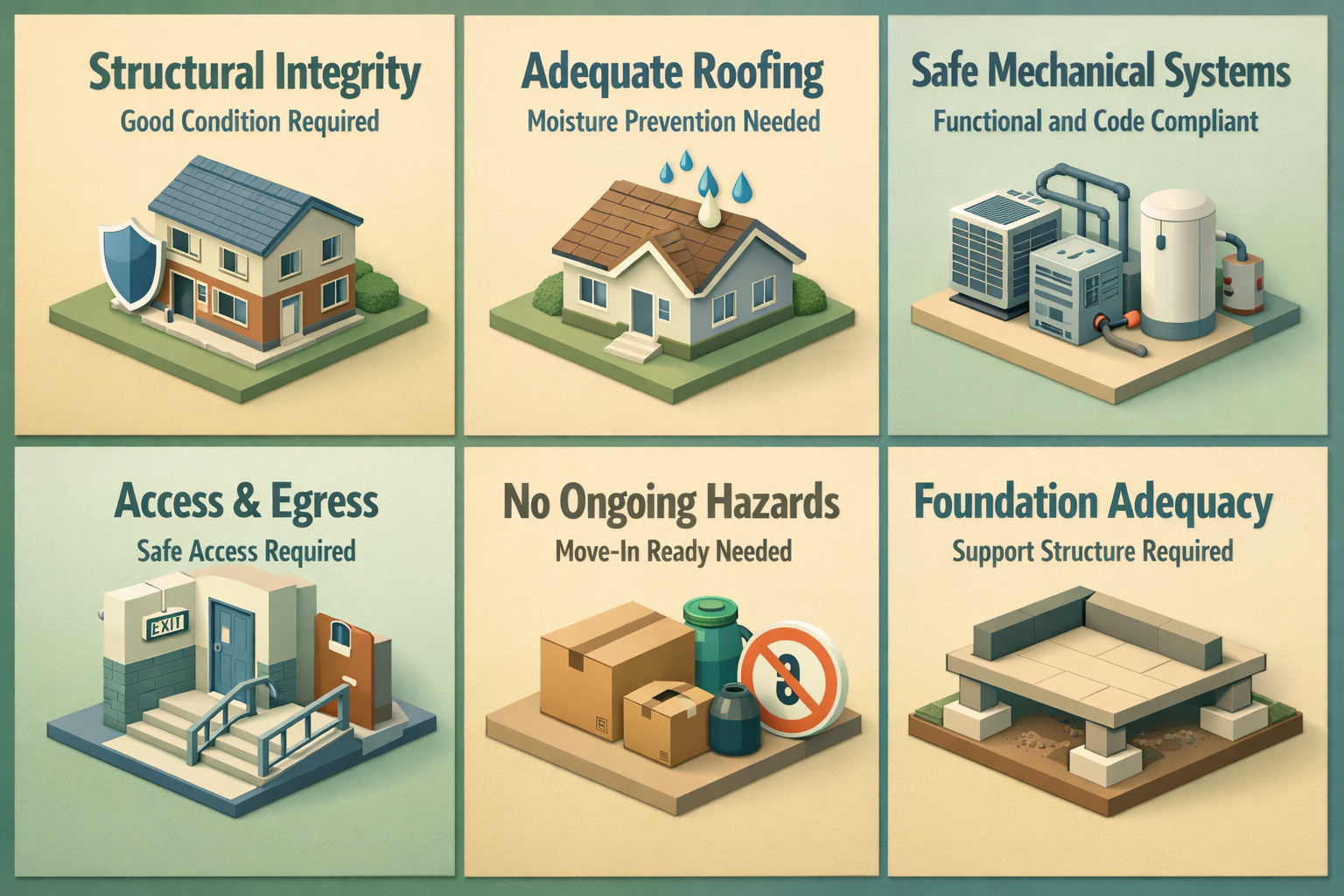
The Department of Veterans Affairs sets Minimum Property Requirements (MPRs) that every home financed with a VA loan must meet. These standards are designed to ensure the property is safe, structurally sound, and sanitary. While the VA does not explicitly ban geodesic domes or non-traditional foundations, the MPRs create a framework that such homes must satisfy before a loan can be approved.
Key VA Minimum Property Requirements include:
- Structural integrity: The foundation, walls, roof, and overall structure must be in good condition and capable of supporting the home safely.
- Adequate roofing: The roof must prevent moisture from entering and have reasonable future utility. A geodesic dome's triangular panels serve as both walls and roof, which can make this assessment more complex.
- Safe mechanical systems: Heating, plumbing, and electrical systems must be functional and meet local code requirements.
- Access and egress: The property must have safe, adequate access from a public or private street.
- No ongoing construction hazards: The property should be move-in ready or nearly so, without major defects or safety issues.
When it comes to foundations specifically, the VA requires that the foundation be adequate to support the structure and show no signs of significant settlement or failure. This means a non-traditional foundation isn't automatically disqualified — but it will face extra scrutiny during the VA appraisal process.
How the VA Appraisal Process Works for Non-Standard Homes
The VA appraisal is one of the most important steps in the loan process for a geodesic dome with a non-traditional foundation. Unlike a standard home inspection, a VA appraisal serves two purposes: determining the property's market value and confirming that it meets the VA's Minimum Property Requirements.
The VA assigns appraisers from an approved panel. These appraisers are experienced professionals, but many may have limited exposure to geodesic dome properties. This can lead to a few common complications:
- Difficulty finding comparable sales: If there are no similar dome homes sold recently in the area, the appraiser may struggle to establish market value accurately.
- Conservative valuations: When comps are scarce, appraisers may apply broader adjustments or assign more conservative values, which could affect how much the VA will lend.
- Foundation scrutiny: A non-traditional foundation will likely prompt additional review. The appraiser may note conditions or require a structural engineer's report before the appraisal can be completed.
One helpful strategy is to work with a VA-experienced real estate agent who can proactively gather documentation about the dome's construction quality, energy performance, and any prior inspections. Providing this context to the appraiser may help support a stronger valuation. You might also consider ordering a pre-appraisal inspection from a licensed structural engineer, especially for the foundation, to address concerns before they become loan-stopping conditions.
Finding the Right VA Lender for a Geodesic Dome Unique Foundation
Not all VA-approved lenders are equally comfortable with unconventional properties. Some lenders impose their own overlays — internal lending rules that go beyond VA guidelines — which may effectively exclude geodesic domes or unusual foundations even if the VA itself doesn't prohibit them. This is why finding the right lender is arguably one of the most important steps in the process.
When searching for a lender, look for these qualities:
- Experience with non-traditional properties: Ask directly whether the lender has financed geodesic domes, earthships, log homes, or other unconventional structures before.
- Minimal overlays on property type: A lender who sticks closely to VA guidelines rather than adding restrictive overlays will give you the best chance of approval.
- Strong communication: Financing a geodesic dome takes more back-and-forth than a standard purchase. You want a loan officer who explains the process clearly and responds promptly.
- Access to a strong appraisal network: Some lenders have working relationships with appraisers who have experience valuing non-standard properties.
It may take reaching out to several lenders before finding one that's willing and equipped to help. Mortgage brokers can sometimes be an advantage here, since they have access to multiple lenders and can shop your scenario to find the best fit. Don't be discouraged if the first few lenders pass — persistence is often key with a VA loan geodesic dome unique foundation scenario.
Preparing Your Property and Documentation for Approval
One of the best ways to improve your chances of VA loan approval on a geodesic dome is to be proactive about documentation. The more evidence you can provide that the property is safe, sound, and marketable, the more confidence the lender and appraiser will have in moving forward.
Here's what to gather and prepare before applying:
- Structural engineer's report: A professional assessment of the dome's structural integrity and foundation performance can address lender concerns upfront. This is especially important for pier-and-beam, rubble trench, or earthen foundations.
- Building permits and certificates of occupancy: These documents confirm the home was built to local code and legally approved for habitation.
- Manufacturer or builder specifications: If the dome was built using a kit or by a recognized dome builder, documentation of the construction method and materials may strengthen your case.
- Maintenance and inspection history: Records showing regular upkeep, prior inspections, and any repairs can demonstrate that the property is well-maintained.
- Comparable sales research: Work with a knowledgeable real estate agent to identify any sales of similar properties, even if they're from a wider geographic area. These can be submitted to the appraiser as supplemental data.
Being organized and transparent with your lender from day one signals seriousness and can reduce delays. Think of it as telling the story of the home — helping everyone involved understand why it's a sound investment despite its unconventional form.
What Happens If the VA Appraisal Raises Concerns
Even with thorough preparation, a VA appraisal may come back with Conditions of Appraisal — issues that must be resolved before the loan can close. For geodesic domes with non-traditional foundations, these conditions might involve requests for additional structural documentation, repairs to specific components, or re-inspection by a licensed engineer.
Here's how to respond constructively:
- Don't panic: Conditions are common even on standard homes. A conditional appraisal doesn't mean the deal is dead — it means there's work to do.
- Address conditions promptly: Work with the seller (if purchasing) or your contractor (if building) to resolve flagged items as quickly as possible. Delays can affect your rate lock and closing timeline.
- Request a Reconsideration of Value (ROV) if warranted: If you believe the appraiser's valuation is too low due to a lack of comps or misunderstanding of the property type, you can formally request a reconsideration. Provide additional supporting data with the request.
- Consider a second lender: If conditions can't be resolved or a lender declines after the appraisal, another VA-approved lender may have a different appraiser and a different outcome.
It's also worth noting that VA appraisals assess current condition. If you're purchasing a dome that needs work, addressing key issues before the appraisal — rather than after — may help avoid a lengthy conditional process.
Alternative Financing Paths If a VA Loan Isn't Approved
If you've explored how to get a VA loan for a geodesic dome with non-traditional foundation and encountered roadblocks, it's worth knowing that other financing options may be available. While none match the no-down-payment benefit of a VA loan, they may offer greater flexibility for unconventional properties.
- Portfolio loans: These are mortgages that lenders keep on their own books rather than selling to the secondary market. Because they don't have to meet Fannie Mae or Freddie Mac guidelines, portfolio lenders can set their own property standards and may be more open to geodesic domes.
- Construction-to-permanent loans: If you're building a new dome rather than buying an existing one, a construction loan that converts to a permanent mortgage may be easier to structure around non-standard construction methods.
- Non-QM (Non-Qualified Mortgage) loans: These products are designed for borrowers or properties that don't fit conventional lending boxes. They often come with higher interest rates, but they offer underwriting flexibility.
- Land and home financing through credit unions: Some credit unions offer niche property financing and may be more willing to evaluate a geodesic dome on its individual merits.
Even if you pursue an alternative loan now, it may be possible to refinance into a VA loan later — provided the property meets MPRs at that time and you've made improvements that address prior concerns. Talking to a knowledgeable mortgage advisor can help you map out the best path forward for your specific situation.
●Conclusion
Financing a geodesic dome with a VA loan is challenging, but it's a challenge that's worth taking on — especially given the powerful benefits the VA loan program offers eligible veterans and service members. The key is understanding that how to get a VA loan for a geodesic dome with non-traditional foundation comes down to preparation, the right team, and patience. Work with a lender experienced in non-standard properties, gather thorough documentation, prepare for a detailed appraisal process, and stay flexible if conditions arise. Your unique home deserves a thoughtful financing approach, and with the right guidance, it's possible to honor your service benefit while building the unconventional life you envision. Ready to explore your options? Connect with a LoanWise mortgage specialist today to get started.