If you're exploring a 10-year adjustable-rate mortgage, you're likely drawn to its lower initial interest rate and the potential savings it offers during the fixed period. But before you sign on the dotted line, it's just as important to understand what happens at the closing table. Many homebuyers and refinancers focus heavily on the monthly payment and overlook the upfront costs that come with securing any mortgage. So, what are the closing costs for a 10-year ARM mortgage? The short answer is that they share many similarities with other loan types, but there are a few nuances worth knowing. This guide breaks it all down so you can walk into closing with confidence and clarity.
Understanding How a 10-Year ARM Works Before Closing
A 10-year adjustable-rate mortgage, often written as a 10/1 ARM or 10/6 ARM, offers a fixed interest rate for the first ten years of the loan. After that initial period, the rate adjusts periodically based on a benchmark index, such as the Secured Overnight Financing Rate (SOFR). This structure can make a 10-year ARM an attractive option for homebuyers who plan to sell or refinance before the adjustment period begins.
Before diving into the specific costs at closing, it helps to understand why the loan structure matters. Because ARM loans carry some rate uncertainty after the fixed period, lenders may approach the origination and underwriting process differently than they would for a 30-year fixed mortgage. That said, the core components of closing costs typically remain consistent across most conventional loan products, including ARMs.
Whether you're a first-time homebuyer, a move-up buyer, or a real estate investor purchasing a rental property, knowing the fee landscape ahead of time puts you in a much stronger negotiating position.
What Are the Closing Costs for a 10-Year ARM Mortgage: A Full Breakdown
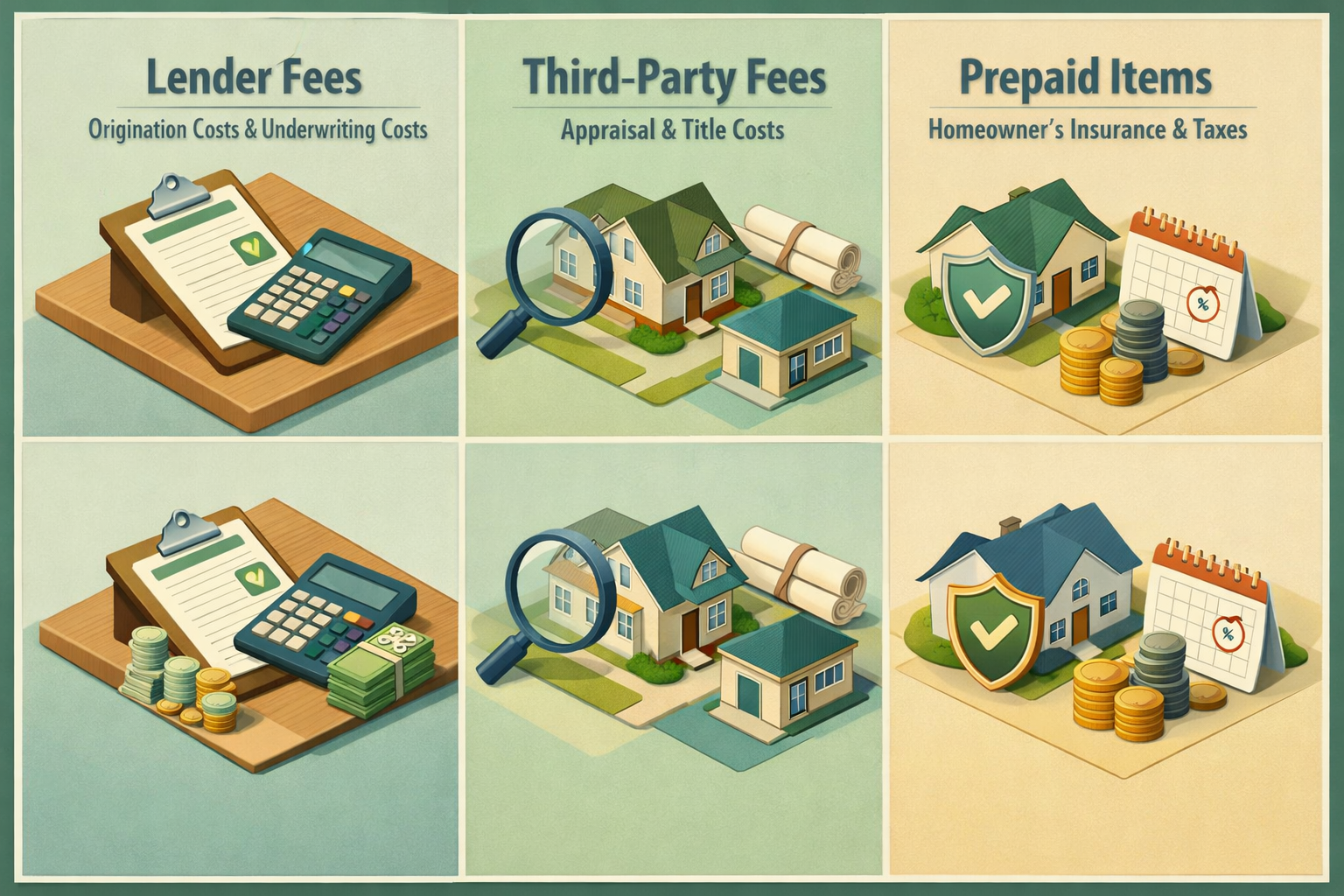
When asking what are the closing costs for a 10-year ARM mortgage, it's useful to separate fees into two broad categories: lender fees and third-party fees. Together, these typically range from about 2% to 5% of the loan amount, though the exact figure varies depending on your lender, location, loan size, and credit profile.
Lender-Related Fees
- Origination fee: This is charged by the lender to process and underwrite your loan. It may be expressed as a flat dollar amount or a percentage of the loan, often around 0.5% to 1%.
- Discount points: Optional upfront payments made to buy down the interest rate. With a 10-year ARM, some borrowers choose to pay points since the initial rate is already lower than a fixed-rate loan, but this decision depends on how long you plan to keep the mortgage.
- Rate lock fee: Some lenders charge a fee to lock in your ARM's initial interest rate during the loan process. This may be included in the origination fee or listed separately.
- Underwriting fee: Covers the lender's cost to evaluate your financial profile, including income, credit, and assets.
- Application fee: Not all lenders charge this, but some may include a fee simply to submit your loan application.
Third-Party and Government Fees
- Appraisal fee: A licensed appraiser assesses the home's market value. This is typically required for purchase loans and refinances alike.
- Title search and title insurance: These protect you and the lender from any ownership disputes or liens on the property.
- Attorney or settlement fees: Some states require a real estate attorney to oversee the closing, while others use title companies.
- Recording fees: Charged by the local government to officially record the deed and mortgage in public records.
- Credit report fee: Covers the cost of pulling your credit history during underwriting.
In addition to these fees, you'll likely see prepaid items on your Closing Disclosure. These include prepaid homeowner's insurance, prepaid property taxes, and prepaid mortgage interest covering the days between closing and the end of the month. While these aren't technically fees, they do affect your total cash needed at closing.
How ARM Mortgage Closing Fees Compare to Fixed-Rate Loans
One of the most common questions homebuyers ask is whether ARM mortgage closing fees are higher or lower than those for fixed-rate mortgages. In most cases, the difference is relatively minor. The core third-party costs — appraisal, title, recording, and government fees — are generally the same regardless of the loan type you choose.
Where you might see a difference is in the lender-specific fees. Because the initial interest rate on a 10-year ARM is typically lower than a 30-year fixed rate, some lenders may price their origination fees slightly differently. Additionally, if you're buying down the rate with discount points, you may not need to pay as many points on an ARM to reach your target payment, since the starting rate is already more competitive.
However, it's worth noting that if you plan to refinance out of the ARM before the adjustment period, you'll be paying closing costs a second time on the new loan. This is an important factor to weigh when comparing the total cost of ownership between an ARM and a fixed-rate mortgage over time.
For real estate investors who use short-term financing strategies, a 10-year adjustable-rate mortgage could offer meaningful savings during the fixed window, making the upfront closing costs easier to justify.
Reading Your Loan Estimate and Closing Disclosure the Right Way
Federal law requires lenders to provide you with a Loan Estimate within three business days of receiving your mortgage application. This document outlines all anticipated closing costs in a standardized format, making it easier to compare offers from multiple lenders. When you're close to closing, you'll receive a Closing Disclosure at least three business days before your scheduled closing date.
These two documents are your most powerful tools for understanding and verifying your 10-year adjustable-rate mortgage costs. Here's what to look for:
- Section A: Origination charges, including origination fees and discount points.
- Section B and C: Services you cannot shop for (like the appraisal) and services you can shop for (like title insurance and settlement agents).
- Section E: Prepaid items such as homeowner's insurance and prepaid interest.
- Section F: Initial escrow payment at closing, which may include the first installments of property taxes and insurance.
Pay close attention to any fees that appear on the Closing Disclosure but were not on the Loan Estimate. Federal guidelines limit how much certain fees can increase from estimate to closing, so if you notice large discrepancies, don't hesitate to ask your lender for an explanation.
Understanding these documents empowers you to catch errors, compare multiple lenders on equal footing, and negotiate more effectively before you commit.
Smart Ways to Reduce What You Pay at the Closing Table
While some closing costs are non-negotiable, there are several strategies that could help you reduce your out-of-pocket expenses when closing on a 10-year ARM mortgage.
Shop Multiple Lenders
One of the most impactful steps you can take is to compare Loan Estimates from at least three different lenders. Origination fees and lender charges vary significantly from one institution to another. Even small differences in these fees can add up to hundreds or thousands of dollars.
Negotiate Seller Concessions
In many real estate transactions, sellers may agree to contribute toward your closing costs as part of the negotiation. This is sometimes called a seller credit or seller concession. The allowable amount typically depends on your loan program and down payment size, but it can be a meaningful way to reduce your cash requirements at closing.
Ask About a No-Closing-Cost Option
Some lenders offer a no-closing-cost mortgage where the closing fees are rolled into the loan balance or offset by a slightly higher interest rate. On a 10-year ARM, this trade-off may or may not make financial sense depending on how long you intend to keep the loan. It's worth running the numbers before agreeing to this structure.
Time Your Closing Date Strategically
Closing at the end of the month can reduce the amount of prepaid interest you owe at closing, since you'll only be covering a few days of interest rather than nearly a full month. It's a small but practical way to trim your upfront expenses.
Review Every Fee Carefully
Errors and duplicate charges do occasionally appear on closing documents. Having a trusted real estate attorney or HUD-approved housing counselor review your Closing Disclosure before you sign could potentially save you money and prevent costly surprises.
When a 10-Year ARM Makes Financial Sense Despite Closing Costs
Understanding what are the closing costs for a 10-year ARM mortgage is only part of the equation. Equally important is deciding whether this loan product aligns with your financial goals and timeline.
A 10-year ARM may be a particularly strong fit if you:
- Plan to sell the home within ten years and want to take advantage of the lower initial rate without worrying about future adjustments.
- Expect your income to grow significantly and believe you'll refinance into a fixed-rate loan before the adjustment period begins.
- Are a real estate investor purchasing a rental property with a defined exit strategy or projected hold period of ten years or less.
- Want a lower initial monthly payment to preserve cash flow, especially during the early years of homeownership when other expenses tend to be higher.
On the other hand, if you're planning to stay in the home for the long term, a fixed-rate mortgage may offer more predictability and stability — even if the monthly payment starts a little higher. The closing costs on either loan type are broadly similar, so the decision often comes down to your personal timeline and risk tolerance rather than upfront fees alone.
It's always wise to consult with a licensed mortgage professional who can model both scenarios using your specific financial information before making a final decision.
●Conclusion
Navigating the world of mortgage financing can feel overwhelming, but breaking it down into manageable pieces makes all the difference. Now that you have a clear picture of what are the closing costs for a 10-year ARM mortgage, you're better equipped to compare loan offers, ask the right questions, and make a confident decision. From lender origination fees and appraisal costs to title insurance and prepaid interest, each line item on your Closing Disclosure tells part of the story. By shopping multiple lenders, reviewing your loan documents carefully, and understanding how ARM mortgage closing fees fit into your broader financial plan, you can approach closing day with far less stress. At LoanWise, we're here to help you explore your mortgage options and find the loan structure that works best for your goals. Reach out to one of our lending specialists today to get started.