
If you're a freelance consultant carrying an adjustable-rate mortgage, you may already be watching your monthly payment shift with the market. When rates climb, that uncertainty can feel overwhelming. The good news is that there are genuine options for refinancing ARM mortgage with income from freelance consulting — and knowing where to start makes all the difference. Whether you're hoping to lock in a fixed rate, lower your payment, or tap into home equity, this guide walks you through the key strategies and what lenders typically expect from self-employed borrowers like you.
Why Freelance Consultants Often Face Unique Refinancing Challenges
Refinancing a mortgage is rarely a simple process, but for freelance consultants, the path can feel especially complicated. Traditional lenders rely heavily on W-2 income to verify a borrower's ability to repay. When your income arrives through client invoices, 1099 forms, or business bank deposits, lenders may view that as less predictable — even when it's entirely stable or growing year over year.
The core challenge is documentation. Most conventional loan programs require two years of self-employment history, verified through tax returns, profit-and-loss statements, and sometimes business bank statements. Freelancers who write off a significant portion of their income for tax purposes may find that their adjusted gross income looks lower on paper than what they actually earn. This discrepancy can make it harder to meet the debt-to-income ratio requirements that lenders typically use to evaluate loan applications.
That said, these obstacles aren't insurmountable. With the right preparation and loan program, refinancing ARM mortgage as a freelance consultant is absolutely achievable. Understanding the landscape upfront helps you approach the process with confidence rather than frustration.
Understanding Your Current ARM and When Refinancing Makes Sense
An adjustable-rate mortgage, or ARM, typically starts with a lower fixed interest rate for an introductory period — often five, seven, or ten years — before it begins adjusting periodically based on a benchmark index. Once that adjustment period begins, your rate and monthly payment can move up or down depending on market conditions.
For freelance consultants, this variability may feel particularly stressful. Your income might already fluctuate from month to month, so adding unpredictable mortgage payments on top of that can create real cash flow concerns. Refinancing into a fixed-rate mortgage could offer more predictability and peace of mind, especially if your ARM's initial fixed period is nearing its end.
Refinancing typically makes sense when:
- Your ARM's introductory period is approaching its end and rates have risen
- You plan to stay in the home long enough to recoup closing costs
- Your credit profile has improved since you first took out the mortgage
- You want to consolidate equity or reduce your overall interest burden
- Market conditions offer fixed rates that are competitive with your current rate
It's worth using a break-even analysis before committing. Divide your estimated closing costs by your projected monthly savings to determine how many months it would take to come out ahead. If you're planning to stay in the home beyond that point, refinancing may well be worth pursuing.
Loan Programs Worth Exploring for ARM Refinance for Self-Employed Borrowers
Not all loan programs treat self-employed income the same way. Understanding which loan programs can open doors you might not have realized were available.
Conventional Refinance Loans
Conventional loans backed by Fannie Mae or Freddie Mac are often the first stop for refinancers. These programs do accommodate self-employed borrowers, but they require thorough income documentation — typically two years of personal tax returns, two years of business tax returns if applicable, and a year-to-date profit-and-loss statement. Your qualifying income is generally based on the average of your net income after business deductions, which may be lower than your gross deposits.
FHA Streamline Refinance
If your existing mortgage is already FHA-insured, you might qualify for an FHA Streamline Refinance. This program can reduce documentation requirements significantly, and income verification may be more flexible. However, it does not allow you to take cash out and still requires that the refinance result in a net tangible benefit — such as a lower rate or payment.
Bank Statement Loans
Bank statement loan programs are specifically designed for self-employed borrowers who can't easily verify income through traditional tax documents. Instead of tax returns, lenders review 12 to 24 months of personal or business bank statements to assess your income. This can be a strong fit for freelance consultants who deposit consistently but write off heavily on taxes. These loans often carry slightly higher rates than conventional products, but they offer a meaningful path to refinancing your ARM mortgage with freelance income.
Non-QM Loan Options
Non-qualified mortgage (Non-QM) programs sit outside the standard guidelines set by government-sponsored entities. They're designed to serve borrowers with complex income situations, including freelancers, independent contractors, and business owners. These products might use alternative income documentation like CPA letters, asset depletion methods, or 1099-only income verification. Rates and terms vary widely, so it's worth comparing multiple lenders if you go this route.
How Lenders Evaluate Refinancing Mortgage with Freelance Income
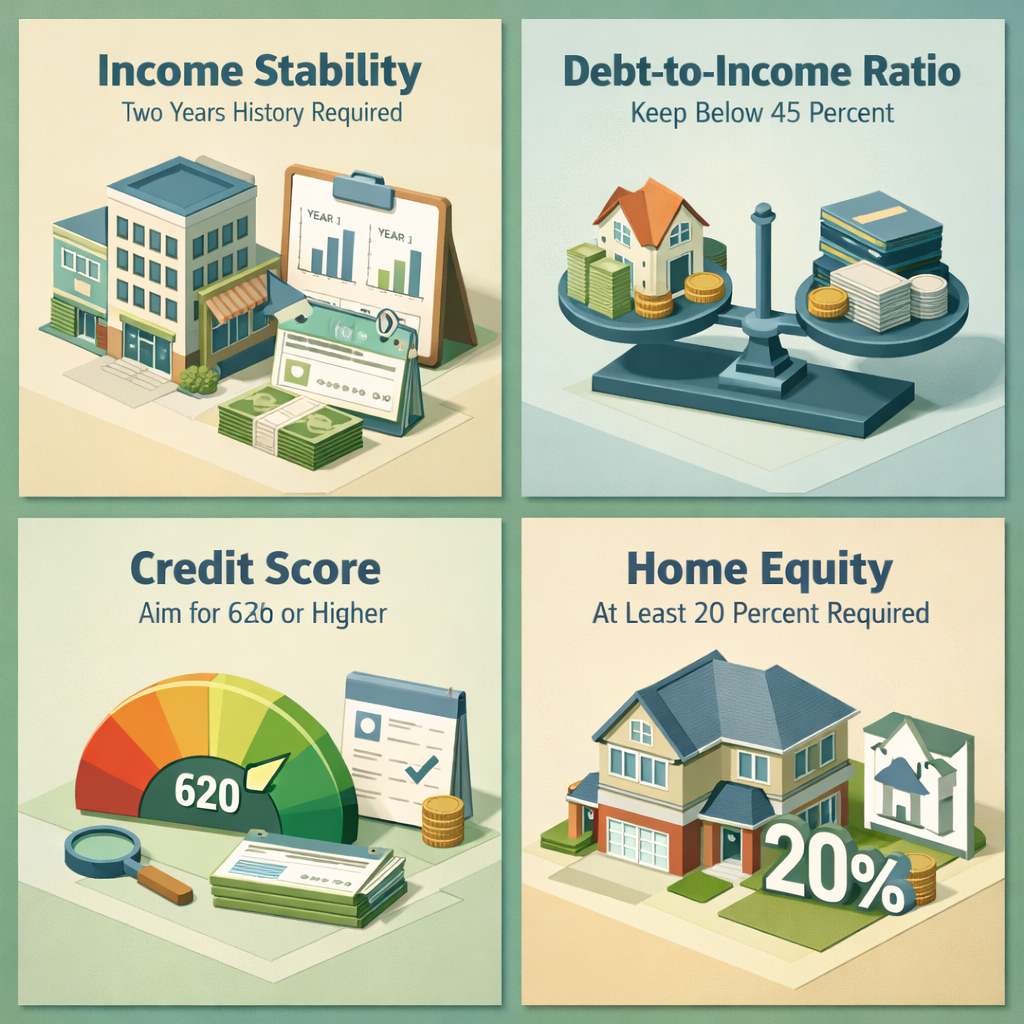
When you apply for a refinance as a freelance consultant, lenders will examine several key financial factors. Understanding what they're looking for helps you put your best application forward.
Income Stability and History
Most lenders want to see at least two years of self-employment history. If you recently transitioned from traditional employment to freelance consulting, some lenders may require that you've been operating in the same field, which can help demonstrate continuity. Income trending upward over two years is generally viewed more favorably than income that has declined, even if the average looks acceptable.
Debt-to-Income Ratio
Your debt-to-income (DTI) ratio compares your monthly debt obligations to your qualifying income. Conventional programs typically prefer a DTI at or below 43 to 45 percent, though some programs with compensating factors may go higher. For freelance consultants, keeping this ratio in check may mean paying down other debts before applying or finding a loan program that allows a higher DTI threshold.
Credit Score
A strong credit score can offset some of the risk lenders associate with variable income. Conventional refinance programs generally prefer scores of 620 or above, while better rates are typically reserved for borrowers in the 740 and above range. If your score has room for improvement, addressing any outstanding collections or reducing revolving credit balances before applying could help you secure more favorable terms.
Home Equity
The amount of equity you've built in your home also matters. Most refinance programs require at least 20 percent equity to avoid private mortgage insurance. Greater equity may also expand the number of programs available to you and improve your negotiating position with lenders.
Documentation Tips to Strengthen Your Refinance Application
Preparation is everything when you're refinancing mortgage with freelance income. The more organized and thorough your documentation, the smoother the process tends to go. Here are some practical steps to take before you apply:
- File complete, accurate tax returns: Lenders want to see two years of tax returns that reflect your true business activity. If you've been overly aggressive with deductions, consider speaking with a CPA about balancing tax efficiency with income visibility.
- Prepare a year-to-date profit-and-loss statement: Many lenders will ask for this even if they already have your tax returns. A well-prepared P&L that matches your bank records adds credibility to your application.
- Organize bank statements: Keep 12 to 24 months of personal and business bank statements ready. Consistent, predictable deposits strengthen your income narrative, especially for bank statement loan programs.
- Get a letter from your CPA: A signed letter from a licensed accountant confirming the nature, history, and expected continuity of your self-employment can carry meaningful weight with some lenders.
- Document long-term client contracts: If you have ongoing consulting agreements, showing lenders that your income has a committed future pipeline may help ease concerns about income stability.
Taking these steps well in advance of applying — ideally six to twelve months ahead — gives you time to address gaps and present the strongest possible file.
Choosing the Right Lender for Your Situation
Not all lenders are equally comfortable working with self-employed borrowers. Some institutions specialize in complex income situations and have underwriters who are experienced in evaluating freelance consulting income. Others may default to rigid documentation requirements that don't reflect the reality of your financial life.
When shopping for a lender to help with your ARM refinance for self-employed income, consider the following:
- Ask directly about self-employed borrower experience: A lender who regularly works with freelancers and independent consultants will likely have more flexible and efficient processes.
- Compare multiple loan types: Don't assume a conventional loan is your only option. Ask about bank statement programs, Non-QM products, and FHA options to understand the full picture.
- Review total loan costs, not just the rate: Closing costs, origination fees, and points can vary significantly between lenders. A slightly higher rate with lower fees might cost you less over time depending on how long you plan to stay in the home.
- Work with a mortgage broker if needed: Brokers have access to multiple lenders and can often match self-employed borrowers with programs that a single bank might not offer.
Taking time to compare lenders rather than accepting the first offer could meaningfully affect your long-term mortgage costs and the overall experience of refinancing paths available for your ARM.
●Conclusion
Navigating the options for refinancing ARM mortgage with income from freelance consulting takes more preparation than a standard W-2 refinance, but it's far from out of reach. With the right documentation, a solid credit profile, and a lender experienced in self-employed borrower situations, you can transition from an unpredictable adjustable rate into a more stable loan structure that fits your financial life. Whether you explore a conventional refinance, a bank statement loan, or a Non-QM program, the key is to start the process informed. Reach out to a knowledgeable mortgage professional at LoanWise today to explore which refinance path aligns best with your consulting income and homeownership goals.