
Getting a promotion at work is a big deal — and if a recent career move has boosted your income with bonus pay, it could open some exciting doors in the mortgage world. If you're currently carrying an adjustable-rate mortgage (ARM), you might already be thinking about your next step. The good news is that your options for refinancing ARM mortgage with bonus income from recent promotion may be broader than you think. Lenders do consider bonus income when evaluating a refinance application, though the rules around how that income is counted can be nuanced. This guide walks you through what you need to know, from how lenders treat bonus earnings to which loan products may suit your situation best.
Understanding How ARMs Work and Why Homeowners Consider Refinancing
An adjustable-rate mortgage starts with a fixed interest rate for an initial period — commonly five, seven, or ten years — after which the rate adjusts periodically based on a financial index. That initial rate is typically lower than a fixed-rate mortgage, which is why many homebuyers choose an ARM when they first purchase a home.
However, once the adjustment period begins, your monthly payment can rise — sometimes significantly — depending on market conditions. For homeowners who plan to stay in their home long-term, this uncertainty can become stressful. That's often the point when refinancing ARM mortgage starts to feel like the smarter, more stable choice.
Refinancing essentially replaces your existing mortgage with a new loan, ideally with better terms. For ARM holders, the primary goal is usually locking in a consistent monthly payment that won't fluctuate with interest rate changes. And if you've recently received a promotion that includes bonus income, you may be in a stronger financial position than you realize to qualify for that new loan.
How Lenders Evaluate Bonus Income During the Refinance Process
One of the most important things to understand when you're exploring a refinance is how your lender will count your income — especially if part of it comes from bonuses. Mortgage lenders don't simply look at your most recent paycheck. Instead, they typically review your income history over a two-year period to determine a stable, qualifying average.
Bonus income is generally considered variable income, which means lenders want to see that it's consistent and likely to continue. Here's what lenders typically look for:
- Two-year history of receiving bonuses: Most lenders will want to see that you've received bonus income for at least two consecutive years before they'll count it toward your qualifying income.
- Documentation: Expect to provide W-2 forms, recent pay stubs, and potentially a letter from your employer confirming your bonus structure.
- Averaging the income: Lenders will often average your bonus income over 24 months to calculate a monthly figure that's used in your debt-to-income (DTI) ratio.
- Likelihood of continuance: Lenders may ask for confirmation that your bonus income is expected to continue, particularly after a recent promotion.
If you've just been promoted and are receiving a bonus for the first time, or if your bonus amount has increased significantly due to the promotion, lenders may be cautious about counting the full amount right away. That said, a formal offer letter or employment verification explaining your new role and compensation structure could help strengthen your application.
What a Recent Promotion Means for Your Refinance Qualification
A promotion is a positive signal in the eyes of most mortgage lenders. It suggests career stability, upward mobility, and an increased capacity to manage debt. However, the way lenders treat the income tied to a promotion can vary depending on your specific circumstances.
If your promotion came with a higher base salary, that income is typically easier for lenders to count. Salaried income is predictable, and your new pay stubs should reflect the updated amount relatively quickly. If your promotion also brought a new or larger bonus structure, lenders may want to see that income sustained over time before fully including it in their calculations.
Here are a few scenarios worth considering:
- Promotion with a higher base salary only: Your qualifying income may increase right away, which could improve your DTI and open up better loan options.
- Promotion with a new bonus component: Lenders may only partially count the bonus until you have a longer track record at your new compensation level.
- Promotion with both a salary increase and enhanced bonus: This is the strongest scenario. You may qualify for more favorable loan terms, especially if you can document both income streams clearly.
In all cases, being transparent with your lender and providing solid documentation is key. A mortgage professional experienced in working with variable income borrowers can help you present your earnings in the most favorable — and accurate — light.
Exploring Your Options for Refinancing ARM Mortgage with Bonus Income from Recent Promotion
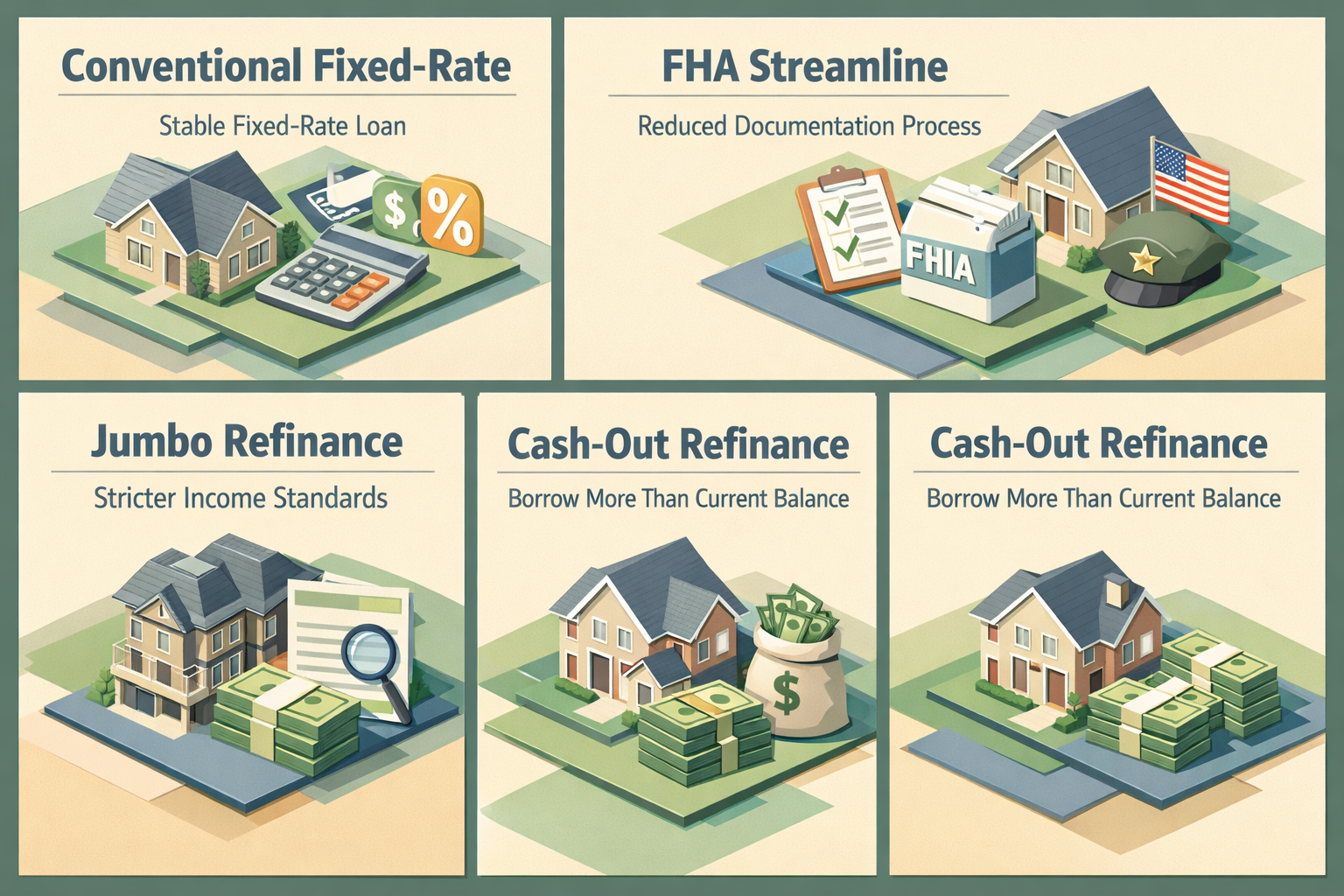
Now that you understand how lenders view your income, let's look at the actual loan products available to you. Your options for refinancing ARM mortgage with bonus income from recent promotion may include several strong paths depending on your financial profile.
Conventional Fixed-Rate Refinance
This is the most common refinance choice for homeowners looking to escape the uncertainty of an ARM. A conventional fixed-rate mortgage offers a stable fixed-rate loan interest rate and predictable monthly payments for the life of the loan. If your credit score is solid, your DTI is within acceptable limits, and you have adequate home equity, a conventional refinance could be a straightforward option. Lenders typically look for a DTI of around 43% or lower, though this can vary.
FHA Streamline Refinance
If your current mortgage is FHA-backed, you might be eligible for an FHA Streamline Refinance. This program is designed to simplify the refinancing process with reduced documentation requirements. However, it's important to note that FHA Streamline refinances have specific eligibility rules, and they may not be available if your current ARM is a conventional product.
VA Interest Rate Reduction Refinance Loan (IRRRL)
For eligible veterans and active-duty service members with a VA-backed ARM, the VA IRRRL — also known as the VA Streamline Refinance — could be a low-hassle path to a fixed rate. Like FHA Streamline, it typically requires less documentation and may not require a new appraisal.
Jumbo Refinance
If your loan balance exceeds conforming loan limits, you may need a jumbo refinance. Lenders tend to apply stricter income and credit standards for jumbo loans, but if your bonus income is well-documented and your financial profile is strong — particularly after a promotion — you may still qualify for competitive terms.
Cash-Out Refinance
If you've built up home equity, a cash-out refinance lets you borrow more than your current loan balance and receive the difference in cash. This could be useful for consolidating debt, funding home improvements, or other financial goals. Your new bonus income could help you qualify for a larger loan amount while still keeping payments manageable.
Building a Stronger Application: Documentation and Timing Tips
Whether your bonus income is brand new or recently expanded, how you document and present it matters greatly. Lenders want a clear, verifiable picture of your earnings. Here's how to prepare:
- Gather two years of tax returns: These show your total income history, including any bonus pay from previous years.
- Collect recent pay stubs: Current stubs should reflect your new salary and, if applicable, any recent bonus payments.
- Request an employment verification letter: Ask your HR department or manager to provide a letter confirming your promotion, new title, updated salary, and expected bonus structure.
- Check your credit report: Before applying, review your credit for any errors and address them promptly. A higher credit score can unlock better refinance rates.
- Calculate your debt-to-income ratio: Add up all monthly debt obligations and divide by your gross monthly income. The lower this number, the better your chances of qualifying for favorable terms.
Timing also matters. If you're only a few months into your new role, some lenders may want to see a few more pay cycles before approving a refinance based on your updated income. Others may be more flexible, especially with strong documentation in hand. Speaking with a loan officer early in the process can help you understand exactly where you stand and what timeline makes the most sense.
Understanding Closing Costs and the Break-Even Point
Refinancing isn't free. Like your original mortgage, a refinance comes with closing costs — typically ranging from 2% to 5% of the loan amount, though this can vary based on your location, lender, and loan type. These costs may include origination fees, appraisal fees, title insurance, and other lender charges.
Before committing to a refinance, it's wise to calculate your break-even point — the number of months it will take for your monthly savings to offset the cost of refinancing. For example, if your refinance costs $5,000 and your new payment saves you $200 per month, your break-even point would be 25 months. If you plan to stay in the home longer than that, the refinance likely makes financial sense.
Your new bonus income can play a role here, too. If it puts you in a stronger financial position, you may be able to afford a slightly higher monthly payment in exchange for a lower interest rate — or you might choose to pay down the loan faster by making extra principal payments. Either approach can reduce your total interest costs over time.
●Conclusion
A recent promotion is more than just a career milestone — it could be the financial boost that makes refinancing your ARM a realistic and rewarding move. Understanding your options for refinancing ARM mortgage with bonus income from recent promotion is the first step toward greater stability and long-term financial confidence. While lenders may have specific requirements around variable income documentation, a well-prepared application backed by clear evidence of your new earnings can go a long way. Whether you're aiming for a conventional fixed-rate loan, a government-backed streamline refinance, or a cash-out option, the key is to work with a knowledgeable mortgage professional who can guide you through the process. At LoanWise, we're here to help you find the right refinance path for your unique situation. Connect with one of our loan specialists today to get started.