
If you're a homeowner with an adjustable-rate mortgage and your income includes irregular bonus payments, you may already know how stressful it can be when interest rates start shifting. The combination of a variable-rate loan and unpredictable income can feel like a financial balancing act. The good news is that exploring the options for refinancing ARM mortgage with fluctuating bonus income doesn't have to be overwhelming. With the right guidance and a clear understanding of how lenders evaluate your earnings, you can move toward a more stable and manageable mortgage — one that better fits your financial life.
What Is an ARM and Why Homeowners Consider Refinancing
An adjustable-rate mortgage, or ARM, starts with a fixed interest rate for an initial period — often five, seven, or ten years — and then adjusts periodically based on a market index. While ARMs can offer lower starting rates, the uncertainty of future rate changes can become a real concern, especially when your income isn't consistent from one year to the next.
Many homeowners with ARMs choose to refinance into a fixed-rate mortgage to lock in stability with predictable monthly payments. This is a particularly appealing strategy if you're approaching the end of your fixed-rate period and rate adjustments could push your payments higher. Refinancing can also allow you to adjust your loan term, tap into home equity, or lower your overall interest costs over time.
For homeowners who earn variable bonus pay — such as those in sales, finance, executive roles, or commission-heavy industries — the decision to refinance comes with an extra layer of complexity. Lenders need to assess income stability, and bonus income doesn't always tell a clean, straightforward story on paper.
How Lenders View Fluctuating Bonus Income During the Refinance Process
When you apply to refinance, lenders evaluate your ability to repay the new loan. To do this, they calculate your qualifying income — the amount they'll use to determine how large a loan you can afford. For salaried borrowers, this is relatively straightforward. But when bonus income is a significant part of your earnings, things get more nuanced.
Most conventional lenders following Fannie Mae or Freddie Mac guidelines will typically require at least a two-year history of receiving bonus income before they'll count it toward your qualifying amount. They may average the bonus income across those two years and use that figure in their calculations. If your bonus was significantly lower in one year or absent entirely, that average could be reduced — and so could your borrowing power.
Lenders will generally ask for documentation such as:
- Two years of W-2 forms showing total earnings
- Recent pay stubs confirming current income
- A written verification of employment confirming the likelihood of continued bonus pay
- Tax returns that align with reported bonus figures
It's worth noting that if your most recent year's bonus was lower than the prior year, some lenders may decline to include that variable income altogether, or apply a more conservative calculation. Understanding this dynamic upfront can help you set realistic expectations and plan accordingly.
ARM Refinance Variable Bonus Pay: Loan Types Worth Exploring
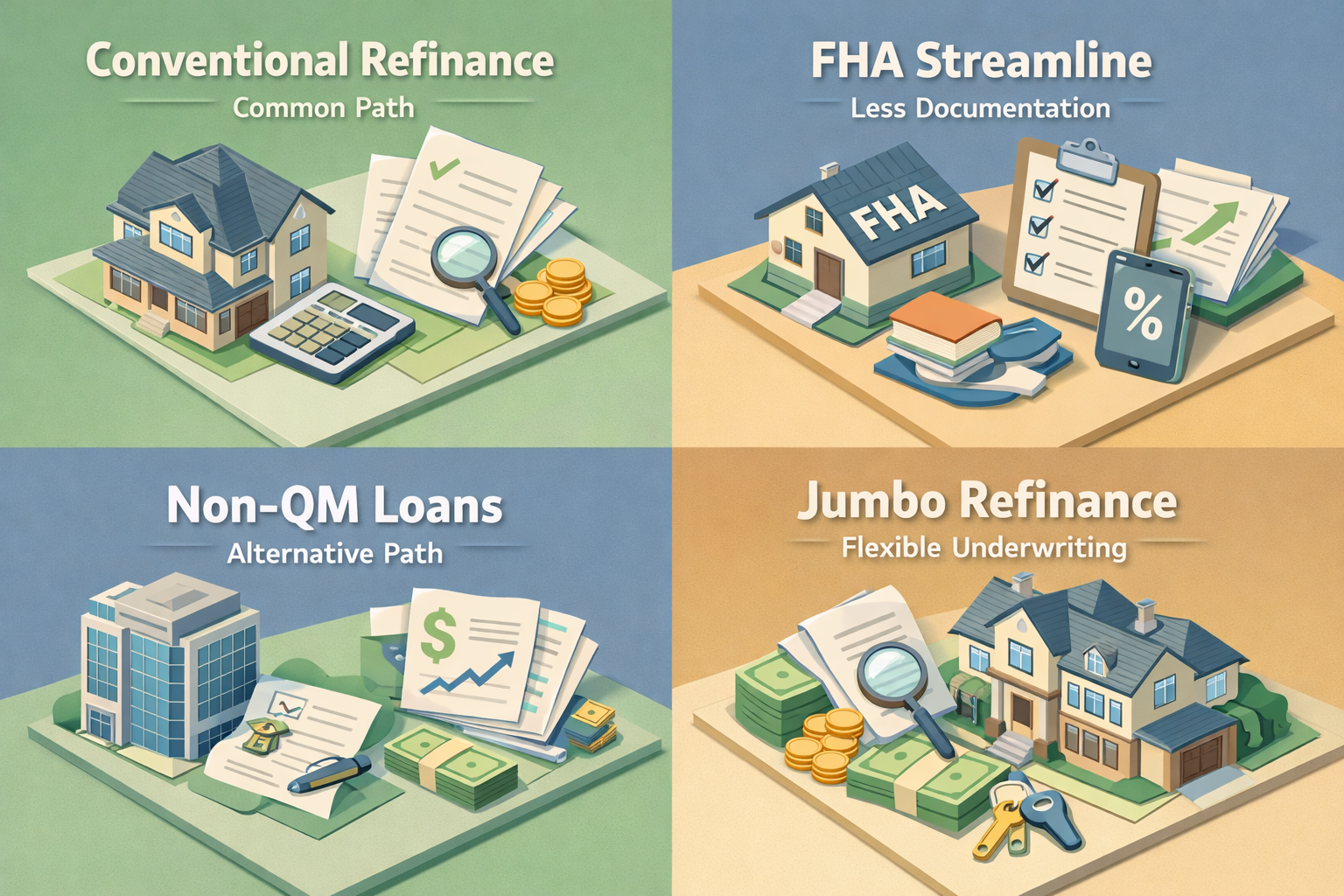
When evaluating your options for refinancing ARM mortgage with fluctuating bonus income, it helps to know which loan programs may be more accommodating of your income situation. Not all refinance products treat variable earnings the same way.
Conventional Fixed-Rate Refinance
This is the most common refinance path. If your bonus income has been consistent over two years and your base salary is strong enough to support the loan on its own, a conventional refinancing an ARM mortgage into a 15- or 30-year fixed-rate product could be a solid fit. The predictable payments can bring real peace of mind when your bonus income varies year to year.
FHA Streamline or Rate-and-Term Refinance
If you currently have an FHA loan, an FHA streamline refinance may require less documentation and underwriting scrutiny. However, if your original ARM isn't FHA-backed, you'd need to qualify through a standard FHA rate-and-term refinance. FHA guidelines may offer slightly more flexibility for borrowers with varied income profiles, though documentation requirements still apply.
Non-QM and Bank Statement Loans
For homeowners whose income is highly variable or difficult to document through traditional means, non-qualified mortgage (non-QM) products may offer an alternative path. Some non-QM lenders use 12 or 24 months of bank statements to calculate income rather than relying on W-2s or tax returns. This can be especially useful if your bonus deposits are large and consistent in your account history, even if they don't appear predictably on paper.
Jumbo Refinance with Flexible Underwriting
If your home value is high and your loan balance exceeds conventional loan limits, a jumbo refinance may apply. Some jumbo lenders have their own internal underwriting guidelines that may allow more flexibility in how they assess bonus income, particularly for high-earning professionals in industries where variable pay is the norm.
Strategies to Strengthen Your Refinance Application
Even with fluctuating bonus income, there are steps you can take to improve your chances of qualifying for a refinance and securing favorable terms. Here are some practical strategies to consider:
- Let your base salary lead: If your base pay alone can support the debt-to-income (DTI) ratio requirements, you're in a stronger position. Many lenders have a DTI threshold of around 43–50%, depending on the loan type. If your fixed salary covers the monthly payment without needing the bonus, the variability matters much less.
- Build a longer bonus history: If you've only been receiving bonus pay for one year, it may be worth waiting until you have two full years of documented bonus income before applying. This could unlock a higher qualifying income and better loan options.
- Reduce other debts first: Paying down credit cards, auto loans, or other liabilities before refinancing can lower your DTI ratio and make your overall financial picture more attractive to lenders.
- Maintain strong credit: Your credit score plays a major role in the rates and programs available to you. Keeping credit card balances low, making on-time payments, and avoiding new credit inquiries ahead of your application can all help.
- Increase your home equity position: The more equity you have in your home, the less risk a lender takes on. A lower loan-to-value (LTV) ratio can open the door to better rates and reduce the impact of any income documentation concerns.
Working with a Mortgage Professional Who Understands Variable Income
Not all lenders are equally experienced in handling ARM refinance variable bonus pay scenarios. Some loan officers may default to conservative income calculations that don't reflect your true financial capacity. That's why it's particularly valuable to work with a mortgage professional who has experience with variable-income borrowers.
A knowledgeable loan officer can help you in several ways:
- Review your income documentation before you formally apply, so there are no surprises
- Identify which lenders or loan programs are most likely to view your income favorably
- Structure your application to highlight your financial strengths — such as home equity, cash reserves, and credit history
- Advise on timing, such as whether to wait for an additional year of bonus history or apply now based on current qualification thresholds
It's also worth shopping multiple lenders, as underwriting guidelines for variable income can differ meaningfully between institutions. One lender might apply a strict two-year average, while another might give more weight to a strong most-recent-year figure or accept alternative documentation. For more details, see our guide on Options for Refinancing an ARM Mortgage with specialized borrower profiles.
Timing Your Refinance Around Income Cycles and Rate Trends
Timing matters when it comes to refinancing — and this is especially true for borrowers with cyclical bonus income. If your bonuses are typically paid at year-end, applying for a refinance in early spring might allow you to include that recent bonus in your application documentation. Applying right before a bonus is expected but hasn't yet been paid could leave a gap in your income history.
On the rate side, keeping an eye on broader interest rate trends is equally important. If your ARM is approaching its adjustment period and market rates are rising, acting sooner rather than later could protect you from a significant payment increase. On the other hand, if rates are declining, it may be worth monitoring the market and waiting for a favorable window.
Balancing these two factors — your income documentation cycle and prevailing interest rate conditions — can help you choose the best moment to move forward. A mortgage advisor can help you evaluate both dimensions and time your application to maximize your chances of success.
●Conclusion
Navigating the options for refinancing ARM mortgage with fluctuating bonus income takes planning, patience, and the right team in your corner. While variable bonus pay can complicate the qualification process, it doesn't have to be a barrier. By understanding how lenders evaluate your earnings, exploring the full range of loan programs available, and taking proactive steps to strengthen your application, you can move forward with confidence. Whether you're looking to lock in a fixed rate, reduce your monthly payment, or simply gain more financial stability, there's likely a refinancing path that works for your situation. Reach out to a LoanWise mortgage professional today to explore your options and take the next step toward a more secure financial future.