
Saving enough money for a down payment is one of the biggest hurdles homebuyers face today. The good news is that you don't always have to do it alone. If a sibling is willing to help, their financial gift could make a real difference — potentially covering your entire down payment on a conventional loan. But before you count on that money, it's important to understand the requirements for a conventional loan with 5% down from a sibling gift. Lenders have specific rules about where down payment funds come from, and gift money from a family member is no exception. This guide walks you through everything you need to know so you can approach the process with confidence.
What Is a Conventional Loan and Why Does the Down Payment Matter?
A conventional loan is a mortgage that isn't backed by a government agency like the FHA, VA, or USDA. Instead, these loans follow guidelines set by Fannie Mae and Freddie Mac, the two government-sponsored enterprises that purchase most conventional mortgages from lenders. Because these loans carry more risk for lenders, they typically come with stricter qualification requirements than government-backed options.
One of the most important aspects of a conventional loan is the down payment. With a conventional mortgage, you may be able to put down as little as 3% if you're a first-time homebuyer, but a 5% down payment is a common benchmark that opens up more loan options and may help you avoid certain restrictions. The size of your down payment also affects your loan-to-value ratio, which directly influences whether you'll need to pay private mortgage insurance (PMI) and what interest rate you might qualify for.
The source of your down payment funds matters just as much as the amount. Lenders want to verify that borrowed money isn't being disguised as a gift, and that any gifted funds don't create a hidden debt obligation. That's why understanding the requirements for a conventional loan with 5% down from a sibling gift is so important before you move forward.
Can a Sibling Give You Money for a Down Payment on a Conventional Loan?
Yes — under Fannie Mae and Freddie Mac guidelines, a sibling is considered an eligible donor for gift funds on a conventional loan. This is great news for homebuyers who have generous family members willing to help. However, the gift must meet specific criteria to be accepted by your lender.
First and foremost, the money must be a true gift — meaning it cannot be a loan in disguise. There should be no expectation of repayment, no promissory note, and no agreement that you'll pay the money back at some future point. If the lender discovers that a repayment arrangement exists, the gift funds will likely be disqualified, and your loan could be denied.
Siblings fall within the "family member" category defined by Fannie Mae, which includes parents, grandparents, children, siblings, spouses, domestic partners, aunts, uncles, and in-laws. This broad definition makes it relatively straightforward to use family contributions, as long as the proper documentation is in place. The key is making sure everything is handled correctly from the start so your loan approval isn't jeopardized.
Key Requirements for Conventional Loan Gift Funds from a Sibling
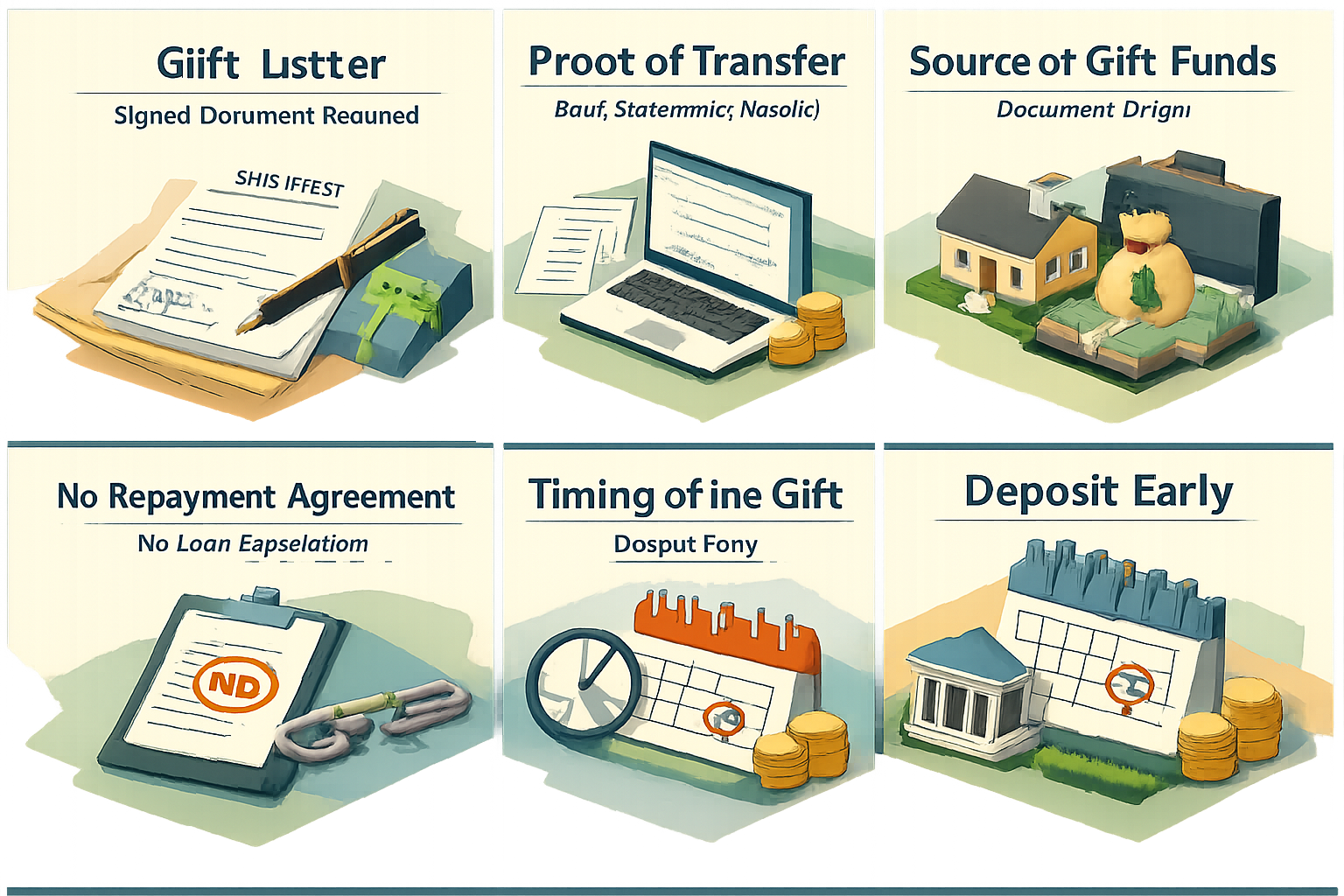
When using conventional loan gift funds sibling down payment contributions, lenders will closely review several factors. Here's what you'll typically need to satisfy their requirements:
- Gift Letter: Your sibling must provide a signed gift letter that states the donor's name, relationship to you, the dollar amount of the gift, the address of the property being purchased, and a clear statement that no repayment is expected or required. This is a non-negotiable document for nearly every lender.
- Proof of Transfer: Lenders will want evidence that the money actually moved from your sibling's account to yours. This typically means providing bank statements from both the donor and the recipient, along with a copy of the wire transfer, cashier's check, or deposit slip.
- Source of Gift Funds: Some lenders may also ask your sibling to document where their funds came from, particularly if large amounts suddenly appear in their account. This helps lenders confirm the money isn't being borrowed from a third party.
- No Repayment Agreement: As mentioned, there must be absolutely no written or verbal agreement to repay the gift. Lenders may ask you to confirm this in writing as part of the loan process.
- Timing of the Gift: The gift should ideally be deposited into your account well before closing. Funds that appear at the last minute may raise red flags and require additional explanation or documentation.
Meeting these requirements helps your lender satisfy Fannie Mae or Freddie Mac guidelines, which is essential for your loan to be eligible for sale on the secondary mortgage market.
How Much of the 5% Down Payment Can Come from a Sibling Gift?
This is a question many homebuyers wonder about, and the answer depends on how much you're putting down. Under Fannie Mae guidelines, the rules around conventional loan gift funds usage are tied to your loan-to-value ratio and the type of property you're purchasing.
For a primary residence — which is the most common scenario for homebuyers — if your down payment is 20% or more, the entire amount may come from gift funds. If you're putting down less than 20%, which includes a 5% down payment, Fannie Mae typically requires that you contribute at least some of your own funds in certain situations, depending on occupancy type and the number of units in the property.
However, for a single-unit primary residence with a 5% down payment, Fannie Mae's current guidelines may allow the entire down payment to come from a gift, including one from a sibling. That said, lender overlays — meaning additional requirements that individual lenders layer on top of the standard guidelines — could be more restrictive. It's always worth checking directly with your lender to understand their specific policies.
Regardless of the gift amount, you'll still need to show that you have enough reserves to cover closing costs and any required post-closing cash reserves. Your sibling's gift generally cannot be used to satisfy reserve requirements unless explicitly permitted by your loan program.
Credit Score and Income Qualifications You Still Need to Meet
Using a sibling's gift for your down payment doesn't change the other qualifying criteria for a conventional loan. You'll still need to meet standard underwriting requirements on your own merits. Here's what lenders will typically evaluate:
- Credit Score: Most conventional lenders require a minimum credit score of 620, though some may set the bar higher. A stronger credit score — generally 740 or above — can help you secure better interest rates and loan terms.
- Debt-to-Income Ratio (DTI): Lenders will look at how much of your gross monthly income goes toward paying debts. Conventional loans typically allow a maximum DTI of around 45% to 50%, though lower is always better for your application.
- Employment and Income Verification: You'll need to provide pay stubs, W-2s, and possibly tax returns to verify stable, consistent income. Self-employed borrowers may face additional documentation requirements.
- Assets and Reserves: Even with a gifted down payment, lenders may want to see that you have some cash reserves of your own — typically covering one to two months of mortgage payments — to demonstrate financial stability.
Meeting these benchmarks is just as critical as having the down payment in place. A gift from your sibling can get you to the closing table, but your overall financial profile still needs to support the loan.
Common Mistakes to Avoid When Using Sibling Gift Funds
Even with the best intentions, homebuyers sometimes make avoidable mistakes when incorporating gift money into their mortgage application. Being aware of these pitfalls can save you significant time and stress.
- Depositing the gift too late: If your sibling's money lands in your account just days before closing, underwriters will scrutinize it heavily. Try to have the gift transferred at least 60 days before your loan application if possible, so it appears as "seasoned" funds in your bank statements.
- Mixing gift funds without documentation: If your sibling transfers money and you immediately mix it with other savings, it can become difficult to trace. Keep the gift funds in a separate account or clearly document all transactions.
- Forgetting to get the gift letter notarized: While not all lenders require notarization, some do. Ask your loan officer upfront to avoid a last-minute scramble.
- Assuming all lenders have the same rules: Guidelines from Fannie Mae set a baseline, but individual lenders may impose stricter requirements. Always confirm your lender's specific policies regarding conventional loan gift funds sibling down payment contributions.
- Not communicating openly with your lender: If you're planning to use a gift, tell your loan officer early. Surprises during underwriting can delay or derail your closing.
●Conclusion
Using a sibling's generosity to help cover your down payment is a legitimate and often effective path to homeownership. Understanding the requirements for a conventional loan with 5% down from a sibling gift puts you in a much stronger position to navigate the process smoothly. The key takeaways are simple: get a proper gift letter, document the fund transfer thoroughly, make sure your sibling understands no repayment is expected, and communicate everything to your lender early. Beyond the gift itself, you'll still need to qualify based on your own credit, income, and financial stability — but with the right preparation, a sibling's contribution could be the boost that makes your homeownership dream a reality. If you're ready to explore your conventional loan options, the team at LoanWise is here to help you take the next step with clarity and confidence.