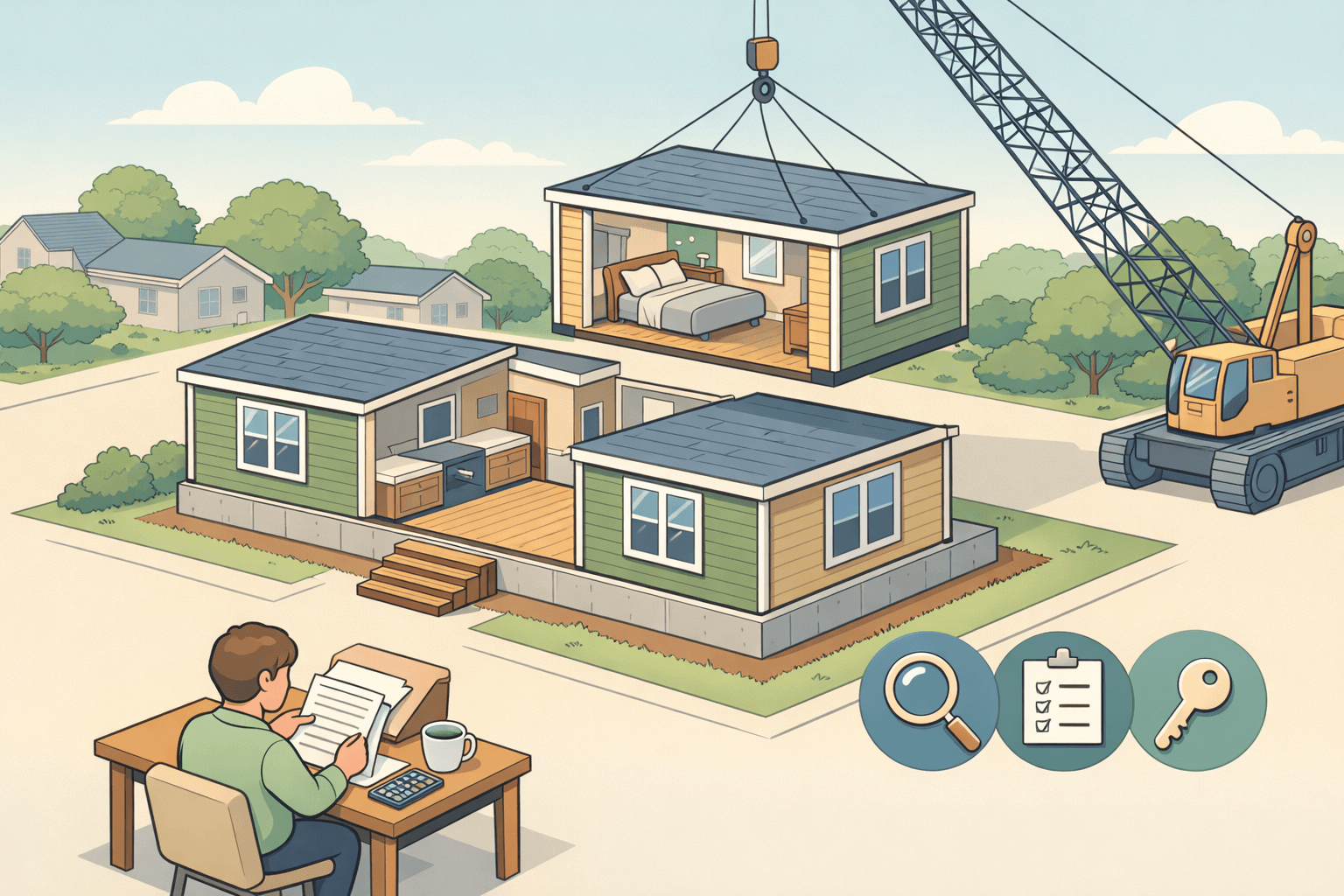
Buying a modular home is an exciting and often more affordable path to homeownership. But like any real estate purchase, it comes with a set of financial responsibilities that extend beyond the purchase price itself. One of the most important questions prospective buyers ask is: what are closing costs for FHA loan on a modular home? Understanding these costs upfront can help you budget accurately, avoid surprises at the closing table, and make the most of your FHA financing. This guide breaks down everything you need to know — from the types of fees involved to the specific FHA loan requirements modular homes must satisfy before the deal can close.
What Makes Modular Homes Different from Manufactured Homes
Before diving into closing costs, it's worth clarifying what a modular home actually is — because the distinction matters significantly when it comes to FHA financing. A modular home is built in sections at an off-site factory and then transported to a permanent foundation where it's assembled. Once constructed, it's considered real property, just like a site-built home.
A manufactured home, on the other hand, is built on a permanent chassis and may be classified as personal property depending on how it's titled and where it sits. FHA treats these two property types differently, and lenders do too. Modular homes are generally easier to finance through FHA because they're treated more like traditional single-family residences.
This distinction is important: if your home is classified as a modular home and sits on a permanent foundation, you may qualify for standard FHA financing rather than the more restrictive FHA Title I or Title II manufactured housing programs. That difference can affect both your loan terms and your closing costs.
FHA Loan Requirements Modular Homes Must Meet Before Closing
The FHA has specific eligibility standards that a modular home must satisfy in order to qualify for an insured mortgage. Meeting these FHA loan requirements modular homes are subject to is not optional — lenders will verify compliance before approving the loan, and any deficiencies could delay or derail your closing.
- Permanent Foundation: The home must be affixed to a permanent foundation that meets HUD guidelines. A foundation inspection or engineer's certification may be required.
- Real Property Classification: The home must be titled as real property, not personal property. If it's still titled as personal property, it typically needs to be converted before FHA loan requirements modular homes can be satisfied for financing purposes.
- Meets Local Building Codes: The structure must comply with state and local residential building codes, not just HUD standards. Many states have adopted specific modular home construction codes.
- FHA Appraisal: An FHA-approved appraiser must inspect the property and confirm it meets minimum property standards (MPS). The appraisal also determines the home's market value for loan-to-value calculations.
- Condition Standards: The home cannot have health or safety hazards such as roof damage, inadequate heating, or structural deficiencies. Any issues found during the appraisal may need to be repaired before closing.
These requirements exist to protect both the borrower and the FHA insurance fund. While they may add a step or two to your process, they also ensure you're buying a home that meets a minimum quality standard — which is reassuring for any first-time homebuyer.
What Are Closing Costs for FHA Loan on a Modular Home
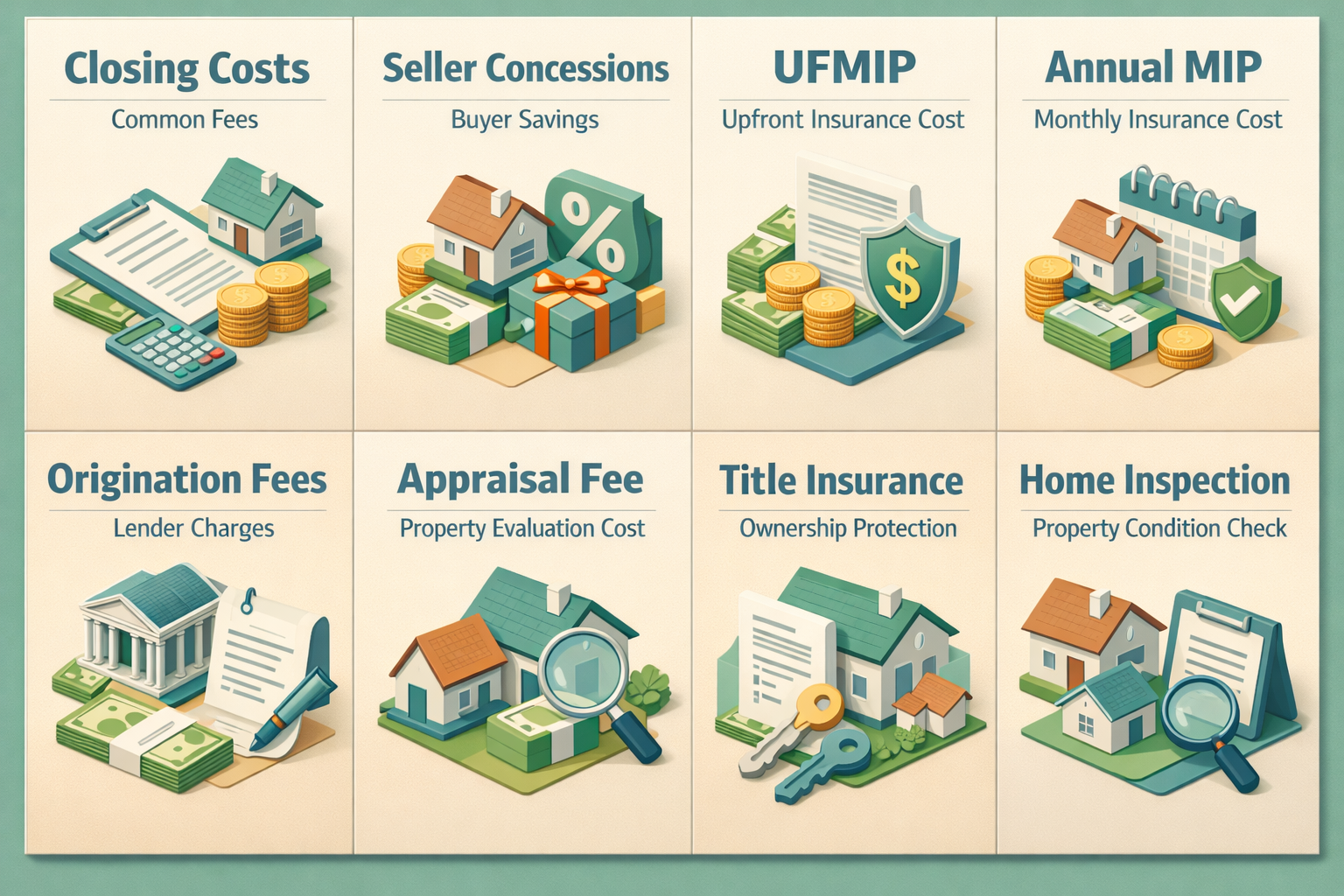
So, what are closing costs for FHA loan on a modular home? In general, FHA closing costs on a modular home are similar in structure to those on a traditional site-built home, though some line items may vary based on the property type and location. Closing costs typically range from roughly 2% to 6% of the loan amount, though this can vary considerably depending on your lender, state, and the specifics of the transaction.
Here's a breakdown of the most common closing cost categories you're likely to encounter:
- Origination Fees: This is what the lender charges for processing your loan. It may be expressed as a flat fee or a percentage of the loan amount, often around 0.5% to 1%.
- FHA Upfront Mortgage Insurance Premium (UFMIP): FHA loans require an upfront MIP, which is currently set at 1.75% of the base loan amount. This can be rolled into the loan rather than paid out of pocket.
- Appraisal Fee: An FHA-approved appraisal is mandatory. Because modular homes may require additional scrutiny — including foundation certification — appraisal fees could be slightly higher than those for standard homes.
- Title Search and Title Insurance: A title search verifies the home's ownership history, while title insurance protects against future claims. Both are typically required for FHA loans.
- Home Inspection Fee: While not always required by FHA, a professional home inspection is strongly recommended. For modular homes, inspectors may also verify that the assembly was completed correctly.
- Survey Fee: Some lenders or states require a land survey to confirm property boundaries, especially for modular homes on rural or non-subdivided lots.
- Attorney or Closing Agent Fees: Depending on your state, a real estate attorney or escrow/title company will handle the closing, and their fees will appear on your Closing Disclosure.
- Prepaid Items: These include prepaid homeowners insurance, prepaid interest (covering the days between closing and your first payment), and initial escrow deposits for property taxes and insurance.
- Recording Fees: Local governments charge fees to record the deed and mortgage documents in public records.
It's worth noting that FHA guidelines allow sellers to contribute up to 6% of the home's sale price toward the buyer's closing costs. This is known as a seller concession and can significantly reduce your out-of-pocket burden at closing.
How the FHA Upfront and Annual Mortgage Insurance Premiums Affect Your Costs
One cost that's unique to FHA loans — and often misunderstood — is mortgage insurance. FHA requires two types of mortgage insurance: an upfront premium paid at closing and an annual premium paid monthly as part of your mortgage payment.
The Upfront Mortgage Insurance Premium (UFMIP) is 1.75% of the base loan amount. On a $200,000 loan, that's $3,500. The good news is that you don't have to pay this out of pocket if you can't afford to — it can be financed into the loan balance. However, this does increase your total loan amount and your monthly payment slightly.
The Annual Mortgage Insurance Premium (MIP) is charged monthly and its rate depends on your loan term, loan-to-value ratio, and loan amount. For most 30-year FHA loans with a down payment below 10%, the annual MIP is currently 0.55% of the loan balance per year, divided into 12 monthly installments. If you put down 10% or more, MIP may cancel after 11 years.
Understanding these premiums is essential when comparing the true cost of an FHA loan versus a traditional mortgages. While FHA loans offer more flexible qualification standards, the ongoing mortgage insurance cost is something buyers should factor into their long-term budgeting.
Strategies to Reduce What You Pay at the Closing Table
Closing costs can feel overwhelming, especially for first-time homebuyers already stretching their budget. The good news is that there are several practical strategies that may help reduce what you owe at closing on an FHA modular home purchase.
- Negotiate Seller Concessions: As mentioned, FHA allows sellers to contribute up to 6% of the purchase price toward closing costs. In a buyer-friendly market, sellers may be willing to help offset these expenses to close the deal.
- Shop Multiple Lenders: Lender fees can vary significantly from one institution to another. Getting Loan Estimates from at least three lenders helps you compare origination fees, discount points, and other lender-controlled costs side by side.
- Ask About No-Closing-Cost Options: Some lenders offer no-closing-cost loans where fees are rolled into the interest rate. While this raises your monthly payment, it reduces your upfront burden — which may be helpful if cash is tight.
- Look Into Down Payment Assistance Programs: Many state and local housing finance agencies offer grants or forgivable loans that can be used toward both down payments and closing costs for eligible buyers.
- Finance the UFMIP: Rolling the FHA upfront mortgage insurance premium into your loan eliminates that large upfront payment, though it does modestly increase your loan balance.
- Review Your Loan Estimate Carefully: When you receive your Loan Estimate, compare it line by line with your Closing Disclosure. If fees have increased without explanation, ask your lender to justify or correct them.
Being proactive about cost reduction doesn't mean cutting corners — it means being an informed consumer who knows what fees are negotiable and what resources are available.
What to Expect During the Closing Process for a Modular Home
The closing process for a modular home financed with an FHA loan follows a similar path to that of a traditional home purchase, but with a few additional steps that buyers should be prepared for.
After your offer is accepted, the lender will order an FHA appraisal. The appraiser will evaluate the home's value and condition, and may also flag any health or safety issues that need to be addressed before the loan can close. For modular homes, the appraiser may pay special attention to the foundation, roof, mechanical systems, and assembly integrity.
If the appraiser requires repairs, you'll need to negotiate with the seller to determine who's responsible for completing them. In some cases, the lender may allow an escrow holdback — where funds are set aside to cover repairs after closing — though not all lenders permit this under FHA guidelines.
Once the appraisal is cleared and underwriting is complete, you'll receive a Closing Disclosure at least three business days before your scheduled closing date. This document outlines every fee, prepaid item, and credit involved in the transaction. Review it carefully and compare it to your original Loan Estimate.
On closing day, you'll sign the final loan documents, pay your closing costs to expect (minus any credits or concessions), and receive the keys. It's helpful to bring a cashier's check or arrange a wire transfer for the exact amount shown on your Closing Disclosure, as personal checks are typically not accepted for closing funds.
●Conclusion
Understanding what are closing costs for FHA loan on a modular home is a critical step in your homebuying journey. From origination fees and FHA mortgage insurance premiums to appraisal costs and prepaid escrow items, the expenses can add up — but with careful planning, you can manage them effectively. Meeting the FHA loan requirements modular homes must satisfy is equally important, as eligibility issues can cause delays or complications if caught late in the process. The key is to start prepared: ask questions early, compare lenders, and work with an experienced mortgage professional who understands the nuances of modular home financing. At LoanWise, we're here to help you navigate every step of the process with confidence. Reach out today to explore your FHA loan options and get a personalized estimate of what your closing costs might look like.