
Mortgage Underwriting Process for Investors
The mortgage underwriting process might seem like a black box to many real estate investors, but understanding how it works can significantly impact your financing success. When you're building a portfolio of rental properties or executing fix and flip projects, knowing what underwriters evaluate can help you prepare better applications and avoid costly delays.
Investment property financing, particularly through DSCR loans and bridge financing, involves different underwriting criteria than traditional homebuyer mortgages. This process typically takes 30 to 45 days from application to closing, but savvy investors who understand the system can often streamline their approvals and secure better terms.
Common Questions About Investment Property Underwriting
Many investors have questions about how the mortgage underwriting process differs for investment properties compared to primary residences.
Q: What is mortgage underwriting?
Mortgage underwriting is the comprehensive evaluation process where lenders assess your creditworthiness, the property's value, and your ability to repay the loan. For investment properties, underwriters focus heavily on the property's income potential rather than just your personal income, especially with DSCR loans.
Q: How long does underwriting take for investment properties?
The underwriting timeline typically ranges from 30 to 45 days for investment property loans. However, DSCR loans might move faster since they rely less on extensive personal income documentation and more on the property's cash flow potential.
Q: What documents do I need for investment property underwriting?
You'll need property financial statements, lease agreements, bank statements, tax returns, and credit reports. For fix and flip projects, you might also need renovation plans and contractor estimates.
Key Factors Affecting Mortgage Approval for Investors
Understanding the factors affecting mortgage approval can help you position your application for success from the start.
- Debt Service Coverage Ratio (DSCR): This measures the property's ability to cover its debt payments from rental income. A DSCR of 1.25 or higher typically strengthens your application significantly.
- Property Cash Flow Analysis: Underwriters examine rental income potential, vacancy rates, and operating expenses to determine if the investment makes financial sense.
- Credit Score and History: While DSCR loans may be more flexible, maintaining a strong credit profile still impacts your interest rates and loan terms.
- Down Payment and Reserves: Investment properties typically require larger down payments, often 20-25%, plus cash reserves for maintenance and unexpected expenses.
- Property Condition and Appraisal: The property must appraise at or above the purchase price, and any significant repairs might affect loan approval or require escrow arrangements.
Essential Documentation for Investment Property Underwriting
Having the right documentation ready can significantly speed up your mortgage underwriting process and improve your chances of approval.
- Property Income Documentation: Current lease agreements, rent rolls, and historical income statements help underwriters verify cash flow potential for rental properties.
- Financial Statements: Personal and business tax returns, profit and loss statements, and bank statements demonstrate your financial stability and ability to manage investment properties.
- Property Analysis Reports: Market rent studies, comparative market analyses, and property condition reports help underwriters assess the investment's viability.
- Insurance and Legal Documents: Property insurance policies, title reports, and any legal documentation related to the property ensure clear ownership and proper coverage.
DSCR Loan Underwriting Advantages for Real Estate Investors
DSCR loans offer unique advantages in the mortgage underwriting process that can benefit serious real estate investors looking to scale their portfolios.
- Income-Based Qualification: These loans focus on the property's income potential rather than your personal income, making it easier to qualify for multiple investment properties simultaneously.
- Faster Processing Times: With less emphasis on extensive personal income documentation, DSCR loan underwriting might move more quickly through the approval process.
- Portfolio Building Benefits: Since qualification doesn't depend heavily on personal debt-to-income ratios, you can potentially finance more properties without hitting traditional lending limits.
- Flexible Documentation Requirements: DSCR loans typically require fewer personal financial documents, focusing instead on the property's cash flow and your experience as an investor.
Step-by-Step Mortgage Underwriting Timeline for Investors
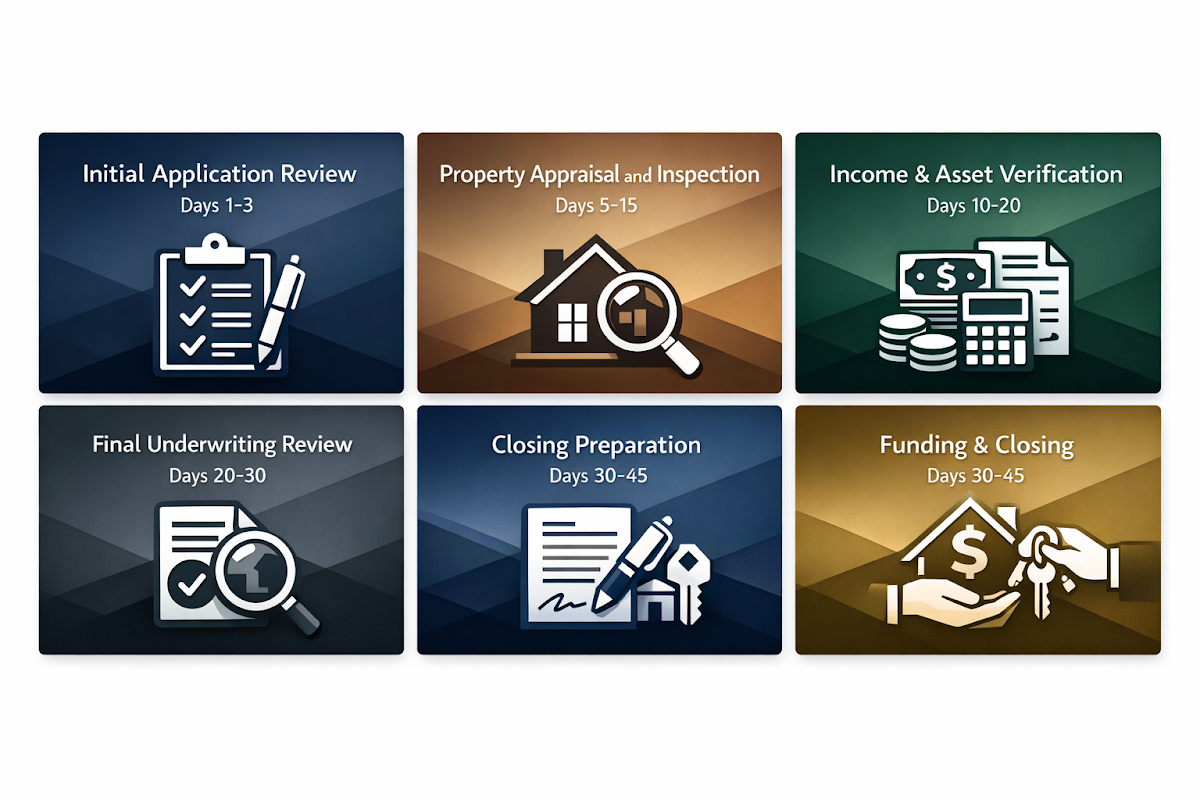
Understanding the mortgage underwriting timeline helps you plan your investments more effectively and set realistic expectations for closing dates.
- Initial Application Review (Days 1-3): Lenders perform a preliminary review of your application, credit score, and basic financial information to determine if you meet initial qualification criteria.
- Property Appraisal and Inspection (Days 5-15): Professional appraisers evaluate the property's current market value and condition, which is crucial for determining loan amounts and identifying any potential issues.
- Income and Asset Verification (Days 10-20): Underwriters verify rental income potential, review financial statements, and confirm asset documentation to ensure you can support the investment financially.
- Final Underwriting Review (Days 20-30): All documentation is compiled and reviewed for final approval, with underwriters potentially requesting additional information or clarification on specific items.
- Closing Preparation (Days 30-45): Once approved, final closing documents are prepared, title work is completed, and all parties coordinate for the closing date and fund transfer.
Strategies to Improve Your Underwriting Success Rate
Smart investors use specific strategies to optimize their mortgage underwriting outcomes and secure better loan terms for their investment properties.
- Optimize Property Selection: Choose properties with strong rental income potential and solid cash flow projections, as these factors heavily influence DSCR loan approvals and terms.
- Maintain Strong Financial Documentation: Keep detailed records of all income sources, expenses, and property performance data to present a clear financial picture to underwriters.
- Work with Investment-Focused Lenders: Partner with lenders who specialize in investment property financing and understand the unique aspects of rental property cash flow analysis.
- Prepare for Common Conditions: Anticipate typical underwriting conditions such as property repairs, additional documentation requests, or reserve requirements to avoid delays in the approval process.
- Consider Market Timing: Take advantage of favorable interest rate environments and lending conditions to secure better terms and improve your overall investment returns.
●Conclusion
Mastering the mortgage underwriting process gives real estate investors a significant advantage in building successful property portfolios. By understanding what underwriters evaluate, preparing comprehensive documentation, and working with investment-focused lenders, you can navigate the approval process more efficiently and secure better financing terms.
Whether you're pursuing DSCR loans for rental properties or bridge financing for fix and flip projects, knowledge of the underwriting timeline and requirements helps you make informed decisions and avoid costly delays. Remember that current market conditions might offer favorable opportunities, so staying informed about underwriting trends and lender requirements can help you capitalize on the best financing options available.
The key to successful investment property financing lies in preparation, documentation, and understanding how lenders evaluate your deals. With this knowledge, you're better positioned to build and expand your real estate investment portfolio through strategic financing decisions.