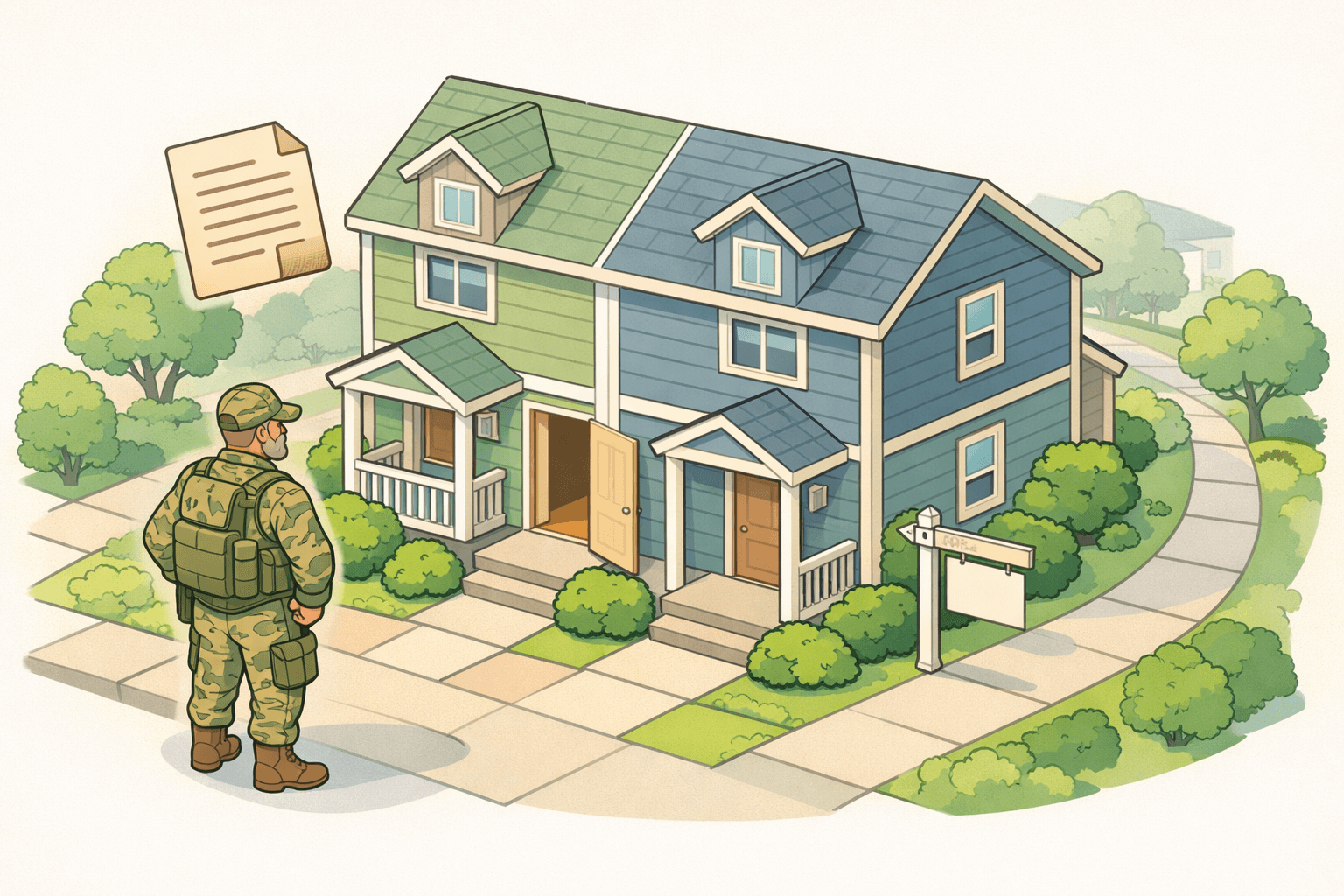
For veterans and active-duty service members, the VA home loan benefit is one of the most powerful financial tools available. It offers competitive interest rates, no down payment requirement in most cases, and no private mortgage insurance. But a common question arises: how to use VA loan benefits for investment property? The answer isn't always straightforward, but with the right knowledge, veterans may be able to leverage this benefit in ways that support long-term wealth building through real estate. This guide breaks down the rules, the possibilities, and the smart strategies worth exploring.
Understanding the VA Loan's Primary Purpose and Occupancy Requirement
The VA loan program was designed primarily to help eligible veterans, active-duty service members, and surviving spouses purchase a primary residence. This means the borrower is generally required to certify that they intend to personally occupy the home as their main place of living — typically within 60 days of closing.
This occupancy requirement is the central rule that shapes how the VA loan can and cannot be used. Because of it, you cannot use a VA loan to purchase a purely investment property, such as a rental home you never intend to live in. However, this doesn't completely close the door on real estate investing. There are strategic, VA-compliant ways to benefit from rental income while still satisfying the occupancy requirement.
It's worth noting that VA loan investment property rules are strict, and lenders take the occupancy certification seriously. Misrepresenting your intent to occupy could have serious legal consequences. That said, veterans who genuinely plan to live in the property — even temporarily — may still find meaningful investment opportunities within the program's guidelines.
Can You Buy Rental Property With a VA Loan? What the Rules Actually Allow
So, can I buy rental property with a VA loan? Not in the traditional sense, but there's a well-known and fully VA-compliant strategy that many veterans use: purchasing a multi-unit property.
The VA allows eligible borrowers to purchase properties with up to four units — provided the veteran occupies one of those units as their primary residence. This means a veteran could buy a duplex, triplex, or four-plex, live in one unit, and rent out the remaining units to tenants. The rental income from those additional units can help offset mortgage costs, and in some cases, may even cover the full payment.
This approach is sometimes called "house hacking," and it's one of the most practical ways veterans can begin building a real estate portfolio. The property must meet VA minimum property requirements (MPRs), and the units must be residential in nature. Commercial-use properties or mixed-use buildings that are primarily commercial typically won't qualify under VA financing guidelines.
Lenders may also consider projected rental income during the loan qualification process, though this varies by lender and situation. It's advisable to speak with a VA-approved lender who can walk you through how rental income is treated in your specific case.
VA Loan for Multi-Unit Properties: Key Eligibility and Property Requirements
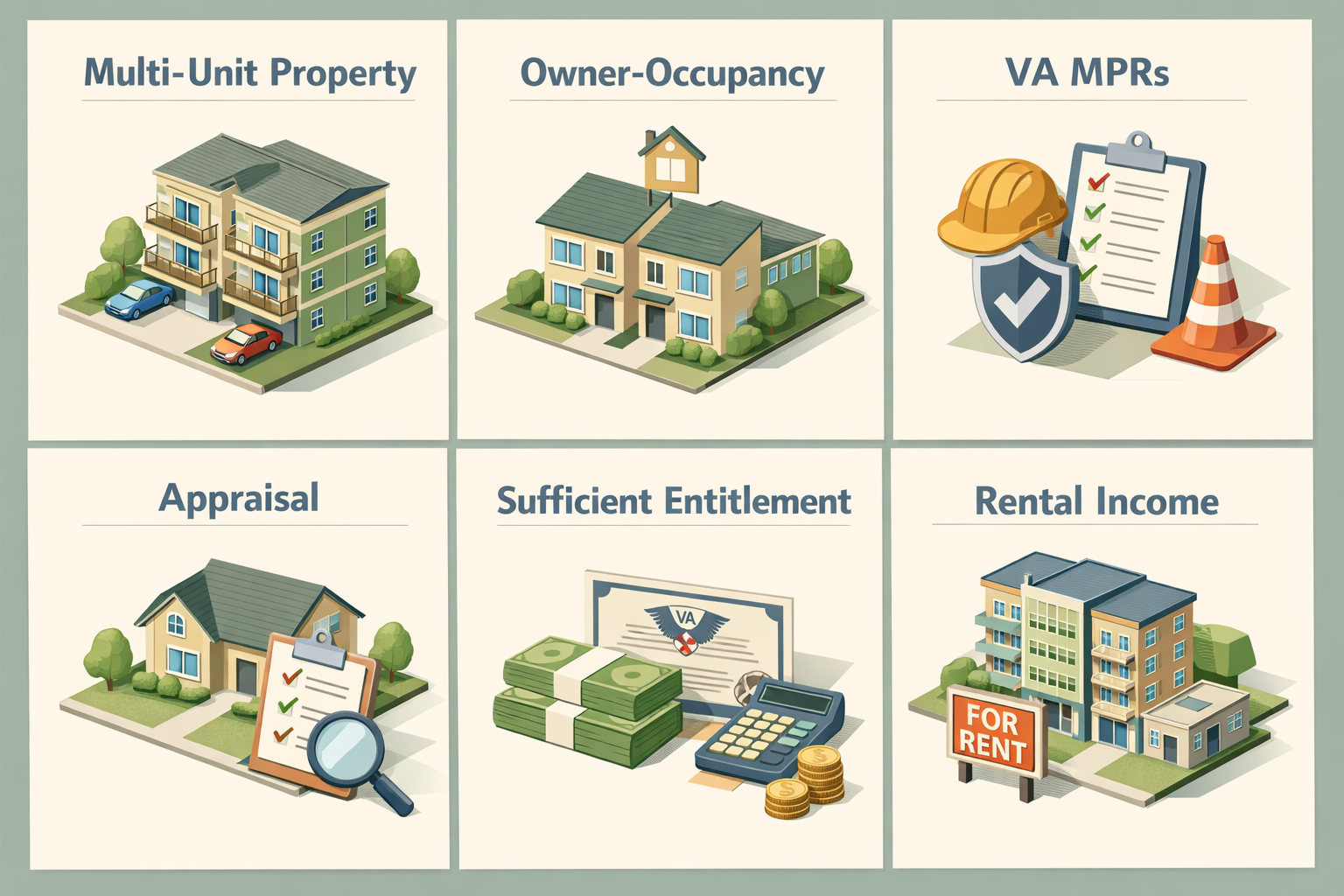
If you're considering a VA loan for multi-unit properties, there are specific eligibility and property standards to keep in mind. Meeting these requirements is essential to getting your loan approved and keeping your investment strategy on solid footing.
- Property size: The property must be between one and four residential units. Five or more units crosses into commercial territory and is not eligible for VA loan for multi-unit properties.
- Owner-occupancy: As mentioned, the veteran must occupy one of the units as their primary residence. This is non-negotiable under VA guidelines.
- VA Minimum Property Requirements (MPRs): The entire property — not just the unit you'll live in — must meet VA MPRs. This includes safe electrical systems, adequate plumbing, a sound roof, and general structural integrity across all units.
- Appraisal: A VA-certified appraiser will assess the property's value and condition. The appraisal for multi-unit properties may be more involved than for single-family homes.
- Sufficient entitlement: You'll need enough VA entitlement to cover the loan amount. Multi-unit properties often come at a higher price point, so understanding your entitlement limits is important.
Working with an experienced VA lender and a real estate agent familiar with VA transactions can help streamline this process considerably. Multi-unit purchases are absolutely achievable with VA financing — they just require a bit more preparation and due diligence.
Using VA Entitlement for a Second Home: What Borrowers Should Know
Another strategy that comes up frequently in veteran real estate planning is using VA entitlement for a second home. This is where the concept of remaining entitlement and bonus entitlement becomes especially important.
If a veteran has used their VA loan benefit on a previous home but has since paid off that loan (or sold the property and had the entitlement restored), they may be eligible to use their benefit again on a new primary residence. The prior home could then be converted into a rental property, effectively turning it into an investment asset.
It's also possible — in some circumstances — for a veteran to have two VA loans active at the same time, using remaining or bonus entitlement, if they've relocated for work or military orders and need to purchase a new primary residence while still carrying the original VA loan. In this scenario, the first property could potentially generate rental income while the veteran lives in the second.
This is a nuanced area of VA loan policy, and the rules around entitlement restoration and multiple simultaneous VA loans can be complex. A certificate of eligibility (COE) will reflect your current entitlement status, and a knowledgeable VA lender can help you interpret what that means for your specific situation. Always consult with a VA-approved lender before assuming your entitlement qualifies you for a second purchase.
Practical Strategies for Building Wealth With VA Financing
Understanding how to use VA loan benefits for investment property is really about understanding how to work smartly within the program's guidelines. Here are some approaches veterans commonly explore:
- Start with a multi-unit property: As covered earlier, purchasing a duplex, triplex, or fourplex while living in one unit is one of the most accessible entry points into real estate investing with a VA loan.
- Convert your current home to a rental after moving: If you're relocating or upgrading to a larger home, your previous VA-financed property can become a rental. Once you've moved out and established a new primary residence, the original home can generate monthly income.
- Use equity for future investment financing: Over time, your VA-financed home may appreciate significantly. Veterans can potentially tap into that equity through a VA cash-out refinance, which could then be used toward a down payment on a conventional investment property.
- Coordinate with future deployments or PCS moves: Military life often involves relocation. Each move may present an opportunity to purchase a new primary residence with remaining VA entitlement, while the previous property transitions to a rental.
These strategies require careful planning, but they demonstrate that the VA loan benefit — when used thoughtfully — can serve as a foundation for a broader real estate investment approach over a military career and beyond.
Common Misconceptions About VA Loans and Investment Properties
There are a few persistent myths about VA loans and investment property that are worth addressing directly.
Myth 1: You can never rent out a VA-financed home. This isn't accurate. Once you've fulfilled the occupancy requirement and have lived in the home as your primary residence, you may be able to rent it out — particularly if you're relocating. The key is that the occupancy requirement must be genuinely met first.
Myth 2: VA loans are only for first-time homebuyers. The VA benefit can be used multiple times throughout a veteran's life, as long as entitlement is available or has been restored. It's a lifetime benefit, not a one-time opportunity.
Myth 3: Rental income from additional units can't help you qualify. Lenders may be able to consider projected rental income from other units in a multi-unit property when evaluating your debt-to-income ratio, though specific policies vary by lender. This could potentially make qualifying for a larger property more achievable.
Myth 4: All investment-adjacent uses of VA loans are prohibited. The VA loan is restricted to owner-occupied primary residences — but that doesn't mean investment value is off the table. Multi-unit properties, equity building, and strategic conversions to rentals are all part of a legitimate, compliant investment approach.
●Conclusion
The VA home loan benefit is far more versatile than many veterans realize. While it isn't a direct tool for purchasing a standalone rental property, it can absolutely play a role in a well-planned real estate investment strategy. Whether you're exploring a VA loan for multi-unit properties, thinking about using VA entitlement for a second home, or simply wondering can I buy rental property with a VA loan, the answer lies in understanding the rules and working creatively within them.
Veterans have earned this benefit through their service, and making the most of it is a worthy financial goal. If you're ready to explore your options, speaking with a VA-approved mortgage specialist is the smartest first step. At LoanWise, our team is here to help you navigate the details and find the right path forward — whether you're a first-time homebuyer, a seasoned homeowner, or a veteran looking to build long-term wealth through real estate.