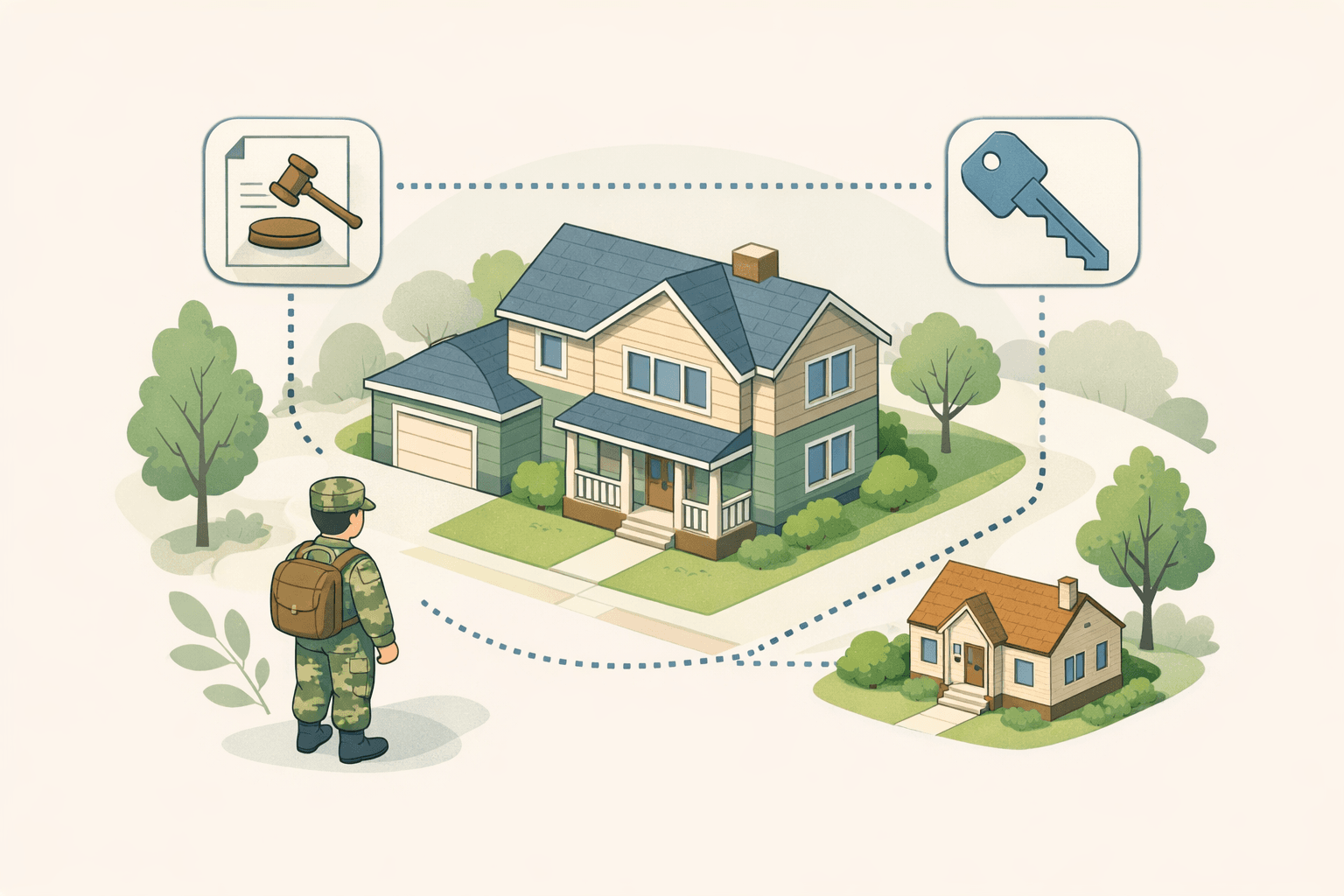
Navigating the VA loan process can feel overwhelming, especially when your financial picture includes non-traditional income sources like child support or assets tied to inherited property. But here's the good news — the VA loan program is one of the most flexible mortgage options available to eligible service members, veterans, and surviving spouses. Understanding how to qualify for a VA loan with inherited property and child support income could open the door to homeownership with little to no down payment, competitive interest rates, and no private mortgage insurance. This guide walks you through everything you need to know, from income verification rules to how inherited real estate may factor into your application.
What Makes VA Loans Different From Other Mortgage Programs
VA loans are backed by the U.S. Department of Veterans Affairs and issued by approved private lenders. Because of this government backing, lenders face less risk, which typically means they can offer more favorable terms to eligible borrowers. These benefits often include no down payment requirements, no private mortgage insurance (PMI), and more lenient credit guidelines compared to conventional loans.
Unlike FHA or conventional mortgages, VA loans use a concept called residual income rather than relying solely on debt-to-income ratios. Residual income measures how much money a borrower has left over each month after covering major expenses. This makes the program particularly well-suited for borrowers whose income comes from multiple sources — including child support payments or income generated from an inherited property.
For veterans who may have complex financial situations, the VA loan's flexibility is a significant advantage. Whether you're a first-time homebuyer or an experienced homeowner looking to move into a new property, this program may offer a pathway to financing that other loan types simply can't match.
Understanding VA Loan Eligibility and Service Requirements
Before diving into income and asset details, it's important to confirm that you meet the basic eligibility requirements for a VA loan. In general, you may qualify if you are:
- An active-duty service member who has served a minimum number of days
- A veteran who was discharged under conditions other than dishonorable
- A National Guard or Reserve member who meets service requirements
- An eligible surviving spouse of a veteran who died in service or from a service-connected disability
You'll need a Certificate of Eligibility (COE) to confirm your entitlement. This document is issued by the VA and can often be obtained through your lender, through the VA's eBenefits portal, or by submitting VA Form 26-1880 by mail.
Once you've confirmed your eligibility, the next step is working with a VA-approved lender to assess your financial profile — and that's where inherited property and child support income come into play.
How Child Support Income Is Treated in VA Loan Qualification
One of the most common questions veterans ask is whether child support payments they receive can be counted as qualifying income. The short answer is: yes, it often can — but there are conditions that must be met for lenders to include it in your effective income calculation.
Generally, VA lenders may count child support income if it meets the following criteria:
- Documented consistency: The income should have been received consistently for a recent period, often at least 12 months, and must be expected to continue.
- Legal agreement in place: A court order, divorce decree, or legally binding separation agreement should verify the payment obligation.
- Evidence of receipt: Bank statements, tax returns, or other financial records showing regular deposits may be required to prove you've been receiving the payments.
- Continuation: The income typically needs to be expected to continue for a defined period — often at least three years from the loan closing date.
If you receive both child support and alimony, both may potentially be counted, provided each meets the documentation and continuity requirements. It's worth noting that child support you pay — rather than receive — would be treated as a recurring debt obligation, which could affect your residual income calculation.
Working with an experienced mortgage professional can help you clearly document this income and present it to the lender in the most favorable light. At LoanWise, our advisors understand the nuances of VA loan qualification and can guide you through every step.
Using Inherited Property as Part of Your VA Loan Application
Inherited property can play a meaningful role in your VA loan application, depending on what you do with it and how it's structured. Here are a few ways inherited real estate might factor into your mortgage qualification:
Equity as a Financial Reserve
If you've inherited a property with equity — meaning its market value exceeds any outstanding liens or debts — that inherited property equity may be considered a financial reserve or asset by your lender. While VA loans don't require cash reserves in all cases, having demonstrable assets can strengthen your application and give lenders greater confidence in your ability to manage homeownership costs.
Rental Income From an Inherited Property
If you're renting out an inherited property, the rental income you receive may potentially be counted toward your qualifying income. VA lenders typically require a rental history and documentation showing the income is stable and likely to continue. A signed lease agreement, tax returns showing rental income, and bank statements are commonly requested. Keep in mind that lenders may apply a vacancy or maintenance factor — often reducing the counted income by a percentage — to account for potential gaps in tenancy.
Selling the Property for a Down Payment or Payoff
Even though VA loans don't require a down payment, proceeds from the sale of an inherited property could be used to pay down existing debts. Reducing your overall debt load can improve your residual income calculation and make qualifying easier. It could also help fund closing costs, further reducing the financial burden of purchasing a new home.
Inherited Property With Existing Mortgage Debt
If the inherited property carries an existing mortgage or lien, that debt obligation may be factored into your total debt load. Lenders will typically review whether you're responsible for that payment and include it in your expense calculations. It's important to be transparent with your lender about any obligations tied to inherited property so there are no surprises during underwriting.
How to Qualify for a VA Loan With Inherited Property and Child Support Income: Documentation Checklist
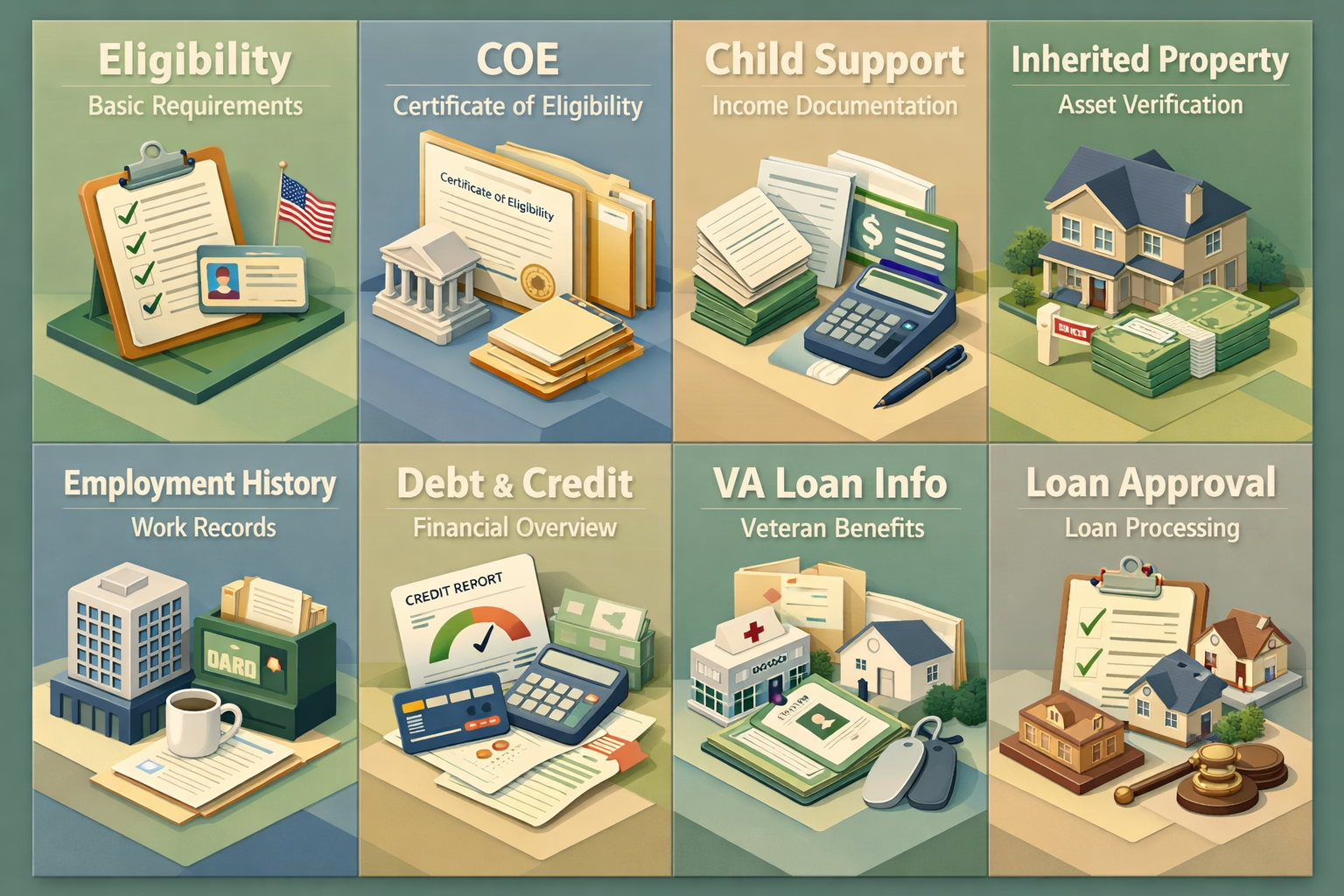
Preparation is one of the most powerful tools in any mortgage application. When your income includes child support and your assets include inherited real estate, having a well-organized file can make the difference between a smooth approval and a frustrating delay. Here's what you'll likely need to gather:
- Certificate of Eligibility (COE) — confirms your VA loan entitlement
- Court order or divorce decree — documents child support obligations and amounts
- 12 to 24 months of bank statements — demonstrates consistent receipt of child support income
- Two years of federal tax returns — shows overall income history, including rental income from inherited property if applicable
- Signed lease agreements — if renting out inherited property, confirms income source
- Property appraisal or tax assessment — establishes the value and equity of the inherited property
- Estate or probate documents — may be needed to verify legal ownership of inherited property
- Recent pay stubs or employment records — if you have other sources of earned income
- Current mortgage statement for inherited property — if it carries any existing debt
Being proactive about gathering these documents can help your loan officer build a strong case for underwriting approval. If you're unsure which documents apply to your specific situation, speaking with a LoanWise mortgage advisor early in the process can save you significant time and stress.
Credit Score and Residual Income: Meeting the VA's Practical Standards
The VA does not set a minimum credit score requirement at the federal level. However, individual lenders typically establish their own credit overlays. Many VA-approved lenders look for a credit score of at least 580 to 620, though some may require higher scores depending on the loan amount and overall risk profile.
More unique to the VA program is the residual income standard. After accounting for your housing payment, other debts, and taxes, you're expected to have a certain amount left over each month based on your family size and geographic region. This leftover amount — your residual income — is what the VA uses to assess whether you can truly afford the home.
If you're receiving child support income and have rental income from an inherited property, both can contribute positively to your residual income calculation, potentially making you a stronger candidate even if your traditional employment income is modest. The key is proper documentation and working with a lender who understands how to present non-traditional income sources within VA guidelines.
It may also be worth reviewing your credit report before applying. Correcting any errors, reducing revolving balances, and avoiding new debt in the months before your application could meaningfully improve your credit profile and help you qualify for a VA loan with more favorable loan terms.
Practical Tips for Veterans Navigating Complex Financial Situations
If your financial situation includes both inherited property and child support income, here are some strategies that may help strengthen your VA loan application:
- Work with a VA-specialized lender: Not all mortgage lenders have deep experience with VA loans. Choosing a lender or advisor who works regularly with VA borrowers can make a significant difference in how your application is presented and processed.
- Get pre-qualified early: Understanding your buying power before you start house hunting helps you set realistic expectations and move quickly when you find the right home.
- Keep financial records organized: VA underwriters often require thorough documentation. The more organized your file, the faster and smoother your approval process is likely to be.
- Don't overlook the VA funding fee: Most VA borrowers pay a one-time funding fee that helps offset the cost of the loan program. This fee can be financed into the loan, but it's worth understanding its impact on your total loan amount. Veterans with certain service-connected disabilities may be exempt from this fee.
- Consult a HUD-approved housing counselor: If you're unsure where to start, a housing counselor can help you assess your financial readiness and identify any gaps in your application.
Understanding how to qualify for a VA loan with inherited property and child support income is entirely possible with the right preparation and the right team behind you. Veterans have earned these benefits, and there's no reason a complex financial picture should stand in the way of homeownership.
●Conclusion
The VA loan program was designed with the unique needs of military families in mind, and that includes borrowers with non-traditional income sources and inherited assets. Whether you're counting on child support income to meet qualification thresholds or hoping to leverage equity from an inherited property, the path forward is clearer than you might think. With proper documentation, a strong understanding of VA residual income standards, and guidance from an experienced mortgage professional, you can turn your military service benefits into the keys to a new home.
At LoanWise, we specialize in helping veterans and military families navigate complex mortgage situations with confidence. If you're ready to explore your VA loan options, connect with one of our advisors today. We'll review your unique financial picture and help you build the strongest possible application — so you can focus on finding the home you deserve.