Buying a condo is an exciting step toward homeownership, but the financing process can feel overwhelming — especially when multiple loan types are involved. If you're exploring what are closing costs for FHA loan on condo with owner financing, you're likely navigating a situation that combines government-backed lending with a seller who may be willing to provide part of the financing. It's a layered arrangement, and understanding the fees involved could save you thousands of dollars at the closing table. This guide breaks down every major cost category so you can walk into the process feeling informed and prepared.
Why FHA Loans and Condos Have Unique Requirements
FHA loans are popular among first-time homebuyers because they allow lower down payments and more flexible credit standards. However, when the property is a condominium, there's an added layer of complexity. The FHA requires that the condo community itself be approved on its FHA-approved condo list before a buyer can use FHA financing. This approval process — known as FHA condo project approval — evaluates the financial health of the homeowners association, the percentage of owner-occupied units, and the community's insurance coverage.
Not every condo development meets these standards, which can limit your options. If the condo you love isn't on the approved list, you may need to pursue a single-unit approval (sometimes called spot approval), which allows individual units to qualify even if the broader project isn't certified. This process involves its own documentation requirements and may add time and cost to your transaction.
Understanding these property-level requirements matters because they directly affect which closing costs apply, how long the process takes, and whether additional fees — like condo certification costs — get added to your loan estimate.
Breaking Down Standard FHA Closing Costs on a Condo Purchase
When asking what are closing costs for FHA loan on condo with owner financing, it helps to first understand what standard FHA closing costs look like before adding the owner financing layer. Most homebuyers can expect closing costs to fall somewhere between 2% and 5% of the loan amount, though the exact figure varies by lender, location, and transaction complexity.
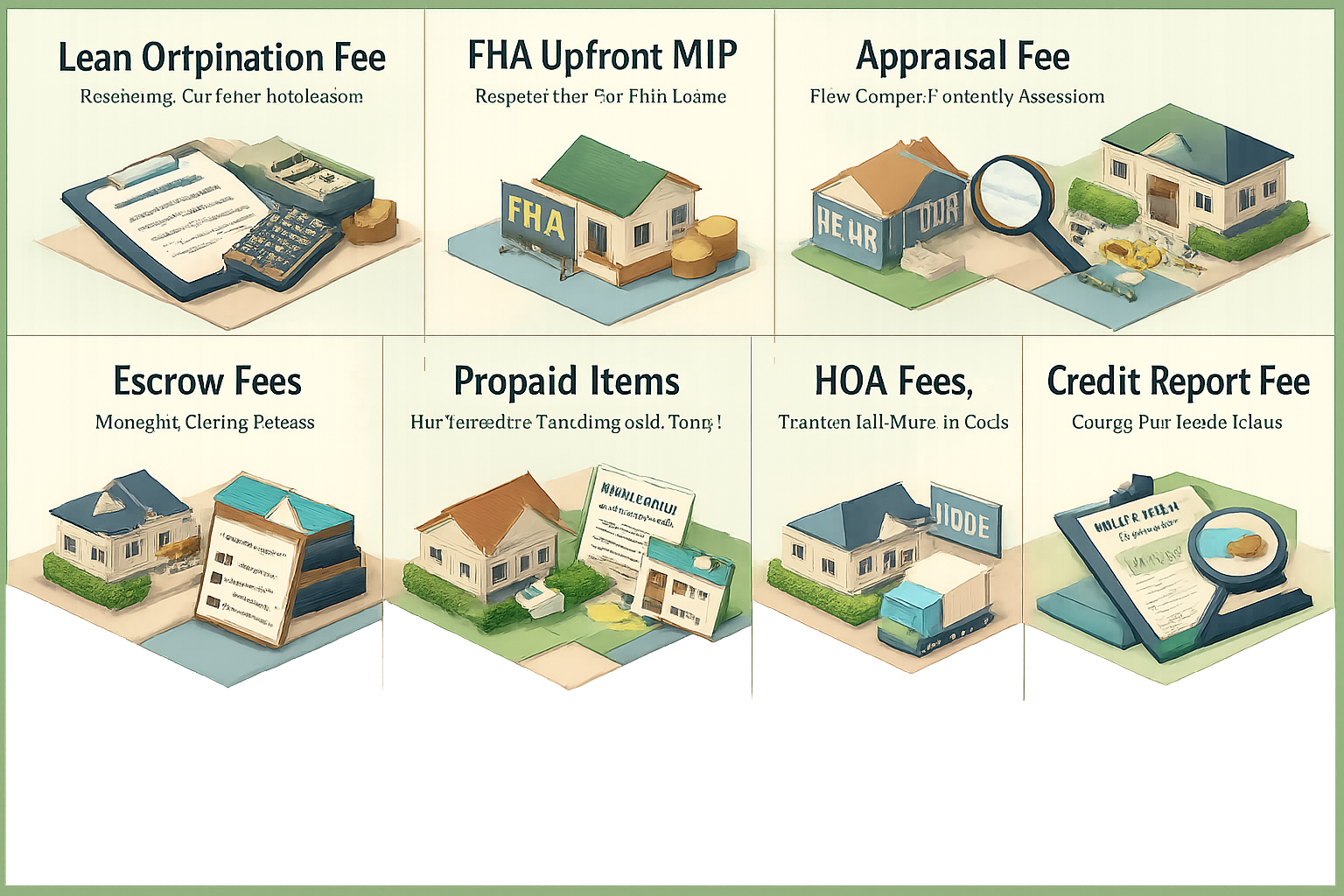
Here are the most common fee categories you'll likely encounter:
- Loan origination fee: Charged by the lender to process and underwrite your mortgage application. This is typically expressed as a percentage of the loan amount.
- FHA upfront mortgage insurance premium (UFMIP): A required fee for all FHA loans, currently set at 1.75% of the base loan amount. It can often be rolled into the loan balance rather than paid out of pocket at closing.
- Appraisal fee: FHA requires a specific FHA-compliant appraisal, which assesses both the value and the condition of the property. Condo appraisals may involve reviewing HOA documents as well.
- Title search and title insurance: These fees verify the legal ownership of the property and protect against future claims. Both lender's and owner's title insurance policies are typically involved.
- Escrow or settlement fees: Paid to the title company or escrow agent managing the closing process.
- Prepaid items: These include prepaid homeowner's insurance, prepaid interest for the remainder of the first month, and initial escrow deposits for taxes and insurance.
- HOA-related fees: Condo purchases often include HOA transfer fees, move-in fees, and sometimes a reserve contribution. These vary widely depending on the development.
- Credit report fee: A smaller charge for pulling your credit during the underwriting process.
- Survey or inspection fees: May apply depending on lender requirements and local practices.
Each of these fees will appear on your official Loan Estimate, a document your lender is required to provide within three business days of receiving your application. Reviewing this document carefully is one of the smartest things you can do as a buyer.
How Owner Financing Changes the Closing Cost Picture
Owner financing — also called seller financing — means the seller agrees to extend credit to the buyer directly, rather than having the buyer obtain a traditional bank loan for the full purchase amount. In a hybrid scenario where FHA financing covers most of the purchase price and the seller carries a secondary note or provides a down payment contribution, the closing cost structure can shift significantly.
Here's where things get important: FHA guidelines have specific rules about seller concessions and secondary financing. The seller is permitted to contribute up to 6% of the home's sale price toward the buyer's closing costs under standard FHA guidelines. However, if the seller is also providing financing through a second lien or subordinate mortgage, that arrangement must meet HUD requirements and cannot conflict with the terms of the primary FHA loan.
When owner financing is structured as a gift of equity or a seller-held second mortgage, lenders and HUD will review the combined loan-to-value ratio carefully. Any seller-provided financing that brings the total debt above FHA's limits could disqualify the transaction or require adjustments. It's strongly recommended to work with both a knowledgeable FHA lender and a real estate attorney to structure this correctly.
Despite the complexity, owner financing can sometimes help buyers cover closing costs more flexibly — for example, by negotiating that the seller pays certain fees as part of the purchase agreement. This could reduce the immediate out-of-pocket burden at closing.
FHA Condo Closing Costs and Owner Financing: What Fees May Be Negotiable
One of the benefits of involving a motivated seller — especially one offering owner financing — is that there may be more room to negotiate who pays what. In a standard FHA transaction, certain costs are fixed or non-negotiable (like the UFMIP), but others can be shifted between parties through the purchase contract.
Fees that may be negotiable include:
- Seller-paid closing costs: The seller can contribute up to 6% of the purchase price toward buyer closing costs, which might cover origination fees, title insurance, prepaid items, and more.
- HOA transfer fees: In many condo sales, the seller traditionally pays the HOA transfer fee, though this is always subject to negotiation.
- Escrow and settlement fees: Some markets split these between buyer and seller; others assign them entirely to one party.
- Owner financing note preparation: If the seller is carrying a second note, there may be attorney fees or document preparation costs associated with drafting that agreement. Clarifying who pays this upfront avoids surprises.
It's worth remembering that negotiating seller concessions doesn't reduce the purchase price — it shifts cash between parties at closing. Your lender will evaluate whether the seller contributions stay within FHA's allowable limits before approving the final terms.
The Role of the FHA Mortgage Insurance Premium in Your Total Costs
One cost that catches many buyers off guard is the FHA mortgage insurance premium (MIP). There are two components: the upfront MIP and the annual MIP, which is collected monthly as part of your mortgage payment.
The upfront MIP is currently 1.75% of the base loan amount. On a $250,000 FHA loan, that translates to $4,375 — a meaningful sum. The good news is that most borrowers choose to roll this into the loan rather than pay it at closing, which slightly increases the loan balance but preserves cash on hand.
The annual MIP depends on your loan term, loan-to-value ratio, and loan amount. For most standard FHA loans with a down payment below 10%, the annual MIP typically continues for the life of the loan. This is an important long-term cost consideration when comparing FHA financing to conventional alternatives, especially if you're also managing payments on a seller-financed second note.
When evaluating what are closing costs for FHA loan on condo with owner financing, don't overlook MIP as a component of your total financing cost — even if it doesn't always appear as a line item labeled "closing cost" in everyday conversation.
Preparing for Condo-Specific Fees and HOA Documentation Requirements
Condo purchases involve a distinct set of fees that don't exist in single-family home transactions. Because FHA must approve the condo project (or individual unit), there's often additional due diligence required from both the lender and the HOA management company.
Some of the condo-specific costs and considerations include:
- Condo questionnaire or certification fee: Lenders typically require the HOA to complete a detailed questionnaire. Some HOAs charge a fee for completing this document, often ranging from $100 to $400 or more depending on the management company.
- HOA document review: The lender may order a full review of HOA financials, meeting minutes, and reserve study. In some cases, a third-party review service is used, which carries its own cost.
- Move-in or transfer fees: Many condo associations charge a one-time fee when ownership changes hands. These aren't part of the mortgage closing costs per se, but they may be due at or around the same time.
- Special assessments: If the HOA has an outstanding special assessment (for building repairs, for example), the lender may require that it be paid off at closing, or it may affect loan eligibility.
Buyers using FHA condo closing costs and owner financing together should request HOA financial documents early in the process. Discovering a large pending special assessment late in underwriting can derail a transaction or require renegotiation of the purchase price.
Practical Tips for Managing Closing Costs on an FHA Condo with Owner Financing
Now that you understand the fee landscape, here are actionable steps to help you manage costs effectively:
- Get multiple Loan Estimates: Compare at least two or three lenders to see how origination fees and third-party charges differ. Even small differences in lender fees can add up to hundreds of dollars.
- Negotiate seller concessions early: If the seller is offering owner financing, use that relationship to negotiate closing cost contributions as part of the purchase agreement before going under contract.
- Verify FHA condo approval status upfront: Before falling in love with a unit, check the HUD condo approval database. If the project isn't approved, factor in the time and potential cost of pursuing spot approval.
- Ask about lender credits: Some lenders offer a higher interest rate in exchange for covering some of your closing costs upfront. This can reduce immediate out-of-pocket expenses, though it increases your monthly payment over time.
- Budget for prepaid items separately: Many buyers focus on closing fees and overlook prepaids — the homeowner's insurance deposit, initial escrow reserves, and prepaid interest that are due at closing. These can add several thousand dollars to your total cash needed.
- Work with an experienced real estate attorney: When owner financing is involved, having a legal professional review the seller note and subordination agreement can protect you from costly errors.
Managing FHA condo closing costs and owner financing together requires careful coordination between your lender, real estate agent, HOA, and the seller. Starting early and staying organized makes a significant difference.
●Conclusion
Understanding what are closing costs for FHA loan on condo with owner financing is essential for anyone navigating this multi-layered home purchase scenario. From the FHA upfront mortgage insurance premium and appraisal fees to HOA documentation charges and seller-financed note preparation costs, the expenses add up quickly — but they're manageable with the right preparation. The key is working with experienced professionals, reviewing your Loan Estimate carefully, and negotiating smartly with the seller when owner financing is part of the deal. At LoanWise, we believe informed borrowers make better decisions. If you're ready to explore your FHA condo financing options, connect with a lending specialist who can walk you through every cost in detail before you commit.