
Buying a high-value home in the United States while earning income from overseas investments is more common than many people might think. International investors, expatriates, and foreign nationals with US ties often find themselves in this exact position — strong assets, consistent dividend income, and a desire to purchase premium US real estate. The challenge, however, is getting a lender to recognize that foreign dividend income as qualifying income for a jumbo loan. Understanding how to qualify for a jumbo loan with foreign dividend income and US property requires knowing what lenders look for, how to document your earnings, and which loan programs might offer the most flexibility. This guide breaks it all down in plain language so you can approach the process with confidence.
What Makes a Jumbo Loan Different From a Conventional Mortgage
A jumbo loan is a mortgage that exceeds the conforming loan limits set by the Federal Housing Finance Agency (FHFA). In most parts of the United States, any loan amount above this threshold — which may shift from year to year — falls into jumbo territory. Because these loans are too large to be purchased by Fannie Mae or Freddie Mac, private lenders take on the full risk themselves.
That added risk means lenders tend to apply stricter standards across the board. Borrowers typically need a higher credit score, a larger down payment, and more extensive documentation compared to conventional mortgage applicants. Debt-to-income ratios are also scrutinized more carefully, and income sources that fall outside the traditional W-2 mold — like foreign income — may require additional verification steps.
Despite these hurdles, jumbo loans remain an important financing tool for real estate investors and high-net-worth individuals looking to purchase luxury homes, multi-family properties, or high-cost real estate in major markets. The key is knowing how to present your financial profile in a way that satisfies lender requirements.
Why Foreign Dividend Income Complicates the Qualification Process
Dividend income earned from foreign investments — such as shares in international companies, foreign mutual funds, or overseas portfolios — can be a reliable and substantial source of earnings. However, lenders view it through a more cautious lens than domestic wage income. There are a few reasons for this.
First, lenders need to verify that the income is stable, consistent, and likely to continue. With foreign dividends, that verification process becomes more complex. Currency fluctuations can affect the real value of the income when converted to US dollars. Political or regulatory changes in a foreign country could also impact the reliability of dividend payments over time.
Second, the documentation trail for foreign income is often less straightforward. US-based borrowers typically provide W-2s, tax returns, and pay stubs. For foreign dividend income, borrowers may need to supply translated financial statements, foreign tax records, and brokerage account statements — sometimes going back two or more years.
Third, not all lenders are equipped to evaluate foreign income. Many traditional banks and credit unions may decline applications that involve overseas earnings simply because they lack the internal expertise to assess them properly. Portfolio lenders and non-QM (non-qualified mortgage) lenders are often better suited to handle these situations.
Core Jumbo Loan Requirements for Foreign Income Earners
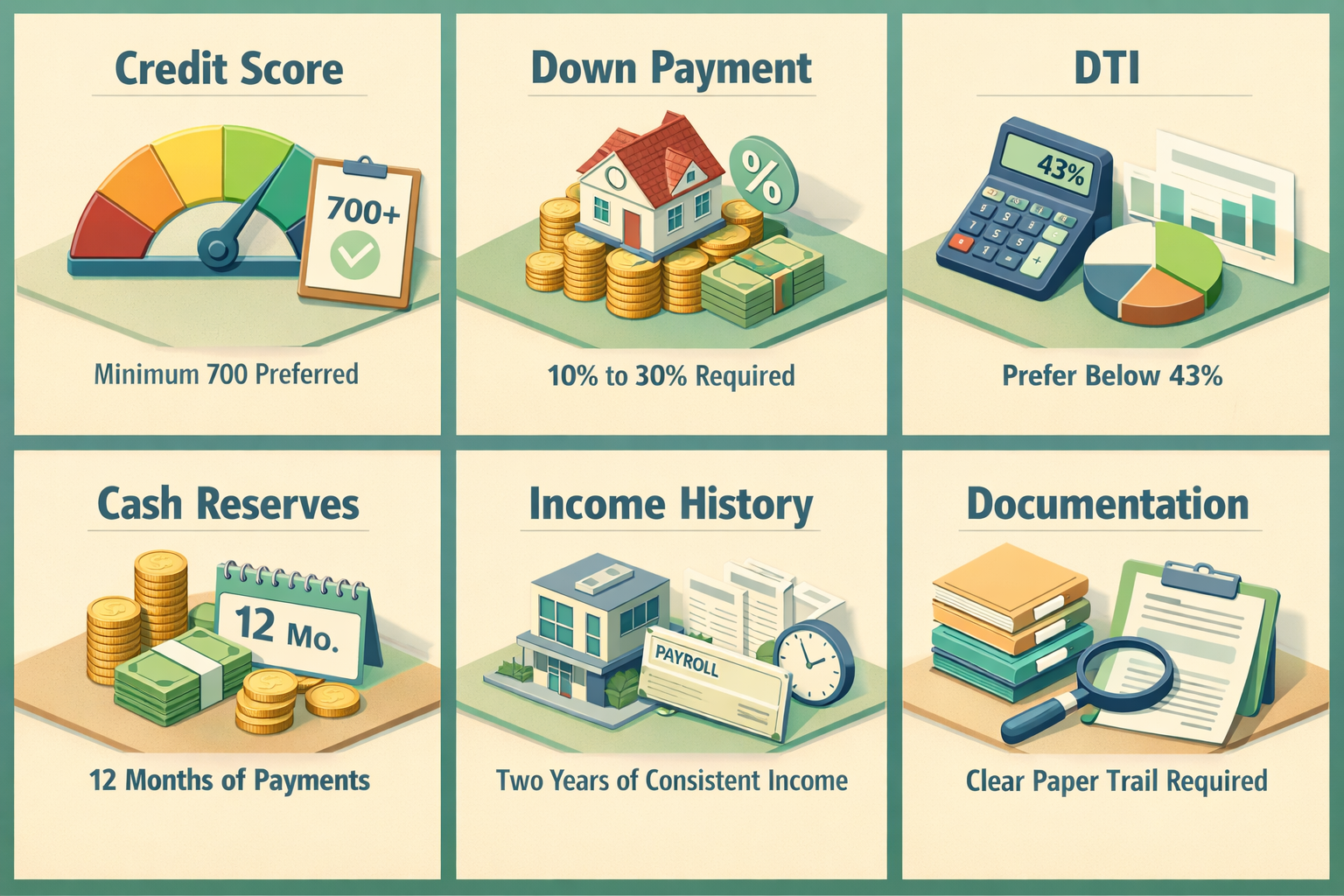
While specific guidelines vary by lender, borrowers hoping to qualify for a jumbo loan with foreign dividend income and US property as collateral should generally be prepared to meet the following expectations:
- Credit Score: Most jumbo lenders look for a credit score of at least 700, and many prefer scores of 720 or higher. If you have a US credit history, make sure it's in strong shape before applying. If you don't have a US credit profile, some lenders may consider alternative credit documentation.
- Down Payment: Jumbo loans typically require a down payment of at least 10% to 20%, though lenders dealing with foreign income borrowers may ask for more — sometimes 25% to 30% — to offset perceived risk.
- Debt-to-Income Ratio (DTI): Lenders generally prefer a DTI below 43%, though some portfolio lenders may allow slightly higher ratios depending on the overall strength of the borrower's financial profile.
- Cash Reserves: Jumbo borrowers are often expected to demonstrate significant liquid reserves — sometimes 12 months or more of mortgage payments held in accessible accounts, particularly when income sources are non-traditional.
- Income History: Most lenders want to see at least two years of consistent dividend income. This helps establish that the payments are recurring rather than one-time events.
Meeting these benchmarks doesn't guarantee approval, but it does put you in a much stronger position when working with a lender who specializes in complex income scenarios.
How to Document Foreign Dividend Income for Lender Review
Documentation is arguably the most critical part of qualifying for a jumbo loan when your income comes from foreign sources. Lenders need a clear, verifiable paper trail that supports both the amount and the consistency of your dividend earnings. Here's what you'll likely need to prepare:
- Foreign Brokerage Statements: At least 12 to 24 months of account statements showing dividend deposits. These should ideally be in English or accompanied by certified translations.
- Tax Returns: Both US tax returns (if you file as a US taxpayer) and applicable foreign tax documentation. If you're a US resident or citizen with foreign income, you're generally required to report it on your US return, which can actually simplify lender verification.
- Currency Conversion Records: Lenders will typically calculate your qualifying income in US dollars. Providing a consistent record of currency exchange rates or actual bank conversion statements helps establish a reliable income figure.
- Proof of Ownership: Documentation showing that you own the foreign assets generating the dividends, such as share certificates, fund statements, or custodial account records.
- Letter of Explanation: Many lenders appreciate — and some require — a detailed letter explaining the nature of the income, the source of the investments, and why the income is expected to continue.
Working with a mortgage broker who has experience in international income scenarios can be invaluable here. They can help you organize your documentation in a way that lenders will find credible and easy to evaluate.
The Role of the US Property in Strengthening Your Application
The property you're purchasing or refinancing plays an important role in your jumbo loan application. US property serves as collateral for the loan, and lenders will order an appraisal to confirm its market value. A property that appraises well — and is located in a desirable, stable market — can actually reinforce your overall application even when income documentation is complex.
For real estate investors specifically, properties that generate rental income may also help. If the US property you're financing produces verifiable rental revenue, some lenders may factor that into your qualifying income alongside your foreign dividend earnings. This can help offset DTI concerns and demonstrate that the property itself contributes to your financial strength.
It's also worth noting that the type of property matters. Primary residences, investment properties, and vacation homes may each be evaluated differently. Jumbo lenders often apply the most favorable terms to primary residences, while investment properties might face slightly higher rates or stricter reserve requirements.
Choosing the Right Lender for a Complex Income Profile
Not every lender is the right fit for borrowers with foreign dividend income. Traditional banks that follow strict agency guidelines may struggle to accommodate income sources that fall outside standard documentation formats. Understanding your lender options is a key step in figuring out how to qualify for a jumbo loan with foreign dividend income and US property.
Portfolio Lenders: These are banks or lending institutions that keep loans on their own books rather than selling them to the secondary market. Because they're not bound by agency rules, they often have more flexibility to evaluate non-traditional income sources on a case-by-case basis.
Non-QM Lenders: Non-qualified mortgage lenders specialize in borrowers who don't fit conventional income molds — the self-employed, business owners, and international earners. They may use bank statement programs, asset depletion methods, or other alternative income calculations to determine qualifying income. These programs can be particularly well-suited to borrowers with substantial foreign dividends.
Private Banks and Wealth Management Arms: High-net-worth borrowers may find that private banking divisions of major financial institutions offer customized jumbo programs. These lenders may look at your total relationship — including investment accounts and assets — rather than focusing narrowly on income verification alone.
Shopping around and working with a mortgage professional who understands international borrower profiles is strongly recommended. Rates and terms can vary considerably between these lender types, and finding the right match could make a meaningful difference in both your approval odds and your loan costs.
Practical Steps to Improve Your Jumbo Loan Approval Odds
If you're planning to apply for a jumbo loan using foreign dividend income, there are several practical steps you can take to improve your approval odds before you even submit an application.
- Establish a US banking relationship: Having a US bank account with a history of regular deposits — including your converted foreign dividends — gives lenders a domestic paper trail they can easily verify.
- Build or maintain a strong US credit profile: If you have US credit cards, installment loans, or other accounts in good standing, keep them active and paid on time. A solid credit score is one of the clearest signals of financial reliability.
- Reduce existing debt: Paying down outstanding obligations before applying can lower your DTI and improve how lenders view your financial position.
- Accumulate substantial reserves: The more liquid assets you can demonstrate — in US accounts or easily convertible foreign accounts — the more comfortable lenders will feel approving a large loan with complex income documentation.
- Consult a tax professional: If your foreign income isn't currently being reported on US tax returns, working with an international tax advisor before applying may open more lender options and simplify the documentation process.
- Engage a knowledgeable mortgage broker early: A broker with experience in jumbo loans and foreign income scenarios can help you identify the right lenders, prepare your documentation package, and avoid common pitfalls that could delay or derail your application.
Preparation is everything in complex mortgage scenarios. The more organized and transparent your financial picture, the more confidence lenders will have in your ability to repay the loan.
●Conclusion
Navigating the jumbo loan process as a borrower with foreign dividend income takes patience, preparation, and the right professional guidance — but it's absolutely achievable. Lenders who specialize in non-traditional income profiles and high-net-worth borrowers understand that financial success doesn't always come in a standard format. By building a strong documentation package, choosing the right lender type, and presenting a complete picture of your assets and income history, you can position yourself as a credible and capable borrower. Whether you're purchasing a luxury primary residence, expanding a real estate investment portfolio, or refinancing an existing property, understanding how to qualify for a jumbo loan with foreign dividend income and US property is the first step toward turning your real estate goals into reality. Connect with a LoanWise mortgage specialist today to explore your options and get personalized guidance for your unique financial situation.