
Buying a high-value home as a freelancer isn't a pipe dream — but it does come with a few more moving parts than a standard mortgage application. If you earn income through multiple 1099 contracts, you already know that traditional lenders can be skeptical of your earnings profile. Add a foreign national co-signer into the mix, and the path to approval can feel even more complicated. The good news is that knowing how to qualify for a jumbo loan with 1099 income from multiple freelance projects and a foreign co-signer is entirely possible with the right preparation, documentation, and lender match. This guide walks you through every key step so you can approach this process with clarity and confidence.
What Makes Jumbo Loans Different from Conventional Mortgages
A jumbo loan is a mortgage that exceeds the conforming loan limits set by the Federal Housing Finance Agency (FHFA). In most parts of the United States, the conforming limit is around $766,550 for a single-family home, though this figure may be higher in certain high-cost markets. Any loan above that threshold is considered a jumbo loan and is not eligible for purchase by Fannie Mae or Freddie Mac.
Because jumbo loans carry more risk for lenders — they can't be sold to government-sponsored entities — lenders typically impose stricter qualification standards. You might expect requirements such as:
- Higher credit score thresholds, often 700 or above, though some lenders may look for 720 or higher
- Lower debt-to-income (DTI) ratios, frequently capped around 43% or lower
- Larger down payments, commonly 10% to 20% or more of the purchase price
- Substantial cash reserves, sometimes 12 months or more of mortgage payments in liquid assets
For freelancers and self-employed borrowers, these requirements don't automatically disqualify you — but they do mean you'll need to be especially organized and prepared with your financial documentation.
How Lenders View 1099 Income from Multiple Freelance Projects
When you earn income as a freelancer, you typically receive a Form 1099 from each client rather than a traditional W-2 from an employer. Lenders don't dismiss 1099 income — but they do evaluate it differently from salaried income. The key factors they consider include consistency, duration, and provability of your earnings.
Most conventional and jumbo lenders want to see at least two years of self-employment income history. They'll typically average your net income across those two years, meaning your taxable income after deductions — not your gross earnings — is what counts. This is an important distinction for freelancers who write off significant business expenses, as those deductions can lower your qualifying income on paper.
Having multiple freelance clients can actually work in your favor. Lenders may view income diversity as a sign of stability. If one client relationship ends, your income doesn't disappear entirely. That said, you'll likely need to document each income stream clearly, including:
- Two years of federal tax returns (personal and, if applicable, business)
- All 1099 forms received across your freelance projects
- Year-to-date profit and loss statements prepared by a licensed CPA
- Bank statements showing consistent income deposits
Some lenders, particularly those offering non-QM (non-qualified mortgage) or bank statement loan programs, may allow you to use 12 to 24 months of bank statements to verify income rather than tax returns. This could be especially helpful if your tax write-offs significantly reduce your net income on paper.
Strengthening Your Application: Credit, Reserves, and Debt Management
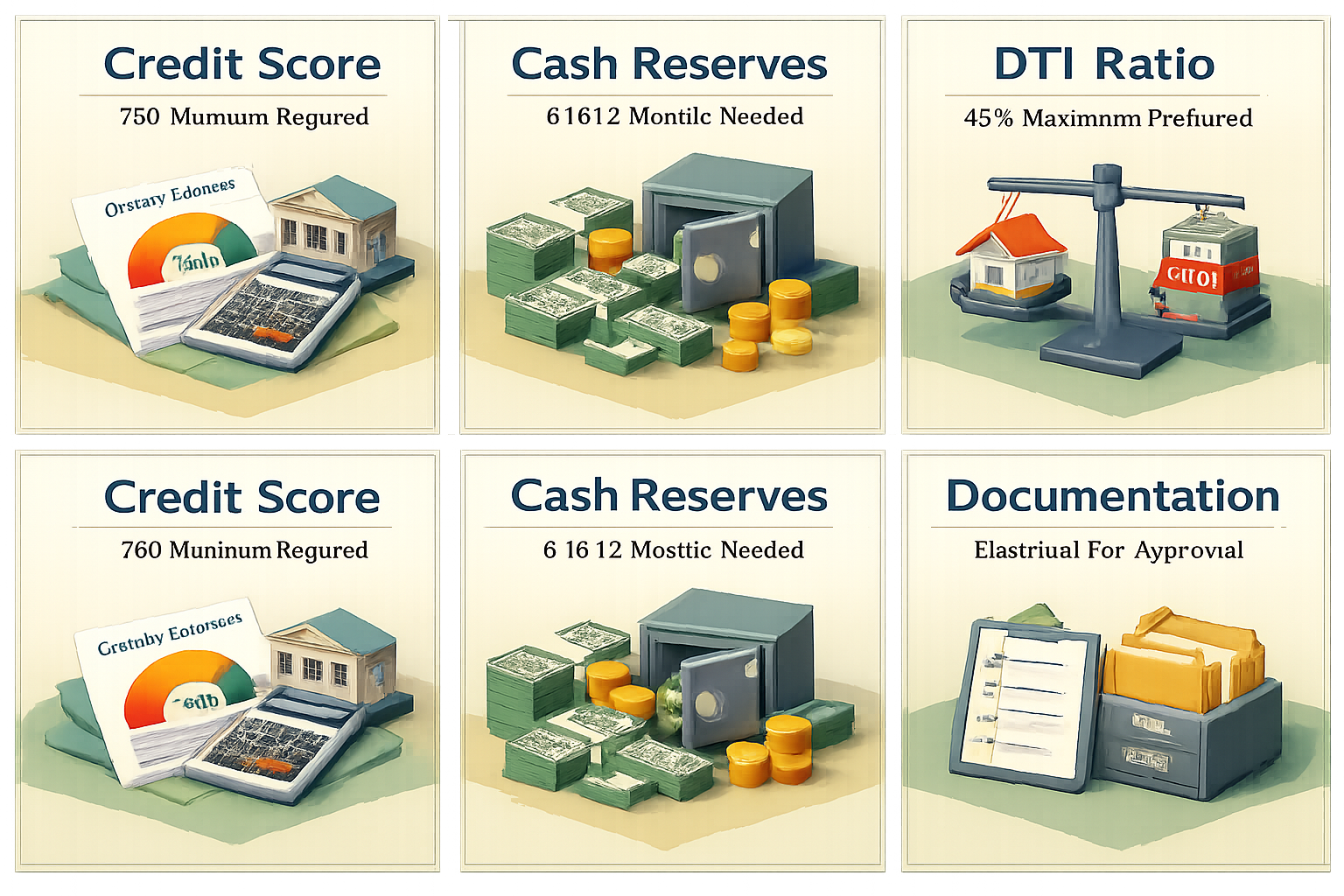
Before approaching a jumbo lender, it's worth making sure your overall financial profile is as strong as possible. While every lender has its own underwriting guidelines, there are several fundamentals that tend to carry significant weight in jumbo loan decisions.
Credit Score and History
A strong credit score is one of the most impactful factors in jumbo loan approval. Many jumbo lenders look for scores of at least 700, and a score of 720 or higher may help you access more competitive interest rates. If your score is lower, consider spending a few months paying down revolving balances, correcting any errors on your credit report, and avoiding new credit inquiries before applying.
Cash Reserves
Lenders typically want jumbo borrowers to have significant liquid reserves after closing. This might range from six to twelve months — or even more — of total monthly housing payments. For freelancers, having healthy reserves also signals to lenders that your income gaps (common in project-based work) won't derail your ability to make mortgage payments.
Debt-to-Income Ratio
Your DTI ratio measures your total monthly debt obligations against your gross monthly income. For jumbo loans, lenders often prefer a DTI at or below 43%. With 1099 income, your qualifying income may be lower than your gross earnings, so paying down student loans, auto loans, or credit card balances before applying could meaningfully improve your DTI.
Adding a Foreign Co-Signer: What You Need to Know
One of the more nuanced aspects of this type of application is the inclusion of a foreign co-signer — someone who doesn't hold U.S. citizenship or permanent residency but agrees to share legal responsibility for the mortgage. While this arrangement isn't impossible to navigate, it does introduce additional complexity that both you and your co-signer should understand upfront.
Why Lenders Approach This Carefully
Lenders are cautious about foreign co-signers primarily because verifying income, assets, and creditworthiness across international borders can be challenging. U.S. credit bureaus don't typically have access to foreign credit histories, and income documentation from other countries may require translation, notarization, or verification through international financial institutions. Additionally, enforcing a mortgage obligation against a foreign national in the event of default raises legal complications that lenders factor into their risk assessment.
What May Help a Foreign Co-Signer Qualify
Despite these challenges, some lenders — particularly portfolio lenders and private banks — may be willing to consider a foreign co-signer under the right conditions. Here's what could strengthen the co-signer's position:
- Substantial U.S.-based assets, such as funds in a U.S. bank account or investments with a U.S. brokerage
- A valid Individual Taxpayer Identification Number (ITIN), which can help establish a financial footprint in the U.S. even without a Social Security number
- Income documentation translated into English by a certified translator, along with official tax filings from the co-signer's home country
- A U.S.-based credit reference, such as a history of making payments on a U.S. credit card or loan
- Proof of legal entry and a clear immigration or visa status, if applicable
It's worth noting that not all lenders accept foreign co-signers on jumbo loans. You may need to work with a mortgage broker who specializes in non-QM lending or international borrowers to find the right lender match.
Choosing the Right Lender for This Unique Loan Scenario
When you're navigating how to qualify for a jumbo loan with 1099 income from multiple freelance projects and a foreign co-signer, lender selection may be the most critical decision you make. Not every bank or mortgage company has the flexibility or appetite for this type of file.
Portfolio Lenders and Private Banks
Portfolio lenders keep their loans on their own books rather than selling them to the secondary market. This gives them more flexibility to set their own underwriting guidelines. Private banks and wealth management divisions of larger financial institutions often cater to high-net-worth borrowers and may be more accustomed to complex income situations, international co-signers, and large loan amounts.
Non-QM Lenders
Non-QM lenders specialize in mortgages that fall outside the traditional qualified mortgage framework. They often offer bank statement programs, asset depletion loans, and other alternative documentation options that can work well for 1099 earners. Some non-QM lenders also have experience working with foreign national borrowers and may have established processes for verifying international income and assets.
Working with a Mortgage Broker
A mortgage broker with experience in jumbo and non-QM lending can be an invaluable resource. Rather than being limited to one lender's guidelines, a broker can shop your file across multiple lenders to find the best fit for your specific scenario. Look for a broker who has experience with self-employed borrowers and international co-signer situations.
Documentation Checklist for Freelancers Applying for a Jumbo Loan
Organization is one of your greatest tools when applying for a qualify for a jumbo loan with non-traditional income. Here's a practical list of documents you'll likely need to gather before submitting your application:
- Two years of personal federal tax returns (all schedules included)
- Business tax returns if you operate as an LLC, S-Corp, or sole proprietor
- All 1099 forms from each freelance client for the past two years
- Year-to-date profit and loss statement prepared and signed by a CPA
- 12 to 24 months of personal and business bank statements
- Client contracts or letters of engagement showing ongoing work relationships
- Asset account statements for checking, savings, investment, and retirement accounts
- Documentation of any additional income sources, such as rental income or dividends
For the foreign co-signer, additional documentation may include translated and notarized copies of foreign tax returns, bank statements from international accounts, ITIN documentation, U.S. asset account statements, and a passport or government-issued identification. The exact requirements will vary by lender, so it's best to get a detailed checklist from your loan officer or broker early in the process.
●Conclusion
Securing a jumbo loan as a freelancer with 1099 income from multiple projects — and a foreign co-signer on the application — is undeniably more complex than a standard mortgage scenario. But complexity doesn't mean impossibility. With a well-documented income history, strong credit and reserves, a carefully selected co-signer profile, and the right lending partner, this type of financing is achievable. Understanding how to qualify for a jumbo loan with 1099 income from multiple freelance projects and a foreign co-signer starts with knowing what lenders are looking for and building your application around those expectations. At LoanWise, we connect borrowers with experienced professionals who understand non-traditional income structures and complex co-signer situations. Reach out today to explore your jumbo loan options and take the next step toward owning your dream home.