
Inheriting farm land can feel like receiving a priceless gift — one that carries both opportunity and complexity. Whether you're looking to build a home on the property, refinance existing structures, or leverage the land's equity, understanding how to qualify for a conventional loan with inherited farm land is essential. Conventional loans are among the most widely used mortgage products available, but agricultural properties come with their own set of lender requirements, appraisal challenges, and eligibility rules. This guide walks you through everything you need to know so you can move forward with confidence.
What Makes Inherited Farm Land Different From Standard Residential Property
Not all land is treated equally in the eyes of a mortgage lender. When you inherit farm land, the property may carry characteristics that fall outside the standard residential lending box. Understanding those differences upfront can save you time, money, and frustration.
Conventional loans — those backed by Fannie Mae or Freddie Mac guidelines — are primarily designed for properties that serve as a borrower's primary residence, second home, or investment property. Agricultural land introduces several variables that lenders must carefully evaluate before approving financing.
- Land use classification: If the inherited property is classified as agricultural or farm land by the local county or municipality, lenders may apply stricter appraisal standards.
- Mixed-use considerations: Many farm properties include both a residential dwelling and working farm operations. Lenders typically focus on the residential component when underwriting a conventional loan.
- Acreage limitations: Fannie Mae guidelines generally require that the residential use of the property be the primary use. Large tracts of farm land may make it harder to establish residential comparables during the appraisal process.
- Income from farming operations: Active farm income may or may not be counted as qualifying income, depending on documentation and consistency.
Knowing these distinctions ahead of time helps you approach the right lenders and prepare the right paperwork from the start.
Establishing Clear Title and Ownership After Inheriting Farm Land
Before a lender can even begin evaluating your loan application, you'll need to demonstrate clear and marketable title to the inherited farm property. This step is often more complicated than it sounds, especially when multiple heirs are involved or when the estate hasn't been fully settled.
Steps to Confirm Legal Ownership
Lenders will require a title search and title insurance as part of the conventional loan process. Here's what you'll typically need to sort out before applying:
- Probate completion: If the farm land passed through a will, the estate may need to go through probate before title can be transferred to you. This process can take months, so it's worth starting early.
- Deed transfer: Once probate is complete, make sure the deed is officially recorded in your name at the county recorder's office.
- Heir buyouts: If the property was inherited by multiple family members, you may need to buy out the other heirs before a lender will approve a mortgage in your name alone.
- Easements and liens: Farm properties sometimes carry easements for utility access, drainage, or neighboring land use. Any outstanding liens — including unpaid property taxes — must typically be resolved before closing.
Working with a real estate attorney who specializes in agricultural property can make this process significantly smoother. Don't skip this step, as title issues are one of the most common reasons loan applications on inherited land get delayed or denied.
Credit Score and Financial Profile Requirements for a Conventional Loan
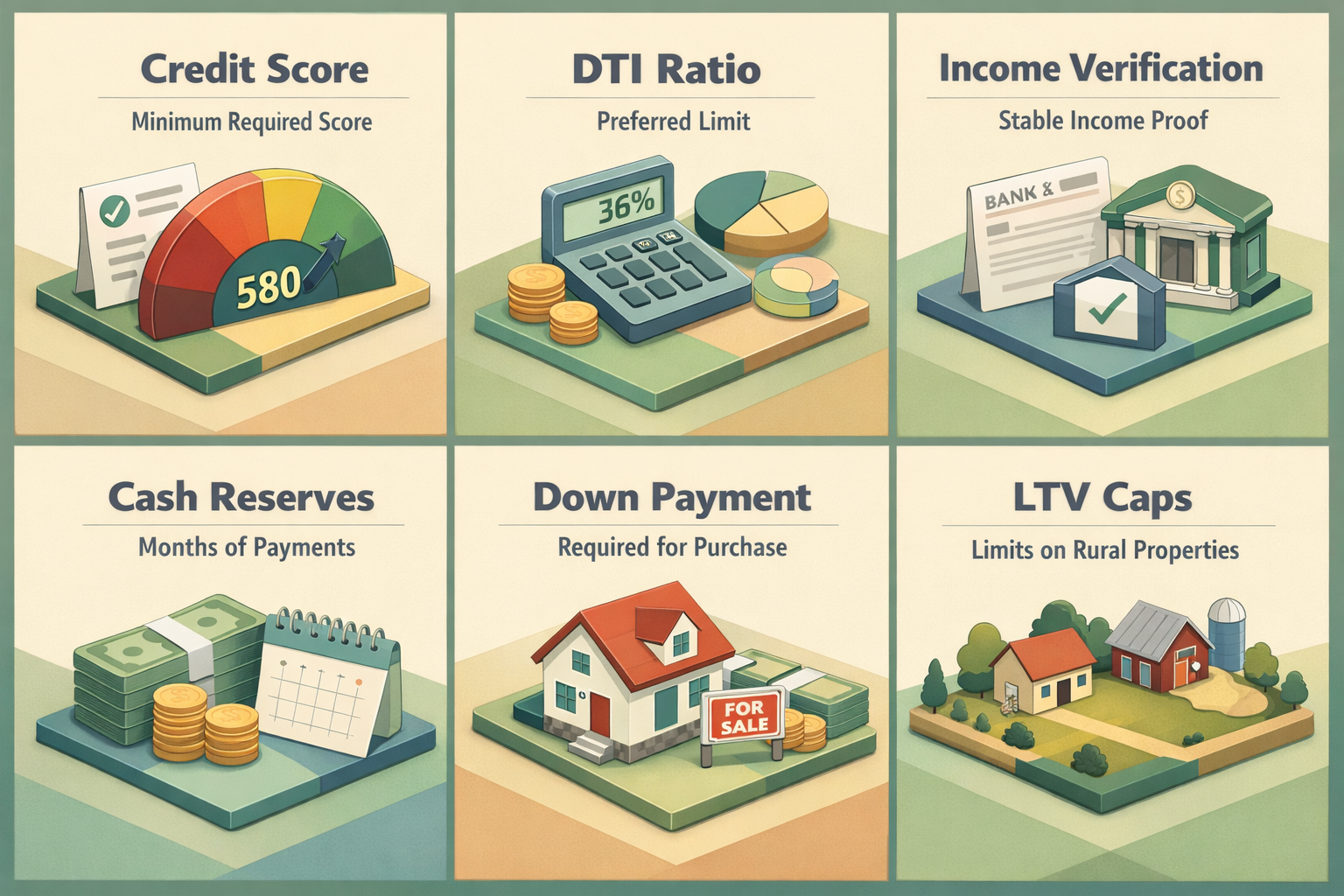
Qualifying for a conventional loan on any property starts with your personal financial profile. Lenders will evaluate your creditworthiness just as they would for any standard home purchase or refinance.
Key Financial Benchmarks Lenders Typically Look For
While specific requirements can vary by lender, conventional loans backed by Fannie Mae or Freddie Mac generally follow these baseline standards:
- Credit score: Most conventional lenders require a minimum credit score of 620, though a score of 740 or higher may help you qualify for better interest rates and lower private mortgage insurance (PMI) costs.
- Debt-to-income ratio (DTI): Lenders typically prefer a DTI at or below 45%, though some programs may allow slightly higher ratios with compensating factors.
- Employment and income verification: You'll need to show stable, verifiable income through pay stubs, W-2s, or tax returns — typically covering the past two years.
- Cash reserves: Some lenders may require you to have a certain number of months' worth of mortgage payments in reserve, particularly for rural or agricultural properties.
If you're self-employed or earn income from farming operations, expect lenders to ask for additional documentation. Farm income can sometimes be difficult to verify because of its seasonal nature and the numerous deductions that agricultural businesses often claim on tax returns. In these cases, working with a lender who has experience in farming property mortgages can make a meaningful difference.
How Lenders Appraise Inherited Agricultural Property for Conventional Financing
The appraisal is arguably the most critical — and most challenging — step in securing a conventional loan on inherited farm land. Because agricultural properties don't always have a deep pool of comparable sales in the area, appraisers may need to cast a wider net or use alternative valuation methods.
Residential vs. Agricultural Appraisal Standards
Conventional lenders require a standard residential appraisal when the primary use of the property is as a home. However, when farm land is involved, the appraiser must also account for the agricultural components without allowing them to overshadow the residential value.
- Highest and best use: The appraiser will determine whether the property's highest and best use is residential or agricultural. If it's classified primarily as agricultural, some conventional lenders may not be able to finance it under standard guidelines.
- Comparable sales: Appraisers look for similar properties — ideally with similar acreage, structures, and land use — that have sold recently in the area. In rural markets, finding true comparables can be challenging, which may affect the appraised value.
- Non-residential outbuildings: Barns, silos, equipment sheds, and other farm structures may add value in an agricultural appraisal but could be treated differently under a residential conventional loan framework.
To improve your chances of a strong appraisal, consider working with an appraiser who is certified for both residential and agricultural property valuations. Providing the appraiser with a list of relevant recent land sales in your county can also be helpful, though the final determination remains theirs to make.
Down Payment and Loan-to-Value Considerations for Farm Land Borrowers
One advantage of inheriting farm land is that the property itself may represent significant equity — even if you didn't pay for it. However, conventional lenders still need to assess the loan-to-value (LTV) ratio carefully when the collateral is an agricultural property.
Using Inherited Equity as a Financial Asset
If you're refinancing the inherited property or using it as collateral for a new loan, the appraised value of the land and any residential structures will determine how much you can borrow. Here are some important points to keep in mind:
- Down payment on a purchase: If you're using the inherited land as a down payment or trade to purchase a separate property, lenders may require a formal appraisal and documentation of the land transfer.
- Cash-out refinance: If the farm property already has a home on it and you want to tap into the equity, a cash-out refinance under conventional guidelines may allow you to borrow up to 80% of the appraised value, depending on your credit profile and the lender's policies.
- LTV caps on rural properties: Some conventional lenders apply more conservative LTV limits to rural or agricultural properties, which means you may need more equity or a larger down payment compared to a standard suburban home purchase.
It's worth shopping multiple lenders when dealing with conventional loan inherited land scenarios, as underwriting flexibility can vary significantly from one institution to another. Community banks and credit unions with agricultural lending experience may offer more favorable terms than large national lenders unfamiliar with farm properties.
Working With the Right Lender and Loan Programs for Agricultural Properties
Not every lender is equipped to handle the nuances of a farming property mortgage. Choosing the right financial institution can be just as important as meeting the credit and income requirements.
Lender Types Best Suited for Inherited Farm Land Financing
- Community banks: Local and regional banks often have deep experience with agricultural lending and may be more willing to work with borrowers on complex inherited land scenarios.
- Farm Credit System lenders: While not conventional lenders in the traditional sense, Farm Credit institutions specialize in agricultural real estate and may offer competitive loan products for farm properties that don't fit the conventional mold.
- Mortgage brokers with rural experience: A knowledgeable broker can shop your loan across multiple lenders simultaneously, helping you find one that's comfortable with agricultural collateral under conventional guidelines.
Alternative Loan Programs to Consider
If a conventional loan proves difficult to secure due to the agricultural nature of the property, there are alternative paths worth exploring:
- USDA Rural Development loans: For properties in eligible rural areas, USDA loans may offer more flexible guidelines for agricultural real estate, including favorable terms for lower-income borrowers.
- FSA loan programs: The USDA's Farm Service Agency offers loan programs specifically designed for farmers and ranchers, including options for purchasing or refinancing farm land.
- Portfolio loans: Some banks hold loans in-house rather than selling them to the secondary market, giving them more flexibility to approve non-traditional property types.
Understanding all your options before settling on a product can help you find the most affordable path forward for your specific situation.
Practical Steps to Strengthen Your Loan Application on Inherited Farm Property
Learning how to qualify for a conventional loan with inherited farm land is one thing — actually executing that process successfully is another. Here are some actionable steps you can take to put your best foot forward.
- Organize your documentation early: Gather the deed, property tax records, any existing surveys, estate settlement documents, and two years of tax returns before you approach a lender.
- Get a preliminary title review: Ask a real estate attorney or title company to flag any potential issues before you apply. Surprises during underwriting can kill a deal.
- Improve your credit profile: If your credit score is below 680, consider spending a few months paying down revolving balances and disputing any errors on your credit report before applying.
- Separate farm income from personal income clearly: If you operate the farm, make sure your tax returns clearly distinguish farm business income from personal wages. Lenders need to see consistent, documentable income.
- Hire a qualified appraiser early: A pre-appraisal can give you a realistic sense of what the property is worth and whether the value supports the loan amount you need.
- Consult a mortgage professional with rural experience: A loan officer or broker who regularly works with agricultural properties will know which lenders are most receptive and how to present your file in the strongest possible light.
Being proactive and organized can shorten your timeline considerably and reduce the likelihood of last-minute surprises during underwriting.
●Conclusion
Inheriting farm land is a meaningful financial opportunity, but converting that asset into conventional loan financing requires careful planning, the right team, and a clear understanding of how mortgage lenders evaluate agricultural properties. From establishing clean title to navigating appraisal challenges and selecting the right lender, each step matters. If you're working through a conventional loan inherited land scenario, don't go it alone — partnering with experienced mortgage professionals, real estate attorneys, and agricultural appraisers can make all the difference. At LoanWise, we're here to help you explore your financing options and find the path that makes the most sense for your property and your goals. Reach out today to get started.