
Owning a boutique clothing store can be incredibly rewarding, but it also comes with a financial challenge that many retail entrepreneurs know all too well — seasonality. Your sales may spike during the holidays or back-to-school season, then slow dramatically during off-peak months. That gap between high revenue periods and quiet spells can strain your cash flow and make it difficult to stock inventory, pay staff, or cover everyday operating costs. That's exactly why understanding how to get a working capital loan for a seasonal boutique clothing store is such a valuable skill for any boutique owner. The right financing at the right time can help you bridge those revenue valleys, invest in your next collection, and keep your business running smoothly year-round.
Why Seasonal Boutiques Often Need Short-Term Cash Flow Support
Unlike businesses with steady, predictable revenue, boutique clothing stores typically experience dramatic swings in income throughout the year. You might generate the bulk of your annual revenue during three or four peak months, while the remaining months barely cover your fixed costs. This rhythm creates a very real need for working capital loan seasonal boutique retail financing solutions designed specifically for businesses like yours.
During slow periods, you still need to pay rent, utilities, payroll, and vendor invoices. At the same time, you may need to place large inventory orders months before a busy season even begins — meaning you're spending money before you've earned it. Without a financial cushion, this cycle can put even profitable boutiques in a tight spot.
Working capital loans are designed to address exactly this kind of short-term cash need. Rather than financing a major asset or long-term investment, they help you manage day-to-day operational expenses and keep your business moving forward during the slower stretches of the year.
Common Types of Working Capital Loans Available to Boutique Retailers
There's no single "one size fits all" financing solution for seasonal boutiques. Several loan products may suit your needs depending on your revenue patterns, credit profile, and how quickly you need funds. Here's a look at the most common options:
- Business Line of Credit: A revolving credit facility that lets you draw funds as needed and repay over time. This is often considered one of the most flexible options for seasonal businesses because you only borrow what you need and pay interest only on the amount used.
- Short-Term Business Loans: Lump-sum loans with repayment terms typically ranging from three to eighteen months. These can work well if you need a specific amount to cover inventory purchases or operational costs ahead of a busy season.
- SBA 7(a) Loans: Backed by the U.S. Small Business Administration, these loans may offer longer terms and more competitive rates for qualifying small business owners. They typically require more documentation and a longer approval timeline but could be worth pursuing if you plan ahead.
- Merchant Cash Advances (MCAs): An advance against your future sales, repaid through a percentage of daily card transactions. While MCAs offer fast access to capital, they often carry higher costs and may not be the most economical choice for every boutique owner.
- Invoice Financing: If your boutique sells wholesale or has outstanding receivables, invoice financing could allow you to unlock cash tied up in unpaid invoices before customers actually pay.
Each of these products carries different eligibility requirements, costs, and repayment structures. It's worth comparing loan types carefully before committing to a specific loan type.
What Lenders Look for When Evaluating Your Boutique Loan Application
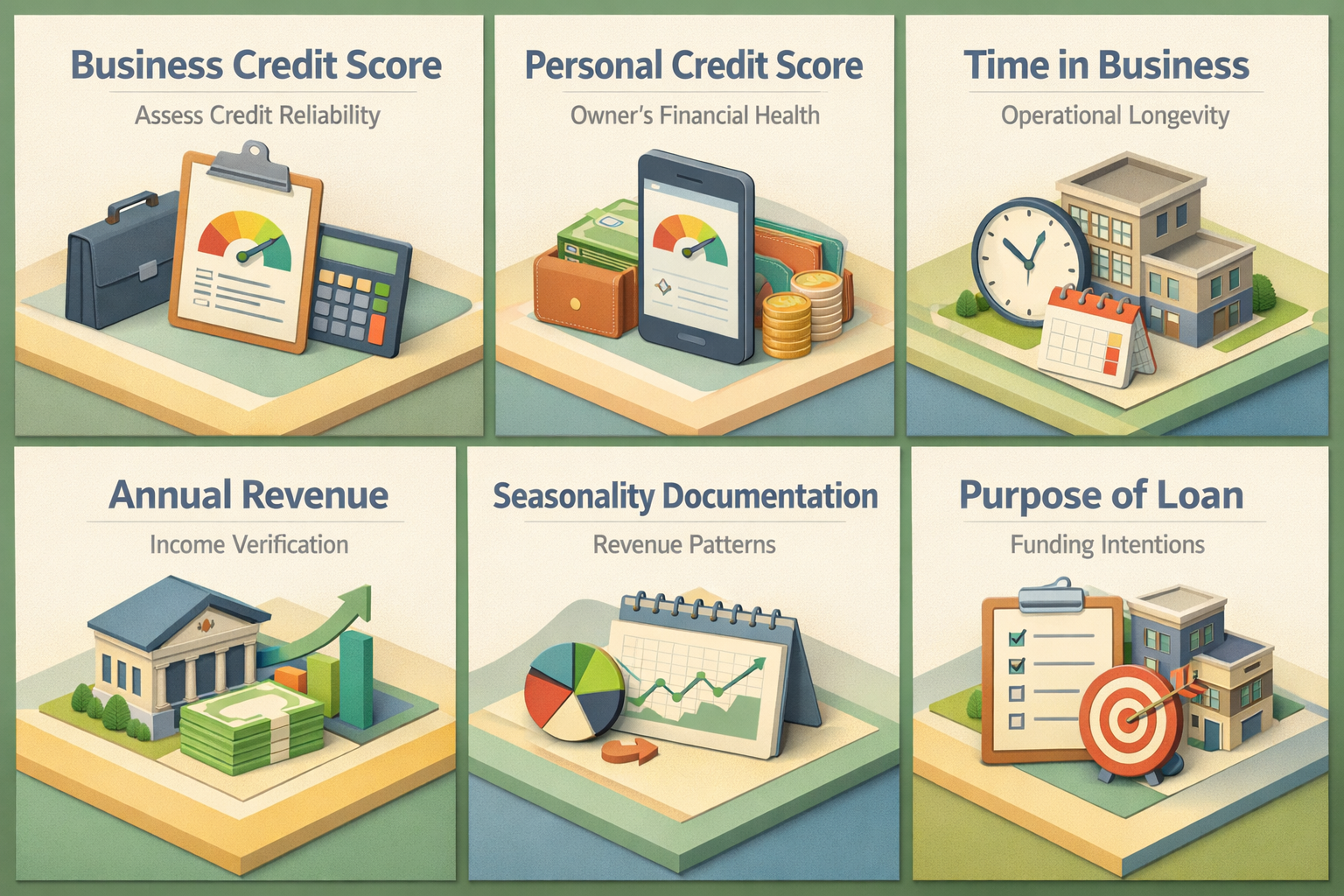
Understanding what lenders examine during the approval process can help you prepare a stronger application. While requirements vary by lender and loan type, most commercial lenders tend to evaluate the following factors:
- Business Credit Score: Lenders often review your business credit profile to assess how reliably you've managed past obligations. A stronger credit history may improve your chances of approval and help you qualify for better terms.
- Personal Credit Score: For small businesses, lenders frequently consider the owner's personal credit as well, particularly if the business is newer or lacks an extensive credit history.
- Time in Business: Many lenders prefer to work with businesses that have been operating for at least one to two years. Boutiques with a longer track record may find it easier to qualify.
- Annual Revenue and Cash Flow: Lenders want to see that your boutique generates enough revenue to support loan repayments. Bank statements and tax returns are commonly requested to verify income.
- Seasonality Documentation: Because your cash flow fluctuates significantly, be prepared to explain your seasonal revenue patterns. Providing lenders with month-by-month sales data can help them better understand your business model.
- Purpose of the Loan: Clearly stating how you plan to use the funds — whether for inventory, payroll, or marketing — can strengthen your application and demonstrate sound financial planning.
Being organized and transparent with your financial documentation often makes a meaningful difference in how lenders view your application.
Step-by-Step: How to Get a Working Capital Loan for a Seasonal Boutique Clothing Store
If you're ready to move forward, following a clear process can save you time and increase your chances of approval. Here's a practical step-by-step approach to how to get a working capital loan for a seasonal boutique clothing store:
- Step 1 — Assess Your Cash Flow Needs: Before approaching any lender, calculate exactly how much working capital you need and when you need it. Review your past sales data to identify your slow seasons and estimate the shortfall you'll need to cover.
- Step 2 — Review Your Credit Profiles: Pull both your personal and business credit reports. Address any errors or outstanding issues before applying, as these can affect your eligibility and loan terms.
- Step 3 — Gather Your Financial Documents: Most lenders will request recent bank statements (typically three to six months), tax returns for the past one to two years, profit and loss statements, and potentially a business plan or cash flow projection.
- Step 4 — Research Lenders: Compare traditional banks, credit unions, online lenders, and SBA-approved lenders. Each may offer different terms, speed of approval, and eligibility requirements. Online lenders often move faster, while banks may offer lower rates for well-qualified borrowers.
- Step 5 — Apply and Explain Your Seasonality: When you submit your application, proactively explain your seasonal revenue cycle. A brief written summary or cash flow projection showing your busy and slow months can help lenders feel confident in your ability to repay.
- Step 6 — Review Loan Terms Carefully: Before signing, read the loan agreement thoroughly. Pay close attention to the interest rate, repayment schedule, prepayment penalties, and any fees. Make sure the repayment timeline aligns with your expected revenue cycle.
Tips to Strengthen Your Loan Application Before You Apply
A little preparation can go a long way when it comes to securing financing for your boutique. Consider these practical strategies before submitting your application:
- Build Business Credit Early: Open a dedicated business bank account, establish trade lines with vendors, and use a business credit card responsibly. These steps can help you build a credit profile that's separate from your personal finances over time.
- Maintain Clean, Organized Records: Lenders respond well to applicants who can quickly provide accurate financial statements. Using accounting software to track income and expenses throughout the year may make this process significantly easier.
- Apply Before the Slow Season Begins: Don't wait until you're in a cash crunch. Applying for a working capital loan while your business is still generating strong revenue may improve your approval odds and give you more negotiating power.
- Reduce Existing Debt Where Possible: A lower debt-to-income ratio may help you qualify for larger loan amounts at more favorable terms. If you carry high-interest debt, consider whether it's practical to pay some of it down before applying.
- Consider a Co-Signer or Collateral: If your credit profile is thin or your boutique is relatively new, offering collateral or a co-signer could potentially help you qualify for financing that might otherwise be out of reach.
Timing your application thoughtfully and presenting your financials clearly and confidently can make a real difference in how lenders respond to your request.
Understanding Loan Costs and How to Compare Financing Options Wisely
Not all working capital loans are priced the same way, and the true cost of borrowing can vary significantly from one product to the next. When evaluating your options, look beyond the stated interest rate and consider the full picture:
- Annual Percentage Rate (APR): The APR reflects the total annual cost of borrowing, including fees, and provides a more accurate comparison than the interest rate alone.
- Origination Fees: Some lenders charge upfront fees to process your loan. These can range from a small flat fee to a percentage of the total loan amount and will affect your net proceeds.
- Factor Rates: Products like merchant cash advances often use a factor rate rather than an interest rate. A factor rate of 1.3, for example, means you'd repay $1.30 for every $1.00 borrowed — which can translate to a very high effective APR.
- Repayment Frequency: Some lenders collect daily or weekly payments, which can strain cash flow during slow seasons. Monthly repayment schedules may be more manageable for seasonal boutique owners.
- Prepayment Penalties: If you expect to repay your loan early using strong seasonal revenue, check whether early repayment comes with a penalty. Some loan products reward early repayment, while others do not.
Taking the time to compare total loan costs — not just monthly payments — helps ensure you're choosing a financing option that genuinely supports your boutique's financial health rather than creating new stress.
●Conclusion
Managing the financial highs and lows of a boutique clothing store doesn't have to feel overwhelming. With the right preparation, clear documentation, and a solid understanding of your financing options, you can confidently navigate the process of securing a working capital loan seasonal boutique retail solution that truly fits your business. Whether you choose a business line of credit, an SBA loan, or a short-term loan, the key is to plan ahead, apply strategically, and partner with a lender who understands the unique rhythm of seasonal retail. At LoanWise, we're here to help small business owners like you explore lending options that make sense for where your business is today — and where you want it to go. Reach out to our team to start the conversation and find the right working capital solution for your boutique.