
Launching a new business is exciting — but securing the capital to get it off the ground can feel overwhelming, especially if you don't have property, equipment, or other assets to pledge as security. Many first-time entrepreneurs are surprised to learn that collateral isn't always a requirement. In fact, understanding how to get a startup business loan with no collateral could open doors you didn't know existed. Whether you're a solo founder, a small team with a strong idea, or a service-based entrepreneur with limited physical assets, there are real financing options worth exploring. This guide breaks down what unsecured startup loans are, where to find them, and how to put your best foot forward when applying.
What Unsecured Startup Financing Actually Means
Before diving into specific loan types, it helps to understand what unsecured really means in a lending context. A secured loan requires the borrower to pledge an asset — such as real estate, equipment, or inventory — that the lender can claim if the loan isn't repaid. An unsecured loan, by contrast, doesn't require that kind of backing. Instead, the lender relies on other factors to assess risk, such as your credit history, business plan, and projected revenue.
For startups, this distinction matters a great deal. Most new businesses haven't accumulated significant assets yet, which is precisely why startup financing without assets has become such an important category in the lending market. Lenders who offer unsecured products typically take on more risk, which often means stricter credit requirements, shorter repayment terms, or higher interest rates. That said, many entrepreneurs find these trade-offs manageable when weighed against the opportunity to get their business up and running.
It's also worth noting that some lenders may ask for a personal guarantee even when no specific collateral is required. A personal guarantee means you, as the business owner, agree to be personally responsible for repaying the debt if the business cannot. This is common with small business loans for entrepreneurs with no collateral, so it's something to factor into your decision-making.
Loan Types That Don't Require Business Assets
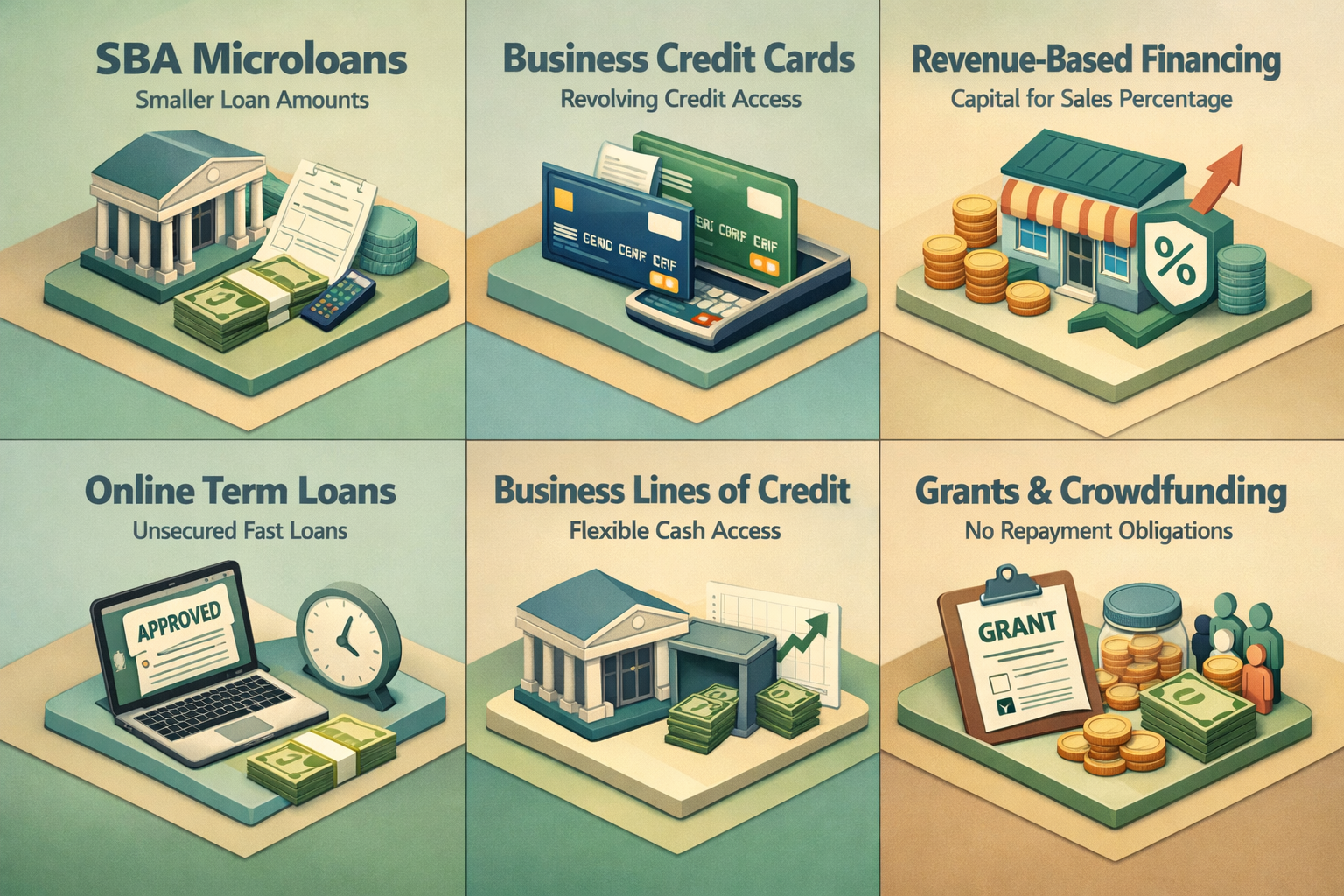
There are several financing products that may be available to startups without physical collateral. Each comes with its own structure, eligibility criteria, and cost profile. Here's a look at the most common options:
- SBA Microloans: The U.S. Small Business Administration's microloan program offers smaller loan amounts — typically up to $50,000 — through nonprofit intermediary lenders. These loans are often accessible to newer businesses and may have more flexible collateral requirements compared to traditional bank loans. They're designed specifically to support startups and underserved entrepreneurs.
- Business Credit Cards: While not a traditional loan, business credit cards offer revolving credit that can cover early operating expenses. They typically don't require collateral and can help build your business credit profile over time.
- Revenue-Based Financing: Also known as merchant cash advances, this option provides capital in exchange for a percentage of future sales. Lenders focus primarily on your projected or existing revenue rather than assets. This may suit businesses with consistent sales activity.
- Online Term Loans: Many online lenders offer unsecured term loans to startups with qualifying credit scores and business plans. These tend to move faster than traditional bank loans and may be more flexible about collateral.
- Business Lines of Credit: An unsecured line of credit gives you access to a set amount of funds you can draw from as needed. Repayment is typically based on what you've actually used, making it a flexible option for managing cash flow in early-stage businesses.
- Grants and Crowdfunding: While not loans, small business grants and crowdfunding platforms can provide startup capital without any repayment obligation — and certainly without collateral requirements. Competition can be stiff, but these options are worth exploring alongside traditional financing.
Each of these products carries different approval criteria. Understanding which one fits your situation is an important first step when applying for startup capital unsecured.
What Lenders Look at When There's No Collateral Involved
Without an asset to fall back on, lenders shift their attention to other signals of creditworthiness and repayment capacity. Knowing what they're evaluating can help you prepare a stronger application.
Personal Credit Score
For startups that haven't yet established a business credit history, your personal credit score often carries significant weight. A higher score suggests responsible debt management, which lenders may interpret as a positive indicator of how you'll handle business debt. Many unsecured lenders look for scores in the mid-to-upper 600s or higher, though this can vary by lender and product type.
Business Plan and Financial Projections
A well-constructed business plan can go a long way when you're seeking small business loans for entrepreneurs with no collateral. Lenders want to see that you've thought through your revenue model, target market, expenses, and growth trajectory. Clear, realistic financial projections demonstrate that you understand your business and have a credible path to repayment.
Industry and Business Type
Some industries are considered lower risk than others. Service-based businesses, for example, often have lower overhead and may generate revenue quickly — factors that can work in your favor. Lenders may also consider whether your industry has stable demand and a track record of sustainable businesses.
Time in Business and Revenue
Even limited revenue history can strengthen your application. If you've been operating for even a few months and can demonstrate consistent income, that data can help offset the absence of collateral. Some lenders specifically focus on cash flow as a primary underwriting factor for unsecured products.
How to Get a Startup Business Loan With No Collateral: A Step-by-Step Approach
If you're ready to pursue unsecured startup business loans for new businesses, a structured approach can improve your chances significantly. Here's a practical framework to work through:
Step 1: Know Your Credit Position
Start by pulling your personal credit report and reviewing it carefully. Dispute any errors, pay down high balances if possible, and make sure there are no surprises. Your score is often the first thing a lender checks when there's no collateral on the table.
Step 2: Build a Business Credit Profile Early
Even before applying for a loan, registering your business, obtaining an EIN, and opening a dedicated business bank account can help establish your business's identity in the eyes of lenders. Some entrepreneurs also apply for a small business credit card early on to begin building a business credit history.
Step 3: Prepare Your Documentation
Gather everything a lender might ask for: your business plan, financial projections, personal tax returns, bank statements, and any existing business financial records. Being organized signals professionalism and makes the review process smoother.
Step 4: Research the Right Lenders
Not all lenders offer unsecured products, and not all unsecured lenders serve startups. Focus your research on online lenders, Community Development Financial Institutions (CDFIs), SBA microloan intermediaries, and credit unions, which may have programs tailored to newer businesses without substantial assets.
Step 5: Compare Terms Carefully
When you receive offers, don't just look at the loan amount. Compare annual percentage rates (APRs), repayment schedules, fees, and any prepayment penalties. Unsecured loans often carry higher costs than secured ones, so understanding the full picture helps you make a sound financial decision.
Step 6: Understand Personal Guarantee Implications
If a lender asks for a personal guarantee, take time to understand what that means. You may be putting your personal financial standing at risk if the business struggles. Speaking with a financial advisor or attorney before signing can be a smart move.
Strengthening Your Application When You're Starting From Scratch
One of the biggest challenges for startup founders is that lenders want evidence of stability — but you're just getting started. There are, however, concrete steps you can take to make your application more compelling even without a long track record.
Partner with a co-signer or co-borrower. If someone with a strong credit profile is willing to co-sign your loan, it can significantly reduce the lender's perceived risk. This is particularly useful for entrepreneurs who are earlier in their credit-building journey.
Start smaller than you think you need to. Applying for a modest loan amount that you can clearly demonstrate the ability to repay may be more strategic than asking for the maximum. Successfully repaying a smaller loan also helps build your credit and makes future borrowing easier.
Demonstrate traction wherever possible. Even pre-sales, signed contracts, letters of intent from customers, or a growing social media following can signal market demand. These details may not replace traditional financial data, but they can add context and credibility to your story.
Consider working with a CDFI or nonprofit lender. These mission-driven organizations often focus on supporting underserved entrepreneurs and may have more flexible underwriting standards than traditional banks. They're a valuable resource for founders who are applying for startup capital unsecured and feel overlooked by conventional lenders.
Common Mistakes to Avoid When Seeking Unsecured Startup Loans
Even well-prepared entrepreneurs can run into trouble if they overlook certain pitfalls. Here are some of the most common missteps to watch out for:
- Applying to too many lenders at once: Multiple hard credit inquiries in a short period can temporarily lower your credit score. Research your top options first, then apply selectively.
- Ignoring the total cost of borrowing: A loan with a low monthly payment might carry a high APR that makes it far more expensive over time. Always calculate the full repayment amount before committing.
- Overstating projections: Lenders review a lot of business plans. Unrealistic revenue forecasts can actually hurt your credibility. Grounded, well-supported numbers tend to inspire more confidence.
- Neglecting the fine print: Prepayment penalties, origination fees, and automatic renewal clauses can catch borrowers off guard. Read every line of your loan agreement before signing.
- Skipping professional advice: For first-time borrowers especially, a brief consultation with a financial advisor or small business development center (SBDC) counselor can help you avoid costly mistakes and identify options you may have missed.
●Conclusion
Figuring out how to get a startup business loan with no collateral isn't always a straightforward path, but it's absolutely a navigable one. The key is to approach the process with clarity — understanding your credit position, knowing which loan types suit your situation, and presenting your business in the strongest possible light. Lenders who specialize in unsecured startup loans for new businesses do exist, and many are genuinely motivated to support entrepreneurs who have the drive and a solid plan. At LoanWise, we're here to help you cut through the noise and connect with financing options that fit where you are today — and where you're headed. Ready to explore your options? Start by speaking with one of our lending specialists to find the right path forward for your business.