
For many homeowners, a Home Equity Line of Credit — commonly called a HELOC — can be a powerful financial tool. It allows you to borrow against the equity you've built in your home, giving you flexible access to funds for home improvements, debt consolidation, education costs, or unexpected expenses. But what happens when part of your income comes from a dependent care grant? If you're wondering how to get a HELOC on a primary residence with a dependent care grant income, you're not alone. Many homeowners receive non-traditional income sources like grants, stipends, or public assistance, and navigating lender requirements can feel overwhelming. The good news is that with the right preparation and documentation, it may be entirely possible to qualify. This guide breaks down what lenders look for, how grant income is treated, and what steps you can take to strengthen your application.
Understanding What a HELOC Is and How It Works for Primary Residences
A HELOC is a revolving line of credit secured by your home's equity — the difference between your home's current market value and the outstanding balance on your mortgage. Because your primary residence serves as collateral, lenders typically offer lower interest rates compared to unsecured credit products like personal loans or credit cards.
HELOCs generally come in two phases. The first is the draw period, which commonly lasts around five to ten years. During this time, you can borrow funds up to your credit limit and often make interest-only payments. The second phase is the repayment period, during which you can no longer draw funds and must repay the principal plus interest — usually over ten to twenty years.
For homeowners using a primary residence as the basis for a HELOC, lenders typically require that you hold meaningful equity in the property. Many lenders look for a combined loan-to-value ratio (CLTV) of 80% to 85% or lower, meaning you'd generally need at least 15% to 20% equity in your home before you can access a line of credit. This threshold can vary by lender and loan program.
Lenders also evaluate your credit score, debt-to-income ratio (DTI), and — critically — your verifiable income. This is where homeowners with dependent care grant income often encounter questions about eligibility.
What Is Dependent Care Grant Income and Why It Matters to Lenders
Dependent care grants are financial awards typically provided by government agencies, nonprofits, employers, or social service organizations to help individuals cover the costs of caring for a dependent — such as a child, elderly parent, or person with a disability. These grants are generally designed to offset childcare, elder care, or disability-related expenses.
From a lender's perspective, the primary concern with any income source is whether it is stable, consistent, and likely to continue. Traditional income like wages or salaries is straightforward to verify through pay stubs and tax returns. Non-traditional income sources — including grants — require more scrutiny because they may be time-limited, subject to renewal, or tied to specific conditions.
That said, many lenders do consider non-wage income when evaluating a HELOC application, provided it can be properly documented. Dependent care grant income may be treated differently depending on whether it is:
- Recurring and ongoing: Some grants are renewed annually or are part of a long-term benefit program, which may be viewed more favorably by lenders.
- Taxable or non-taxable: Taxable grant income that appears on your tax return may be easier to document and verify. Non-taxable income may require additional letters or award documentation.
- Deposited regularly: Consistent bank deposits from grant disbursements can help demonstrate income regularity to underwriters.
It's worth noting that lenders are not legally required to accept all income types. The treatment of dependent care grant income can vary significantly from one lender to another, which is why shopping around and working with an experienced mortgage professional may be especially important in these situations.
Primary Residence HELOC Requirements You Should Know Before Applying
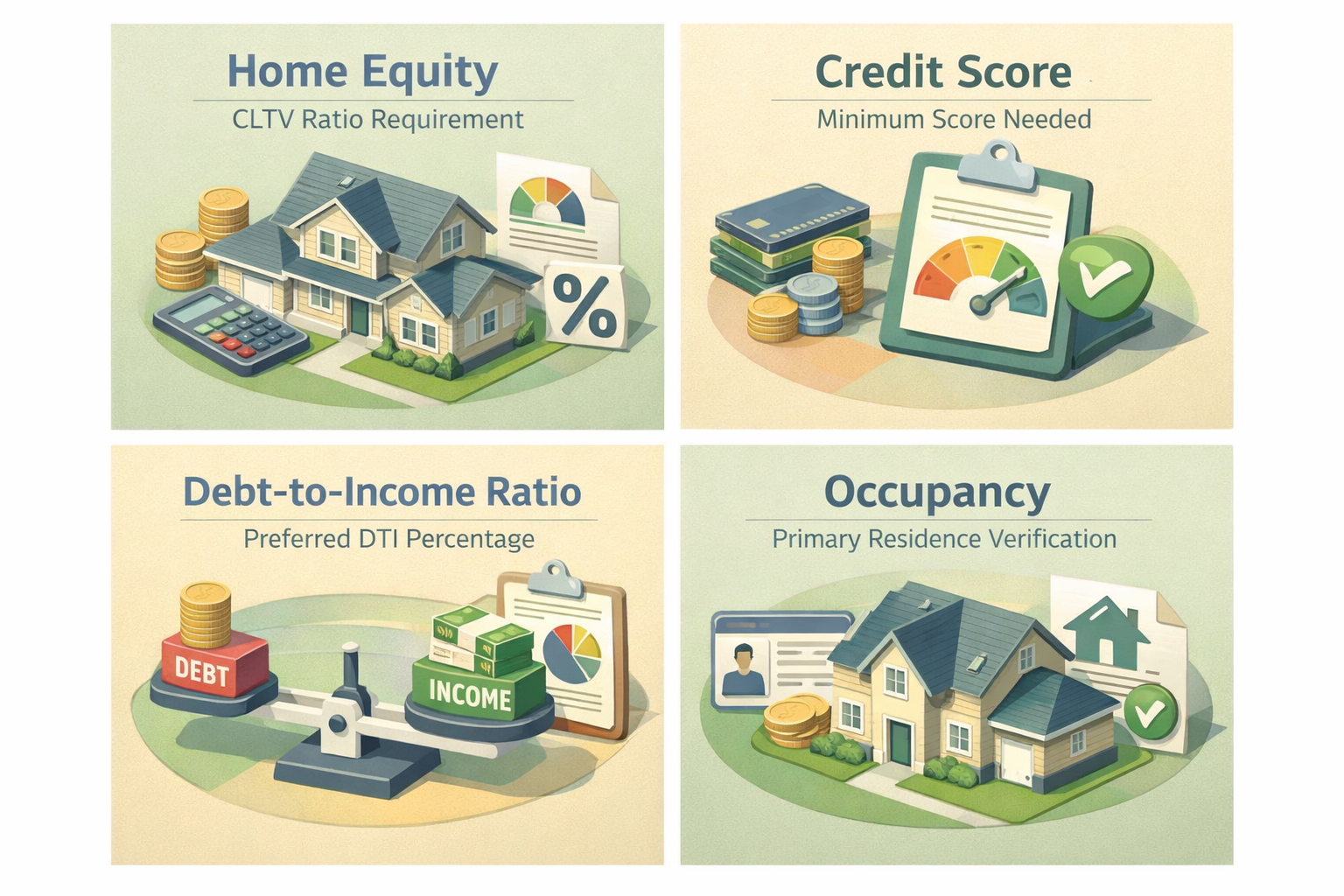
Before diving into the documentation side of things, it helps to understand the core primary residence HELOC requirements that most lenders evaluate. Meeting these benchmarks gives your application its strongest foundation, especially when your income profile includes non-traditional sources.
Home Equity
As mentioned, most lenders require a CLTV ratio of 80% to 85%. If your home is valued at $400,000 and you owe $280,000 on your mortgage, your current LTV is 70%, which could make you eligible to access a HELOC of up to $40,000 to $60,000, depending on the lender's maximum CLTV threshold. The more home equity you have, the better positioned you typically are.
Credit Score
Most lenders look for a minimum credit score in the range of 620 to 680 for HELOC approval, though some may require higher scores — particularly for borrowers with non-traditional income. A stronger credit score can help offset concerns about income stability and may result in more favorable interest rates.
Debt-to-Income Ratio
Your DTI ratio measures how much of your gross monthly income goes toward debt obligations. Lenders typically prefer a DTI of 43% or lower for HELOC approvals. If your dependent care grant income can be counted as qualifying income, it will factor into this calculation and could improve your DTI ratio.
Occupancy and Property Type
Since you're applying for a HELOC on your primary residence, lenders will confirm you live in the home. Primary residences typically qualify for better terms than investment properties or second homes, which is an advantage for homeowners in this situation.
How to Get a HELOC on a Primary Residence With a Dependent Care Grant Income: Documentation Tips
The key to qualifying for a HELOC with grant income often comes down to thorough, organized documentation. Lenders want evidence that your income is real, verifiable, and expected to continue. Here's what you'll likely need to prepare:
Grant Award Letters
An official award or approval letter from the granting organization is typically the starting point. This document should ideally show the amount of the grant, the disbursement schedule, and — most importantly — the duration or renewal terms. If the grant is renewable annually, having documentation of prior renewals may strengthen your case.
Bank Statements
Providing two to three months of bank statements that show consistent deposits from the grant can help demonstrate regular cash flow. Underwriters often look for a paper trail that connects grant disbursements to your bank account.
Tax Returns
If your grant income is taxable and reported on your federal tax returns, two years of tax returns can be very helpful. This gives lenders a longer history of the income and may make it easier for underwriters to treat it as qualifying income.
Letter from the Granting Organization
In some cases, lenders may request a letter directly from the organization providing the grant. This letter might confirm the current status of the grant, the expected renewal timeline, and the amount being paid. Having this ready in advance can help speed up the underwriting process.
Additional Income Documentation
If you have other income sources — part-time employment, self-employment, Social Security, disability benefits, or rental income — documenting these alongside your grant income can significantly strengthen your overall application. Lenders often feel more comfortable when grant income is one of multiple income streams rather than the sole source.
Working With the Right Lender When You Have HELOC With Grant Income Situations
Not every lender approaches non-traditional income the same way. Some conventional lenders may have strict guidelines that make it difficult to count dependent care grant income. Others — including community banks, credit unions, and portfolio lenders — may have more flexibility in how they evaluate your financial situation.
Here are a few strategies that may help you find the right lending partner:
- Work with a mortgage broker: A licensed mortgage broker has access to multiple lenders and can help you identify which ones are most likely to consider your grant income. This can save significant time compared to applying to multiple lenders individually.
- Ask lenders directly: Before submitting a full application, ask potential lenders how they treat dependent care grant income. Their answers will quickly reveal whether they're a good fit for your situation.
- Consider credit unions: Credit unions often have more flexible underwriting criteria and a community-focused approach. They may be more willing to work with borrowers who have non-traditional income sources.
- Look into portfolio lenders: Portfolio lenders keep loans on their own books rather than selling them on the secondary market. This gives them more freedom to set their own underwriting guidelines, which could work in your favor.
It's also worth noting that the dependent care grant mortgage landscape — meaning how lenders handle grant income across mortgage and home equity products — continues to evolve. Staying informed and working with a knowledgeable lending professional can make a meaningful difference in your outcome.
Improving Your Approval Odds Before You Apply
If you're not quite ready to apply or want to boost your chances of success, there are several proactive steps you can take in the months leading up to your HELOC application.
Build or Protect Your Credit Score
Pay all bills on time, reduce credit card balances, and avoid opening new credit accounts in the months before applying. Even a modest improvement in your credit score could expand your lender options and improve your rate.
Reduce Existing Debt
Paying down revolving debt or other loans can lower your DTI ratio. A lower DTI makes it easier for lenders to count your grant income as sufficient for repayment — especially if your overall debt load is manageable.
Increase Your Home Equity If Possible
Making extra principal payments on your mortgage — even small ones — can increase your equity position over time. Additionally, home improvements that increase your property's market value may also boost your available equity, though results vary depending on the project and local market conditions.
Maintain Consistent Grant Disbursements
If your grant payments have been irregular, try to ensure they're consistent in the months before you apply. Regular, predictable deposits give lenders more confidence in the stability of your income.
Consult a HUD-Approved Housing Counselor
HUD-approved housing counselors offer free or low-cost guidance on home equity products and can help you understand your options before you apply. They may also be able to connect you with lenders experienced in working with non-traditional income borrowers.
●Conclusion
Learning how to get a HELOC on a primary residence with a dependent care grant income may feel complex at first, but it's a goal that many homeowners can realistically pursue with the right preparation. The process centers on demonstrating that your income — including grant funds — is stable, documented, and sufficient to support repayment. While lender requirements vary and some may be more accommodating than others, building strong documentation, maintaining solid credit, and working with experienced lending professionals can make a meaningful difference. If you're ready to explore your HELOC options or want personalized guidance based on your unique income situation, the team at LoanWise is here to help. Reach out today to connect with a lending expert who understands non-traditional income and can help you tap into the equity you've worked hard to build.