
For many small business owners, inventory is the lifeblood of their operation. Whether you're a retailer preparing for a seasonal rush, a wholesaler fulfilling bulk orders, or an e-commerce entrepreneur scaling up, having the right products on hand at the right time can make or break your revenue. But stocking up costs money — and that's where inventory financing comes in. Understanding how to get a business loan for inventory financing could be the key to keeping your business moving forward without draining your cash reserves. In this guide, we'll walk you through everything you need to know — from the types of loans available to how lenders evaluate your application.
What Is Inventory Financing and Why Does It Matter?
Inventory financing is a type of short-term business funding that helps companies purchase the stock or goods they need to operate and grow. Unlike general-purpose business loans, this funding is specifically tied to purchasing products that will later be sold for profit. The inventory itself often serves as collateral, which can make this type of financing more accessible to businesses that may not have extensive hard assets to pledge.
This matters for a wide range of businesses. Retailers stocking up before the holiday season, manufacturers sourcing raw materials, and distributors fulfilling large purchase orders all face the same challenge: they need to spend money before they earn it. Inventory financing bridges that gap.
Small business owners often find that traditional financing doesn't move fast enough for their needs. A slow-moving loan application could mean missing a bulk-pricing opportunity or being unable to meet a major client's demand. That's why knowing your inventory financing options for small business is so important — the right product can get you funded quickly and keep your operation running smoothly.
Common Types of Business Loans to Buy Inventory
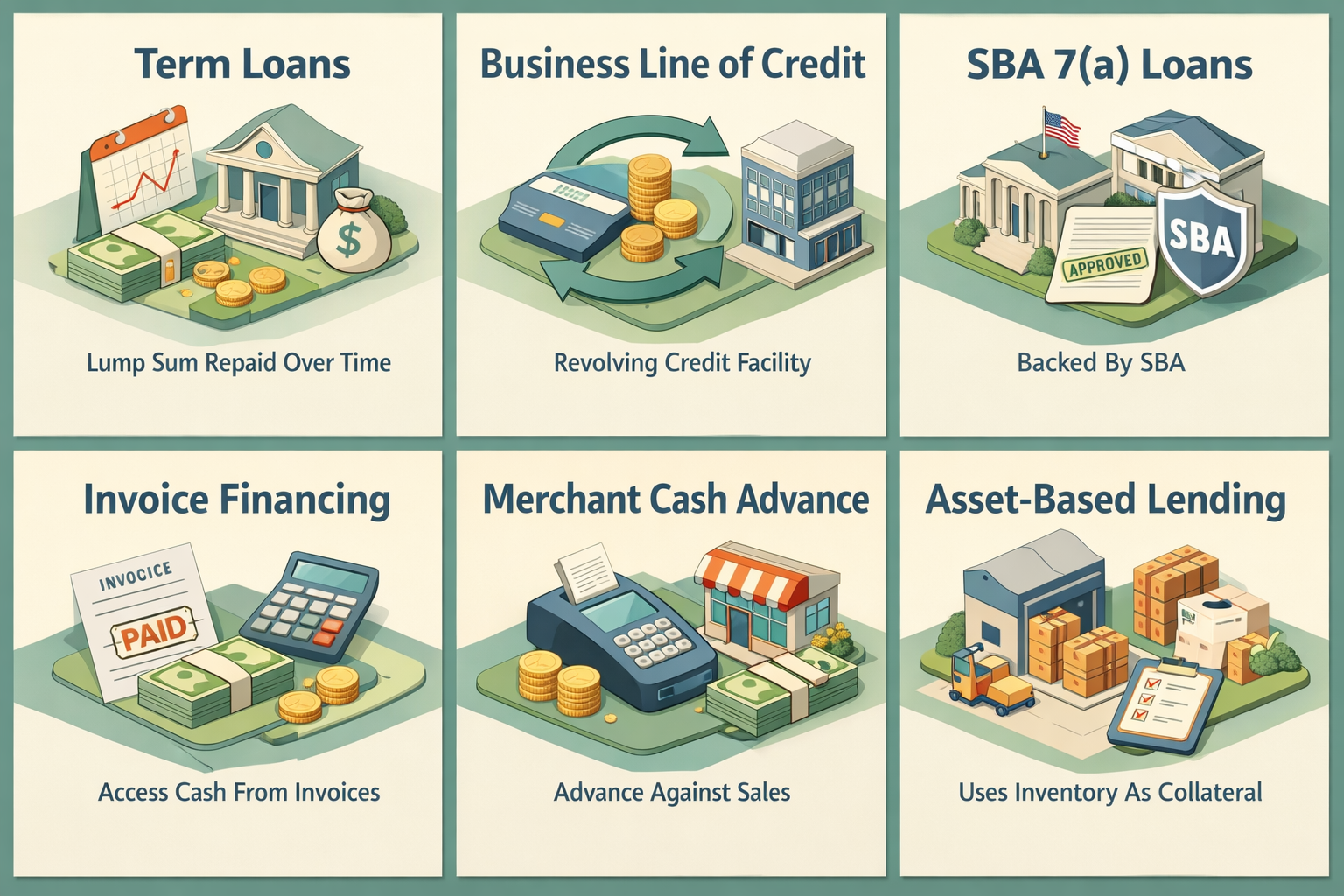
There's no single "best" loan for every business. The right choice depends on your sales volume, credit profile, industry, and how quickly you need funds. Here's a look at the most common business loans to buy inventory:
- Term Loans: A lump sum repaid over a set period, often with fixed monthly payments. Term loans may work well for businesses with a clear, one-time inventory purchase in mind, such as buying a large product lot at a discount.
- Business Line of Credit: A revolving credit facility that lets you draw funds as needed, up to a set limit. This is often a flexible solution for businesses that need to restock inventory on an ongoing basis. You only pay interest on what you borrow.
- SBA 7(a) Loans: Backed by the U.S. Small Business Administration, these loans can offer competitive rates and longer repayment terms. They may be suitable for established businesses with solid financials, though the application process can take longer.
- Invoice Financing: If your cash flow is tied up in unpaid customer invoices, invoice financing (or factoring) lets you access a portion of that money upfront. This could free up funds to purchase inventory without taking on new debt in the traditional sense.
- Merchant Cash Advance (MCA): An advance against future credit card or revenue sales. MCAs can be fast to access, but they typically carry higher costs and may be better suited for short-term, urgent inventory needs.
- Asset-Based Lending: This approach uses business assets — including existing inventory — as collateral for a loan or line of credit. It can be a strong option for businesses with significant on-hand stock.
Each of these options comes with its own terms, rates, and qualification requirements. Speaking with a business lending specialist can help you identify which structure best fits your needs.
How Lenders Evaluate Your Inventory Financing Application
Before you apply, it helps to understand what lenders look for. While every lender has its own criteria, most will review a combination of the following factors when assessing a request for working capital loans for stock:
- Credit Score: Both your personal and business credit scores may be reviewed. A stronger credit profile typically opens the door to better rates and higher loan amounts.
- Time in Business: Many lenders prefer businesses that have been operating for at least one to two years. Startups may have fewer options, though some specialized lenders do work with newer businesses.
- Annual Revenue: Lenders want to see that your business generates enough income to repay the loan. Your revenue history helps them gauge risk.
- Inventory Type and Liquidity: Because inventory often serves as collateral, lenders may assess how easily your products can be sold if you default. Perishable goods or highly specialized items may be viewed less favorably than fast-moving consumer products.
- Cash Flow: Lenders want to confirm that your business has healthy cash flow patterns. Bank statements, profit and loss reports, and tax returns are commonly requested.
- Existing Debt: Your debt-to-income or debt service coverage ratio helps lenders determine whether you can take on additional obligations without straining your finances.
Preparing these documents in advance can streamline your application and improve your chances of approval.
Step-by-Step Guide: How to Get a Business Loan for Inventory Financing
If you're ready to move forward, here's a practical breakdown of how to get a business loan for inventory financing from start to finish:
- Step 1 — Assess Your Inventory Needs: Calculate how much inventory you need, what it will cost, and how long it will take to sell. This gives you a realistic loan amount to target and a rough repayment timeline.
- Step 2 — Review Your Credit Profile: Pull your personal and business credit reports. Address any errors or outstanding issues before applying, as even small improvements can affect your loan terms.
- Step 3 — Gather Financial Documents: Most lenders will ask for bank statements (typically three to six months), tax returns, profit and loss statements, a balance sheet, and sometimes a business plan or inventory purchase orders.
- Step 4 — Research Lenders: Compare options across traditional banks, credit unions, online lenders, and SBA-approved lenders. Each may offer different loan amounts, interest rates, fees, and approval timelines.
- Step 5 — Submit Your Application: Complete the application carefully and accurately. Incomplete or inconsistent information can delay or derail approval.
- Step 6 — Review Loan Terms: If approved, read the agreement thoroughly before signing. Pay close attention to the annual percentage rate (APR), repayment schedule, prepayment penalties, and any fees associated with the loan.
- Step 7 — Use Funds Strategically: Once funded, purchase inventory according to your plan. Track your sales and repayment schedule carefully to avoid cash flow issues down the road.
Funding Retail Inventory Needs: Industry-Specific Considerations
Not all inventory financing works the same way across every industry. Funding retail inventory needs can look quite different depending on whether you're running a boutique clothing shop, a hardware store, a food and beverage business, or an online marketplace. Here are a few scenarios worth considering:
Seasonal Retailers
If your business experiences predictable seasonal spikes — think holiday gifts, back-to-school supplies, or summer outdoor equipment — you may want to plan your financing well ahead of peak demand. A business line of credit could allow you to draw funds when needed and repay them once sales come in.
E-Commerce Sellers
Online sellers often face unique challenges, including fluctuating supplier lead times and platform-driven demand spikes. Short-term working capital loans or MCAs might offer the speed needed to take advantage of fast-moving opportunities, though costs should be weighed carefully.
Wholesale and Distribution Businesses
Wholesalers dealing in large purchase orders might benefit from asset-based lending or purchase order financing, which ties funding directly to confirmed orders. This can reduce lender risk and potentially improve your approval chances.
Food and Beverage Businesses
Perishable inventory presents a unique challenge for lenders. Businesses in this sector may need to demonstrate faster inventory turnover and may find that a revolving line of credit suits their needs better than a long-term term loan.
Tips to Strengthen Your Application and Improve Approval Odds
Getting approved for any business loan requires preparation. Here are several practical strategies that could improve your chances when applying for inventory financing options for small business:
- Build Business Credit Early: Open a dedicated business bank account, apply for a business credit card, and pay vendors on time. These steps help establish a credit history that lenders can evaluate independently from your personal finances.
- Maintain Clean Financial Records: Disorganized or inconsistent records raise red flags. Using accounting software and working with a bookkeeper can help ensure your financials are accurate and presentable.
- Show Inventory Turnover: Demonstrating that your inventory moves quickly — meaning you're selling products efficiently — makes lenders more confident that the collateral holds real value.
- Reduce Existing Debt Where Possible: Paying down outstanding obligations before applying could improve your debt service coverage ratio and make your business appear lower-risk.
- Consider a Co-signer or Additional Collateral: If your credit profile is limited, offering additional security or a creditworthy co-signer might improve your terms or open more lender options.
- Work With a Business Lending Specialist: Navigating multiple loan products can be complex. A knowledgeable advisor can help match you with lenders that align with your profile and goals, potentially saving time and improving outcomes.
●Conclusion
Inventory is what keeps your business competitive, and having access to reliable funding ensures you're never caught short when opportunity knocks. Whether you're exploring a business line of credit, an SBA loan, or another form of short-term working capital, the key is to match the financing structure to your specific business model and cash flow cycle. Taking the time to understand your options, prepare your documentation, and present a strong application can make a meaningful difference in both your approval odds and the terms you receive. At LoanWise, we're here to help small business owners and entrepreneurs navigate the lending landscape with clarity and confidence. Ready to explore your inventory financing options? Connect with a LoanWise business lending specialist today and take the next step toward keeping your shelves stocked and your business growing.