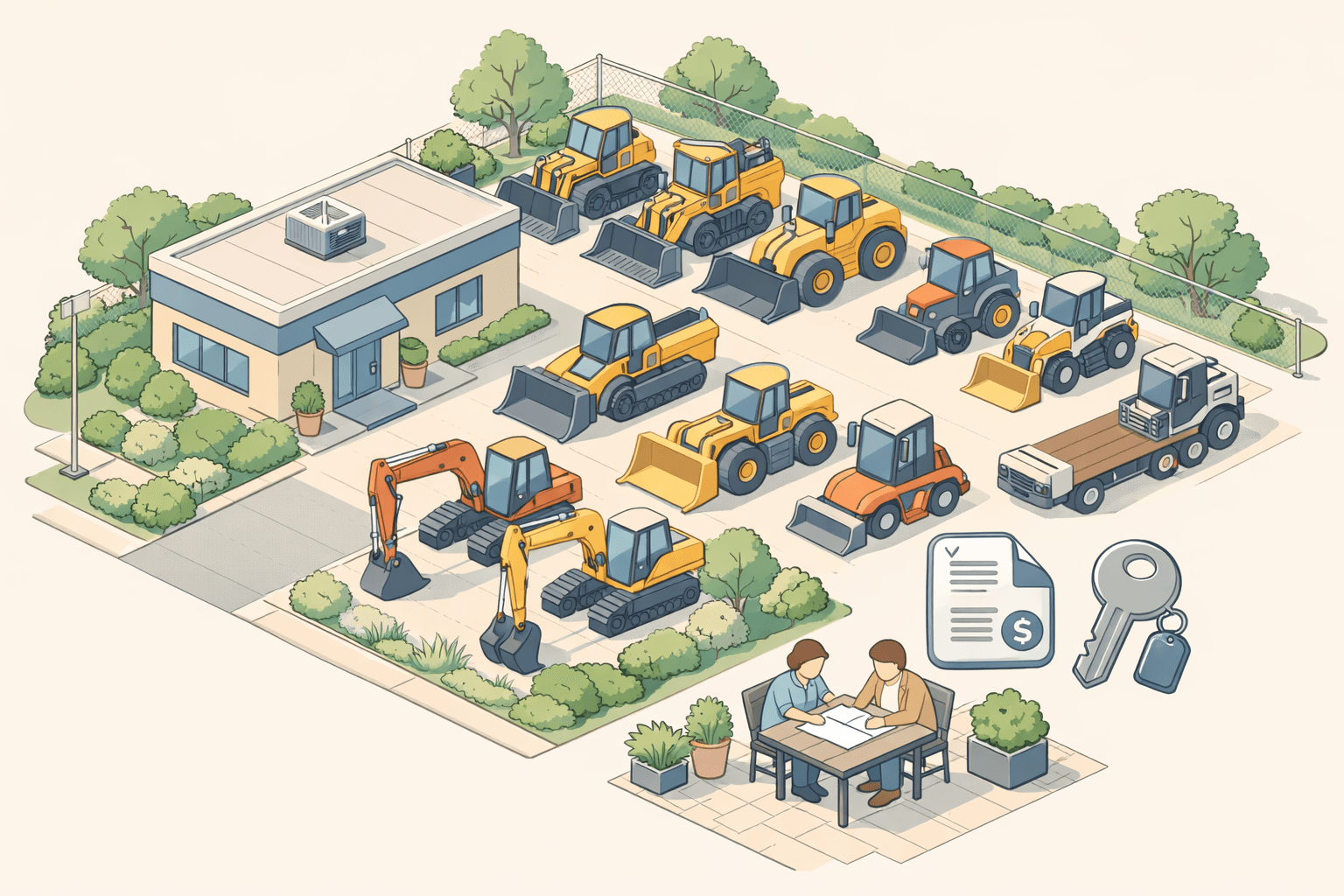
Acquiring a used equipment dealership can be a smart move for entrepreneurs who want to tap into a market with steady demand. From construction machinery to agricultural tools, used equipment businesses serve industries that never really slow down. But like any business acquisition, the biggest challenge is often financing. If you're wondering how to get a business loan for acquiring a used equipment dealership, you're not alone. Many buyers find the process complex, especially when it involves business valuation, inventory assessment, and lender qualification. This guide breaks down the loan types available, what lenders look for, and how to position yourself for approval.
Why Used Equipment Dealerships Attract Investor Interest
Used equipment dealerships occupy a unique space in the commercial market. They provide cost-effective alternatives to businesses that need machinery but can't justify the price of new equipment. Industries like construction, agriculture, manufacturing, and landscaping all rely on used equipment suppliers, which means a well-run dealership can enjoy consistent revenue throughout the year.
For entrepreneurs looking to acquire an existing dealership, there's an added advantage: you're buying into an established operation with an existing customer base, supplier relationships, and often a track record of cash flow. That track record matters enormously when you're applying for a business loan for equipment business purchase, because lenders want to see that the business can generate enough income to cover its debt obligations.
Beyond the cash flow story, used equipment dealerships often carry significant tangible assets — the inventory itself. This can work in your favor when approaching lenders, since asset-backed collateral may strengthen your loan application and potentially improve your terms.
Loan Options Worth Considering for This Type of Acquisition
Not every loan product is designed for business acquisitions, so it's important to understand which financing vehicles are most commonly used in this space. Understanding your loan options before approaching lenders can save you significant time and effort.
SBA 7(a) Loans
The SBA 7(a) loan program is widely considered one of the most accessible and flexible options for business acquisitions. Backed by the U.S. Small Business Administration, these loans are issued by approved lenders and may cover up to a substantial portion of the purchase price. They typically offer longer repayment terms and competitive interest rates compared to conventional business loans. For buyers looking at how to get a business loan for acquiring a used equipment dealership, the SBA 7(a) is often one of the first places to start, particularly if the dealership has a solid operating history.
SBA 504 Loans
If the acquisition involves purchasing commercial real estate — such as the lot or building where the dealership operates — the SBA 504 loan could be a strong fit. This program is structured to finance fixed assets and typically involves a combination of a lender contribution, an SBA-backed debenture, and a borrower down payment. It may be especially useful if the property itself carries significant value.
Conventional Term Loans
Some buyers may prefer conventional term loans from banks or credit unions, especially if they have strong credit profiles and significant collateral. These loans tend to have stricter underwriting standards and shorter repayment periods than SBA products, but they can close faster in some cases. If the dealership's financials are clean and well-documented, conventional financing could be a viable path.
Asset-Based Lending
Given that used equipment dealerships carry physical inventory, asset-based lending is another option worth exploring. In this structure, the loan is secured against the value of the dealership's inventory or equipment. Lenders assess the liquidation value of the assets and extend credit accordingly. This approach might be helpful for buyers who need working capital in addition to acquisition financing.
What Lenders Typically Evaluate Before Approving an Acquisition Loan
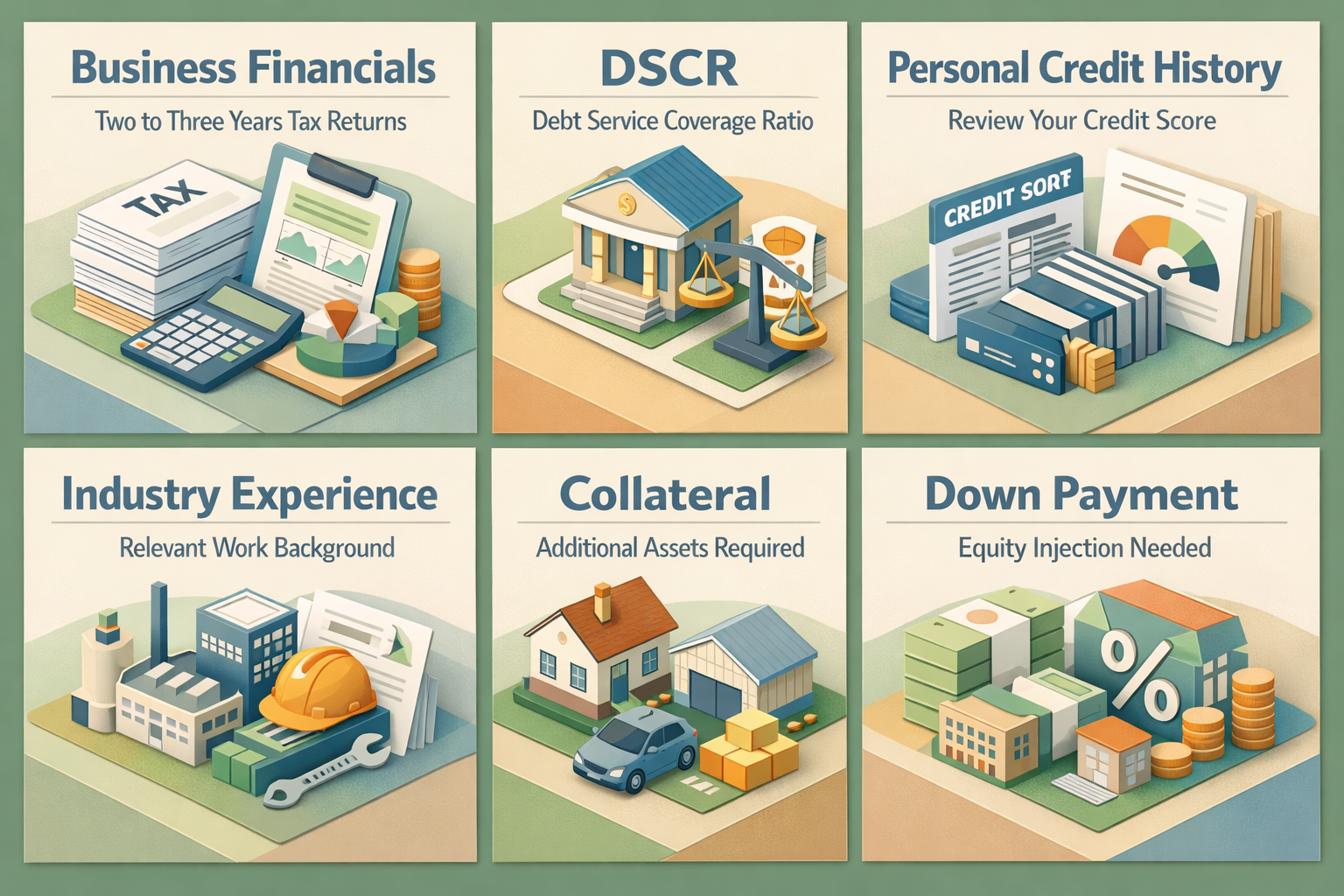
Understanding how lenders think can give you a real edge when applying for financing for used machinery sales businesses. Lenders don't just look at your credit score — they assess the full picture of both you and the business you're acquiring. Familiarizing yourself with lender requirements early in the process can help you prepare a stronger application.
- Business financials: Lenders will typically request two to three years of the dealership's tax returns, profit and loss statements, and balance sheets. They want to confirm that the business generates enough revenue to service the new debt.
- Debt service coverage ratio (DSCR): This ratio compares the business's net operating income to its total debt obligations. Most lenders prefer a DSCR above 1.25, meaning the business earns at least 25% more than what's needed to cover its debts.
- Your personal credit history: Lenders will review your personal credit score and history, particularly if you're using an SBA loan that requires a personal guarantee. A score above 680 is generally considered favorable, though requirements can vary by lender.
- Your industry experience: Have you worked in equipment sales, distribution, or a related field? Lenders often view relevant experience as a risk mitigator, since an experienced operator is more likely to run the business successfully.
- Collateral: Beyond the business's own assets, lenders may ask for additional collateral, such as personal real estate or other business assets. Be prepared to discuss what you can pledge.
- Down payment: Most acquisition loans require a down payment, often ranging from 10% to 30% of the purchase price depending on the loan type and lender. SBA loans may allow lower down payments in some cases, but buyers should be ready to inject equity.
Preparing a Strong Loan Application Package
The quality of your loan application can significantly influence how quickly lenders respond and whether you get approved. Disorganized or incomplete documentation often slows the process down and can raise red flags. Here's what you'll typically need to gather before approaching a lender.
Business Acquisition Documents
Start with the purchase agreement or letter of intent, the seller's three years of business tax returns, a current inventory list with estimated values, and any existing contracts with customers or suppliers. If the dealership has a lease, include those terms as well. Lenders want to understand what they're lending against and what continuity the business has.
Personal Financial Documents
You'll need to provide your personal tax returns for at least two years, a personal financial statement listing your assets and liabilities, and a government-issued ID. If you have business partners, they'll likely need to submit similar documentation.
Business Plan
Even for an existing business acquisition, lenders often want to see a business plan that outlines how you intend to operate and grow the dealership. Include your marketing approach, staffing plans, financial projections for the next two to three years, and any operational improvements you plan to implement. A well-thought-out plan demonstrates that you've done your homework and can be a persuasive tool.
Valuation and Appraisal
An independent business valuation is a critical piece of the puzzle. It confirms that you're paying a fair price and gives the lender confidence that the loan amount is reasonable relative to the business's worth. For equipment-heavy businesses, a physical inventory appraisal may also be required.
Working With the Right Lender for Your Acquisition Goals
Not every lender has experience with business acquisitions in the equipment sector, and that experience gap can matter. Working with a lender who understands how used equipment dealerships operate — including how inventory is valued and how the sales cycle works — can make the approval process smoother and more efficient.
SBA-approved lenders are a natural starting point, particularly if you're leaning toward the 7(a) or 504 programs. Community banks and credit unions can also be excellent partners for this type of transaction, as they sometimes offer more flexibility in underwriting compared to large national banks. Some specialized commercial lenders focus specifically on business acquisitions and may have streamlined processes for deals in this range.
When you're comparing lenders, don't focus solely on interest rates. Look at the full cost of the loan, including origination fees, prepayment penalties, and required reserves. Also consider the lender's responsiveness and willingness to explain their process — a lender who communicates clearly and promptly can make a big difference when you're trying to close a time-sensitive deal.
It may also be worth engaging a commercial loan broker or financial advisor who specializes in business acquisitions. They can help you identify lenders who are the right fit and guide you through the underwriting process, potentially saving you time and improving your chances of approval. Getting pre-qualified is a smart way to secure financing before you make an offer.
Common Pitfalls to Avoid When Financing a Dealership Acquisition
Even well-prepared buyers can run into problems during the financing process. Being aware of common mistakes ahead of time can help you sidestep costly delays or outright rejections.
- Overpaying for the business: If the purchase price significantly exceeds what the business valuation supports, lenders may decline to finance the full amount, leaving you scrambling to cover the gap. Always negotiate based on verified financials, not the seller's asking price alone.
- Underestimating working capital needs: Acquisition financing typically covers the purchase price, but running a dealership also requires working capital for payroll, inventory purchases, and operating expenses. Make sure your financing plan accounts for these ongoing costs.
- Ignoring inventory quality: In a used equipment dealership, not all inventory is equally valuable. Older or harder-to-sell machinery may be discounted heavily by lenders during asset assessments. Conduct your own due diligence on the inventory before finalizing the purchase price.
- Skipping due diligence on liabilities: Make sure the business doesn't carry hidden liabilities such as unpaid taxes, pending lawsuits, or unresolved environmental issues related to machinery. These can affect both your loan approval and your ability to operate the business cleanly post-acquisition.
- Applying to too many lenders at once: Multiple hard credit inquiries in a short period can negatively impact your credit score. Be strategic about which lenders you formally apply to, and consider getting pre-qualified before submitting full applications.
●Conclusion
Knowing how to get a business loan for acquiring a used equipment dealership is the first step toward turning a smart business opportunity into a reality. From choosing the right loan program to building a compelling application and working with a lender who understands your industry, each step in the process matters. Take the time to prepare thoroughly, understand what lenders are looking for, and don't hesitate to seek expert guidance along the way. With the right financing strategy in place, acquiring a used equipment dealership could be a rewarding path to business ownership and long-term growth. Ready to explore your options? Connect with a LoanWise lending specialist today to discuss your acquisition goals and find the right loan solution for your situation.