
Acquiring an established dental practice can be one of the smartest moves an entrepreneurial dentist makes. It offers an existing patient base, trained staff, and proven revenue — all things that take years to build from scratch. But like any significant business investment, it requires solid financing. If you're exploring how to get a business loan for acquiring a dental practice, you're already asking the right question. The good news is that lenders often view dental acquisitions favorably because dental businesses tend to generate consistent, predictable income. Still, navigating the lending landscape takes preparation, strategy, and an understanding of what lenders actually look for. This guide walks you through everything you need to know — from loan types to approval tips — so you can move forward with confidence.
Why Dental Practice Acquisitions Are Attractive to Lenders
Before diving into the mechanics of borrowing, it helps to understand why financing a dental practice purchase is generally more accessible than funding other types of small business acquisitions. Dental practices tend to operate in a recession-resistant industry. People continue to need oral health care regardless of broader economic conditions, which means dental businesses often maintain relatively stable cash flow even during downturns.
Lenders — especially those experienced with healthcare or professional practice lending — recognize this stability. As a result, they may offer more favorable terms for dental acquisitions compared to businesses in more volatile sectors. That said, approval is never automatic. Lenders still scrutinize the borrower's credentials, the practice's financial health, and the overall deal structure before committing to any loan.
Understanding your position as a borrower in this favorable environment can help you approach lenders with realistic expectations and a well-prepared application. The more you know about what makes dental acquisition loans appealing to financial institutions, the better equipped you'll be to present yourself as a low-risk candidate.
Loan Options Available for Buying an Existing Dental Office
When it comes to financing a dental practice purchase, there's more than one path forward. Understanding your loan options helps you choose the structure that best fits your financial situation and long-term goals.
SBA 7(a) Loans
The Small Business Administration's 7(a) loan program is one of the most commonly used tools for practice acquisitions. These loans may offer competitive interest rates, longer repayment terms, and relatively lower down payment requirements compared to conventional commercial loans. Because the SBA partially guarantees the loan, lenders may be more willing to extend financing to borrowers who might not qualify for a standard bank loan. Loan amounts can potentially reach up to several million dollars, depending on the deal and lender guidelines.
Conventional Bank and Credit Union Loans
Many traditional financial institutions offer commercial term loans specifically designed for professional practice acquisitions. Banks with dedicated healthcare lending divisions often understand the dental industry's revenue model well, which can work in your favor. However, these loans may require stronger credit profiles and larger down payments than SBA-backed options.
Specialty Healthcare Lenders
Several private lenders focus exclusively on healthcare and dental practice financing. These specialty lenders may offer streamlined application processes and underwriting models tailored to the unique financial structure of dental businesses. While their rates can sometimes be higher than traditional banks, the speed and flexibility they offer may make them worth considering, especially for time-sensitive acquisitions.
Seller Financing
In some cases, the seller of the practice may be willing to finance a portion of the purchase price directly. This arrangement — often called a seller note — can supplement a primary loan or serve as a bridge when conventional financing doesn't fully cover the acquisition cost. Seller financing terms vary widely and are negotiated directly between buyer and seller.
Understanding Dental Practice Acquisition Loan Requirements
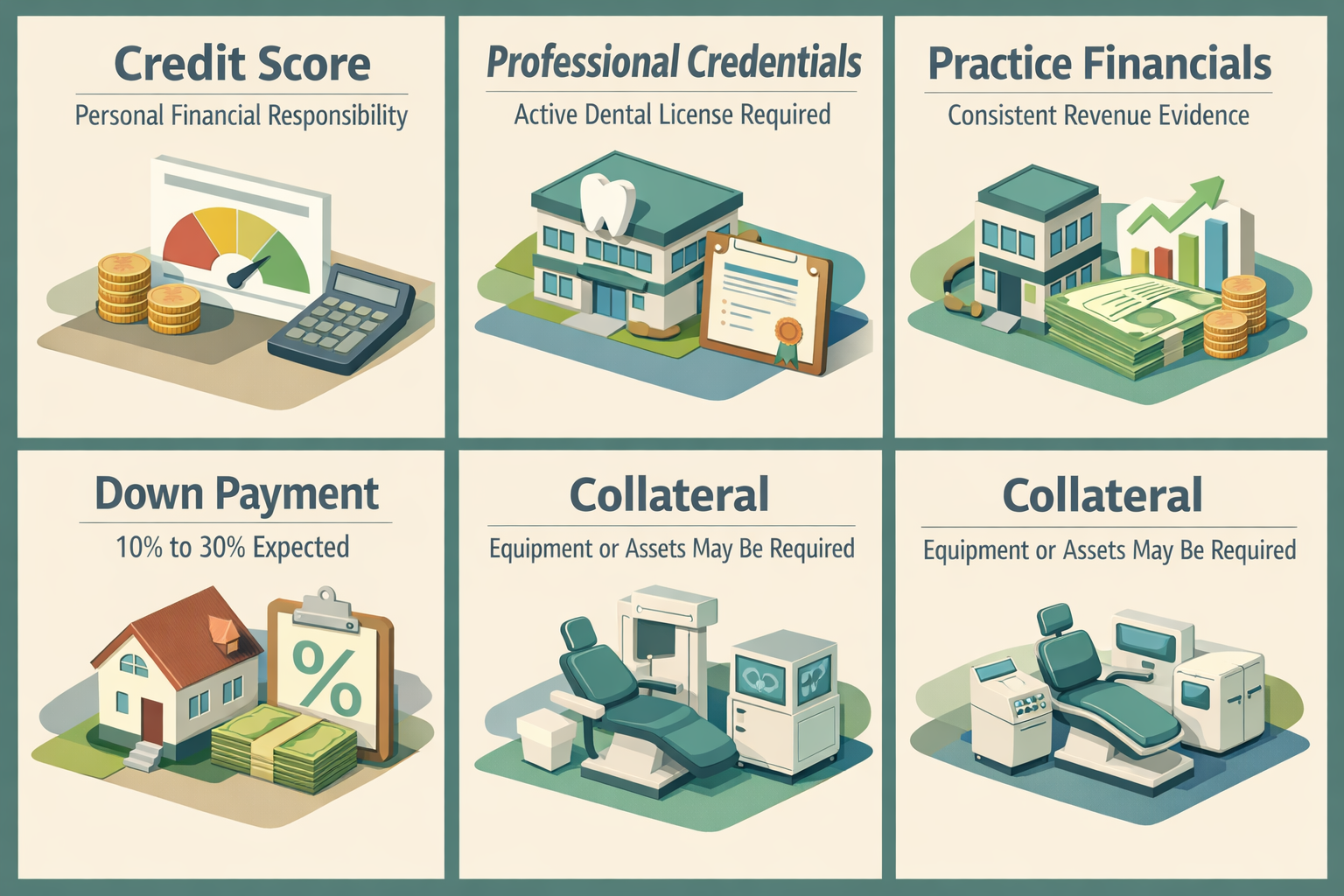
Knowing the dental practice acquisition loan requirements before you apply can save you significant time and frustration. While each lender sets its own criteria, there are several common factors that most financial institutions evaluate when reviewing an acquisition loan application.
Credit Score and Financial History
Your personal credit score is typically one of the first things a lender checks. A strong credit history — generally a score in the mid-to-upper 700s or higher — may improve your chances of approval and could help you secure better interest rates. Lenders may also review your personal tax returns, bank statements, and any existing debt obligations to assess your overall financial responsibility.
Professional Credentials and Experience
Most lenders require that the borrower hold an active dental license and ideally have some clinical experience, either as an associate dentist or in a supervisory role. Lenders want to know that you're capable of running the practice effectively after the acquisition closes. Business management experience, while not always required, can strengthen your application considerably.
Practice Financial Statements
The financial health of the practice you're acquiring matters just as much as your own. Lenders will typically request two to three years of the practice's tax returns, profit and loss statements, and recent production reports. They want to see consistent revenue, manageable overhead, and evidence that the practice can generate enough cash flow to service the debt after the acquisition.
Down Payment
While some loan programs may allow lower down payments — particularly SBA loans — most lenders expect the borrower to contribute some equity into the deal. A down payment might range anywhere from 10% to 30% of the total purchase price, depending on the lender, the loan program, and the risk profile of the transaction. Having more capital available upfront can sometimes lead to better terms.
Collateral
Dental practice loans are often partially or fully unsecured, especially when the practice has strong cash flow and the borrower has solid credentials. However, some lenders may require collateral such as equipment, real estate, or personal assets to back the loan. Understanding what collateral you can offer may expand your financing options.
How to Prepare a Strong Loan Application Step by Step
Now that you understand what lenders are looking for, the next step is putting together an application that genuinely stands out. Here's a practical roadmap to help you get ready.
- Pull your credit reports early. Review your personal credit reports from all three major bureaus before you apply. Dispute any errors and take steps to reduce outstanding balances if your score needs improvement.
- Gather your financial documents. Compile two to three years of personal tax returns, recent bank statements, and a personal financial statement. Lenders will use these to evaluate your overall financial picture.
- Perform due diligence on the practice. Work with a dental practice consultant or CPA experienced in healthcare transactions to review the seller's financial records. Understanding the practice's true profitability is essential before you commit to a purchase price.
- Create a business plan. Even for an acquisition, a written business plan demonstrates to lenders that you understand how the practice operates and have a strategy for maintaining or growing revenue after the transition.
- Get a professional practice valuation. An independent valuation helps establish a fair purchase price and gives lenders confidence that the deal is structured appropriately.
- Work with an experienced advisor or broker. A commercial loan broker or lender familiar with dental acquisitions can help match you with the right financing product and guide your application through underwriting more efficiently.
Taking these steps before submitting your application can meaningfully increase your chances of approval and may help you negotiate better loan terms.
Key Factors That Can Affect Your Loan Terms and Approval Odds
Even when you meet the basic dental practice acquisition loan requirements, several additional factors could influence the specific terms a lender offers — or whether they approve you at all. Being aware of these variables gives you a chance to address potential concerns before they become roadblocks.
Debt-to-Income Ratio
If you carry substantial personal debt — such as student loans common among dental school graduates — lenders may be cautious about adding a large acquisition loan on top of your existing obligations. Demonstrating a clear plan for managing your debt load can help reassure underwriters that the new loan is manageable within your overall financial picture.
Practice Location and Market Conditions
The geographic market where the practice operates can influence lender confidence. A practice in a growing suburban community with limited dental competition may be viewed differently than one in an oversaturated urban market or a declining rural area. Lenders often consider local market dynamics when evaluating acquisition risk.
Patient Retention Risk
One concern lenders and buyers alike share is whether existing patients will continue with the practice after ownership changes. A practice that's heavily dependent on the personal relationship between the selling dentist and long-term patients may carry higher retention risk. Lenders may factor this into their risk assessment, which is worth addressing in your business plan and transition strategy.
Deal Structure and Purchase Price
The way a deal is structured matters to lenders. If the purchase price appears inflated relative to the practice's verified revenue and EBITDA, lenders may push back or offer less favorable terms. Working with an experienced dental practice transaction advisor can help you negotiate a deal structure that's both fair and financeable.
Tips for Strengthening Your Financial Profile Before Applying
If you're not quite ready to apply for an acquisition loan, there are concrete steps you can take to improve your position over the next few months. Small improvements to your financial profile could lead to better loan terms and a smoother approval process.
- Pay down high-interest debt. Reducing your credit card balances and other revolving debt can improve your credit utilization ratio, which often has a positive effect on your credit score relatively quickly.
- Build up cash reserves. Lenders may look more favorably on borrowers who maintain a healthy amount of liquid savings. Aim to have enough in reserve to cover several months of practice operating expenses in addition to your down payment.
- Avoid taking on new personal debt. Opening new credit accounts or financing large personal purchases shortly before applying for a business loan could raise red flags for underwriters.
- Establish or strengthen business credit. If you've operated as an associate or in a prior business capacity, having an established business credit profile — even a modest one — can add credibility to your application.
- Consult a CPA familiar with dental acquisitions. A knowledgeable accountant can help you present your financials in the most favorable and accurate light, which may make a meaningful difference during underwriting.
Working with the Right Lender Makes All the Difference
Not all lenders are equally equipped to handle dental practice acquisitions. Choosing the wrong financing partner could mean slower processing, less competitive terms, or an outright denial from an underwriter who doesn't understand your industry. That's why finding a lender with genuine experience in healthcare or professional practice lending is so important.
When evaluating potential lenders, ask about their track record with dental acquisition financing specifically. Inquire how many similar transactions they've closed, what their typical processing timelines look like, and whether they offer dedicated loan officers who specialize in healthcare lending. These details can make a significant difference in how smoothly your acquisition moves from application to closing.
It's also worth comparing multiple lenders rather than accepting the first offer you receive. Interest rates, origination fees, prepayment penalties, and repayment terms can vary considerably between institutions. Taking the time to shop around — ideally with the help of an experienced commercial loan broker — could save you a meaningful amount of money over the life of the loan.
Understanding how to get a business loan for acquiring a dental practice ultimately comes down to preparation, choosing the right loan product, and partnering with a lender who knows your industry. When those three elements align, the path from aspiring practice owner to confident business operator becomes much more achievable.
●Conclusion
Acquiring a dental practice is a major financial commitment, but it's also one of the most rewarding steps a dentist can take toward building long-term wealth and professional independence. By understanding the loan options available, meeting the dental practice acquisition loan requirements, and preparing a thorough application, you'll be in a strong position to secure the financing you need. At LoanWise, we're here to help small business owners and entrepreneurs like you navigate complex lending decisions with clarity and confidence. Ready to explore your options? Connect with a LoanWise lending specialist today and take the first step toward owning the practice you've worked so hard to build.