
If you earn money from rare coin collecting, you already know that your income doesn't look like a typical paycheck. Sales can be unpredictable, values fluctuate, and no employer is cutting you a W-2 at year's end. But that doesn't mean homeownership is out of reach. Understanding how to calculate mortgage affordability with income from rare coin collecting is the first step toward turning that passion into a path to owning a home. With the right documentation, the right lender, and a clear picture of your finances, you may be surprised at what's possible.
Why Rare Coin Income Is Considered Irregular by Mortgage Lenders
Mortgage lenders evaluate borrowers primarily on their ability to make consistent, on-time monthly payments. Because of this, they tend to favor income that is predictable and verifiable. Rare coin collecting, whether you buy and resell coins, deal at auctions, or operate as a numismatic dealer, typically falls into the category of irregular income.
Unlike a salaried employee who receives the same amount every two weeks, a coin collector's income may spike during a strong auction season and slow considerably during off periods. Lenders may view this inconsistency as a repayment risk, which is why they often require more thorough documentation from borrowers in this situation.
It's also worth noting that rare coin income may be classified differently depending on how you earn it. If you sell occasionally as a hobbyist, lenders might not count that income at all. However, if you operate as a self-employed dealer or run a registered numismatic business, your income may be evaluated more seriously — though lenders will still look for a documented history of earnings over at least two years.
Understanding where your income fits in the lender's framework is crucial before you ever fill out a mortgage application. The better you understand their perspective, the more effectively you can prepare.
How to Calculate Mortgage Affordability With Income From Rare Coin Collecting
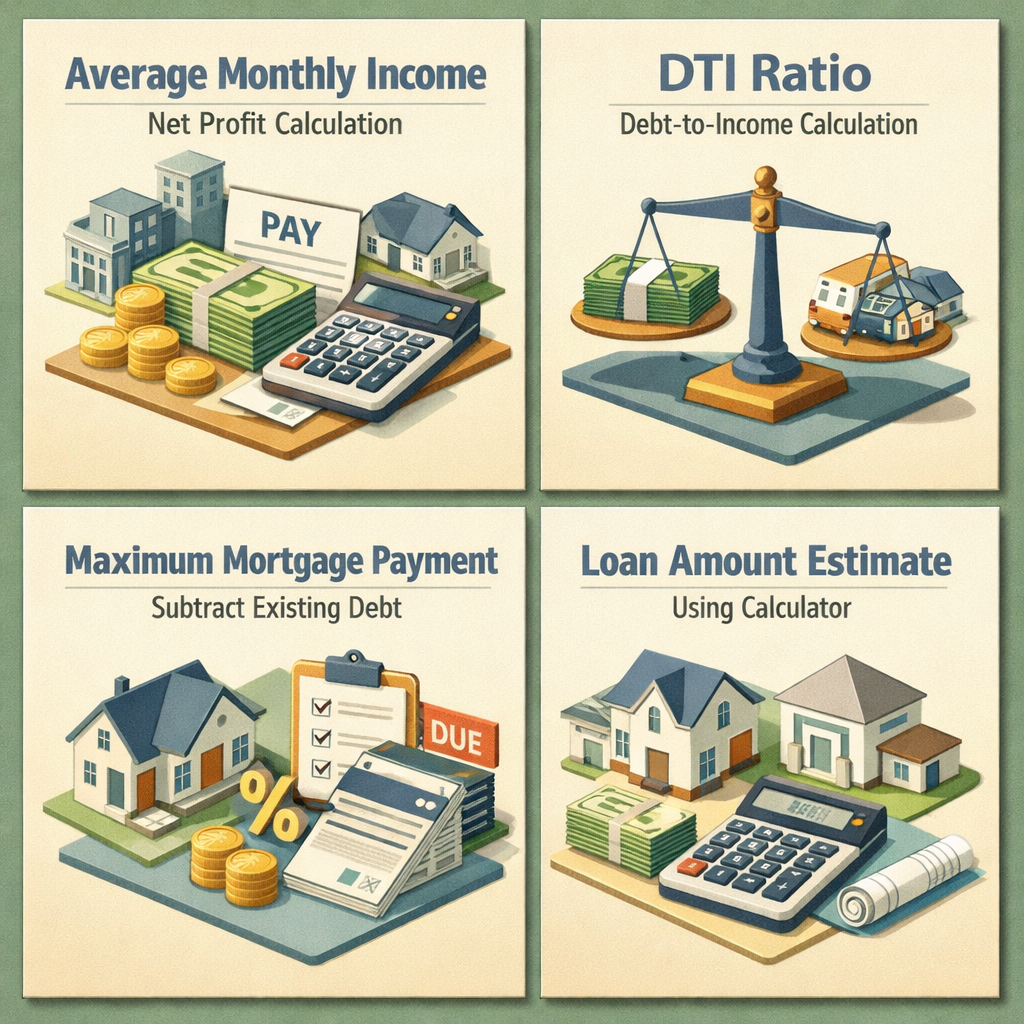
The core question any lender will ask is: how much stable, documentable income do you earn each month? To calculate mortgage affordability with income from rare coin collecting, you'll need to work with what lenders call your qualifying income — not your gross receipts, but the net income after deducting business expenses.
Here's a simplified framework to estimate what you might qualify for:
- Step 1 — Determine your average monthly net income: Add up your net profit from coin-related activities over the past 24 months and divide by 24. If your income is rising, some lenders may use a more favorable average.
- Step 2 — Apply the debt-to-income (DTI) ratio: Most conventional lenders prefer a DTI ratio of 43% or lower. This means your total monthly debt payments — including the proposed mortgage — should not exceed roughly 43% of your gross qualifying income.
- Step 3 — Estimate your maximum monthly mortgage payment: Subtract all existing monthly debt obligations from your maximum DTI threshold. The remainder is what lenders may allow for your housing payment.
- Step 4 — Back into a loan amount: Using a self-employed mortgage calculator, input your estimated monthly payment, interest rate, and loan term to approximate the home price you might be able to afford.
Keep in mind that lenders will also factor in property taxes, homeowner's insurance, and any HOA fees as part of your housing cost. These can meaningfully reduce the loan amount you qualify for, so it's wise to calculate mortgage affordability early in your planning process.
Documentation That Proves Your Coin Collecting Income to Lenders
One of the biggest hurdles for rare coin collectors seeking a mortgage is documentation. Since there's no employer to verify your wages, you'll need to build a paper trail that convinces an underwriter of your income's reliability. Here's what lenders typically want to see:
- Two years of personal tax returns (IRS Form 1040): These are often the foundation of income verification for self-employed borrowers. Lenders will look at your Schedule C if you operate as a sole proprietor, or your K-1 if you're part of a partnership or S-corporation.
- Two years of business tax returns (if applicable): If your coin dealing is structured as a business entity, lenders may require both personal and business returns.
- Profit and loss statements: A year-to-date P&L, ideally prepared or reviewed by a licensed CPA, can help demonstrate current earnings that may not yet appear on a filed tax return.
- Bank statements: Many non-QM and portfolio lenders offer bank statement loan programs that allow borrowers to use 12 to 24 months of personal or business bank deposits as proof of income — a useful option when tax deductions have significantly reduced your reported net income.
- Auction records and sales receipts: Documentation from established auction houses, dealer invoices, or certified appraisal records can help corroborate your income claims.
The more organized and consistent your financial records are, the more confidence a lender is likely to have in your application. Working with an accountant who understands self-employed borrowers can make a significant difference here.
Exploring Non-QM and Collateral-Based Loan Qualification Options
If traditional mortgage programs seem out of reach due to your income structure, you may have more options than you think. Non-qualified mortgage (non-QM) loans are designed for borrowers whose financial profiles don't fit the standard mold — and rare coin collectors may fall squarely into that category.
Non-QM lenders often offer more flexible underwriting guidelines, including the ability to use bank statements, asset depletion, or collateral-based loan qualification methods instead of relying solely on tax return income. Here's a closer look at some alternatives:
- Asset depletion loans: Some lenders will take your total liquid assets — such as savings, investment accounts, or even the appraised value of a significant coin collection — and divide them over a set number of months to calculate a theoretical monthly income. This could be particularly relevant for collectors with valuable holdings.
- Collateral-based qualification: Lenders may place greater weight on the value of the property being purchased or on other assets you own when evaluating your application. A strong down payment or significant net worth can sometimes offset income documentation challenges.
- Bank statement loans: As mentioned, these programs allow lenders to average your monthly deposits over 12 to 24 months as a proxy for income, bypassing traditional tax return requirements.
- Portfolio loans: Some smaller banks and credit unions hold loans in-house rather than selling them to secondary markets. These lenders may have more flexibility to underwrite based on the full picture of your financial situation.
It's important to note that non-QM loans may come with higher interest rates or fees compared to conventional loans. Weighing those costs against the benefit of qualifying is a key part of making an informed decision.
Strengthening Your Credit Profile Before Applying for a Home Loan
When your income is harder to document, your credit score and overall financial health become even more important to lenders. A strong credit profile can help compensate for some of the uncertainty that comes with irregular income mortgage situations, so it's worth investing time in improving it before you apply.
Here are some practical strategies that may help:
- Pay down existing debt: Reducing your credit card balances and installment loan balances can lower your DTI ratio, which is a key metric lenders evaluate alongside income.
- Avoid new credit inquiries: Applying for new credit cards or loans shortly before a mortgage application can temporarily lower your credit score and raise red flags for underwriters.
- Maintain a long credit history: Keep older accounts open even if you're not using them. The length of your credit history is one factor in your overall credit score calculation.
- Dispute inaccuracies: Review your credit reports from all three major bureaus and dispute any errors that may be dragging your score down unnecessarily.
- Build reserves: Lenders often look favorably on borrowers who have several months of mortgage payments saved in reserve. For borrowers with irregular income, having six to twelve months of reserves could strengthen your application considerably.
Even small improvements to your credit score could meaningfully affect the loan terms you're offered, so starting this process well before your planned purchase timeline is a smart move.
Working With the Right Lender for Nontraditional Borrowers
Not all mortgage lenders are equipped to handle borrowers with nontraditional income sources. Many large banks and retail mortgage lenders are structured to serve salaried W-2 employees and may not have the tools or flexibility to evaluate a rare coin collector's income fairly. Choosing the right lending partner can make or break your application.
Here are some types of lenders that may be better suited to your situation:
- Mortgage brokers: A broker has access to multiple lenders, including non-QM specialists, and can shop your profile to find a lender whose guidelines match your situation.
- Non-QM specialty lenders: These lenders specifically underwrite loans for self-employed borrowers, investors, and individuals with irregular or alternative income streams.
- Community banks and credit unions: Local institutions may offer portfolio lending options with more personalized underwriting that takes your full financial picture into account.
- CDFI lenders: Community Development Financial Institutions sometimes offer flexible programs for borrowers who don't fit conventional molds, though availability may vary by region.
When speaking with any lender, be upfront about the nature of your income. Transparency early in the process helps avoid surprises during underwriting and allows a knowledgeable loan officer to guide you toward the most suitable product. Ask specifically whether the lender has experience working with self-employed borrowers or those with alternative income documentation, and learn how to strengthen your home loan application before submitting.
●Conclusion
Learning how to calculate mortgage affordability with income from rare coin collecting takes a bit more effort than it would for a traditional borrower, but it's entirely achievable with the right preparation. By averaging your verifiable net income, building a strong documentation package, exploring non-QM and collateral-based options, and working with a lender experienced in nontraditional borrowers, you can put yourself in a meaningful position to qualify for a home loan. Your path to homeownership may look different from the average buyer's — but with patience, organization, and the right guidance, it's a path worth pursuing. Connect with a LoanWise mortgage specialist today to explore which programs may be the right fit for your unique financial situation.