Smart Investor's Home Appraisal Guide
The home appraisal process serves as a critical checkpoint in real estate investment financing, directly affecting loan approval and investment returns. Whether you're securing DSCR loans for rental properties or bridge financing for fix and flip projects, understanding what appraisers evaluate can make the difference between profitable deals and missed opportunities. This comprehensive guide breaks down the essential steps, preparation strategies, and modern appraisal options that today's savvy investors need to navigate successfully.
Essential Pre-Appraisal Preparation Checklist
Proper preparation before the home appraisal process can significantly impact your property's valuation and subsequent loan approval. Real estate investors who take time to prepare their properties typically see more favorable appraisal outcomes.
- Complete necessary repairs: Address any visible structural issues, plumbing problems, or electrical concerns that might flag safety violations or reduce property value
- Gather comparable sales data: Research recent sales of similar properties in the area to provide context for the appraiser and support your expected valuation
- Document property improvements: Compile receipts and photos of recent renovations, upgrades, or additions that add value to the investment property
- Ensure property access: Coordinate with tenants or property managers to guarantee full access to all areas, including basements, attics, and utility rooms
What Appraisers Evaluate During Property Assessment
Understanding what appraisers evaluate during the assessment helps investors focus their preparation efforts on factors that most significantly impact property valuation and loan approval prospects.
- Physical condition and structural integrity: Foundation stability, roof condition, HVAC systems, and overall maintenance quality directly influence the final appraisal value
- Property size and layout functionality: Square footage accuracy, room count, and practical layout design for rental potential or resale value consideration
- Location and neighborhood factors: Proximity to amenities, school districts, transportation, and overall market desirability in the investment area
- Recent market comparables: Similar properties sold within the last six months in the immediate vicinity that support the requested loan amount
Modern Appraisal Options for Investment Properties
Today's real estate investors have access to various appraisal methods that can streamline the financing process, particularly beneficial for time-sensitive investment opportunities like fix and flip projects.
- Desktop appraisals with photo documentation: Faster processing times and lower costs while maintaining accuracy for standard investment properties
- Traditional full appraisals: Comprehensive on-site evaluations required for complex properties or higher loan amounts in DSCR financing
- Automated valuation models: Technology-driven assessments that might supplement traditional methods for portfolio refinancing or quick acquisitions
Step-by-Step Home Appraisal Process Timeline
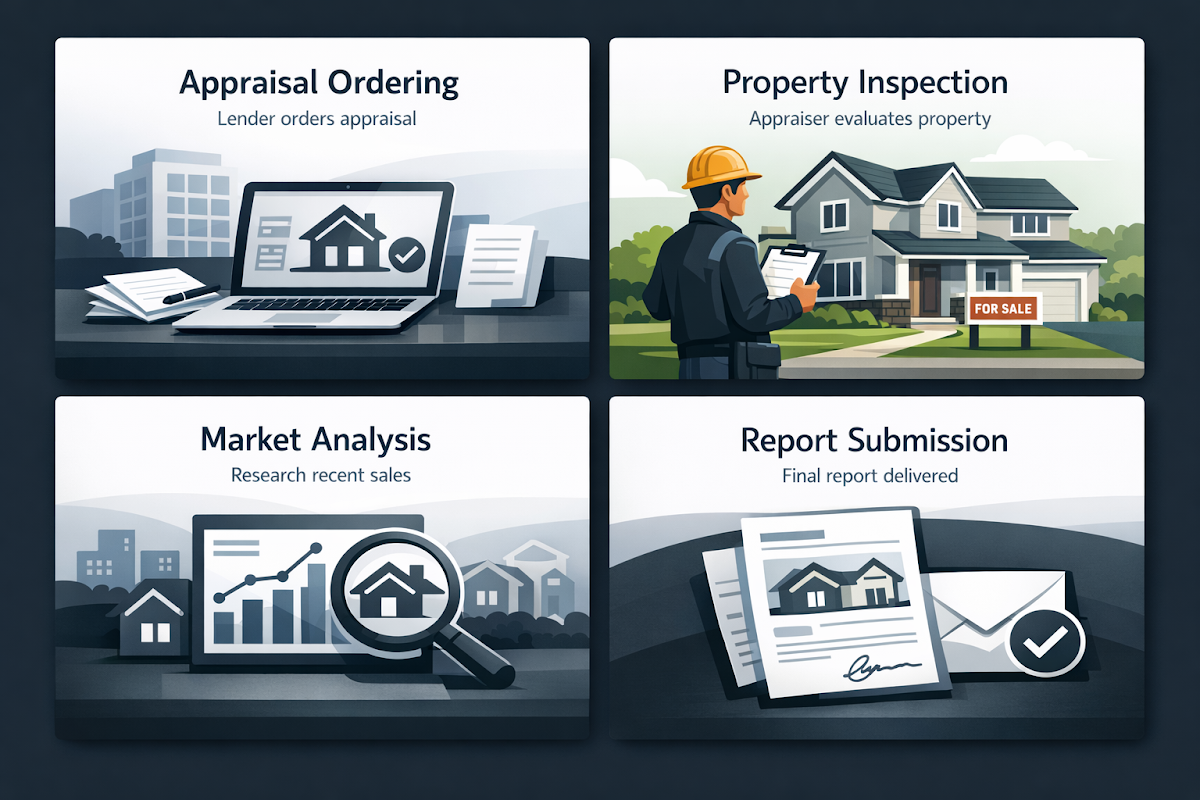
The home appraisal process follows a structured timeline that investors should understand to plan their financing and acquisition strategies effectively.
- Appraisal ordering and scheduling: Lender orders appraisal within 24-48 hours of loan application submission, with scheduling typically occurring within one week
- Property inspection and data collection: Appraiser conducts thorough on-site evaluation, measuring spaces, photographing conditions, and noting property features and defects
- Market analysis and comparable research: Appraiser researches recent sales data, analyzes market trends, and selects appropriate comparable properties for valuation support
- Report preparation and submission: Comprehensive appraisal report compilation, including photos, measurements, market analysis, and final value conclusion delivered to lender
- Lender review and borrower notification: Mortgage underwriter reviews appraisal for loan approval, with results typically communicated within 2-3 business days of report receipt
Challenging Low Appraisals: Your Options
When appraisal values fall short of expectations, real estate investors have several strategic options to address valuation discrepancies and protect their investment deals.
- Request appraisal reconsideration: Provide additional comparable sales data or documentation of property improvements that may not have been fully considered in the original assessment
- Order second appraisal opinion: Some lenders allow investors to request a second appraisal, particularly when significant valuation discrepancies exist or market conditions have changed rapidly
- Negotiate purchase price adjustments: Work with sellers to reduce purchase price to match appraisal value, preserving loan-to-value ratios and investment returns
- Increase down payment contribution: Bridge the gap between appraisal value and purchase price by adding more cash to maintain desired loan amount and deal structure
Appraisal Contingency Strategies for Investors
The appraisal contingency clause provides crucial protection for real estate investors, allowing contract termination or renegotiation when property values don't meet financing requirements.
- Standard appraisal contingency inclusion: Ensure purchase contracts include provisions allowing contract cancellation if appraisal value falls below purchase price by specified percentage
- Negotiated contingency timeframes: Establish realistic timelines for appraisal completion and subsequent decision-making periods, typically 10-14 days from contract acceptance
- Alternative financing preparation: Identify backup financing options, including portfolio lenders or alternative loan products, if traditional appraisal requirements cannot be met
- Market condition considerations: Adjust contingency terms based on local market volatility, with more conservative approaches in rapidly changing investment markets
Key Takeaway for Investment Success
Mastering the home appraisal process gives real estate investors a significant competitive advantage in today's dynamic market. By understanding what appraisers evaluate, preparing properties strategically, and leveraging modern appraisal options like desktop assessments, investors can streamline their financing while maximizing property valuations. Whether you're building a rental portfolio with DSCR loans or executing fix and flip strategies with bridge financing, thorough preparation and process knowledge translate directly into better loan terms and higher investment returns.
●Conclusion
The home appraisal process doesn't have to be a roadblock to your investment success. With proper preparation, strategic understanding of valuation factors, and knowledge of your options when challenges arise, you can navigate appraisals confidently. Remember that every appraisal is an opportunity to demonstrate your property's true investment potential and secure the financing terms that support your long-term wealth-building goals.