
Essential Mortgage Underwriting Process Guide
The mortgage underwriting process can make or break your real estate investment deals. For investors seeking DSCR loans, fix and flip financing, or rental property mortgages, understanding this critical stage helps you prepare better documentation and avoid costly delays. Unlike traditional homebuyer mortgages, investor loans require underwriters to evaluate different criteria focused on property cash flow, investment experience, and debt service coverage ratios. This guide breaks down what you need to know about navigating the mortgage underwriting process successfully.
What is Mortgage Underwriting for Investment Properties
What is mortgage underwriting when it comes to investment properties? The mortgage underwriting process for real estate investors differs significantly from traditional homebuyer loans. Underwriters evaluate your ability to generate rental income and manage investment properties rather than just your personal income and credit score.
- Property cash flow analysis: Underwriters examine rental income potential, market rents, and vacancy rates to determine if the property can support the mortgage payments
- Investment experience review: Your track record managing rental properties or completing fix and flip projects influences approval decisions
- DSCR calculations: For DSCR loans, underwriters focus on the property's debt service coverage ratio rather than your personal income
- Asset verification: Liquid reserves requirements are typically higher for investment properties, often requiring 2-6 months of mortgage payments in reserves
Key Documentation Requirements for Investment Loan Underwriting
Key documentation requirements form the foundation of your mortgage underwriter checklist for investment properties. Gathering these documents early in the process can significantly reduce your underwriting timeline and improve approval chances.
- Property financial documents: Rent rolls, lease agreements, property management statements, and market rent analyses help underwriters evaluate income potential
- Business entity documentation: If holding properties in LLCs or corporations, provide operating agreements, tax returns, and bank statements for the entity
- Construction and renovation plans: Fix and flip projects require detailed renovation budgets, contractor estimates, and after-repair value appraisals
- Experience documentation: Previous investment property tax returns, property management experience, and completed project summaries demonstrate your capability
Common Underwriting Challenges for Real Estate Investors
Common underwriting challenges can delay or derail investment property loans if you're not prepared. Understanding these potential obstacles helps you address issues proactively during the mortgage underwriting process.
- Cash flow verification issues: Seasonal rental properties or new acquisitions without established rent history may face scrutiny from underwriters
- Entity structure complications: Complex ownership structures or newly formed LLCs might require additional documentation and explanation
- Property condition concerns: Underwriters may flag properties needing significant repairs or those in declining neighborhoods
- Debt-to-income ratio problems: Multiple investment properties can complicate personal debt calculations, even for DSCR loans
Timeline Expectations for Investment Property Underwriting
Timeline expectations for the underwriting timeline on investment properties typically extend longer than traditional mortgages. Several factors unique to investor loans can affect processing speed and approval timeframes.
- Initial review phase: Document collection and preliminary underwriting review may take 5-10 business days for complete applications
- Property evaluation period: Appraisals, environmental assessments, and market rent analyses can add 7-14 days to the process
- Conditional approval stage: Underwriters often request additional documentation or clarifications, extending timelines by 3-7 business days per round
- Final approval process: Complete underwriting approval for investment properties typically ranges from 21-45 days depending on loan complexity
Steps to Expedite Your Investment Loan Approval
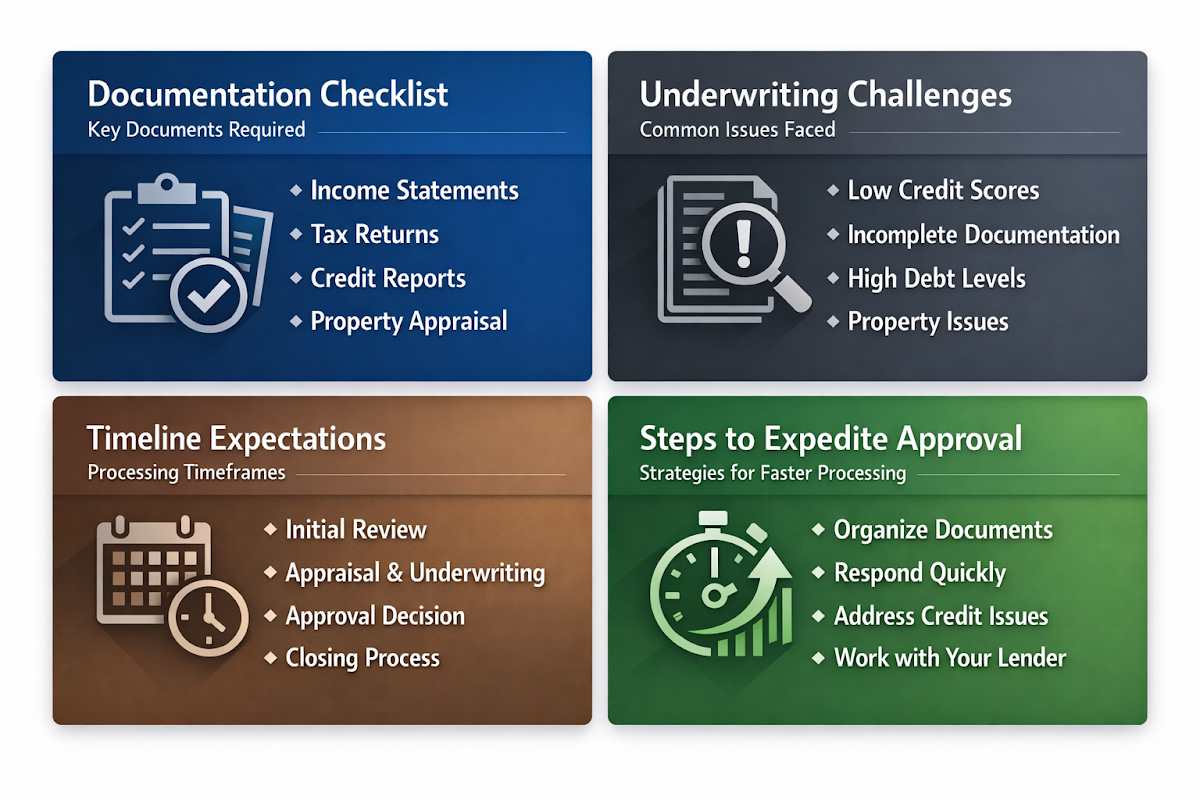
Steps to expedite your investment loan approval can help you close deals faster and capitalize on market opportunities. Following these strategies positions you for smoother processing through the mortgage underwriting process.
- Prepare comprehensive documentation packages: Submit complete rent rolls, lease agreements, tax returns, and financial statements upfront to avoid delays
- Work with experienced investment loan officers: Lenders specializing in DSCR loans and fix and flip financing understand unique requirements better
- Maintain strong liquidity positions: Keep adequate reserves in easily accessible accounts to demonstrate financial stability
- Choose properties in strong markets: Well-located rental properties with stable tenant demand face fewer underwriting obstacles
- Respond quickly to underwriter requests: Prompt submission of additional documentation or clarifications keeps your file moving through the approval pipeline
●Conclusion
Understanding the mortgage underwriting process gives real estate investors a significant advantage when seeking financing for rental properties, fix and flip projects, or portfolio expansion. The key to success lies in thorough preparation, complete documentation, and realistic timeline expectations. While investment property underwriting might seem complex, working with experienced lenders who understand DSCR loans and investor financing can streamline the process considerably. Remember that each property and situation is unique, so maintaining flexibility and responding promptly to underwriter requests will help ensure your deals close on time and within budget.