
Understanding FHA Loan Requirements for Down Payment
Real estate investors often overlook FHA loans as a potential financing tool, but understanding the FHA loan requirements for down payment can open new opportunities for portfolio expansion. While traditionally viewed as a homebuyer program, FHA loans might offer strategic advantages for investors targeting specific property types or markets. The down payment structure varies based on credit scores and can significantly impact your investment capital allocation and overall deal profitability.
Credit Score Impact on Down Payment
Credit score impact on down payment requirements represents a crucial factor for real estate investors evaluating FHA loan options. The relationship between your credit score and required down payment directly affects your available capital for additional investments.
- Borrowers with credit scores of 580 or higher typically qualify for the minimum 3.5% down payment requirement
- Credit scores between 500-579 may require a 10% down payment, significantly increasing upfront investment costs
- Maintaining a credit score above 580 could help preserve cash flow for other investment opportunities
- Regular credit monitoring and optimization strategies might improve your financing position across multiple deals
FHA Down Payment Options Analysis
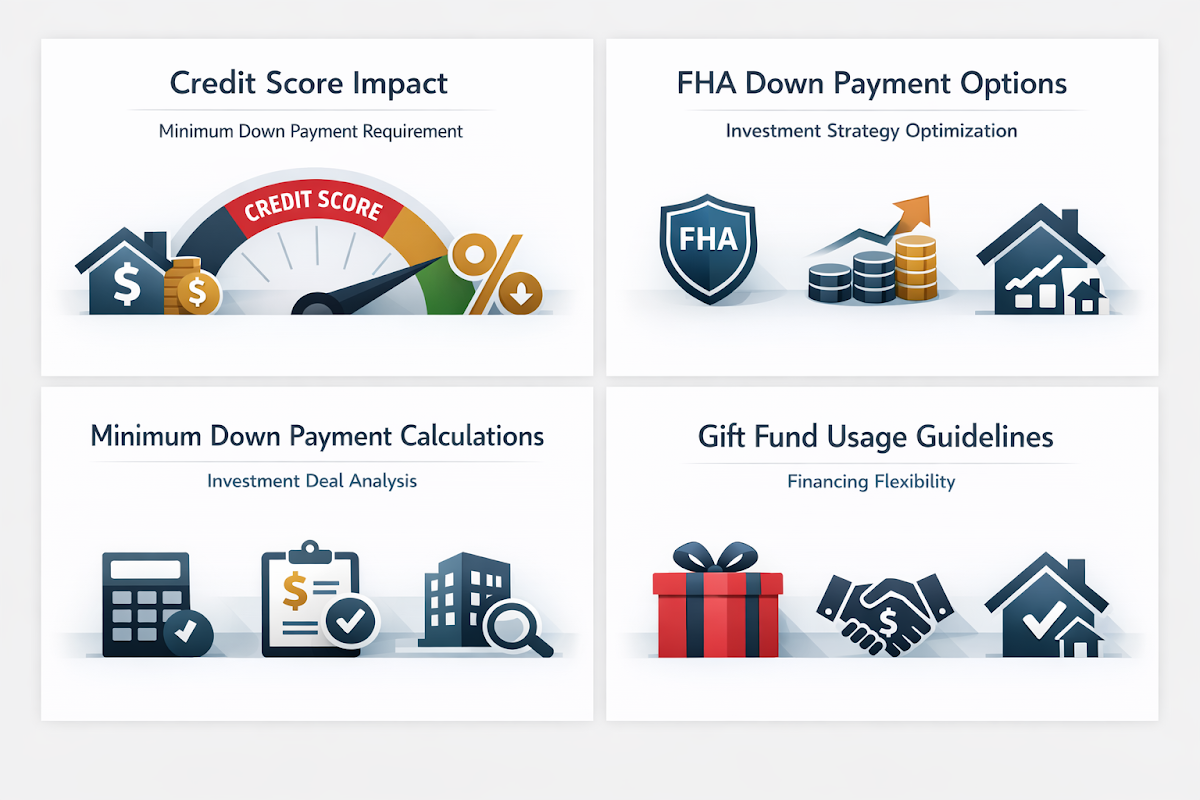
FHA loan down payment options analysis reveals several pathways for real estate investors to structure their financing approach. Understanding these options helps optimize your investment strategy and capital deployment across multiple properties.
- The standard 3.5% down payment option provides maximum leverage for qualified borrowers with strong credit profiles
- Higher down payment requirements for lower credit scores may still offer competitive terms compared to conventional financing
- Gift funds from family members might be acceptable for down payment contributions in certain situations
- Cash reserves beyond the down payment typically remain required for closing costs and immediate property improvements
Minimum Down Payment Calculations
Minimum down payment for FHA loan calculations directly impact your investment deal analysis and return projections. Accurate calculations help determine whether FHA financing aligns with your investment goals and cash flow requirements.
- Property purchase price multiplied by the applicable percentage determines your minimum down payment amount
- Additional closing costs and fees should be factored into your total upfront investment calculation
- Mortgage insurance premiums may affect your monthly carrying costs and overall return on investment
- Reserve requirements beyond the down payment could influence your ability to pursue additional deals simultaneously
Down Payment Assistance Program Benefits
Down payment assistance program benefits might provide additional financing flexibility for real estate investors in specific markets or property types. These programs could reduce your initial capital requirements and improve deal feasibility.
- Research local and state down payment assistance programs that may complement FHA loan financing for investment properties
- Evaluate program eligibility requirements to determine compatibility with your investment strategy and property selection
- Calculate potential savings from assistance programs against program restrictions or future obligations
- Consider the application timeline and approval process when planning your acquisition schedule
Gift Fund Usage Guidelines
Using gift funds for FHA down payment purposes may offer additional financing flexibility for real estate investors with family support. Understanding the guidelines helps structure these arrangements properly while maintaining compliance with program requirements.
- Verify that gift funds meet FHA requirements for acceptable sources and documentation standards
- Ensure proper gift letter documentation that clearly states the funds do not require repayment
- Understand any restrictions on gift fund sources and their impact on your loan approval process
- Plan for additional verification requirements that might extend your closing timeline
Investment Strategy Considerations
Investment strategy considerations for FHA loans require careful evaluation of program limitations and benefits relative to your portfolio goals. The financing structure may influence your property selection and long-term investment approach.
- Assess whether FHA loan terms align with your intended property use and investment timeline
- Compare FHA financing costs against conventional investment loan options for your specific deal parameters
- Evaluate the impact of mortgage insurance requirements on your monthly cash flow and return calculations
- Consider exit strategy implications and any restrictions that might affect future refinancing or sale options
Strategic Implementation Takeaway
Strategic implementation of FHA loan requirements for down payment knowledge can enhance your investment financing toolkit when used appropriately. While FHA loans may not suit all investment scenarios, they could provide value in specific situations where low down payments and competitive terms align with your property acquisition strategy. The key lies in understanding the requirements, maintaining strong credit profiles, and carefully evaluating each opportunity against your overall portfolio objectives and cash flow needs.
●Conclusion
Understanding FHA loan requirements for down payment provides real estate investors with another financing option to consider in their investment strategy. While these loans may have specific limitations and requirements, they could offer opportunities for portfolio expansion in certain market segments. Success with FHA financing typically depends on maintaining strong credit profiles, understanding program guidelines, and carefully evaluating how these loans fit within your broader investment objectives and capital allocation strategy.