
FHA Loan Requirements for Real Estate Investors
While FHA loans typically serve owner-occupant homebuyers, real estate investors often encounter FHA loan requirements when evaluating properties, working with buyer clients, or considering house hacking strategies. Understanding these requirements can help investors identify market opportunities and structure deals more effectively.
FHA financing might play a role in your investment strategy when you're considering multi-unit properties for owner-occupancy or when your buyers need government-backed financing options. The Federal Housing Administration sets specific standards that could impact your deal flow and property selection criteria.
Smart Strategies When Working with FHA Financing
Smart strategies when working with FHA financing can help investors navigate government-backed loan requirements more effectively. These approaches may help you identify suitable properties and structure deals that align with FHA standards.
- Target properties that meet FHA property standards: Focus on well-maintained properties that typically pass FHA appraisals without major repairs, which can streamline the closing process
- Consider multi-unit properties for house hacking: FHA loans may allow up to four units if you occupy one unit as your primary residence, creating potential rental income
- Build relationships with FHA-approved lenders: Working with experienced FHA lenders can help you understand current requirements and processing timelines
- Maintain strong financial documentation: Keep detailed records of income, assets, and debts to meet FHA loan debt-to-income ratio requirements efficiently
Common Mistakes to Avoid with FHA Requirements
Common mistakes to avoid with FHA requirements can save investors time and prevent deal complications. Understanding these pitfalls may help you structure transactions more effectively when FHA financing is involved.
- Don't assume all properties qualify: FHA property standards can be stricter than conventional loans, potentially requiring repairs before closing
- Don't overlook occupancy requirements: FHA loans typically require owner-occupancy, which may limit pure investment property purchases
- Don't ignore debt-to-income ratios: FHA loan DTI requirements might affect your buyers' purchasing power and deal structure
- Don't skip FHA appraisal considerations: Properties may need to meet specific safety and habitability standards that could impact your renovation timeline
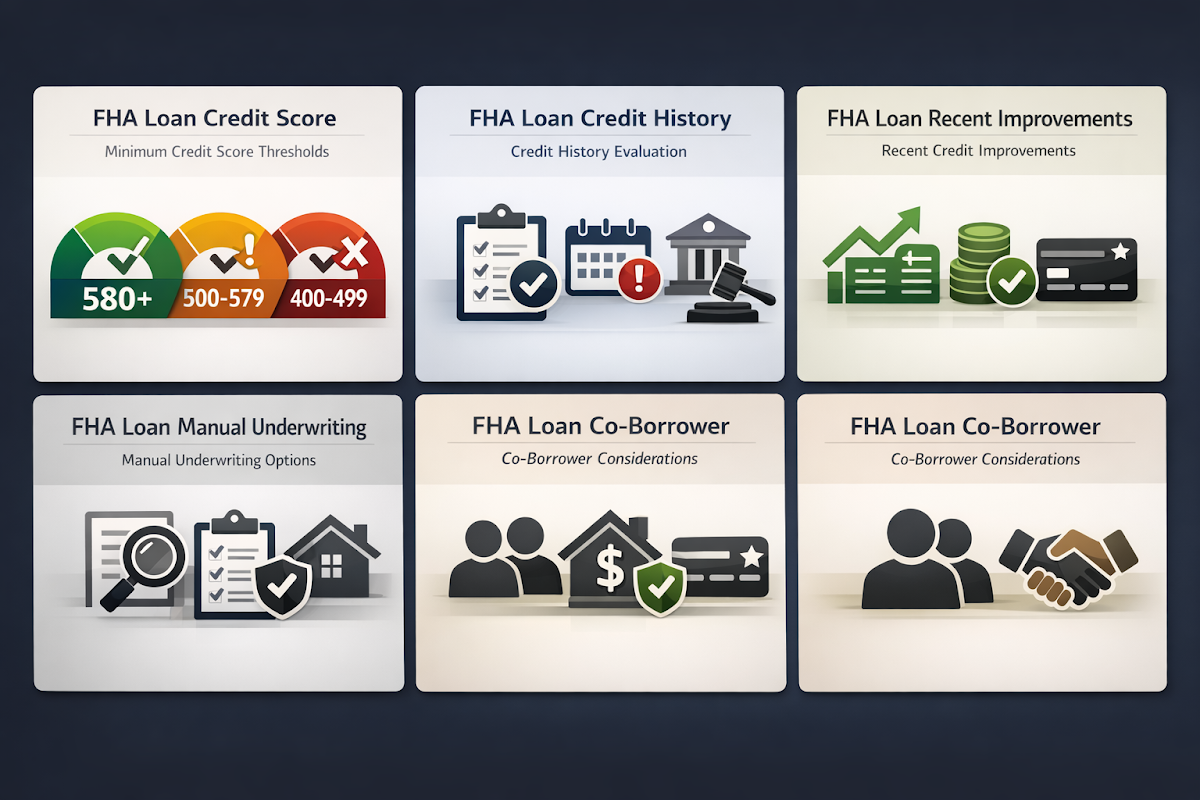
5 Key FHA Loan Credit Score Requirements
FHA loan credit score requirements typically offer more flexibility than conventional financing, which may benefit your buyers or house hacking strategies. Understanding these standards can help you evaluate deal feasibility.
- Minimum credit score thresholds: FHA loans might accept credit scores as low as 580 with a 3.5% down payment, or 500 with 10% down
- Credit history evaluation: Lenders may consider overall credit patterns rather than focusing solely on the credit score number
- Recent credit improvements: Borrowers who have improved their credit recently might qualify even with past credit challenges
- Manual underwriting options: Some lenders may offer manual underwriting for borrowers who don't meet automated system requirements
- Co-borrower considerations: Multiple borrowers might help meet credit requirements through combined credit profiles
4 Essential FHA Down Payment Rules
FHA loan down payment rules typically require lower initial investments than conventional loans, which could affect your buyers' purchasing power and deal structure. These requirements may influence your target buyer demographic.
- Standard down payment amounts: FHA loans typically require 3.5% down for borrowers with credit scores of 580 or higher
- Higher down payment requirements: Borrowers with credit scores between 500-579 might need to put down 10% of the purchase price
- Gift fund acceptance: Down payments may come from gift funds from family members or approved organizations
- Down payment assistance programs: Many local and state programs can be combined with FHA financing to reduce out-of-pocket expenses
3 Critical FHA Property Standards
FHA loan property standards focus on safety, security, and soundness, which may impact your property selection and renovation strategies. Understanding these requirements can help you identify suitable investment opportunities.
- Safety and habitability requirements: Properties must meet basic safety standards including functional heating, plumbing, electrical systems, and structural soundness
- Appraisal and inspection standards: FHA appraisers may require repairs for issues like peeling paint in homes built before 1978, roof damage, or safety hazards
- Property type eligibility: Single-family homes, approved condominiums, and multi-unit properties up to four units might qualify under specific conditions
●Conclusion
Understanding FHA loan requirements can help real estate investors identify market opportunities and work more effectively with buyers who need government-backed financing. While FHA loans typically serve owner-occupants, these requirements may influence your property selection criteria and deal structure when working with FHA-qualified buyers.
For investors focused on pure investment properties without owner-occupancy requirements, exploring investor-specific loan products like DSCR loans or fix and flip financing might provide more flexibility for your investment strategy. Consider consulting with experienced mortgage professionals who understand both FHA requirements and investor loan options to determine the best financing approach for your specific situation.