Understanding FHA Loan Down Payment Options for Investment Properties
While FHA loans are typically designed for primary residences, understanding FHA loan down payment options can provide valuable insights for real estate investors exploring various financing strategies. These government-backed loans often feature lower down payment requirements compared to conventional mortgages, making them an attractive option for investors who might later convert properties or consider house hacking strategies.
For real estate investors evaluating different mortgage products, FHA financing might serve as a stepping stone in building their portfolio. The minimum down payment requirements and flexible funding sources could make FHA loans worth considering in specific investment scenarios.
Essential FHA Down Payment Requirements
Understanding the essential FHA loan down payment requirements helps investors evaluate whether this financing option aligns with their investment strategy. The Federal Housing Administration sets specific guidelines that determine how much cash investors need upfront.
- Minimum down payment for FHA loan typically starts at 3.5% of the purchase price for borrowers with credit scores of 580 or higher
- Borrowers with credit scores between 500-579 may qualify but usually need to put down 10% of the purchase price
- Down payment funds must be verified and sourced according to FHA guidelines, ensuring legitimate origins
- The down payment amount directly affects monthly mortgage insurance premiums and overall loan terms
Acceptable Sources for FHA Down Payments
FHA guidelines allow various sources for down payment funds, providing flexibility that might benefit real estate investors in specific situations. These acceptable sources expand the options beyond traditional savings accounts.
- Personal savings accounts, checking accounts, and certificates of deposit that show seasoning requirements
- Using gift funds for FHA down payment from family members, employers, or approved organizations with proper documentation
- Proceeds from the sale of personal assets, including stocks, bonds, or other real estate holdings
- Employer assistance programs or down payment grants from qualified housing organizations
FHA Down Payment Assistance Program Options
FHA down payment assistance programs can supplement investor financing strategies, though these programs typically target primary residence purchases. Understanding these options helps investors identify potential opportunities.
- State and local housing finance agencies often offer down payment assistance that can be combined with FHA loans
- Employer-sponsored homebuyer assistance programs may provide grants or low-interest loans for down payments
- Non-profit organizations sometimes offer down payment assistance for qualified borrowers in specific geographic areas
- Some programs offer deferred payment loans that don't require monthly payments until the property is sold or refinanced
Strategic Steps for Maximizing FHA Benefits
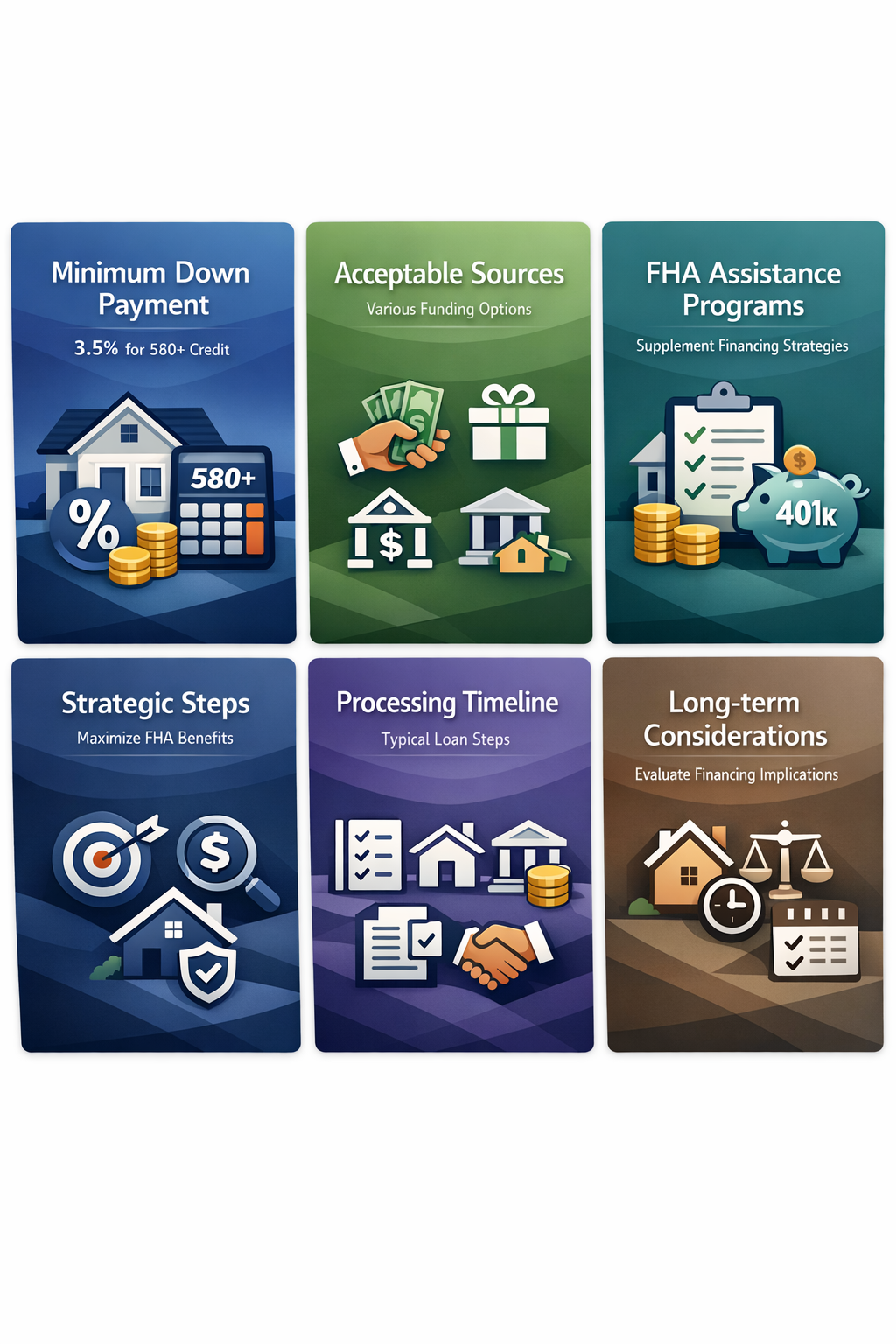
Real estate investors can follow specific steps to maximize the benefits of low down payment FHA loans while building their investment portfolio effectively.
- Evaluate your credit score and work to achieve at least 580 to qualify for the lowest down payment requirements
- Document all income sources thoroughly, including rental income from existing investment properties that might support qualification
- Research local down payment assistance programs that might reduce your upfront cash requirements
- Consider house hacking strategies where you live in one unit while renting others to meet occupancy requirements
- Plan your exit strategy, including timeline for potential refinancing or property conversion
Timeline for FHA Loan Processing
Understanding the typical timeline for FHA loan processing helps investors plan their acquisition strategies and manage cash flow during the application period.
- Pre-qualification phase typically takes 1-3 business days once you provide initial financial information
- Formal application and documentation review usually requires 7-10 business days for initial underwriter assessment
- Property appraisal and inspection process often takes 10-14 days depending on appraiser availability and property complexity
- Final underwriting and loan approval typically requires another 5-7 business days after all conditions are met
- Closing preparation and scheduling usually takes 3-5 business days once final approval is received
Long-term Investment Considerations
While FHA loans offer attractive down payment options, real estate investors should carefully consider the long-term implications of choosing this financing method for their investment strategy. The low down payment benefits come with specific requirements and limitations that could affect portfolio growth.
FHA loans require mortgage insurance premiums that may persist for the life of the loan, potentially reducing cash flow compared to conventional financing. Additionally, the primary residence requirement limits direct investment property purchases, though strategic approaches like house hacking might provide workarounds. Investors should evaluate whether the lower upfront costs justify the ongoing expenses and restrictions associated with FHA financing.
●Conclusion
FHA loan down payment options provide real estate investors with alternative financing strategies that might complement their overall investment approach. While these loans are primarily designed for primary residences, the low minimum down payment requirements and flexible funding sources could support specific investment strategies like house hacking or portfolio building.
For investors seeking more direct investment property financing, specialized loan products like DSCR loans or fix and flip financing might better align with their goals. These investor-focused mortgage products typically offer more flexibility for rental properties and renovation projects without the occupancy requirements associated with FHA loans.
Consider consulting with mortgage professionals who understand both traditional and investor financing options to determine the best approach for your specific investment strategy and portfolio goals.