
Real estate investors seeking financing for rental properties often discover that traditional mortgage qualification can be challenging. DSCR loan qualification requirements offer a different approach, focusing on the property's income potential rather than personal income documentation. Understanding these requirements is crucial for investors looking to expand their portfolios efficiently and secure competitive financing terms for their investment properties.
Understanding DSCR Loan Qualification Fundamentals
Debt Service Coverage Ratio loans represent a significant shift in how lenders evaluate investment property financing applications. Unlike conventional mortgages that heavily emphasize personal income verification through tax returns and pay stubs, DSCR loans focus primarily on the rental property's cash flow potential. This approach typically makes the qualification process more straightforward for real estate investors.
The core principle behind DSCR loan qualification requirements centers on the property's ability to generate sufficient rental income to cover the mortgage payments. Lenders calculate this ratio by dividing the property's gross rental income by the total debt service, including principal, interest, taxes, and insurance. A ratio above 1.0 indicates that the property generates enough income to cover its carrying costs, while ratios below 1.0 suggest the investor might need to contribute additional funds monthly.
Most lenders prefer to see DSCR ratios between 1.0 and 1.25, though some programs may accept ratios as low as 0.75 for well-qualified borrowers. This flexibility allows investors to pursue properties that might require modest monthly contributions while still building long-term wealth through appreciation and principal paydown.
Credit Score and Financial History Requirements
Credit requirements for DSCR loans typically range from 620 to 640 minimum scores, though many lenders prefer scores of 680 or higher for the most competitive rates and terms. Unlike traditional mortgages where credit scores might be just one factor among many, DSCR loan qualification requirements place considerable weight on creditworthiness since personal income documentation is minimized.
Lenders usually examine credit history for patterns that indicate responsible debt management and financial stability. Recent bankruptcies, foreclosures, or significant delinquencies can impact qualification, though the specific waiting periods vary by lender. Most programs require at least two to four years since any major credit events, depending on the circumstances and the borrower's overall financial profile.
Beyond the credit score itself, lenders often evaluate the borrower's overall debt-to-income ratio using existing obligations. While they may not require extensive income documentation, they still need to verify that the borrower can handle their current debts plus the new investment property obligation. This balanced approach helps ensure that investors don't overextend themselves financially.
Down Payment and Reserve Fund Requirements
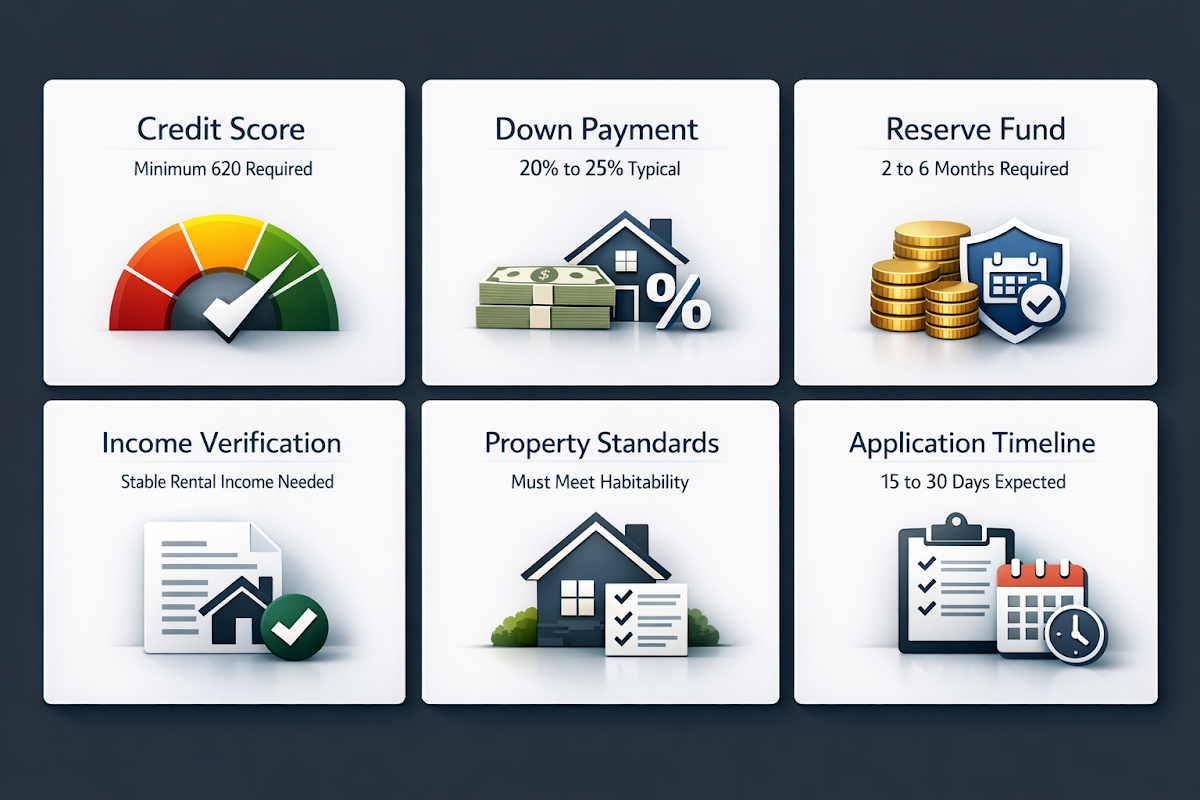
DSCR loan qualification requirements typically mandate higher down payments compared to owner-occupied properties, reflecting the increased risk associated with investment properties. Most programs require between 20% and 25% down payment, though some lenders may accept as little as 15% for exceptionally well-qualified borrowers with strong credit profiles and significant liquid assets.
Reserve requirements represent another crucial component of qualification. Lenders usually require borrowers to maintain liquid reserves equivalent to two to six months of mortgage payments for the investment property. These reserves might include cash, money market accounts, certificates of deposit, or other readily accessible funds. The specific amount depends on factors such as the borrower's experience level, credit strength, and the property's characteristics.
Some lenders also consider the borrower's real estate investment experience when determining reserve requirements. Seasoned investors with proven track records might qualify for lower reserve requirements, while newer investors might need to demonstrate larger cash cushions. This approach helps protect both the lender and borrower from potential cash flow challenges that could arise during vacancy periods or unexpected maintenance expenses.
Property Income Documentation and Verification
The rental income verification process forms the foundation of DSCR loan qualification requirements. For existing rental properties, lenders typically require lease agreements, rent rolls, and sometimes bank statements showing consistent rental deposits. The documentation should demonstrate stable occupancy and market-rate rental income that supports the desired loan amount.
For vacant properties or new purchases, lenders often rely on professional appraisals that include rental income estimates or market rent studies. Some programs accept rent schedules prepared by licensed real estate professionals or property management companies. The key is providing credible evidence that the property can generate the rental income used in the DSCR calculation.
Lenders may also consider the local rental market conditions and vacancy rates when evaluating income projections. Properties in areas with strong rental demand and low vacancy rates might receive more favorable consideration than those in markets with higher vacancy risks. This market-based approach helps ensure that income projections remain realistic and sustainable over the loan term.
Property Type and Condition Standards
DSCR loan qualification requirements often include specific property eligibility criteria that can vary significantly between lenders. Most programs accept single-family rental homes, small multifamily properties up to four units, and some commercial properties. However, certain property types such as manufactured homes, properties with significant acreage, or unique structures might face restrictions or require specialized lending programs.
Property condition standards typically require that investment properties meet basic habitability and safety requirements. Lenders usually require professional property inspections and appraisals that verify the property's structural integrity and identify any major repair needs. Properties requiring extensive renovations might not qualify for standard DSCR programs, though some lenders offer rehabilitation loan products specifically designed for fix-and-flip or value-add investment strategies.
Location requirements can also impact qualification, with some lenders maintaining specific geographic restrictions or preferring properties in certain metropolitan areas. Properties in flood zones might require additional insurance coverage, while those in declining markets could face higher down payment requirements or interest rate adjustments. Understanding these property-specific requirements early in the process can help investors focus their search on qualifying properties.
Application Process and Timeline Considerations
The DSCR loan application process typically moves faster than traditional mortgage applications since extensive personal income documentation isn't required. However, borrowers should still prepare for a thorough evaluation process that includes credit verification, asset documentation, and property analysis. Most lenders can complete the underwriting process within 15 to 30 days, depending on the complexity of the transaction and the completeness of the submitted documentation.
Successful applicants usually benefit from working with loan officers who specialize in investment property financing. These professionals understand the unique aspects of DSCR loan qualification requirements and can guide borrowers through potential challenges. They often maintain relationships with appraisers and other professionals familiar with rental property valuations, which can help streamline the process.
Timing considerations become particularly important for investors looking to close quickly on investment opportunities. Having pre-approval letters and established relationships with DSCR lenders can provide competitive advantages in fast-moving markets. Some investors maintain ongoing relationships with multiple lenders to ensure access to financing when attractive opportunities arise, allowing them to move quickly and secure better deals.
Rate Factors and Program Variations
Interest rates for DSCR loans typically run higher than owner-occupied mortgage rates, reflecting the increased risk associated with investment properties. The specific rate offered depends on multiple factors including credit score, down payment amount, loan-to-value ratio, and the property's DSCR. Borrowers with stronger qualification profiles generally receive more competitive rates and better loan terms.
Various DSCR loan programs cater to different investor needs and qualification profiles. Some programs focus on seasoned investors with extensive portfolios, while others target newer investors looking to build their real estate holdings. Interest-only payment options might be available for certain programs, allowing investors to maximize cash flow during the initial years of ownership.
Portfolio lenders and specialized investment property lenders often provide more flexible DSCR loan qualification requirements compared to traditional banks. These lenders might accept lower credit scores, higher loan-to-value ratios, or unique property types that don't fit conventional lending guidelines. However, this flexibility often comes with slightly higher interest rates or additional fees, making it important for investors to compare multiple options and understand the total cost of financing.
●Conclusion
DSCR loan qualification requirements provide real estate investors with an efficient path to financing rental properties without the extensive personal income documentation required by traditional mortgages. Success depends on understanding credit requirements, maintaining adequate reserves, and selecting properties that generate sufficient rental income to support the debt service. By working with experienced lenders and preparing thorough documentation, investors can leverage these programs to build and expand their real estate portfolios effectively while accessing competitive financing terms that support their long-term investment goals.