
Running a music career as an independent artist isn't just about talent — it's about managing a real business. From buying instruments and renting rehearsal space to covering travel costs and marketing your brand, the financial demands can add up quickly. The good news is that business loan options for a freelance musician with performance contracts are more accessible today than ever before. Whether you're a touring performer, a studio session artist, or a gigging musician building your local fanbase, understanding your financing options could be the key to taking your career to the next level.
Why Freelance Musicians Qualify as Business Borrowers
Many musicians don't realize they're actually running a small business. If you're earning income from performances, recording sessions, teaching, or licensing, lenders may view you as a self-employed entrepreneur — and that opens doors to a range of business financing tools.
The key is how you document that income. Lenders typically want to see that your income is consistent and verifiable. Performance contracts are especially valuable here. A signed contract showing scheduled gigs, payment terms, and booking dates acts as a form of proof of future revenue — similar to how a commercial borrower might use purchase orders or receivables to secure financing.
To strengthen your position as a borrower, consider these foundational steps:
- Register your business: Forming an LLC or sole proprietorship adds legitimacy and may improve your chances with lenders.
- Open a dedicated business bank account: Separating personal and business finances makes your cash flow easier to document.
- File taxes as a self-employed individual: Schedule C filings on your federal tax returns give lenders a clear picture of your net income.
- Keep your performance contracts organized: Dated, signed agreements are powerful documentation tools when applying for financing.
With the right paperwork in place, freelance musicians can present themselves as credible, bankable business owners — which is exactly what lenders want to see.
Types of Business Loans Available to Independent Artists
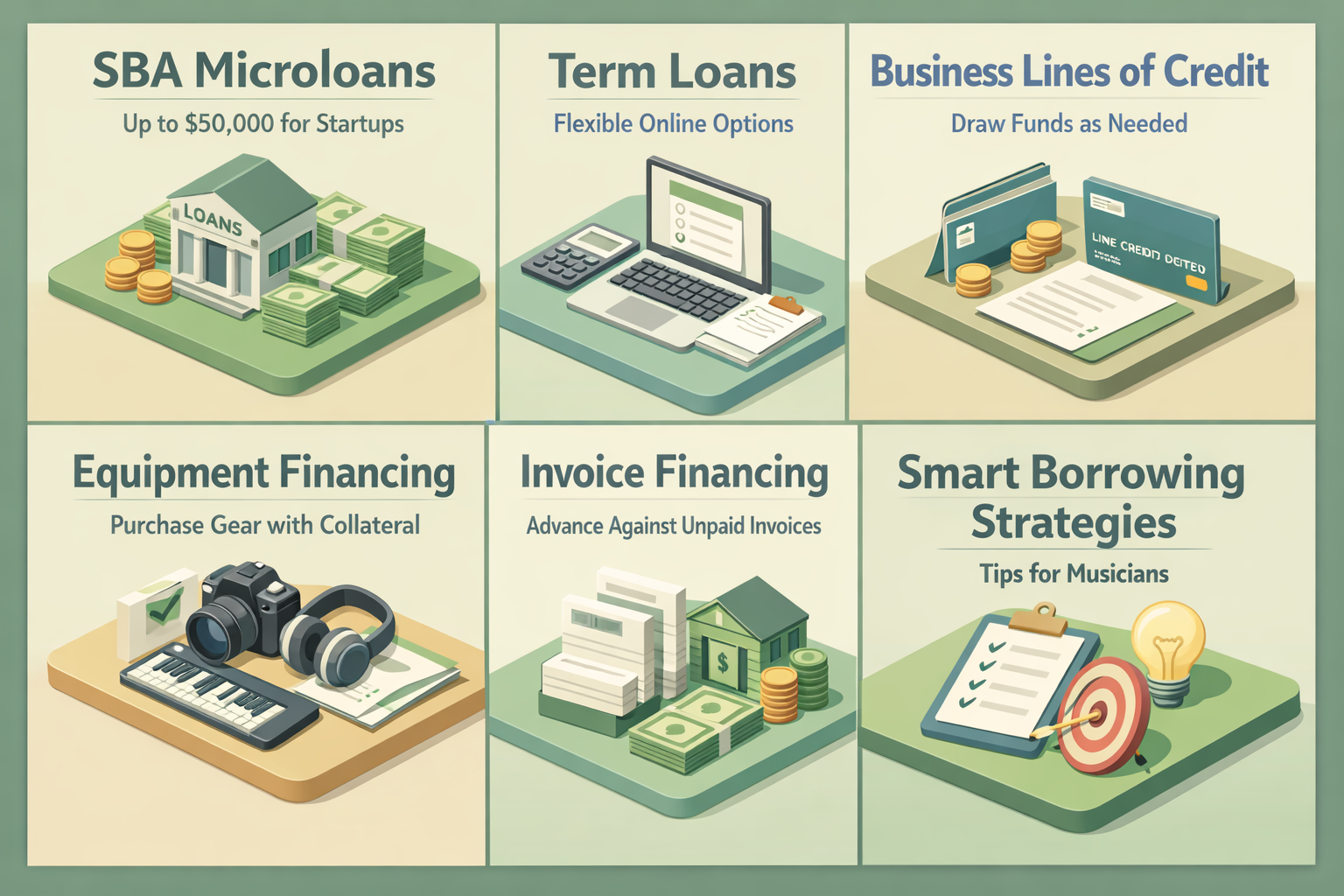
There's no single loan product designed exclusively for musicians, but several financing options are well-suited to the unique cash flow patterns and needs of independent performers. Here's a look at the most relevant choices:
SBA Microloans
The U.S. Small Business Administration's Microloan program offers loans typically up to $50,000 through nonprofit intermediary lenders. These loans are designed for small businesses and startups that may not qualify for traditional bank financing. For a freelance musician just getting started or growing their operation, an SBA Microloan could be a practical entry point. Funds can often be used for equipment, working capital, or supplies — all common needs for performing artists.
Term Loans From Online Lenders
Online business lenders have made it significantly easier for self-employed individuals to access term loans without the strict requirements of traditional banks. Many online platforms accept bank statements and contracts as proof of income rather than requiring years of tax returns. Repayment terms, interest rates, and loan amounts vary widely, so it's worth comparing multiple lenders before committing.
Business Lines of Credit
A business line of credit works similarly to a credit card — you draw funds as needed and only pay interest on what you use. This can be a smart tool for musicians dealing with irregular income. For example, you might draw on the line to cover touring expenses before a performance and repay it once the show fees come in. Flexibility is the main advantage here.
Equipment Financing
If you need to purchase instruments, sound equipment, recording gear, or stage lighting, equipment financing may be a strong fit. The equipment itself often serves as collateral, which can make approval easier even for borrowers with limited credit history. Repayment terms are typically tied to the expected life of the equipment.
Invoice Financing
If you've completed gigs but haven't been paid yet, invoice financing — sometimes called factoring — allows you to borrow against those outstanding payments. A lender advances you a percentage of the invoice value, and you repay it once the client pays. For musicians waiting on venue payments or corporate event fees, this could help bridge cash flow gaps.
How Performance Contracts Strengthen Your Loan Application
One of the most underutilized assets a freelance musician has is a well-documented portfolio of performance contracts. These agreements serve as tangible evidence of upcoming revenue, which can significantly improve a lender's confidence in your ability to repay a loan.
When presenting contracts to a lender, make sure they include:
- The names and contact information of both parties
- Performance dates, venues, and agreed-upon payment amounts
- Payment schedules and any deposit terms
- Signatures from both the client and the performer
Lenders who specialize in working with self-employed borrowers or creative professionals may be more comfortable using contracts as part of their underwriting process. It's worth asking prospective lenders upfront whether they accept performance agreements as income documentation.
Keep in mind that lenders may discount future contract income somewhat — particularly if contracts are short-term or if there's a risk of cancellation. Having a consistent track record of fulfilled contracts over multiple years strengthens your case considerably. Bank statements showing regular deposits from gigs can further validate what your contracts promise.
What Lenders Look for When Evaluating a Musician's Business Credit
Whether you're applying for a microloan, a line of credit, or an equipment loan, lenders typically evaluate several core factors. Understanding these can help you prepare a stronger application.
Personal and Business Credit Scores
For many sole proprietors, the personal credit score plays a major role in loan decisions. A score in the mid-600s or higher may open doors to many products, though better terms are usually available to those with scores above 700. If you've established a business credit profile through a registered entity, that history may also be considered.
Time in Business
Lenders often look for at least one to two years of operating history. If you've been performing professionally and filing taxes as a self-employed musician for a couple of years, you may meet this threshold. Newer musicians may need to look at startup-focused lenders or SBA programs designed for early-stage businesses.
Revenue and Cash Flow
Even without traditional payroll, lenders want to see that money flows through your business consistently. Bank statements showing regular deposits — ideally averaging a stable monthly income — are critical. The more predictable your income appears, the more favorably lenders may view your application.
Debt-to-Income Ratio
Lenders will likely assess how much of your income already goes toward existing debt obligations. Keeping this ratio manageable improves your borrowing capacity and signals responsible financial management.
Smart Borrowing Strategies for Freelance Music Professionals
Getting approved for a loan is just the first step — using borrowed capital wisely is what drives real business growth. Here are some smart borrowing strategies that may help freelance musicians get the most from their financing:
- Borrow for revenue-generating purposes: Prioritize investments that directly increase your earning potential, such as professional recording equipment, a reliable vehicle for touring, or marketing tools that help book more gigs.
- Match loan terms to cash flow cycles: If your income is seasonal — for example, heavier in summer festival season — consider loans with flexible repayment schedules or draw-and-repay products like lines of credit.
- Start small and build credit: Taking on a manageable loan and repaying it on time helps build your business credit profile, making it easier to access larger amounts in the future.
- Work with a financial advisor or SCORE mentor: The SBA's SCORE program offers free mentoring for small business owners, including those in creative industries. A mentor can help you review your financials and prepare a compelling loan application.
- Compare multiple lenders: Rates, fees, and qualification requirements vary widely. Online lenders, community development financial institutions (CDFIs), and credit unions may offer more favorable terms for self-employed borrowers than traditional banks.
Taking a thoughtful, strategic approach to borrowing can help you grow your music business without taking on more debt than your income can comfortably support.
Exploring Business Loan Options for a Freelance Musician With Performance Contracts Through Alternative Channels
Beyond traditional and SBA lending, there are several alternative financing channels worth considering. These options may be particularly useful if you're early in your career or haven't yet built a strong credit history.
Community Development Financial Institutions (CDFIs)
CDFIs are mission-driven lenders that focus on underserved communities and small businesses that may struggle to access conventional credit. Many CDFIs offer flexible underwriting, lower minimum credit requirements, and even financial education resources alongside their loan products. If you're based in an area with an active CDFI, it could be a valuable resource for music entrepreneurs.
Arts-Focused Grants and Hybrid Funding
While not technically loans, grants from arts foundations, local governments, and cultural organizations can supplement your financing strategy. Some programs combine grants with low-interest loans specifically for creative professionals. These hybrid options can reduce how much debt you need to take on while still funding your business goals.
Crowdfunding and Fan-Backed Capital
Platforms that allow fans to pre-fund albums, tours, or creative projects have become a legitimate way for independent musicians to raise capital without incurring debt. While this isn't a loan in the traditional sense, it can reduce reliance on borrowing and preserve cash flow for debt repayment on other obligations.
Combining a few of these channels — such as a small equipment loan alongside a grant or crowdfunding campaign — can create a more balanced and sustainable financial foundation for your music business. Explore the full range of business loan options to find the best fit for your situation.
●Conclusion
Building a sustainable career as an independent musician takes more than talent — it takes financial strategy. The good news is that business loan options for a freelance musician with performance contracts are real, accessible, and increasingly well-suited to the way creative professionals earn their income. From SBA microloans and equipment financing to lines of credit and CDFI programs, there are multiple pathways to the capital you need to grow. The most important steps are to get your documentation in order, understand what lenders are looking for, and choose financing tools that match your income patterns and business goals. If you're ready to explore your options, LoanWise is here to help you find the right lending solution for your music career.