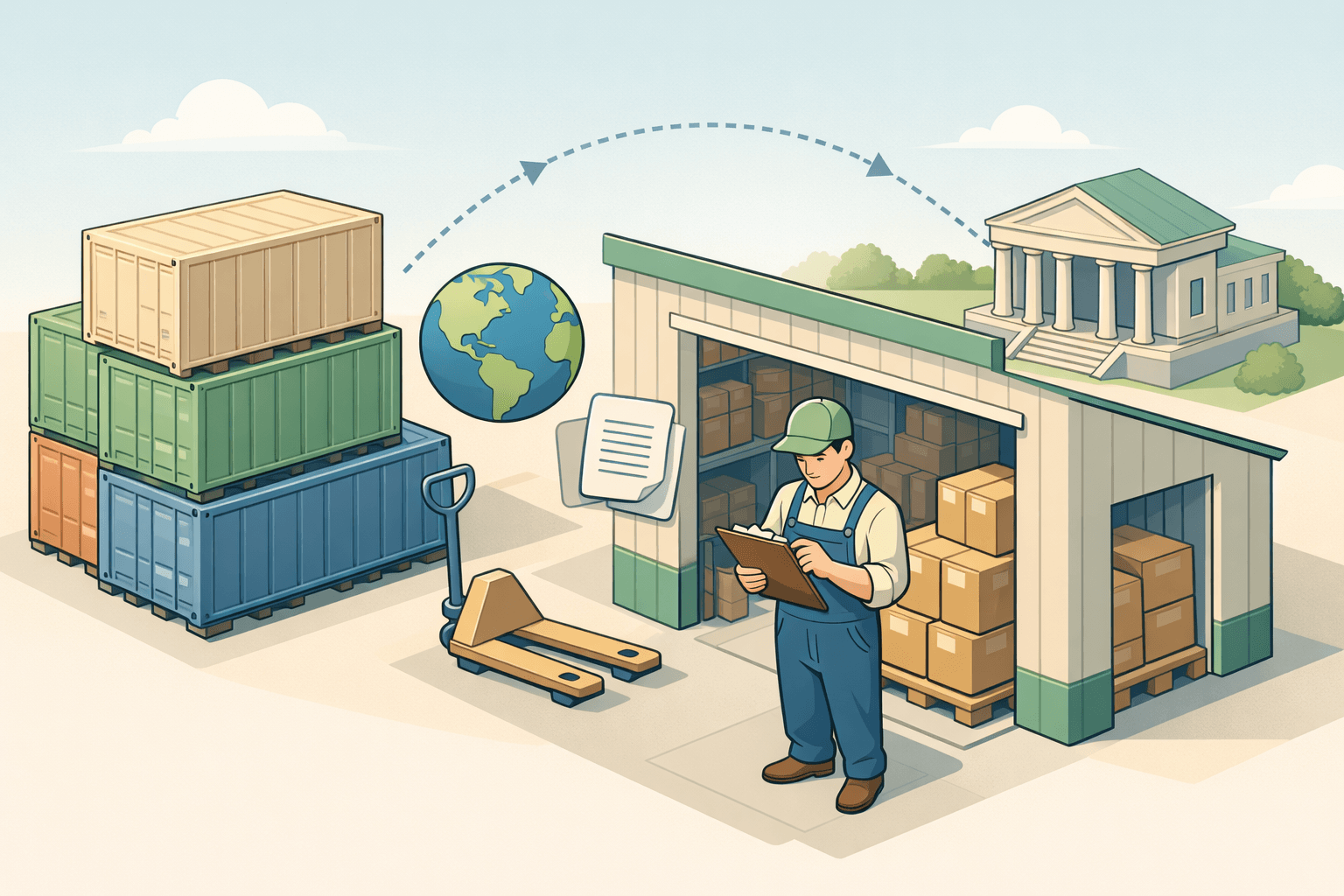
Running a business that sources products from overseas can be incredibly rewarding — but it also comes with a unique set of financial challenges. Whether you're purchasing inventory from manufacturers in Asia, raw materials from South America, or specialty goods from Europe, you likely need significant upfront capital long before those products ever reach your shelves. That's where a business loan for importing goods becomes essential. The right financing solution can bridge the gap between placing your order and collecting revenue, keeping your supply chain moving and your business growing. In this guide, we'll walk through the most effective import financing options available to small business owners and entrepreneurs today.
Why Importing Goods Creates Unique Cash Flow Challenges
Unlike domestic purchasing, international trade introduces a range of financial complexities that can strain even a well-managed business. Payment terms with overseas suppliers are often very different from what you'd expect locally. Many foreign manufacturers require deposits — sometimes 30% to 50% upfront — with the remainder due before shipment or upon delivery. That means your capital is tied up for weeks or even months before you can sell a single unit.
On top of that, shipping lead times, customs clearance, and currency fluctuations all add layers of uncertainty. A business owner importing goods from China, for example, might place an order in January, wait eight to twelve weeks for production, spend another three to six weeks on ocean freight, and then deal with customs processing — all before the product is available for sale. During that entire window, working capital is locked up.
These timing mismatches are why many importers turn to specialized financing tools. Without proper funding in place, even a profitable import business can find itself unable to reorder inventory or fulfill growing customer demand. Understanding your options is the first step toward building a sustainable import operation.
What Is a Business Loan for Importing Goods?
A business loan for importing goods is any financing product designed to help a company purchase products or materials from international suppliers. These loans are sometimes called trade finance products, and they come in several forms depending on the nature of your business, your supplier relationships, and your creditworthiness.
Some import financing options are structured specifically for international transactions — such as letters of credit and trade credit insurance — while others are more general-purpose tools that importers frequently use, like term loans, lines of credit, and SBA loan programs. The best solution for your business will depend on your order size, your cash flow cycle, your supplier's requirements, and the lending relationships you've already established.
It's worth noting that import financing is not a one-size-fits-all product. A boutique retailer importing handmade goods might have very different needs than a wholesale distributor importing electronics. That's why exploring multiple financing channels — and potentially combining them — is often a smart approach for growing importers.
Letters of Credit: A Cornerstone of International Trade Financing
One of the most widely used tools in international commerce is the letter of credit for imports. A letter of credit (LC) is a financial document issued by a bank on behalf of the buyer — in this case, the importer — that guarantees payment to the seller once certain conditions are met. Those conditions typically include proof of shipment, accurate documentation, and compliance with agreed-upon terms.
For overseas suppliers, a letter of credit reduces the risk of non-payment significantly. Because the bank is backing the transaction, the supplier can feel confident proceeding with production and shipment. For the importer, an LC can sometimes unlock better pricing or more favorable payment terms, since the supplier's risk is reduced.
There are different types of letters of credit available, including:
- Irrevocable LC: Cannot be changed without agreement from all parties, providing the highest level of security for sellers.
- Standby LC: Acts more like a guarantee and is only drawn upon if the buyer defaults on payment.
- Revolving LC: Useful for businesses that import regularly from the same supplier, as it can be reused for multiple transactions.
Obtaining a letter of credit typically requires working with a bank that has international trade capabilities. The bank may require collateral or a strong credit profile, and fees are usually charged as a percentage of the LC value. For small business owners, building a relationship with a trade-savvy lender early on can make accessing these tools much smoother.
Working Capital Solutions That Keep Importers Liquid
Beyond letters of credit, many importers rely on working capital for importers in the form of revolving lines of credit or short-term business loans. These tools give businesses the flexibility to draw funds as needed, pay suppliers promptly, and repay the balance as inventory sells.
A business line of credit is particularly well-suited for importers with consistent, repeating purchase cycles. You can draw from the line when placing an order, then repay it when the goods are sold. This revolving structure means you're only paying interest on what you've borrowed, which can make it more cost-effective than a traditional term loan for short-cycle imports.
Short-term term loans may be a better fit when you're making a larger, one-time purchase — such as buying a new product line in bulk to take advantage of a favorable exchange rate or a supplier promotion. These loans provide a lump sum upfront and are repaid over a fixed term, often six to twenty-four months.
When evaluating working capital options, lenders will typically look at your business's revenue history, credit score, time in operation, and existing debt obligations. Stronger financials generally unlock better interest rates and higher credit limits, so maintaining clean books and consistent cash flow is always in your best interest as an importer.
SBA Loans and Government-Backed Programs for International Trade
The U.S. Small Business Administration (SBA) offers several programs that may be particularly useful for small business importers. While many people associate SBA loans with domestic expansion or equipment purchases, these programs can also support international trade loans and import-related activities.
The SBA Export Working Capital Program (EWCP) is specifically designed for businesses engaged in international trade, though it's primarily targeted at exporters. However, importers who also sell goods overseas may find this program relevant. The SBA 7(a) loan program, which is more broadly available, can be used for working capital purposes — including purchasing inventory from foreign suppliers.
SBA loans are attractive because they're partially guaranteed by the federal government, which encourages lenders to offer more favorable terms than they might otherwise provide to small businesses. Interest rates on SBA 7(a) loans are regulated and tied to the prime rate, which may result in lower borrowing costs compared to alternative lenders. However, the application process can be more involved, requiring detailed financial documentation and a longer approval timeline.
For importers who qualify, SBA financing could be one of the most cost-effective paths to funding international purchases. It's worth consulting with an SBA-approved lender to understand which program best fits your import business model.
Supply Chain Financing and Invoice-Based Options for Importers
Supply chain financing for importers represents a modern and increasingly popular approach to managing the costs of international purchasing. Rather than relying solely on traditional bank loans, supply chain finance programs allow importers to extend their payment terms with suppliers while ensuring those suppliers get paid quickly — often through a third-party financing platform.
Here's how it typically works: a finance company or platform pays your supplier on your behalf, and you repay the financier on extended terms — often 60, 90, or even 120 days later. This arrangement gives you more time to sell your imported goods before repayment is due, improving your cash flow without straining the supplier relationship.
Another invoice-based tool worth knowing is purchase order (PO) financing. If you've already received a confirmed purchase order from a customer, some lenders will advance funds based on that order to help you pay your supplier upfront. This can be especially valuable for importers who land a large order but don't have the capital to fulfill it immediately.
These solutions are often provided by specialty lenders or fintech platforms, and they may come with higher costs than bank financing. Still, for businesses in growth mode that haven't yet built a long credit history, supply chain and invoice-based financing can provide a critical bridge to scale.
How to Qualify and Choose the Right Import Financing Option
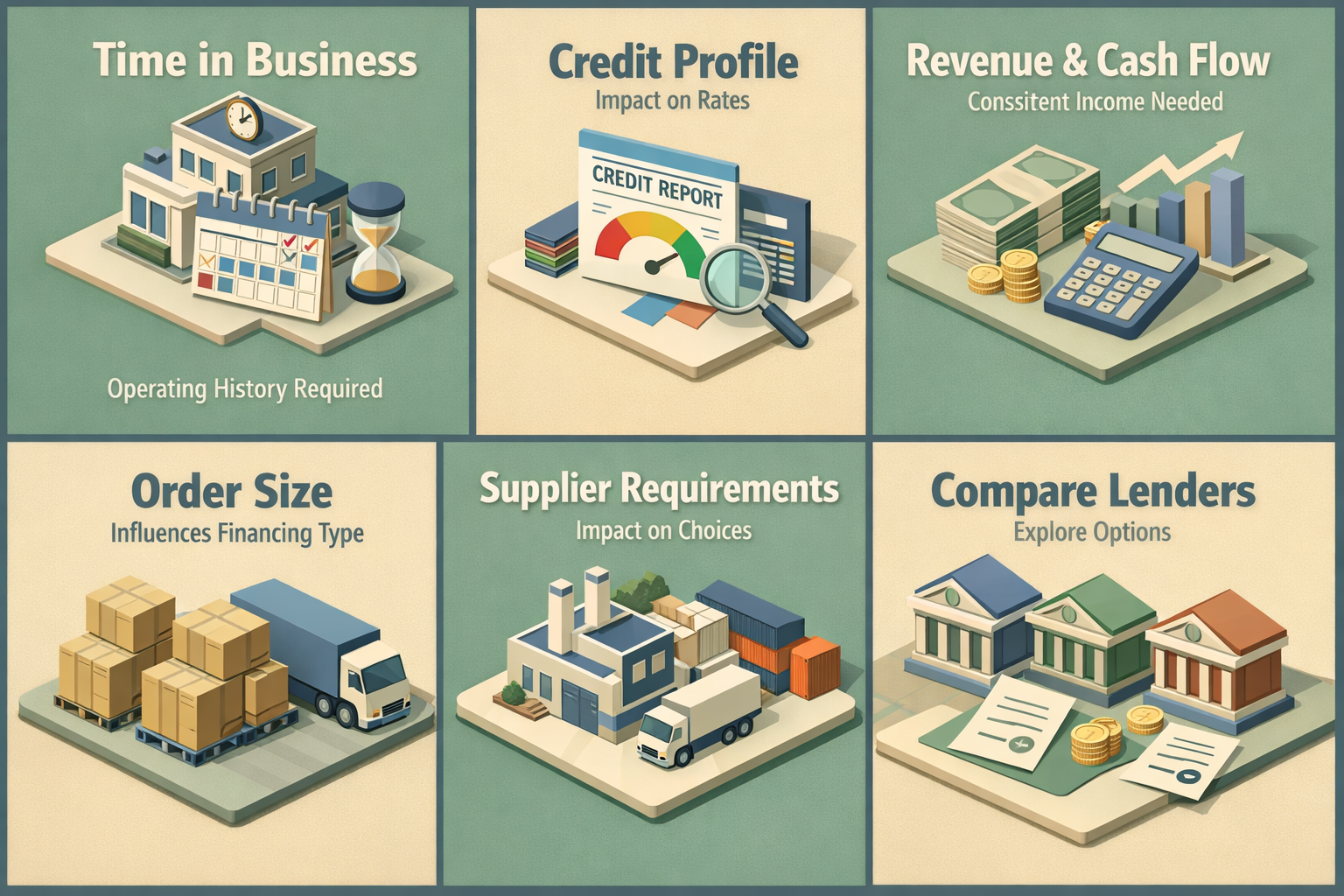
Choosing the right import financing options starts with an honest assessment of your business's financial position and operational needs. Here are some key factors to consider before applying:
- Time in business: Most traditional lenders prefer businesses with at least one to two years of operating history. Newer businesses may need to explore alternative lenders or SBA microloan programs.
- Credit profile: Both personal and business credit scores typically play a role in qualifying for import financing. Higher scores generally unlock better rates and terms.
- Revenue and cash flow: Lenders want to see that your business generates consistent revenue and has manageable debt relative to income. Having organized financial statements ready is essential.
- Order size and frequency: Smaller, infrequent orders might be best served by a line of credit, while larger or more structured purchases could benefit from an LC or term loan.
- Supplier requirements: If your overseas supplier requires an LC or advance payment, that will influence which financing tool you need regardless of your preferences.
It's also wise to compare multiple lenders before committing. Banks, credit unions, SBA-approved lenders, and online business lenders all offer different products at different price points. Working with a knowledgeable lending advisor — like the team at LoanWise — can help you navigate these choices and find the solution that makes the most sense for your specific import business.
●Conclusion
Sourcing goods from international markets can give your business a powerful competitive edge — but only if your financing strategy can keep up with the demands of global trade. Whether you need a business loan for importing goods, a letter of credit to secure supplier trust, or a revolving line of credit to smooth out cash flow, there are more options available today than ever before. The key is understanding which tools fit your business model, your growth stage, and your financial profile. Don't let capital constraints hold back a strong import strategy. Reach out to LoanWise today to explore tailored financing solutions designed with small business owners and commercial borrowers in mind.