
When your business needs funding, choosing between a business line of credit vs business loan can feel overwhelming. Both financing options offer unique advantages, but they serve different purposes and work best in specific situations. Understanding these differences will help you make an informed decision that aligns with your company's financial goals and cash flow needs.
Understanding Business Lines of Credit
A business line of credit functions similarly to a credit card, providing flexible access to funds up to a predetermined limit. Unlike traditional loans, you only pay interest on the amount you actually use, not the entire credit limit. This revolving credit structure makes it ideal for businesses with fluctuating cash flow needs.
Most business lines of credit offer limits ranging from $10,000 to $500,000, though some lenders may provide higher amounts for established companies. The application process typically requires financial statements, tax returns, and proof of business revenue. Once approved, you can draw funds as needed through online transfers, checks, or cards.
Interest rates on lines of credit are often variable, meaning they can change based on market conditions. However, the flexibility to access funds quickly during unexpected expenses or seasonal fluctuations makes this financing option particularly valuable for many business owners.
How Traditional Business Loans Work
Traditional business loans provide a lump sum payment that you repay over a fixed period with predetermined monthly payments. These loans typically offer larger amounts than lines of credit, making them suitable for significant investments like equipment purchases, real estate acquisitions, or major business expansions.
The loan structure includes fixed or variable interest rates, with repayment terms usually ranging from one to ten years. Longer terms generally mean lower monthly payments but higher total interest costs. Most lenders require detailed business plans, financial projections, and collateral for larger loan amounts.
Business loans often provide more predictable payment schedules, which can help with budgeting and financial planning. The fixed nature of these loans makes them particularly attractive for businesses with steady cash flow that need substantial capital for specific projects or investments.
Key Differences in Funding Structure
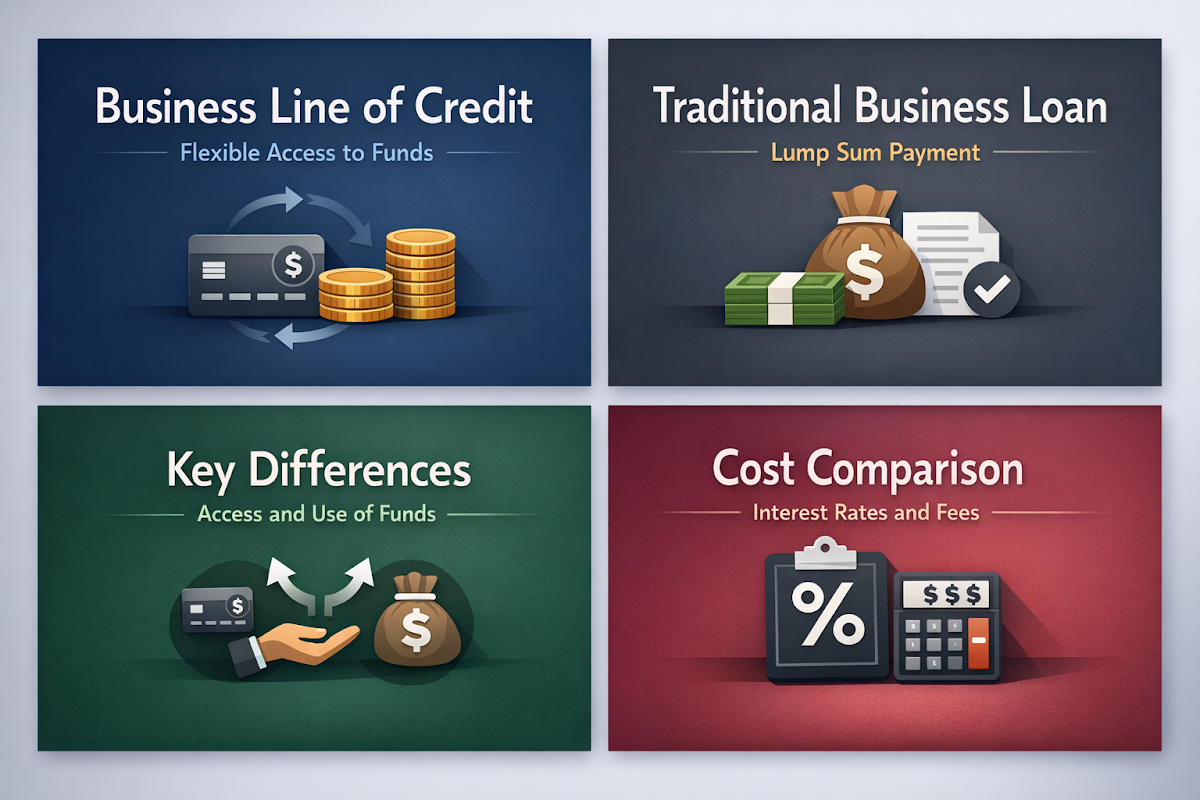
The fundamental difference between these financing options lies in how you access and use the funds. Business lines of credit offer ongoing access to capital, allowing you to borrow, repay, and borrow again as needed. This revolving structure provides maximum flexibility for managing working capital and unexpected expenses.
Traditional business loans provide all funds upfront, requiring you to start making payments immediately regardless of whether you've used all the money. This structure works well when you know exactly how much capital you need and when you'll need it, such as for equipment purchases or facility expansions.
Interest calculations also differ significantly. Lines of credit charge interest only on outstanding balances, while traditional loans calculate interest on the full loan amount from day one. This distinction can result in substantial cost savings if you don't need all available funds immediately.
Cost Comparison and Interest Considerations
Business lines of credit often carry higher interest rates than traditional loans, typically ranging from 8% to 30% annually. However, since you only pay interest on funds you actually use, the effective cost might be lower than expected. Some lenders also charge annual fees or draw fees for accessing funds.
Traditional business loans usually offer lower interest rates, especially for borrowers with strong credit profiles and established businesses. Rates typically range from 4% to 20%, depending on factors like creditworthiness, loan amount, and collateral. Fixed-rate loans provide payment predictability, while variable rates might offer initial savings.
When comparing costs, consider the total expense over time, including origination fees, annual fees, and early repayment penalties. A line of credit might cost more per dollar borrowed but could be more economical if you only need funds periodically or for short durations.
Qualification Requirements and Application Process
Both financing options require similar documentation, but qualification criteria can vary significantly. Business lines of credit often have more flexible requirements, with some lenders approving applications for newer businesses or those with lower credit scores. However, higher-risk borrowers typically face higher interest rates and lower credit limits.
Traditional business loans usually require more extensive documentation, including detailed financial statements, business plans, and collateral evaluations. Established businesses with strong credit histories and steady revenue streams generally receive better terms and higher approval rates.
The application timeline also differs considerably. Lines of credit applications often process within days or weeks, while traditional loan approvals might take several weeks or months. If you need quick access to funds, a business line of credit could provide faster solutions for urgent financing needs.
Choosing the Right Option for Your Business
Consider a business line of credit if your company experiences seasonal fluctuations, needs flexible working capital, or wants to maintain a financial safety net for unexpected expenses. This option works particularly well for service-based businesses, retailers preparing for seasonal inventory, or companies managing irregular cash flow patterns.
Traditional business loans make more sense for specific, large purchases or investments with clear returns. If you're buying equipment, expanding facilities, or making other substantial investments, a lump-sum loan with predictable payments might be more appropriate. These loans also work well for debt consolidation or refinancing existing obligations.
Some businesses benefit from having both options available. A traditional loan could fund major investments while a line of credit provides ongoing flexibility for day-to-day operations. This combined approach offers both stability and flexibility, though it requires careful management to avoid overextending your company's debt capacity.
●Conclusion
The decision between a business line of credit vs business loan ultimately depends on your specific financial situation, growth plans, and cash flow patterns. Lines of credit offer flexibility and cost-efficiency for variable funding needs, while traditional loans provide larger amounts with predictable payments for substantial investments. Consider consulting with financial advisors or lenders to evaluate which option aligns best with your business objectives and financial capacity.