
If you're a freelancer carrying an adjustable-rate mortgage, you already know the feeling of navigating two moving targets at once — a loan that shifts with the market and an income that changes month to month. It's a challenging combination, but it doesn't have to be a dead end. Many homeowners in your position are actively exploring the best options for refinancing ARM mortgage with variable freelance overtime pay, and lenders are increasingly finding ways to work with non-traditional earners. This article breaks down what you need to know, from how lenders view your income to which loan programs may give you the best shot at a stable, fixed-rate future.
Understanding How ARM Loans Work and Why Refinancing May Make Sense
An adjustable-rate mortgage, or ARM, starts with a fixed interest rate for an introductory period — often three, five, or seven years — and then adjusts periodically based on a financial index. When that adjustment period arrives, your monthly payment could rise significantly, especially in a high-rate environment. For freelancers who already deal with unpredictable income, a rising mortgage payment can create real financial pressure.
Refinancing into a fixed-rate mortgage locks in a consistent monthly payment for the life of the loan. That kind of stability can be especially valuable when your freelance or overtime income fluctuates. Instead of worrying about both your ARM rate resetting and a slow-income month hitting at the same time, a fixed-rate refinance gives you at least one predictable number in your budget.
That said, refinancing an ARM isn't always the right move for everyone. It typically involves closing costs, a new appraisal, and a full underwriting review. The break-even point — the moment when your monthly savings offset the cost of refinancing — matters. But for freelancers facing an upcoming ARM adjustment or those who've seen rates rise well beyond their initial teaser rate, exploring a refinance is often a smart first step.
How Lenders Evaluate Variable Freelance and Overtime Income During Underwriting
Here's where things get nuanced for freelancers. Traditional underwriting relies heavily on consistent, documented income — think W-2 employees with steady paychecks. When your earnings come from freelance contracts, gig work, or variable overtime, lenders need to take a closer look before they feel confident qualifying you for a new loan.
Most conventional lenders following Fannie Mae or Freddie Mac guidelines require at least two years of self-employment history before they'll count that income toward qualification. They'll typically review your tax returns, 1099 forms, profit and loss statements, and sometimes bank statements to calculate a two-year average of your net income. If your freelance income has been growing year over year, lenders may use an average — which could actually undercount your current earning power.
Variable overtime income is treated similarly. Lenders may count it only if it can be demonstrated as likely to continue, often requiring a two-year history of receiving overtime pay from the same employer or consistent client base. If your overtime is sporadic or tied to short-term contracts, some lenders may discount it or exclude it entirely from your qualifying income.
Understanding this upfront can help you plan your refinance timeline and gather the right paperwork before applying. The more clearly you can document your income — even if it's variable — the stronger your application tends to be.
Loan Programs Worth Exploring When You Refinance ARM Variable Overtime Income
Not all refinance programs treat non-traditional income the same way. Knowing your options helps you choose the path most likely to lead to approval.
- Conventional Fixed-Rate Refinance: If you've got two or more years of documented freelance income and solid tax returns, a conventional refinance through Fannie Mae or Freddie Mac guidelines may be your most competitive option. Rates tend to be favorable for borrowers with strong credit and sufficient equity.
- FHA Streamline Refinance: If your current mortgage is FHA-backed, the streamline program requires limited documentation and may skip a full income re-verification in some cases. It's designed to lower your rate or payment with less friction — which can be helpful if your variable income makes full underwriting complicated.
- Non-QM (Non-Qualified Mortgage) Loans: These are designed specifically for borrowers who don't fit conventional income boxes. Lenders offering Non-QM products may accept bank statement loans — where 12 to 24 months of deposits replace tax returns as income proof — or asset depletion methods. For freelancers with strong cash flow but complex tax situations, this could be a meaningful alternative.
- VA Interest Rate Reduction Refinance Loan (IRRRL): If you're an eligible veteran or service member with a VA loan, the IRRRL program offers a streamlined refinance path with minimal income documentation required in many cases.
- Portfolio Loans: Some smaller banks and credit unions hold loans in-house rather than selling them on the secondary market. Because they set their own guidelines, they may be more flexible when evaluating freelance or variable income profiles.
Talking with a mortgage advisor who understands non-traditional income scenarios can help you quickly narrow down which of these programs fits your situation best.
Strengthening Your Application Before You Apply to Refinance
The good news is there are concrete steps you can take to improve your refinance profile, even with variable income. Preparation matters — and for freelancers, it matters more than most.
Organize and Maximize Your Income Documentation
Start by gathering two years of federal tax returns, all 1099s, and bank statements. If you work with an accountant, ask them to prepare a current profit and loss statement. Lenders want to see consistency and sustainability — the cleaner and more complete your paper trail, the easier it is for underwriters to say yes. If you've been taking large deductions that significantly reduce your net income on paper, it's worth discussing with a tax professional whether that trade-off is costing you borrowing power.
Review and Improve Your Credit Profile
Credit scores play a major role in the interest rate you're offered. Paying down revolving debt, correcting any errors on your credit report, and avoiding new credit applications before you refinance can all help. Even a modest improvement in your score could shift you into a better rate tier, making a meaningful difference over the life of a 30-year loan.
Build Your Home Equity Position
Lenders are generally more comfortable — and often offer better rates — when you have at least 20% equity in your home. If you're close to that threshold, making an extra principal payment before applying might help you avoid private mortgage insurance and access more competitive terms. An updated home appraisal could also reveal equity gains you hadn't accounted for, especially in markets that have appreciated over recent years.
The Best Options for Refinancing ARM Mortgage with Variable Freelance Overtime Pay at a Glance
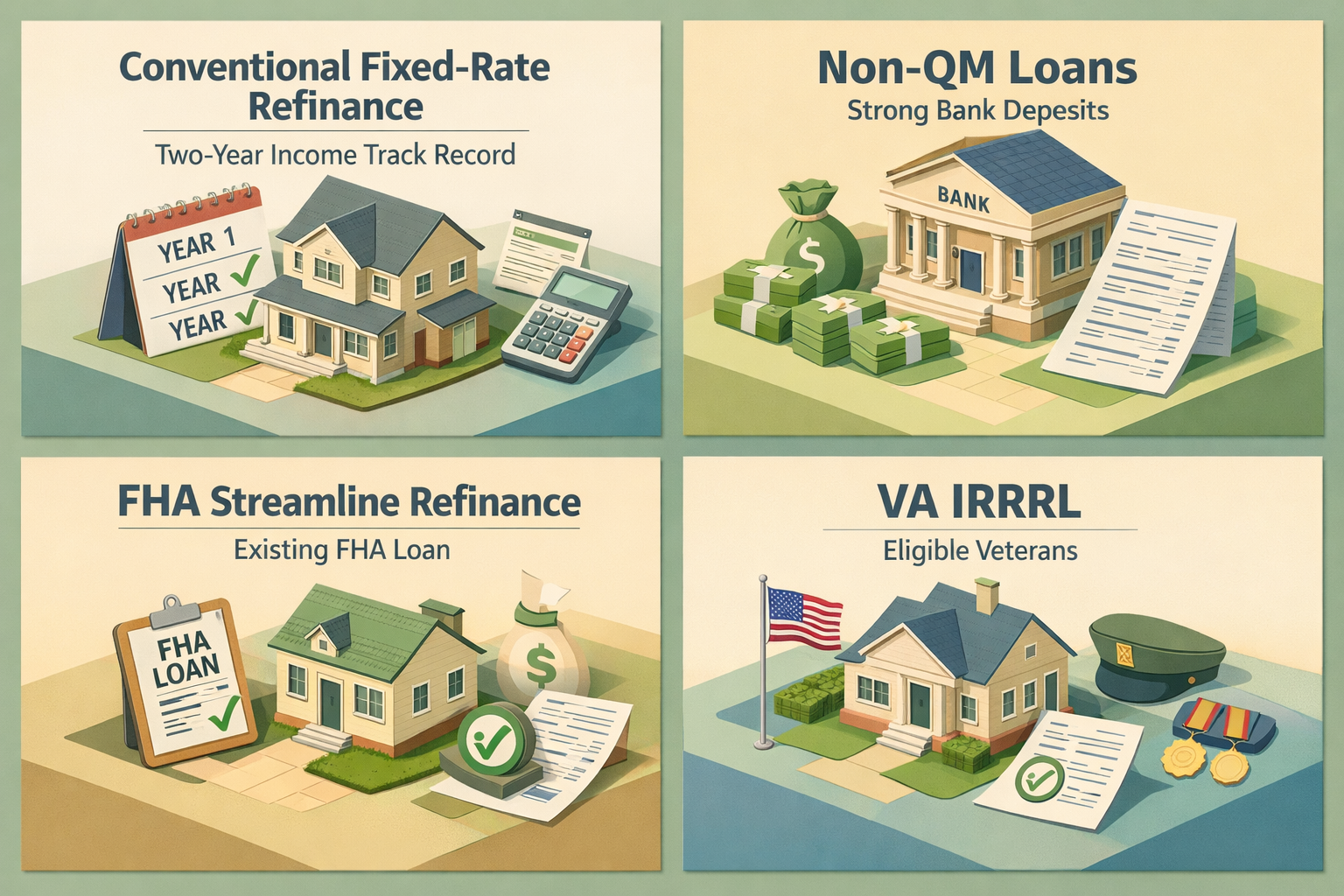
Let's bring it all together. If you're a freelancer holding an ARM and trying to refinance ARM variable overtime income into something more manageable, here's a practical summary of your most promising paths:
- Two-year documented income track record: Pursue a conventional fixed-rate refinance for competitive rates and broad lender availability.
- Strong bank deposits but complex tax returns: A Non-QM bank statement loan may offer a faster, more realistic path to approval.
- Existing FHA or VA loan: Explore streamline or IRRRL programs that reduce documentation friction while still locking in a lower rate.
- Unique income profile that doesn't fit standard boxes: Seek out portfolio lenders or credit unions that may offer more flexibility in how they evaluate your application.
The right option depends on your specific income history, credit profile, equity position, and how urgently your ARM is set to adjust. There's rarely a one-size-fits-all answer for freelancers, but there are almost always viable paths when you approach the process with the right information and the right lender partner.
Timing Your Refinance Strategically Around Income Cycles
Freelancers and contract workers often have income that peaks during certain seasons or project cycles. If your business follows a pattern — say, stronger revenue in the second half of the year — it may be worth timing your refinancing ARM mortgage application when your most recent months of bank statements reflect stronger deposits. While lenders typically average income over two years, some Non-QM lenders weight recent bank statement periods more heavily.
Similarly, if you're anticipating a significant new contract or a raise in overtime rates, it might be worth waiting a few months to let that income show up in your documentation before applying. On the flip side, if your ARM is approaching an adjustment date, waiting too long could mean a sharp payment increase that strains your cash flow during the transition.
Balancing the urgency of your ARM adjustment against the strength of your current income documentation is one of the most important strategic decisions you'll make in this process. A knowledgeable mortgage advisor can help you map out the timing that gives you the best options for refinancing that gives you the best odds of a smooth approval.
●Conclusion
Refinancing an ARM when you earn variable freelance or overtime income isn't always straightforward, but it's far from impossible. The key is understanding how lenders view your income, knowing which programs are most likely to work for your profile, and preparing your documentation thoughtfully before you apply. Whether you pursue a conventional fixed-rate refinance, a Non-QM bank statement loan, or a government-backed streamline option, the right strategy starts with honest self-assessment and the right guidance. At LoanWise, we work with borrowers across the income spectrum — including freelancers, independent contractors, and those with variable overtime pay — to find refinance solutions that fit real life. If you're ready to explore the best options for refinancing ARM mortgage with variable freelance overtime pay, connect with a LoanWise mortgage advisor today and take the first step toward a more stable financial future.