
Divorce is one of life's most stressful transitions, and when a shared home is involved, the financial decisions that follow can feel just as complicated as the emotional ones. If you and your former spouse co-own a property with an adjustable-rate mortgage (ARM), you're likely facing a unique set of challenges: rising rate risk, shared equity to divide, and legal paperwork that lenders need to see before moving forward. Understanding the best options for refinancing ARM mortgage with recent divorce decree and shared property equity can make all the difference in protecting your financial future. Whether you want to keep the home, buy out your ex-spouse, or simply convert to a more predictable loan, this guide walks you through what you need to know.
Why an ARM Mortgage Becomes More Complicated After Divorce
Adjustable-rate mortgages are designed with rate fluctuations built in. When you first signed that loan, the introductory rate may have seemed attractive. But as market conditions shift, your rate — and your monthly payment — can change significantly. After a divorce, this uncertainty is even harder to manage, especially when both names are still on the loan.
Until the mortgage is refinanced or formally reassigned, both borrowers remain legally responsible for the debt. That means your ex-spouse's financial behavior — late payments, credit issues, even bankruptcy — could directly affect your credit score and your ability to qualify for future loans. The shared liability doesn't end with a divorce decree alone. Lenders are bound by the original loan contract, not family court orders.
This is precisely why refinancing isn't just a smart financial move after divorce — for many homeowners, it's a necessary one. It removes one party from the loan, replaces the ARM with a product that may offer more stability, and allows the remaining borrower to take full ownership of the property's financial obligations.
What the Divorce Decree Means for Your Refinance Application
Your divorce decree is one of the most important documents you'll bring to a lender when exploring refinancing options. It typically outlines how shared property and equity are to be divided, which spouse retains the home, and whether a buyout is required. Lenders use this document to understand the legal arrangement and to confirm that the refinancing aligns with what the court has ordered.
If the decree requires one party to refinance within a set timeframe — which is common — missing that deadline could create legal complications with your ex-spouse. It's worth reviewing your decree carefully and communicating with your lender early so the process stays on schedule.
Lenders will generally want to see:
- A fully executed copy of the divorce decree
- Any property settlement agreements attached to the decree
- Documentation of the agreed equity split or buyout terms
- Proof of sole income and assets if the co-borrower is being removed
Keep in mind that qualifying on your own income after divorce may require some preparation. If your household income has changed significantly, your debt-to-income ratio and credit profile will be closely evaluated. Working with a mortgage specialist who has experience with refinance ARM mortgage divorce decree situations can help you navigate these nuances smoothly.
How Shared Property Equity Is Handled During a Refinance
One of the most financially significant aspects of a post-divorce refinance is addressing shared property equity. Equity is the difference between what your home is worth and what you still owe on the mortgage. When two people own a home together, that equity typically belongs to both parties — and dividing it fairly is a core part of the divorce settlement.
There are a few common ways equity is handled during a refinance after divorce:
- Equity Buyout Refinance: The spouse who keeps the home refinances for an amount large enough to pay off the existing ARM and provide a cash payment to the departing spouse equal to their share of the equity. This is one of the most common approaches.
- Cash-Out Refinance: Similar to an equity buyout, a cash-out refinance allows the staying spouse to borrow against the home's appraised value. The proceeds can be used to settle the equity split as defined in the divorce decree.
- Selling the Home and Splitting Proceeds: If neither party wants to keep the property, selling outright and dividing the net proceeds after paying off the ARM may be the simplest solution.
It's important to note that lenders will typically order a fresh appraisal during the refinance process. The current market value — not the purchase price — determines how much shared property equity is available. In markets where home values have risen, there may be considerably more equity to work with than you expect.
Best Options for Refinancing ARM Mortgage With Recent Divorce Decree and Shared Property Equity
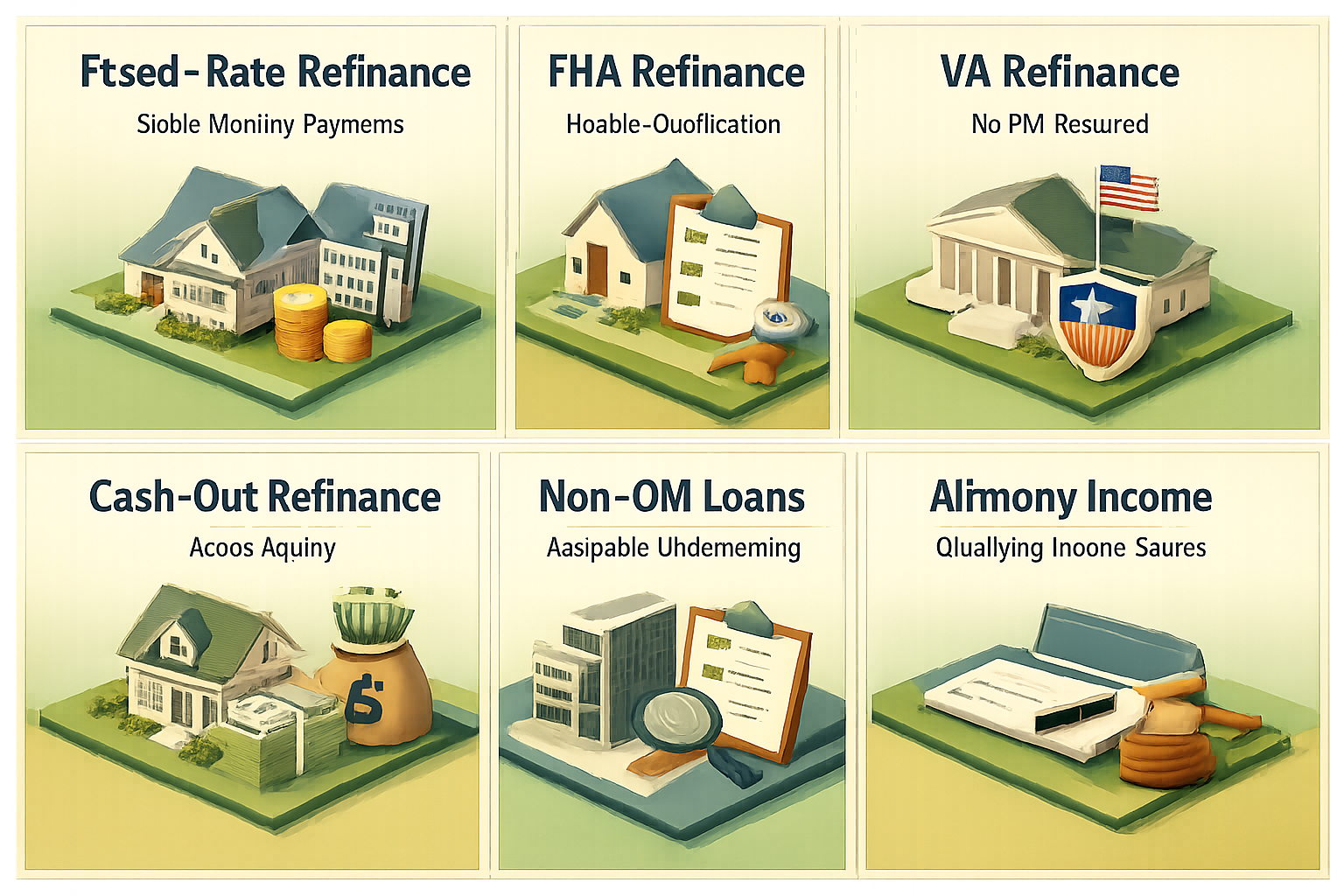
When evaluating the best options for refinancing ARM mortgage with recent divorce decree and shared property equity, it helps to understand the main loan products available and how each one might serve your situation.
Fixed-Rate Conventional Refinance
Converting your ARM into a fixed-rate conventional mortgage is often the most straightforward path. A fixed rate means your monthly payment stays the same for the life of the loan, which can make budgeting significantly easier — especially when you're adjusting to a single income. Conventional loans typically require a credit score of at least 620, though stronger scores may unlock better rates. If you have solid credit and sufficient equity, this is usually a strong starting point.
FHA Rate-and-Term Refinance
If your credit score has taken a hit during the divorce process, an FHA refinance may be worth exploring. FHA loans tend to have more flexible qualification requirements, though they do come with mortgage insurance premiums that add to your monthly costs. This option could be especially helpful for borrowers with limited cash reserves who still need to refinance out of a risky ARM.
VA Refinance (Interest Rate Reduction Refinance Loan)
If you or your ex-spouse are a qualifying veteran or active service member and the original mortgage is a VA loan, you may be eligible for a VA IRRRL or a VA cash-out refinance. VA loans offer competitive rates and typically don't require private mortgage insurance. Eligibility and entitlement issues after divorce can be complex, so speaking with a VA-experienced lender is advisable.
Cash-Out Refinance for Equity Buyout
As mentioned earlier, a cash-out refinance can serve a dual purpose: it pays off the existing ARM and allows you to access equity to fund your ex-spouse's buyout share. Lenders may allow you to borrow up to 80% of the home's appraised value on a conventional cash-out refinance, though limits vary by loan type and lender guidelines. This option works best when there's meaningful equity built up in the property.
Non-QM or Portfolio Loans
If your income situation is complicated — perhaps you've recently changed jobs, are self-employed, or rely on alimony or child support as primary income — a non-qualified mortgage (non-QM) or portfolio loan might offer the flexibility that traditional loan programs don't. These loans are held by the lender rather than sold to the secondary market, which means underwriting standards can be more adaptable. However, they may come with higher interest rates to reflect the added risk.
Using Alimony and Child Support as Qualifying Income
A concern that many divorcing homeowners have is whether they'll qualify for a refinance on a single income. The good news is that alimony and child support payments can often be counted as qualifying income — but there are specific documentation requirements lenders typically expect.
Most conventional lenders will consider these income sources if:
- The payments are documented in the divorce decree or a separate legal agreement
- The income has been received consistently for at least six months
- The payment obligation is expected to continue for at least three years from the date of the mortgage application
It's worth noting that lenders may verify this income through bank statements showing consistent deposits. If the payments have been irregular or informal, you may need to establish a more formal record before applying. Working with an experienced loan officer early in the process gives you time to organize your documentation and improve your eligibility.
Steps to Take Before You Apply for a Post-Divorce ARM Refinance
Preparation is one of the most valuable things you can do before submitting a refinance application. The more organized your financial picture, the smoother the process tends to go. Here are key steps to consider:
- Review your divorce decree thoroughly. Confirm what it says about property division, refinancing timelines, and equity distribution so you can explain the arrangement clearly to your lender.
- Check your credit report. Request a free credit report from all three major bureaus and dispute any errors. If joint accounts are still open, your ex-spouse's activity may still affect your score.
- Separate shared financial accounts. Close or retitle any joint bank accounts and credit cards as soon as legally permitted. This reduces financial entanglement and may improve your credit profile.
- Gather income documentation. Collect recent pay stubs, tax returns, bank statements, and any legal documentation of alimony or child support you receive.
- Get a home appraisal estimate. Knowing roughly what your home is worth helps you calculate available equity and determine which refinance option makes the most sense.
- Consult a mortgage specialist. A lender experienced in post-divorce refinancing ARM mortgage can review your full situation and recommend the loan product most aligned with your goals and qualifications.
●Conclusion
Navigating a home refinance after divorce is rarely simple, but it's absolutely achievable — and doing it right can set the foundation for a much more stable financial future. Whether your priority is removing a co-borrower from the loan, converting an unpredictable ARM into a fixed-rate mortgage, or accessing shared equity to settle your divorce agreement, there are meaningful options available to you. The best options for refinancing ARM mortgage with recent divorce decree and shared property equity will depend on your credit profile, income, available equity, and the specific terms outlined in your divorce agreement. Starting early, staying organized, and working with a knowledgeable mortgage professional can help you move through this transition with clarity and confidence. At LoanWise, we're here to help you explore the right path forward — one that fits your life as it is now, not as it was before.