
Refinancing an adjustable-rate mortgage can feel like a smart financial move — especially when interest rates shift or your monthly payments start climbing. But if you're a freelancer, independent contractor, or self-employed professional, the path to approval isn't always straightforward. Lenders want to see consistent, reliable income, and variable freelance earnings don't always fit neatly into a standard income box. The good news is that the best options for refinancing ARM mortgage with variable freelance income do exist, and more lenders are creating programs designed with non-traditional borrowers in mind. This article walks you through what to expect, how to prepare, and which loan paths may work best for your situation.
Why Freelancers Face Extra Scrutiny When Refinancing an ARM
Adjustable-rate mortgages, or ARMs, often start with a lower introductory interest rate that resets after a set period — commonly five, seven, or ten years. When that rate adjusts upward, your monthly payment could increase significantly. Refinancing into a fixed-rate mortgage is a popular strategy to lock in stable terms. However, lenders evaluate your ability to repay based on your income history, and this is where freelancers often run into challenges.
Traditional mortgage underwriting is built around W-2 employment. Lenders typically want to verify two years of steady, predictable income using pay stubs and employer records. Freelancers, by contrast, may experience income that fluctuates month to month or year to year depending on client load, project cycles, and seasonal demand. Even if a freelancer earns well overall, inconsistent cash flow can raise red flags for conventional underwriters.
Additionally, self-employed borrowers often take advantage of legal tax deductions that reduce their reported net income on tax returns. While this is a sound tax strategy, it can lower the income figure lenders use to calculate your debt-to-income ratio, which may affect how much you can borrow or whether you qualify at all. Understanding these hurdles is the first step toward overcoming them.
Documenting Your Income the Right Way as a Freelance Borrower
One of the most important things a refinance ARM loan variable income freelance borrower can do is organize thorough, consistent documentation before applying. Lenders need to see a clear picture of your earnings, and how you present that information can make or break your application.
- Two years of federal tax returns: Most lenders will request your full personal tax returns, including all schedules. They'll average your net income over the two-year period to arrive at a qualifying figure.
- Profit and loss statements: A year-to-date P&L prepared by a licensed CPA or accountant can help show current earnings, especially if your income has grown recently.
- Bank statements: Twelve to twenty-four months of personal or business bank statements are commonly requested. These help lenders verify actual cash deposits that reflect your real-world income activity.
- 1099 forms: If you receive 1099s from clients, these serve as third-party verification of earnings and add credibility to your income claims.
- Contracts and client agreements: Active contracts showing ongoing work can help demonstrate income continuity, which lenders find reassuring.
The more organized and consistent your documentation, the smoother the underwriting process is likely to be. Working with an accountant who understands mortgage lending for self-employed borrowers can be especially valuable.
Loan Programs That May Work Best for Freelancers Refinancing an ARM
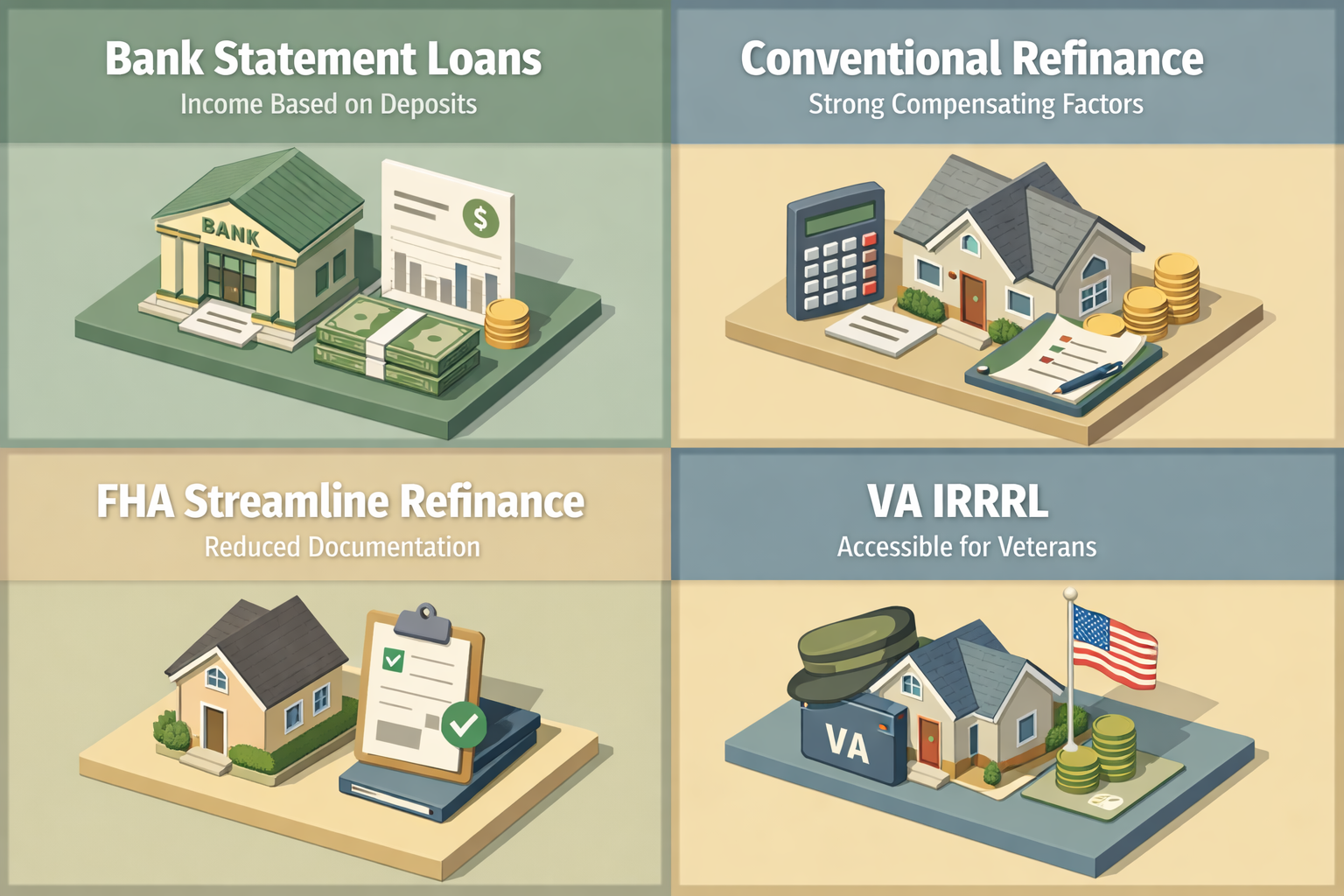
Not all mortgage products treat freelance income the same way. Knowing which programs are more flexible can help you target the right lender and loan type from the start.
Bank Statement Loans
Bank statement loans are designed specifically for self-employed borrowers who may not show strong income on tax returns. Instead of using tax documents, lenders calculate your qualifying income based on twelve or twenty-four months of bank deposits. These are non-QM (non-qualified mortgage) products, which means they operate outside standard government guidelines but are offered by a growing number of private lenders. They may come with slightly higher interest rates, but they can open the door for freelancers who would otherwise be denied.
Conventional Refinance with Strong Compensating Factors
If your credit score is strong, your loan-to-value ratio is favorable, and you have significant cash reserves, you may still qualify for a conventional refinance ARM loan through Fannie Mae or Freddie Mac guidelines. These programs do allow for self-employed income, though underwriting tends to be more rigorous. A strong overall financial profile can help offset income variability.
FHA Streamline Refinance
If your current mortgage is FHA-insured, the FHA Streamline Refinance could be an option worth exploring. This program reduces the documentation requirements compared to a full refinance and does not always require a new income verification or appraisal. That said, it's designed to lower your rate or improve your loan terms, not to pull out cash, and it may not be available if your original loan was a conventional ARM.
VA Interest Rate Reduction Refinance Loan
Eligible veterans and active-duty service members with an existing VA loan may qualify for the VA IRRRL, also known as the VA Streamline. Like the FHA version, it typically involves reduced documentation and may not require full income re-verification. If you're a freelancer who is also a veteran, this could be one of the most accessible paths available.
How Your Debt-to-Income Ratio Affects Approval Odds
Your debt-to-income ratio, or DTI, is one of the most important metrics lenders evaluate. It compares your total monthly debt obligations to your gross monthly income. For most conventional programs, lenders prefer a DTI at or below 43 percent, though some programs allow for higher ratios with compensating factors.
For freelancers, the challenge is that the income side of this equation is often lower than expected. If your tax returns show significant deductions, your net income — and therefore your qualifying income — may be reduced. This pushes your DTI higher, which can limit your loan options or reduce the amount you can refinance.
There are a few strategies that may help manage this. First, consider working with your accountant to review whether any non-cash deductions, such as depreciation, can be added back to your qualifying income. Lenders may allow certain add-backs that can improve your DTI picture. Second, paying down existing debts before applying — such as credit cards or auto loans — reduces the debt side of the ratio and can make a meaningful difference. Third, choosing a lender who specializes in self-employed borrowers may help, as they're often more experienced in interpreting variable income correctly.
Building a Stronger Application Profile Before You Apply
Preparation is one of the most powerful tools a freelance borrower has when navigating the refinance process. Taking time to strengthen your application before submitting it can meaningfully improve your chances of approval and help you access better rates.
- Check and improve your credit score: A higher credit score often unlocks better interest rates and more program options. Review your credit report for errors and address any outstanding derogatory items. Paying down revolving balances can boost your score relatively quickly.
- Build up cash reserves: Lenders feel more confident when borrowers have several months of mortgage payments sitting in savings or investment accounts. This signals financial resilience, especially important when income is variable.
- Reduce your outstanding debts: As noted above, a lower DTI improves your approval odds. Paying off smaller debts before applying is a practical strategy.
- Maintain consistent income for at least two years: The longer your track record of self-employment income, the more convincingly you can demonstrate stability. If you're newer to freelancing, you may want to wait before refinancing.
- Work with a mortgage broker experienced in non-QM lending: Brokers who specialize in self-employed borrowers often have access to a wider range of lenders and products than a single bank might offer.
Rate Environment Considerations and Timing Your Refinance Wisely
Timing matters when refinancing, and this is especially true when you're moving from an adjustable-rate mortgage to a fixed-rate product. The goal is typically to find the best options for refinancing ARM mortgage that's lower than — or at least comparable to — what your ARM is projected to reset to, while also securing the long-term predictability of a fixed payment.
Mortgage rates fluctuate based on broader economic conditions, including Federal Reserve policy decisions, inflation trends, and bond market movements. While no one can predict with certainty where rates will go, monitoring rate trends and working with a knowledgeable loan officer can help you identify a favorable window to act.
Keep in mind that refinancing involves closing costs, which typically range from two to five percent of the loan amount. It's important to calculate your break-even point — the number of months it will take for your monthly savings to offset the upfront costs. If you plan to stay in your home long enough to reach that break-even point, refinancing is generally considered worthwhile. If you're planning to sell in the near future, the math may not favor refinancing at this time.
For freelancers, one additional consideration is the timing relative to your income. If you've had an unusually strong income year, applying during or shortly after that period may result in better qualifying numbers. Conversely, if you've had a slow year, waiting until your next strong year of documentation may improve your outcome.
●Conclusion
Navigating the best options for refinancing ARM mortgage with variable freelance income requires more preparation than a standard refinance, but it's absolutely achievable with the right approach. Freelancers and self-employed borrowers have more loan options available today than ever before, from bank statement programs to flexible conventional pathways. The key is understanding how lenders evaluate your income, building a strong documentation package, and working with professionals who have experience serving non-traditional borrowers. At LoanWise, we're here to help you explore your refinance options and find a path that fits your unique financial picture. Reach out today to speak with a lending specialist who understands the freelance borrower's journey.