
If you're carrying an adjustable-rate mortgage and your financial picture includes a relocation bonus or part-time employment, you might be wondering whether refinancing is even possible — let alone smart. The good news is that lenders today are more flexible than many borrowers expect. Understanding the best options for refinancing ARM mortgage with relocation bonus and part-time job income starts with knowing how lenders evaluate non-traditional earnings, what loan products are available, and how to position yourself for approval. This guide breaks it all down in plain language so you can move forward with confidence.
Why Homeowners with ARMs Consider Refinancing
An adjustable-rate mortgage, or ARM, starts with an initial fixed-rate period — often three, five, or seven years — and then adjusts periodically based on a market index. When rates are rising or unpredictable, that adjustment can push your monthly payment significantly higher. Many homeowners feel uncomfortable with that uncertainty, especially when their income may already vary month to month.
Refinancing an ARM into a fixed-rate mortgage is one of the most common moves a homeowner can make to lock in a stable payment. A variable rate refinance to a fixed product eliminates the risk of future rate hikes and can make budgeting much easier. For homeowners who plan to stay in their home long-term, this kind of stability often outweighs the short-term savings an ARM might provide.
That said, the refinance process isn't just about the rate. Lenders will look closely at your income, debt-to-income ratio, credit profile, and employment history. If you've recently received a relocation bonus or you're working part-time, those factors deserve special attention before you apply.
How Lenders View a Relocation Bonus as Income
A relocation bonus is a one-time payment made by an employer to help cover the costs of moving, often tied to a job change or transfer. While it's certainly real money, lenders treat it differently than regular salary income. Most lenders classify relocation bonuses as non-recurring income, which means they typically won't count it toward your qualifying income for a mortgage refinance on its own.
However, there are situations where relocation bonus income can still work in your favor. Some lenders may consider it as a compensating factor — evidence that you're financially capable even if it doesn't count as stable monthly income. If the bonus was used to pay down debt or boost your savings, that improved financial picture could support your application indirectly.
Additionally, if your new position comes with a higher base salary as part of the relocation package, that salary increase is what lenders will focus on. Offer letters and employment contracts showing your new compensation can help document this. In cases where a borrower has recently started a new job following a relocation, some lenders will accept an offer letter as proof of income — though policies vary by lender and loan type.
- Non-recurring bonuses generally don't count as qualifying income on their own.
- New salary tied to relocation can be documented with offer letters or pay stubs.
- Reserves and assets built from a bonus may serve as compensating factors.
- Lender flexibility varies — some non-QM lenders may take a broader view of income sources.
Part-Time Job Mortgage Qualification: What You Need to Know
Part-time income is accepted by many mortgage lenders, but it comes with conditions. Most conventional lenders want to see a consistent two-year history of part-time employment before they'll count that income toward your qualifying amount. This requirement mirrors the standard for self-employed borrowers — lenders want evidence that the income is stable and likely to continue.
If you've been working part-time for less than two years, you may still qualify, but lenders might require additional documentation or apply more scrutiny. In some cases, a strong primary income — such as a full-time salary — combined with part-time earnings can strengthen your overall application even if only the primary income is used for qualification purposes.
When it comes to part-time job mortgage applications, documentation is everything. Lenders typically request:
- Two years of W-2s or tax returns showing part-time income.
- Recent pay stubs from the part-time employer.
- A written verification of employment from the part-time employer.
- A signed letter from the borrower explaining the nature of the work and its continuance.
It's also worth noting that if you hold multiple part-time positions, lenders may average the combined income over the documented period rather than adding up current earnings at face value. Working with a knowledgeable loan officer who understands how to structure your income documentation can make a meaningful difference here.
Best Options for Refinancing ARM Mortgage with Relocation Bonus and Part-Time Job
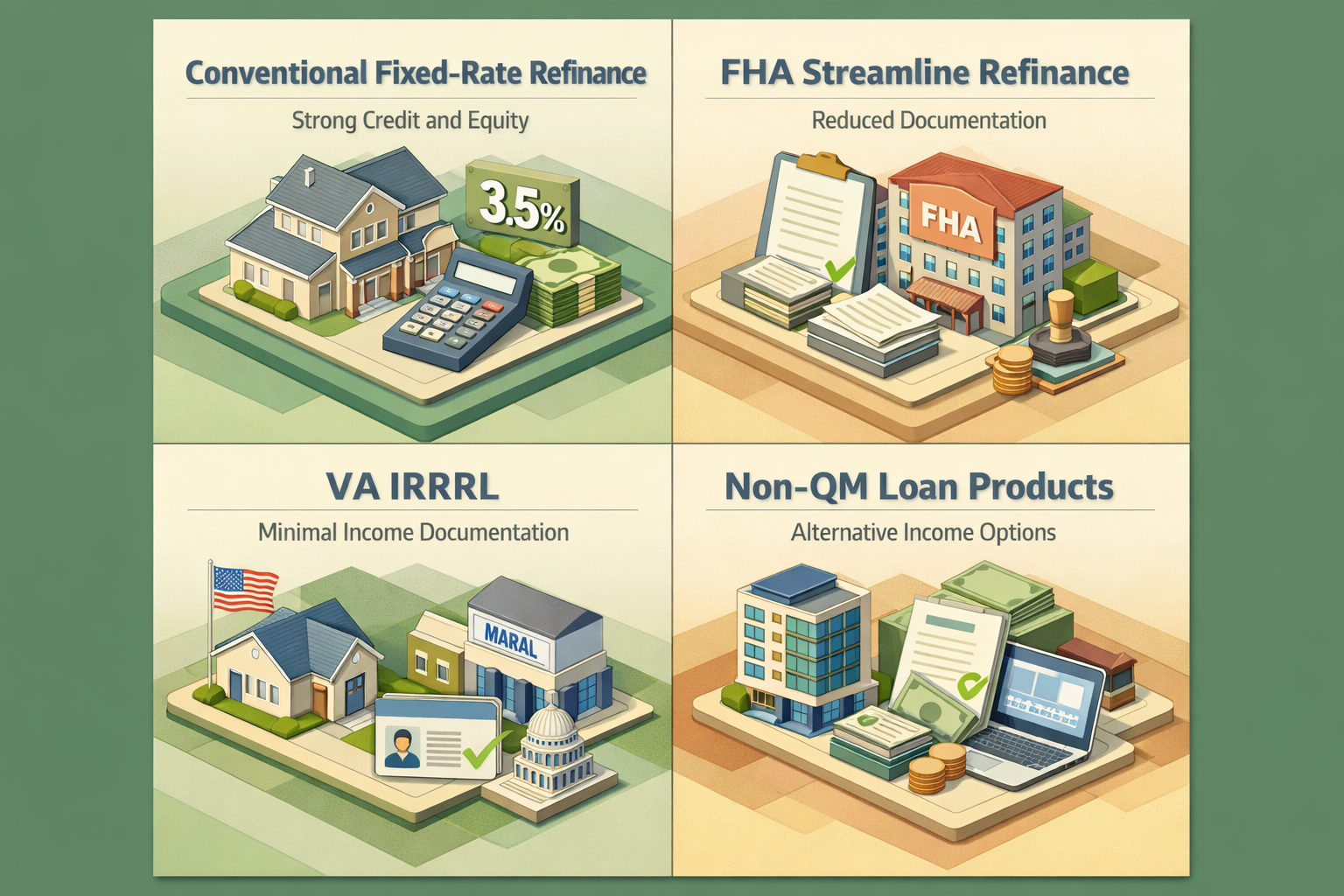
When you're navigating the best options for refinancing ARM mortgage with relocation bonus and part-time job income, the right loan product depends on your credit score, home equity, and how your income is structured. Here are the most relevant paths worth exploring:
Conventional Fixed-Rate Refinance
If you have strong credit — typically a score of 620 or higher — and at least some equity in your home, a conventional refinance may be within reach. Fannie Mae and Freddie Mac guidelines do allow part-time income when properly documented over a two-year history. This route often offers competitive rates and flexible term options such as 15-year or 30-year fixed loans.
FHA Streamline or Rate-and-Term Refinance
If your current mortgage is FHA-backed, an FHA streamline refinance can simplify the process with reduced documentation requirements. While income verification is still part of the process in most cases, the FHA program is generally more flexible for borrowers with non-traditional employment situations. A standard FHA rate-and-term refinance is also an option if you want to switch from an ARM to a fixed rate.
VA Interest Rate Reduction Refinance Loan (IRRRL)
Eligible veterans and service members with a current VA loan may qualify for a VA IRRRL, which offers streamlined refinancing an ARM mortgage with minimal income documentation in many cases. If you're relocating due to a Permanent Change of Station (PCS) order, this program may be especially relevant.
Non-QM Loan Products
Non-qualified mortgage lenders operate outside of the conventional guidelines set by Fannie Mae and Freddie Mac. They may accept bank statements, asset depletion, or alternative income documentation in place of traditional W-2s. If your relocation bonus significantly boosted your assets or if your part-time income doesn't meet conventional thresholds, a non-QM refinance ARM mortgage product could offer a viable path — though often at a slightly higher rate.
Improving Your Approval Odds Before You Apply
Preparation is one of the most powerful tools a borrower has. Before submitting a refinance application with a mixed income profile, there are several steps you can take to strengthen your position.
Build or Preserve Your Cash Reserves
Lenders look favorably on borrowers who have several months of mortgage payments in savings or liquid assets. If your relocation bonus is still sitting in a bank account, that reserve could serve as a meaningful compensating factor during underwriting.
Review and Strengthen Your Credit Profile
A higher credit score can open doors to better rates and more lenient income requirements. Pay down revolving debt where possible, avoid opening new credit accounts before applying, and check your credit reports for any errors that could be dragging your score down.
Reduce Your Debt-to-Income Ratio
Your debt-to-income (DTI) ratio compares your monthly debt obligations to your gross monthly income. Most conventional lenders prefer a DTI below 45%, though some allow up to 50% with strong compensating factors. Paying off smaller debts before applying can help bring your DTI into a more favorable range.
Document Everything Thoroughly
With non-standard income sources like part-time work and one-time bonuses, paperwork becomes even more important. Gather tax returns, pay stubs, offer letters, bank statements, and any employer verification letters well before your application date. Organized documentation signals to lenders that you're a prepared and reliable borrower.
Timing Your Refinance Around a Job Change or Relocation
Timing can make a significant difference when refinancing ARM mortgage with a recently changed employment situation. Lenders often prefer to see at least 30 days of pay stubs from a new employer before counting that income. If you've just relocated and started a new job, waiting a month or two before applying could result in a smoother approval process.
On the other hand, if your ARM is about to adjust upward and the rate increase would strain your budget, waiting isn't always the best options for refinancing. In that scenario, speaking with a loan officer early — even before you're fully settled — can help you understand your options and potentially lock in a rate before it climbs further.
It's also worth considering whether your relocation is permanent. Some borrowers who relocate for work find themselves moving again within a few years, which could make a new ARM — with its lower initial rate — a reasonable short-term choice rather than refinancing into a 30-year fixed. Your personal timeline and housing plans should factor into this decision alongside the financial numbers.
●Conclusion
Navigating the best options for refinancing ARM mortgage with relocation bonus and part-time job income requires a clear understanding of how lenders evaluate non-traditional earnings, what loan programs fit your situation, and how to document your financial picture effectively. Whether you pursue a conventional refinance, an FHA program, a VA loan, or a non-QM product, the key is knowing where you stand and working with a lender who understands your unique circumstances. At LoanWise, our team is ready to help you explore your refinancing options and find a path that fits your income, your timeline, and your long-term goals. Reach out today to start the conversation.