
If you've recently switched jobs and you're sitting on an adjustable-rate mortgage, you might be feeling a little uneasy. ARM loans come with interest rates that can rise over time, and when your income situation has just shifted, locking into a stable fixed rate can feel both urgent and complicated. The good news is that navigating the best options for refinancing ARM mortgage with recent job change is entirely possible — it just takes some preparation and a clear understanding of what lenders are looking for. Whether you moved to a higher-paying role, shifted industries, or transitioned from a salaried position to self-employment, your path to refinancing isn't closed. It may simply require a slightly different approach.
Why Homeowners With ARMs Often Want to Refinance
Adjustable-rate mortgages can be attractive at first. They typically offer lower introductory interest rates compared to fixed-rate loans, which makes them appealing for buyers who plan to sell or refinance before the rate adjusts. But once that initial fixed period ends, the rate can move — sometimes significantly — based on market indexes. For homeowners who decide to stay longer than originally planned, that variability can create real financial stress.
Refinancing an ARM into a fixed-rate mortgage gives homeowners predictability. Your monthly payment stays the same regardless of what happens in the broader interest rate environment. That peace of mind has real value, especially when your household income has recently changed due to a job transition. Locking in a stable payment now could help you budget more confidently for the months and years ahead.
It's also worth noting that refinancing doesn't just convert your loan type — it may also give you access to better terms, a lower interest rate if market conditions are favorable, or even the ability to tap into your home's equity. These are all compelling reasons why homeowners with ARMs actively explore their refinance options, even when their employment situation has recently shifted.
How a Job Change Affects Your Refinance Eligibility
Lenders evaluate several key factors when reviewing a refinance application, and employment history is near the top of that list. When you refinance ARM after job change, lenders want to verify that your income is stable and likely to continue. A recent career move raises questions they'll need answered through documentation and context.
Generally speaking, lenders prefer to see at least two years of consistent employment in the same field. However, that doesn't mean a job change automatically disqualifies you. The type of change matters quite a bit. Moving to a new employer in the same industry at the same or higher pay level is typically viewed more favorably than switching industries entirely or moving from salaried employment to commission-based or self-employed income.
Here's a closer look at how different job change scenarios may affect your application:
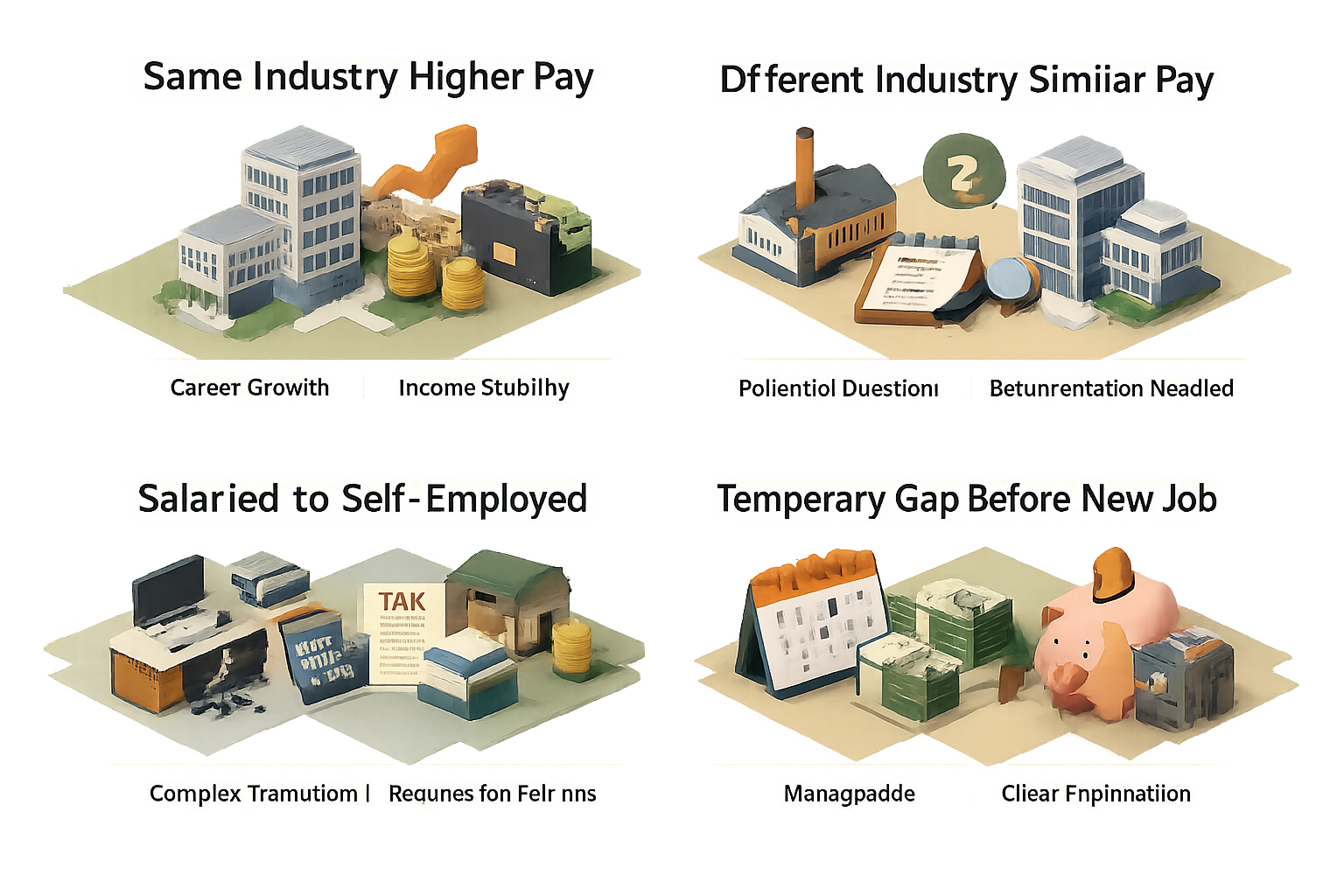
- Same industry, higher pay: This is generally the most favorable situation. Lenders may view it as career growth and income stability.
- Different industry, similar pay: This could raise questions, but if the new role is salaried and full-time, many lenders may still approve the refinance with sufficient documentation.
- Salaried to self-employed: This is the most complex transition. Lenders typically require two years of self-employment tax returns before they can use that income for qualification purposes.
- Temporary gap before new job: Short employment gaps followed by a return to work in the same field are often manageable, though lenders will want a clear explanation.
Understanding where your situation falls on this spectrum helps you set realistic expectations and choose the right loan program from the start.
The Best Options for Refinancing ARM Mortgage With Recent Job Change
Exploring the best options for refinancing ARM mortgage with recent job change means looking beyond the standard conventional refinance and considering programs that offer flexibility in how income is documented and evaluated.
Conventional Refinance With an Offer Letter
If you've recently started a new salaried job, many conventional lenders may accept an offer letter or employment contract as proof of income — especially if you can demonstrate that the position is full-time and your start date has already passed. You'll typically need to show that the new income is sufficient to meet the debt-to-income (DTI) requirements. This can be a strong path if your new employer is well-established and your compensation is straightforward.
FHA Streamline Refinance
If your current ARM is an FHA-backed loan, the FHA Streamline Refinance program could be one of the most accessible best options available to you. This program is designed to reduce paperwork and qualification hurdles for existing FHA borrowers. In many cases, it doesn't require a full income verification or a new appraisal, which means a recent job change may have less impact on your eligibility. The primary requirements typically involve being current on your mortgage and demonstrating a net tangible benefit from the refinance, such as a lower monthly payment or a more stable rate structure.
VA Interest Rate Reduction Refinance Loan (IRRRL)
Eligible veterans and active-duty service members with VA loans may qualify for the VA IRRRL, sometimes called a VA Streamline Refinance. Similar to the FHA Streamline, this program may not require full income documentation in all cases, making it potentially more accessible for borrowers in the middle of a career transition. If you have a VA ARM and qualify for this program, it's worth discussing with a VA-approved lender.
Non-QM Loans for Complex Income Situations
For borrowers who've transitioned to self-employment or commission-based income, non-qualified mortgage (non-QM) programs may offer an alternative path. These loans use alternative documentation methods — such as bank statements, asset depletion, or profit and loss statements — instead of traditional W-2s and tax returns. While non-QM loans may come with higher interest rates and fees, they could be a practical bridge for borrowers who can't yet document income through conventional means.
Strengthening Your Application Before You Apply
Regardless of which loan program you pursue, taking steps to strengthen your overall financial profile can meaningfully improve your odds of approval. Lenders are balancing risk, and the more confidence you can give them about your ability to repay, the better.
- Check your credit score: A strong credit score can offset some of the concern around employment changes. Review your credit report for errors and address any outstanding issues before applying.
- Lower your debt-to-income ratio: If possible, pay down revolving debt like credit cards before applying. A lower DTI gives lenders more comfort, especially when your income documentation is complex.
- Build up your cash reserves: Lenders often look more favorably on borrowers who have several months of mortgage payments saved in reserve. This signals financial resilience even during transitions.
- Gather documentation early: Collect pay stubs, your offer letter, bank statements, tax returns, and any other relevant financial records before you begin the application process. Being organized can speed things up considerably.
- Write a letter of explanation: Many lenders appreciate a clear, written explanation of your job change. If the move was strategic and positions you for higher income or career growth, say so clearly and professionally.
Preparation is one of the most powerful tools available to refinancing ARM mortgage homeowners. The more complete and credible your application looks, the smoother the process tends to be.
Timing Your Refinance Around Your Career Transition
Timing matters when you're looking to refinance ARM after job change. In some cases, waiting a few months after starting your new position can significantly improve your approval odds and the terms you receive. Once you've received a few pay stubs from your new employer, lenders have something concrete to verify, which can make the process much smoother.
That said, waiting isn't always the right move. If your ARM is approaching an adjustment period and rates are expected to rise, waiting too long to refinance could mean locking in a higher rate than you would have otherwise. Balancing these competing factors — employment documentation versus rate timing — is something a knowledgeable mortgage advisor can help you think through based on your specific situation.
It's also worth monitoring broader interest rate trends. Refinancing makes the most financial sense when the new rate is meaningfully lower than your current one, or when converting from an adjustable to a fixed-rate structure protects you from future volatility. Even in a rising rate environment, converting to a fixed-rate loan may still be the right long-term choice depending on how long you plan to stay in the home.
Working With the Right Lender Makes a Difference
Not all lenders evaluate employment situations the same way. Some institutions have more rigid underwriting standards, while others — particularly mortgage brokers and non-bank lenders — may have access to a wider range of loan programs that accommodate borrowers with non-traditional income or recent job changes.
When shopping for a refinance lender, consider asking the following questions upfront:
- Do you have experience working with borrowers who recently changed jobs?
- Which loan programs do you offer for borrowers with limited pay history at a new employer?
- Can you explain how you'll document and verify my income given my current employment situation?
- What is your typical timeline for refinance approvals?
Getting multiple quotes is also a smart strategy. Not only does it give you a sense of the rates and terms available to you, but it may also reveal which lenders are most flexible given your employment profile. Comparing loan estimates carefully — including closing costs, points, and prepayment penalties — ensures you're making a fully informed decision.
●Conclusion
A recent career move doesn't have to put your refinance goals on hold. By understanding how lenders evaluate employment changes, exploring programs designed for borrowers in transitional situations, and preparing a strong application, you can successfully pursue the best options for refinancing ARM mortgage with recent job change. The key is to be informed, organized, and proactive. Whether you're looking to stabilize your monthly payment, reduce your rate, or simply gain peace of mind about your mortgage, the right path forward exists — and LoanWise is here to help you find it. Speak with a mortgage professional today to explore which refinance options align with your goals and current financial picture.