
Living with an adjustable-rate mortgage can feel like a financial rollercoaster. When your rate was locked in, the low initial payment probably looked great. But as rates adjust — sometimes sharply — that monthly payment can climb in ways that strain even a well-managed budget. For homeowners who rely on overtime pay or side hustle income to keep up with expenses, finding stability through a fixed-rate refinance could be one of the smartest financial moves available today.
The challenge? Lenders don't always make it easy. Variable income streams like overtime wages and gig earnings tend to raise questions during underwriting. Still, that doesn't mean refinancing is out of reach. In fact, exploring the best options for refinancing ARM mortgage with overtime pay and side hustle income could open the door to lower risk, more predictable payments, and long-term financial peace of mind. Let's walk through what you need to know.
Why Homeowners With Variable-Rate Mortgages Are Looking to Refinance Now
An adjustable-rate mortgage, or ARM, typically starts with a lower interest rate than a fixed-rate loan. That introductory rate is attractive — but it doesn't last forever. After the initial fixed period ends, the rate adjusts periodically based on a benchmark index, which means your payment can increase significantly over time.
For many homeowners, the prospect of rising payments is unsettling. This is especially true if your income isn't entirely predictable. Overtime hours can be cut. Side gigs can slow down. When your mortgage payment rises and your income fluctuates, the combination can create serious financial pressure.
Refinancing into a fixed-rate mortgage removes that uncertainty. You'd swap an unpredictable payment for one that stays the same for the life of the loan. That stability can be especially valuable for homeowners who earn variable income through overtime or self-employment side work, since it reduces the number of financial unknowns you're managing at once.
Beyond payment predictability, refinancing may also offer the opportunity to lower your interest rate if market conditions are favorable, adjust your loan term, or access home equity. Whether your goal is to reduce monthly costs or build equity faster, the timing and structure of your refinance matters.
How Lenders View Overtime Pay During the Mortgage Approval Process
Overtime income is real income — but lenders treat it differently than your base salary. Most lenders want to see a consistent, two-year history of overtime earnings before they'll count it toward your qualifying income. This is because overtime isn't guaranteed. Your employer can reduce or eliminate it at any time, so underwriters need evidence that it's a reliable, ongoing part of your compensation.
To document overtime income, you'll typically need to provide:
- Two years of W-2 forms showing total annual earnings including overtime
- Recent pay stubs — usually covering 30 days — that reflect current overtime activity
- A verification of employment (VOE) from your employer, which may also confirm the likelihood of continued overtime hours
Lenders will often average your overtime earnings over 24 months to arrive at a monthly figure. If your overtime has been increasing over time, that may work in your favor. However, if it's been declining, some lenders may discount it further or exclude it altogether. Understanding how your specific overtime history will be interpreted is an important first step in the refinance process.
It's also worth noting that different loan programs may have slightly different guidelines. Conventional loans backed by Fannie Mae or Freddie Mac typically follow the two-year standard, while some portfolio lenders may apply their own internal criteria. Checking with a knowledgeable loan officer early can save you time and surprises.
Side Hustle Income and How It Factors Into Your Refinance Application
Side hustle income — whether you drive for a rideshare platform, freelance, sell products online, or consult independently — adds another layer of complexity to a refinance application. Because this type of income is self-employment income, lenders generally apply stricter documentation standards compared to a traditional salaried position.
To use side hustle income when you refinance with multiple income streams, lenders will typically require:
- Two years of personal tax returns (and sometimes business returns if applicable)
- A profit and loss statement for the current year if the returns are more than a few months old
- Bank statements showing consistent deposits from the side business
- 1099 forms from clients or platforms that paid you
One important nuance: lenders look at your net self-employment income after business deductions, not your gross revenue. If you write off a lot of expenses on your Schedule C, your qualifying income may be lower than you expect. This is a common surprise for side hustlers who aggressively reduce their taxable income but then find that strategy works against them when applying for a mortgage refinance.
If your side hustle has been operating for less than two years, most lenders won't count it at all — though some non-QM (non-qualified mortgage) programs may be more flexible. It's worth having a frank conversation with your lender about what income sources they'll accept and how much each one contributes to your qualifying profile.
Best Options for Refinancing ARM Mortgage With Overtime Pay and Side Hustle Income
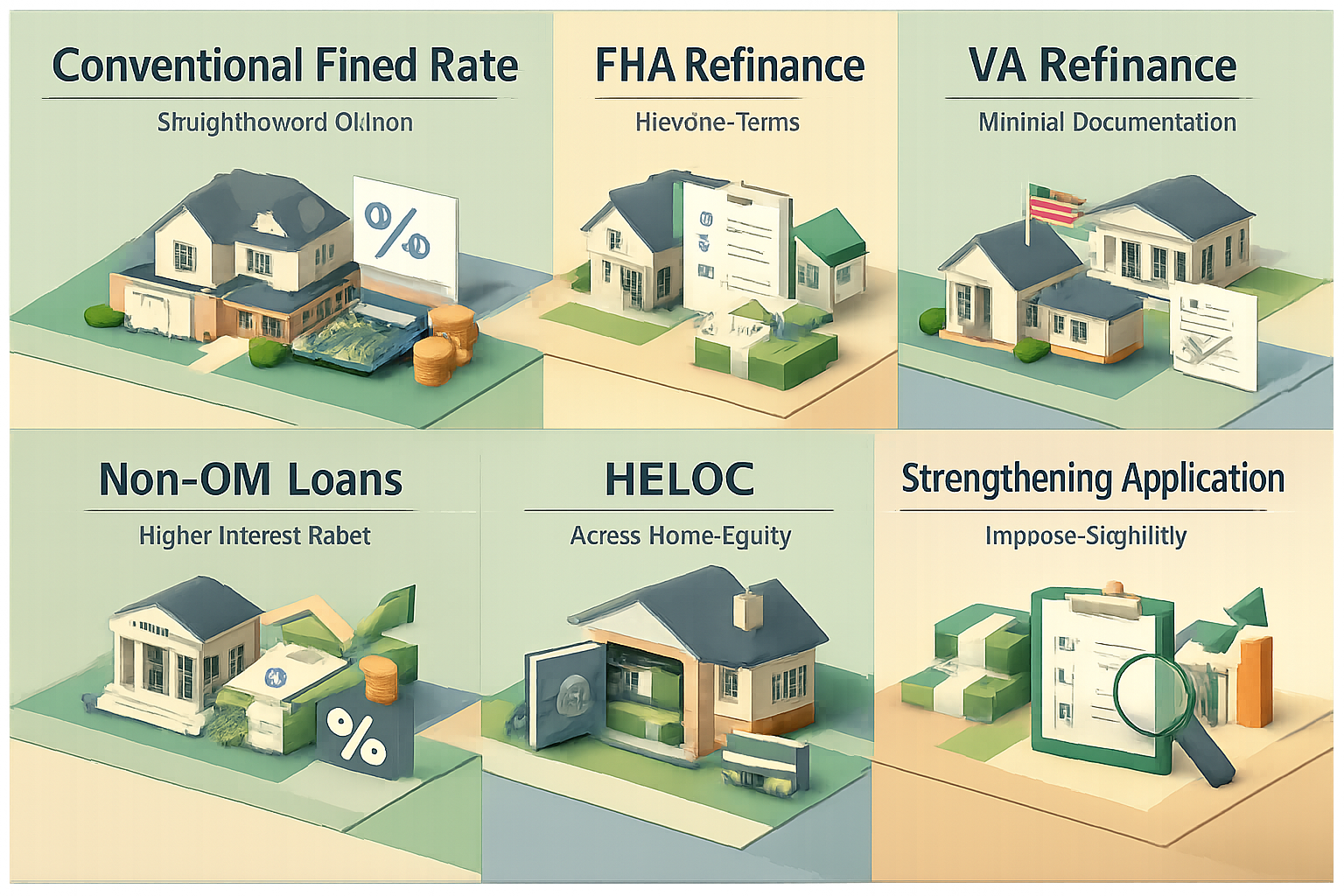
When it comes to the best options for refinancing ARM mortgage with overtime pay and side hustle income, the right path depends on your full financial picture. Here's a look at the most common refinance routes available to homeowners with variable income:
Conventional Fixed-Rate Refinance
This is the most straightforward option for many homeowners. If you have strong credit, at least 20% equity in your home, and can document two years of overtime and side hustle income through tax returns and pay stubs, a conventional loan may offer competitive rates and terms. Fannie Mae and Freddie Mac guidelines allow for the inclusion of overtime and self-employment income when properly documented, making this a viable route for many borrowers.
FHA Refinance
FHA loans are known for their flexibility. They accept lower credit scores and allow higher debt-to-income (DTI) ratios than conventional loans, which can be helpful if your variable income creates a higher DTI on paper. FHA guidelines also allow overtime income with a two-year history, and self-employment income is accepted with proper tax documentation. The tradeoff is that FHA loans require mortgage insurance premiums, which add to your monthly cost.
VA Refinance (for eligible veterans)
If you're a veteran or active-duty service member, a VA Interest Rate Reduction Refinance Loan (IRRRL) may offer a streamlined path to a lower fixed rate with minimal documentation requirements. For a standard VA refinance, overtime and self-employment income guidelines are similar to other programs, but the absence of a private mortgage insurance requirement can make VA loans especially attractive.
Non-QM Loans for Variable Income Borrowers
Non-qualified mortgage programs are designed for borrowers who don't fit neatly into standard underwriting boxes. Some non-QM lenders will use bank statement income instead of tax returns to qualify self-employed borrowers, which may result in a higher qualifying income for side hustlers with significant gross deposits. These loans typically come with higher interest rates and fees, so it's important to weigh the cost against the benefit of qualifying.
HELOC or Cash-Out Refinance for Equity Access
If your ARM is manageable but you want to leverage your home's equity while also adjusting your rate structure, a cash-out refinancing ARM mortgage might serve multiple goals at once. You'd refinance into a new fixed-rate loan while pulling out equity as cash — useful for consolidating debt or funding other goals. Variable income documentation requirements are the same, but the equity component can sometimes offset a weaker income profile in certain lender scenarios.
Strengthening Your Application Before You Apply
Even if your income situation is complex, there are practical steps you can take to improve your refinance eligibility before submitting an application. A little preparation can make a meaningful difference in the rate you're offered and whether you qualify at all.
- Check and improve your credit score: Higher credit scores typically lead to better rates and more loan options. Review your credit report for errors and pay down revolving balances if possible before applying.
- Reduce your debt-to-income ratio: Paying off smaller debts or avoiding new credit inquiries in the months before your application can lower your DTI, making it easier to qualify even with variable income.
- Organize your income documentation early: Gather two years of tax returns, W-2s, 1099s, pay stubs, and bank statements ahead of time. Having everything ready shows lenders you're organized and reduces processing delays.
- Avoid large deposits or unusual transactions: Lenders scrutinize bank statements carefully. Unexplained large deposits can raise red flags during underwriting, so it's smart to document the source of any significant transfers in advance.
- Work with a loan officer experienced in variable income: Not all mortgage professionals have the same level of experience with complex income situations. Seeking out someone who regularly works with self-employed borrowers or W-2 earners with significant overtime can make a big difference in how your application is structured.
Timing Your ARM Refinance Strategically
Timing matters when you're refinancing out of an ARM. One of the most important factors is where you are in your ARM's adjustment schedule. If your initial fixed period is about to expire and rates are rising, acting sooner rather than later may protect you from a steep payment increase. On the other hand, if you're in the early part of your fixed period and rates are currently high, it may be worth waiting for more favorable conditions — though no one can predict rate movements with certainty.
Another timing consideration involves your income documentation. Since lenders typically look at two years of tax returns, the year your returns are filed can affect how your income is calculated. If your most recent tax year showed a dip in side hustle income, waiting until a stronger year is on record might improve your qualifying profile. This is something a knowledgeable loan officer can help you evaluate.
Finally, consider break-even analysis. Refinancing involves closing costs, which typically range from 2% to 5% of the loan amount. You'll want to calculate how many months it takes to recoup those costs through your lower monthly payment. If you plan to move or sell the property before reaching that break-even point, refinancing ARM mortgage may not make financial sense — even if you qualify.
●Conclusion
Navigating a mortgage refinance when your income includes overtime pay and side hustle earnings can feel complicated — but it's absolutely achievable with the right preparation and guidance. Whether you pursue a conventional fixed-rate loan, an FHA refinance, a VA option, or a non-QM program, there are pathways designed to accommodate borrowers with variable income profiles.
The key is understanding how lenders view your income, documenting it thoroughly, and choosing the loan program that aligns with your financial goals. If you're ready to explore the best options for refinancing ARM mortgage with overtime pay and side hustle income, connecting with an experienced mortgage professional is the smartest first step you can take. At LoanWise, we're here to help you find the right fit — contact us today to get started.