
Refinancing a mortgage is already a big decision — but when your income includes overtime pay that shifts from month to month, the process can feel even more uncertain. Many homeowners who earn overtime find themselves in a difficult spot: they want the stability of a fixed-rate loan, yet their fluctuating earnings make it harder to qualify. If you're holding an adjustable-rate mortgage and exploring ways to lock in more predictable payments, you're not alone. Understanding the best options for refinancing ARM mortgage with fluctuating overtime pay starts with knowing how lenders view variable income and which loan programs may be the most flexible for your situation.
Why Adjustable-Rate Mortgages Become a Concern Over Time
An adjustable-rate mortgage, or ARM, typically starts with a lower introductory interest rate that remains fixed for a set period — often three, five, seven, or ten years. Once that initial period ends, the rate adjusts periodically based on a benchmark index. For many homeowners, this adjustment can mean noticeably higher monthly payments, sometimes in a relatively short window of time.
For borrowers who rely on overtime income to cover their mortgage, this rate volatility creates a double layer of financial uncertainty. Not only might your mortgage payment increase, but your overtime earnings may also dip depending on your employer's workload, seasonal demands, or business cycles. That combination can put real pressure on your household budget.
This is why many homeowners with overtime income start exploring refinance options well before their ARM's fixed period expires. Locking into a fixed-rate mortgage can offer the payment consistency that variable earners often need most. The challenge, however, lies in qualifying — especially when lenders scrutinize income documentation carefully.
How Lenders Evaluate Overtime Income During a Refinance
When you apply to refinance ARM overtime income situations, one of the first questions a lender will ask is: how consistent has this overtime been? Lenders don't automatically dismiss overtime pay — but they do need to see evidence that it's reliable and likely to continue.
Most conventional lenders and those following Fannie Mae or Freddie Mac guidelines will typically want to see a two-year history of overtime earnings documented through W-2s and pay stubs. If your overtime income has been consistent over that period, lenders may average it and include it in your qualifying income. If, however, your overtime has been inconsistent — spiking one year and dropping the next — lenders may discount it significantly or exclude it altogether.
Here's what lenders commonly look for when evaluating overtime income for a refinance:
- Two years of documented overtime earnings on federal tax returns and W-2 statements
- A written Verification of Employment (VOE) confirming that overtime is expected to continue
- Recent pay stubs showing year-to-date overtime amounts
- A declining income trend may raise red flags and reduce the amount lenders will count toward qualifying
It's worth noting that different loan programs may apply slightly different standards. FHA loans, for instance, may also allow averaged overtime income over a two-year period, while VA loans follow similar income documentation guidelines for eligible veterans. Understanding which program fits your employment profile is a critical first step.
Best Options for Refinancing ARM Mortgage with Fluctuating Overtime Pay
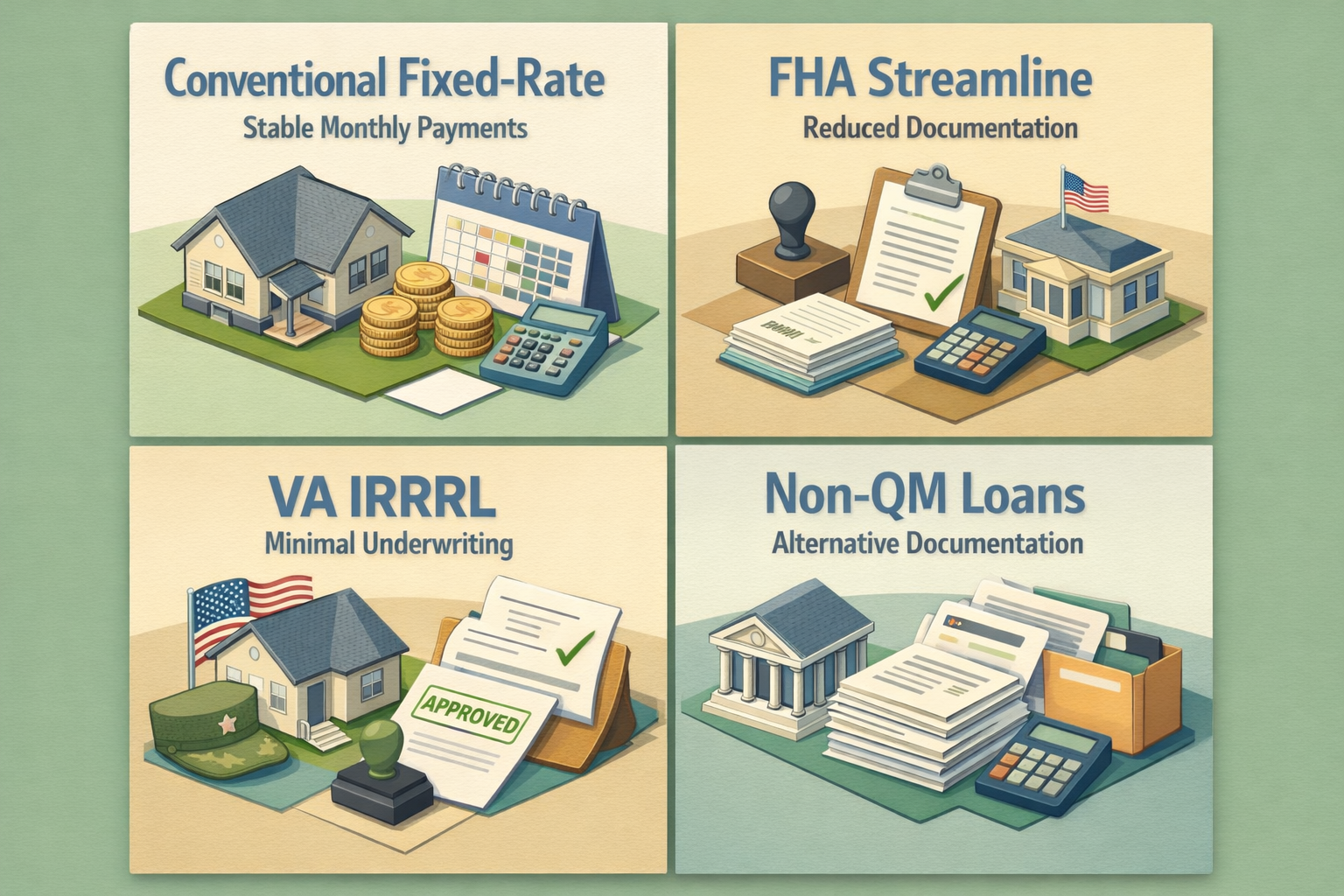
Not every refinance loan product treats variable income the same way. Exploring your choices thoughtfully can make the difference between approval and denial. Here are some of the most viable paths homeowners in this situation may want to consider.
Conventional Fixed-Rate Refinance
For many borrowers, converting from an ARM to a 30-year or 15-year fixed-rate conventional loan is the most straightforward solution. If you have solid credit, sufficient equity in your home, and two years of overtime history showing stability, a conventional refinance could lock in your rate and provide consistent monthly payments going forward.
Conventional loans backed by Fannie Mae or Freddie Mac typically require a credit score of at least 620, though a higher score may help you secure a more competitive rate. Lenders will average your overtime income over 24 months, so borrowers with steady overtime earnings are often in a good position here.
FHA Streamline or Standard FHA Refinance
If your current mortgage is already an FHA loan, an FHA Streamline Refinance may reduce documentation requirements — which could be helpful if your overtime income has been inconsistent. The Streamline process generally doesn't require a full income re-verification in all cases, though individual lender overlays can vary. For those with a conventional ARM looking to move into FHA, a standard FHA refinance may apply, which does involve full income documentation.
VA Interest Rate Reduction Refinance Loan (IRRRL)
Eligible veterans and active-duty service members who currently hold a VA loan may be able to use the VA IRRRL, sometimes called a VA Streamline Refinance. Like the FHA Streamline, this program may reduce the documentation burden since it's designed to lower your interest rate with minimal underwriting. If your current ARM is a VA loan, this could be a streamlined path to a fixed rate.
Non-QM Loans for Variable Income Borrowers
For borrowers whose overtime income makes full income documentation challenging, non-qualified mortgage (non-QM) loans may offer an alternative route. These products often allow lenders to use bank statements, asset depletion methods, or other alternative documentation to assess income. Keep in mind that non-QM loans typically carry higher interest rates and fees compared to conventional products, so they're often best options suited for borrowers who genuinely can't qualify through traditional channels.
Strengthening Your Refinance Application When Income Varies
Even with fluctuating overtime, there are practical steps you can take to improve your chances of qualifying for a refinancing ARM mortgage. Lenders assess your overall financial picture, so strengthening other areas of your application can help offset concerns about income variability.
- Build your credit score: A higher credit score can compensate for some income uncertainty by showing lenders you manage debt responsibly. Paying down revolving balances and avoiding late payments in the months before applying can help.
- Lower your debt-to-income (DTI) ratio: Lenders typically prefer a DTI below 43% for conventional loans, though some programs allow higher. Paying off smaller debts before refinancing can improve this ratio meaningfully.
- Increase your home equity: More equity in your property means less risk for the lender. If your home has appreciated in value, a new appraisal could work in your favor and may even eliminate the need for private mortgage insurance (PMI).
- Document everything: Provide at least two years of tax returns, all W-2 forms, recent pay stubs, and an employer letter confirming your overtime is expected to continue. Complete documentation leaves less room for doubt.
- Shop multiple lenders: Lender overlays — internal policies that go beyond standard guidelines — can vary significantly. One lender may be more flexible with overtime income documentation than another, so comparing offers is always a smart move.
Timing Your Refinance Strategically Around Income Cycles
If your overtime tends to be seasonal or cyclical, the timing of your refinance application could influence how your income is calculated. Applying when your year-to-date overtime earnings are at their highest — rather than at a low point — may result in a more favorable income average on your application.
Additionally, keeping a close eye on interest rate trends can help you determine whether refinancing makes financial sense at a given moment. While no one can predict rate movements with certainty, locking in a fixed rate when rates are relatively favorable could save you a meaningful amount over the life of your loan — especially compared to the uncertainty of an ARM that's about to reset.
It's also worth calculating your break-even point before proceeding. A refinance comes with closing costs — typically ranging from 2% to 5% of the loan amount, though your specific costs will depend on your lender, loan size, and location. Dividing those costs by your estimated monthly savings will tell you how many months it takes to recoup the expense. If you plan to stay in the home beyond that break-even period, refinancing may make strong financial sense.
Working With a Lender Who Understands Variable Earnings
Not all mortgage professionals have the same experience evaluating non-traditional or variable income sources. Choosing to work with a lender or mortgage broker who has a track record of helping borrowers with overtime, commission, or bonus income can make a significant difference in both the approval process and the loan terms you receive.
A knowledgeable loan officer can help you determine upfront which loan programs are most suitable for your income profile, help you gather the right documentation, and set realistic expectations for what you can qualify for. They may also be aware of niche programs or lender-specific guidelines that aren't widely advertised but could benefit your specific situation.
When interviewing lenders, consider asking directly: "How do you calculate qualifying income for borrowers with fluctuating overtime?" The answer will quickly reveal whether the lender has genuine experience with variable income borrowers or whether you might be better served by exploring other options.
●Conclusion
Navigating the best options for refinancing ARM mortgage with fluctuating overtime pay requires a clear understanding of how lenders assess variable income and which loan programs offer the most flexibility. Whether you pursue a conventional fixed-rate refinance, an FHA or VA streamline product, or a non-QM alternative, the key is matching your income profile to the right program — and presenting the strongest possible application. By documenting your overtime history thoroughly, improving your overall financial standing, and working with a lender experienced in variable income, you can move from the uncertainty of an adjustable-rate mortgage toward the stability of a fixed payment. LoanWise is here to help you explore your options and connect with lending solutions tailored to your real-world financial situation.