
Earning a living through commissions can be incredibly rewarding, but it also introduces a layer of complexity when it comes to qualifying for a mortgage refinance. If you currently hold an adjustable-rate mortgage (ARM) and you're feeling the pressure of rising or unpredictable monthly payments, you're not alone. Many sales professionals, real estate agents, freelancers, and other commission-based earners find themselves in exactly this situation. The good news is that exploring the best options for refinancing ARM mortgage with commission-based income is absolutely achievable with the right knowledge and preparation. This guide walks you through what lenders look for, which loan programs may suit your profile, and how to position yourself for a successful refinance.
Understanding How ARM Loans Work and Why Refinancing May Make Sense
An adjustable-rate mortgage starts with a fixed interest rate for an initial period — often three, five, seven, or ten years — and then adjusts periodically based on a market index. When rates were historically low, ARMs were an attractive choice. However, as interest rate environments shift, many homeowners find their monthly payments increasing significantly after the fixed period ends.
For commission-based earners, this unpredictability is doubly challenging. Your income may already fluctuate from month to month or season to season, and a rising mortgage payment on top of variable earnings can create real financial stress. Refinancing into a fixed-rate mortgage could provide the payment stability that makes long-term budgeting far more manageable.
It's worth noting that refinancing isn't always the right move for everyone. Factors like how long you plan to stay in the home, your current loan balance, and the costs associated with refinancing all play a role in determining whether it makes financial sense. That said, if you're approaching your ARM's adjustment period or you've already seen your rate increase, it may be a strong time to evaluate your options.
How Lenders Evaluate Commission-Based Income for a Refinance
One of the most important things commission-based borrowers need to understand is how lenders calculate qualifying income. Unlike salaried employees, commission earners can't simply show a pay stub and call it a day. Most conventional lenders require a more thorough review of your earnings history.
Typically, lenders will average your commission income over the past two years using your tax returns (IRS Form 1040) and W-2s if applicable. If your income has been increasing year over year, some lenders may use a more favorable calculation. However, if your income dropped significantly in one of those years, it could lower your qualifying average — even if your most recent earnings were strong.
Here's what lenders commonly review when evaluating a variable income mortgage refinance:
- Two years of federal tax returns — These reveal your net commission income after deductions.
- Year-to-date profit and loss statements — Helpful if you're self-employed or file as a sole proprietor.
- 1099 forms — Common for independent contractors and outside sales representatives.
- Bank statements — Some lenders use 12 to 24 months of bank deposits as an alternative income verification method.
- Employment verification — A letter from your employer confirming your position and commission structure may be required.
It's also important to understand that many commission earners write off significant business expenses on their tax returns, which can reduce their reported income. While this is a smart tax strategy, it may lower your qualifying income for mortgage purposes. Working with a knowledgeable loan officer who has experience with variable income borrowers can help you navigate this challenge effectively.
Loan Programs That May Be a Good Fit for Your Refinance ARM Loan Commission Income Profile
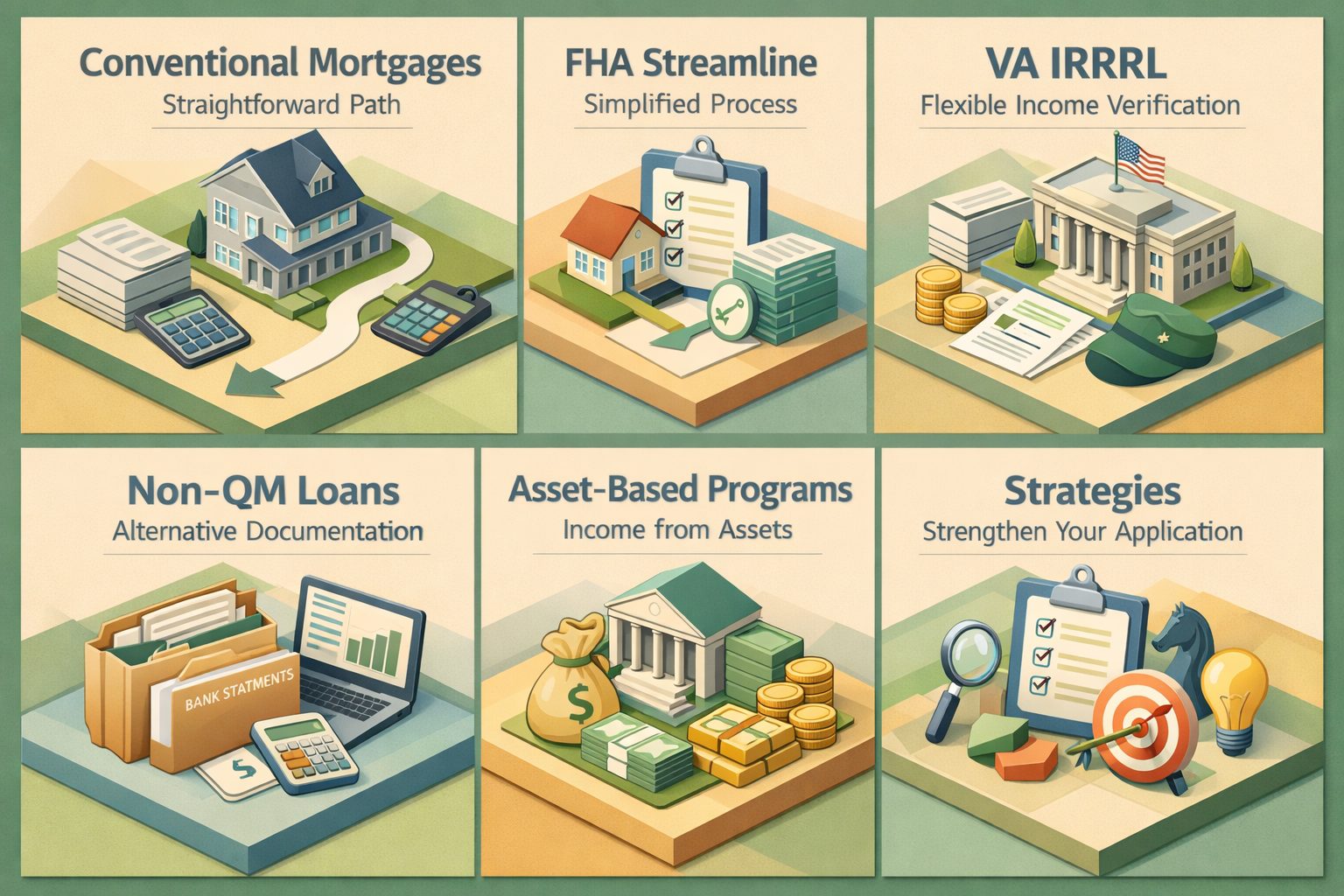
Not all loan programs treat commission-based income the same way. Understanding which options may align best with your financial situation is a critical part of finding the best options for refinancing ARM mortgage with commission-based income.
Conventional Fixed-Rate Mortgages
A conventional refinance into a 15-year or 30-year fixed-rate mortgage is often the most straightforward path for commission earners with strong two-year income history, good credit scores, and sufficient home equity. Fannie Mae and Freddie Mac guidelines allow for commission income as long as it's been received for at least two years and is likely to continue.
FHA Streamline Refinance
If your current loan is FHA-backed, an FHA Streamline Refinance could simplify the process. This program typically requires less documentation and may not require a new appraisal. However, it's designed to reduce your interest rate or switch from an ARM to a fixed rate while maintaining FHA insurance, so you'll still carry mortgage insurance premiums.
VA Interest Rate Reduction Refinance Loan (IRRRL)
For eligible veterans and active-duty service members, the VA IRRRL is a streamlined option that can refinance an existing VA ARM into a fixed-rate VA loan. Income verification requirements are often more flexible under this program, which can be a meaningful advantage for commission-based borrowers.
Non-QM Bank Statement Loans
Non-Qualified Mortgage (Non-QM) programs have grown considerably in recent years and may be an excellent alternative for commission earners who struggle to qualify under traditional documentation requirements. Bank statement loans, for example, allow lenders to qualify borrowers based on 12 to 24 months of personal or business bank deposits rather than tax returns. This can be particularly valuable if your tax deductions significantly reduce your reported income.
Asset-Based Mortgage Programs
Some lenders offer asset depletion or asset utilization programs that calculate income based on the value of your liquid assets divided over a loan term. If you've accumulated significant savings, investments, or retirement accounts, this could supplement or even replace commission income documentation in certain scenarios.
Strategies to Strengthen Your Application Before You Refinance
Preparation is everything when you're a commission-based borrower looking to refinance. Taking proactive steps ahead of your application can meaningfully improve your chances of approval and help you secure a more favorable rate.
- Build and protect your credit score. Lenders typically offer the best rates to borrowers with scores of 740 or higher. Pay down revolving balances, avoid opening new credit accounts before applying, and dispute any errors on your credit report.
- Increase your home equity. A lower loan-to-value (LTV) ratio generally translates to better loan terms and may eliminate the need for private mortgage insurance. If your home has appreciated, a current appraisal could work in your favor.
- Reduce your debt-to-income ratio (DTI). Paying off or paying down consumer debts — such as car loans or credit cards — can lower your DTI and increase the income you have available to qualify for the refinance.
- Maintain consistent income documentation. Avoid large unreimbursed business expense deductions in the year before you plan to refinance if possible, as these can reduce your qualifying income on paper.
- Work with a mortgage professional experienced in variable income. Not all loan officers are equally familiar with commission-based income scenarios. Seeking out a lender who regularly works with sales professionals, real estate agents, or self-employed borrowers can make a significant difference.
Timing Your Refinance Around Commission Income Fluctuations
Timing can be a meaningful factor in the success of your refinance application. Since lenders typically review a two-year income average, applying during or shortly after a strong earning period may help your qualifying figures. Conversely, if you had an unusually low-income year recently, you might benefit from waiting until that year falls further back in your income history or until you can demonstrate a stronger trend.
It's also worth considering the broader interest rate environment. While no one can predict market movements with certainty, keeping an eye on rate trends and working with a loan officer who can help you lock in at an opportune moment may save you meaningful money over the life of the loan.
If your ARM is approaching its first adjustment date, don't wait until the last moment to start the refinance process. Mortgage refinances typically take 30 to 60 days to close, and starting the conversation early gives you more breathing room and negotiating flexibility.
Common Challenges and How to Work Through Them
Even well-prepared commission-based borrowers may encounter hurdles during the refinance process. Being aware of potential challenges ahead of time can help you address them before they become deal-breakers.
Declining Income Years
If one of your two qualifying years showed lower-than-usual commission earnings — perhaps due to a slow market, a career transition, or a health event — lenders may flag this as a risk factor. In some cases, providing a written explanation letter along with documentation showing your income has since recovered can help. Non-QM bank statement programs may also sidestep this issue entirely by focusing on deposit history rather than tax returns.
High Business Expense Write-Offs
Commission earners who are self-employed or file Schedule C often deduct significant business expenses, which can dramatically reduce their stated net income. If this applies to you, a Non-QM lender using gross deposit income rather than net tax return income might offer a much more favorable qualifying calculation.
Gaps in Employment or Income History
Some commission-based professionals switch employers, move between industries, or take brief breaks from work. Lenders generally prefer to see a consistent two-year history in the same field or profession. If you've changed companies but remained in the same industry, this is typically viewed more favorably than a full career switch.
●Conclusion
Refinancing an adjustable-rate mortgage when you earn commission-based income may feel like a complex undertaking, but it's far from impossible. The key is understanding how lenders assess your income, knowing which loan programs align with your financial profile, and taking deliberate steps to strengthen your application. Whether you pursue a conventional fixed-rate refinance, explore a Non-QM bank statement loan, or take advantage of a streamlined government program, there are genuine pathways available to you. Exploring the best options for refinancing ARM mortgage with commission-based income starts with having an informed conversation with a mortgage professional who understands your unique situation. At LoanWise, we're here to help you navigate every step of that journey with clarity and confidence.