
If you're a veteran, active-duty service member, or eligible surviving spouse exploring home financing, a VA loan can be one of the most powerful tools available to you. With no required down payment and no private mortgage insurance, VA loans offer real advantages over conventional options. But there's one cost that often catches borrowers off guard: the VA loan funding fee. Understanding what is the cost of a VA loan funding fee — and how it fits into your broader mortgage expenses — can help you plan smarter, budget accurately, and avoid surprises at the closing table.
Understanding the VA Loan Funding Fee and Why It Exists
The VA loan funding fee is a one-time charge paid to the U.S. Department of Veterans Affairs. It helps keep the VA loan program self-sustaining so that future generations of eligible borrowers can continue to access zero-down financing without requiring private mortgage insurance or putting taxpayer money at risk.
Think of it as the program's way of spreading the cost of its own guarantee across all borrowers who benefit from it. Because VA loans don't require a down payment and often carry competitive interest rates, the funding fee helps offset the financial risk the government absorbs when it backs these loans.
It's worth noting that this fee is separate from other standard mortgage charges. It exists specifically within the VA loan program and does not apply to conventional, FHA, or USDA loans, which each have their own cost structures.
Breaking Down the Actual Cost of a VA Loan Funding Fee
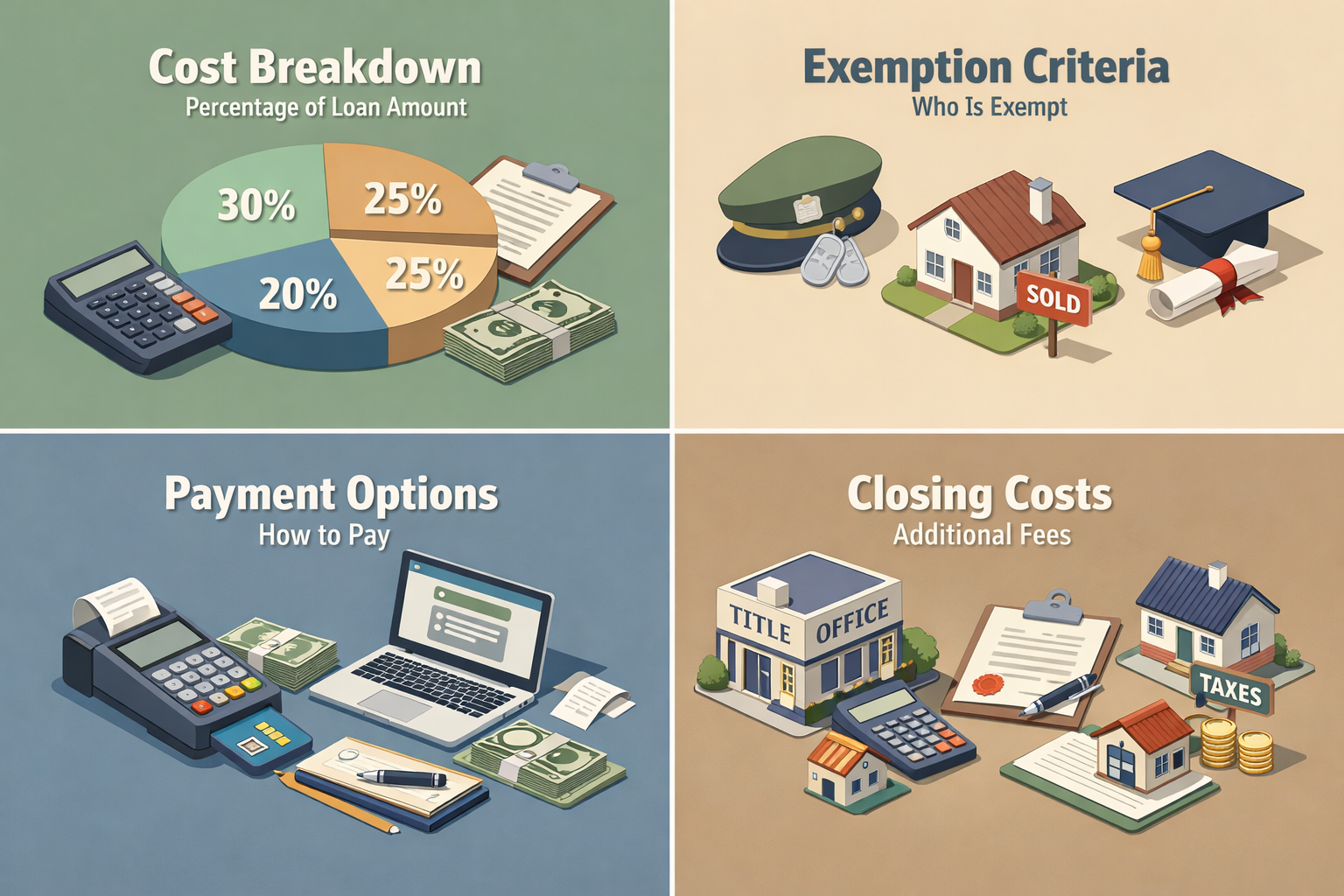
So, what is the cost of a VA loan funding fee in real numbers? The fee is calculated as a percentage of the total loan amount, and the exact rate depends on several key factors:
- Your loan type: Purchase loans, cash-out refinances, and Interest Rate Reduction Refinance Loans (IRRRLs) each carry different fee structures.
- Your down payment amount: For purchase loans, putting more money down typically lowers the fee percentage you'll owe.
- Whether it's your first use or a subsequent use: First-time VA loan users generally pay a lower fee than those using the benefit again.
- Your military category: Active-duty service members, veterans, reservists, and National Guard members may fall into slightly different rate tiers.
For a first-time use purchase loan with no down payment, the funding fee may be around 2.15% of the loan amount for most veterans and active-duty borrowers. For subsequent use, that rate could rise to approximately 3.3%. If a borrower puts down 5% or more, the rate typically drops — and a 10% or greater down payment may reduce it further still.
For example, on a $300,000 home loan with no down payment at a first-use rate of 2.15%, the funding fee could be approximately $6,450. On a subsequent-use loan at 3.3%, that same loan amount could carry a fee of around $9,900. These figures illustrate why understanding your specific situation matters before you close.
Note: Fee percentages may be updated periodically by the VA. Always confirm the current rates directly with your lender or through official VA resources before finalizing your loan.
Who May Qualify for a VA Loan Funding Fee Exemption
Not every eligible borrower is required to pay this fee. A VA loan funding fee exemption may apply in certain circumstances, which could result in meaningful savings.
Borrowers who are typically exempt from the funding fee include:
- Veterans receiving VA compensation for a service-connected disability
- Veterans who would be entitled to receive VA disability compensation but are currently receiving retirement or active-duty pay instead
- Surviving spouses of veterans who died in service or from a service-connected disability, and who are using the VA loan benefit
- Service members who have received a proposed or memorandum rating indicating eligibility for disability compensation before the loan closes
If you believe you may qualify for an exemption, it's important to confirm your disability rating status with the VA before your loan closes. The exemption is not applied automatically in every case — your lender will need documentation to verify eligibility. Failing to claim an exemption you're entitled to could mean paying thousands of dollars unnecessarily.
How to Pay the VA Funding Fee at Closing
One of the more flexible aspects of this charge is understanding how to pay the VA funding fee. Borrowers generally have two main options:
- Pay it upfront at closing: You can pay the full funding fee as a lump sum on your closing day, similar to other closing costs. This keeps it out of your loan balance and means you won't pay interest on it over time.
- Roll it into the loan: Most borrowers choose to finance the funding fee by adding it to their total loan amount. This eliminates the need for out-of-pocket cash at closing but does increase your monthly payment slightly and means you'll pay interest on that amount over the life of the loan.
There's no universally right answer here. If you have cash available and want to minimize your long-term interest costs, paying upfront may make sense. If you're trying to preserve your savings or reduce the amount of money you need at closing, rolling the fee into the loan could be the more practical choice. Discussing both scenarios with your loan officer before closing is a smart step.
Where the VA Funding Fee Fits in Your Overall Closing Costs
To put this fee in proper perspective, it helps to look at a full VA loan closing costs breakdown. While VA loans eliminate private mortgage insurance and don't require a down payment, they do come with other standard closing expenses. Here's what you might typically see alongside the funding fee:
- Origination fees: Charged by the lender for processing your loan. The VA limits what lenders can charge, which can work in your favor.
- Appraisal fee: VA loans require a specific VA appraisal, which may cost slightly more than a conventional appraisal.
- Title insurance and settlement fees: These cover the cost of verifying the property's ownership history and protecting against title disputes.
- Prepaid costs: This includes prepaid homeowner's insurance, property taxes, and initial escrow deposits.
- Discount points: Optional fees paid to buy down your interest rate upfront.
The funding fee is often the largest single line item on a VA loan closing disclosure, but the overall closing costs for VA loans are frequently competitive with — and sometimes lower than — those of other loan types, largely because of the restrictions the VA places on lender fees and the absence of mortgage insurance premiums.
Using Your VA Loan Certificate of Eligibility to Confirm Your Status
Before any lender can finalize your VA loan, you'll need a VA loan certificate of eligibility, commonly called a COE. This document serves as official proof that you meet the service requirements to use the VA home loan benefit.
Your COE also plays a role in determining your funding fee. It confirms whether you're using your VA loan benefit for the first time or a subsequent time, which directly affects the fee percentage applied to your loan. It may also reflect any existing disability compensation status that could qualify you for an exemption.
You can obtain your COE through several channels:
- Online through the VA's eBenefits portal
- Through your VA-approved lender, who may be able to access it electronically on your behalf
- By mailing VA Form 26-1880 directly to the VA
Most lenders are set up to pull the COE quickly during the application process, so this step typically doesn't slow things down significantly. However, having it ready before you apply can help streamline your experience and ensure accurate fee calculations from the start.
●Conclusion
Understanding what is the cost of a VA loan funding fee is an essential part of preparing for your home purchase or refinance as a VA-eligible borrower. The fee varies based on your loan type, down payment, and whether you're a first-time or repeat user of the benefit — but with the right information, you can plan for it confidently. If you may qualify for a funding fee exemption, confirming that status before closing could save you a significant amount of money. And whether you choose to pay the fee upfront or roll it into your loan, knowing your options puts you in control of your financial future. At LoanWise, we're here to help you navigate every line of your closing costs and make the most of the benefits you've earned.