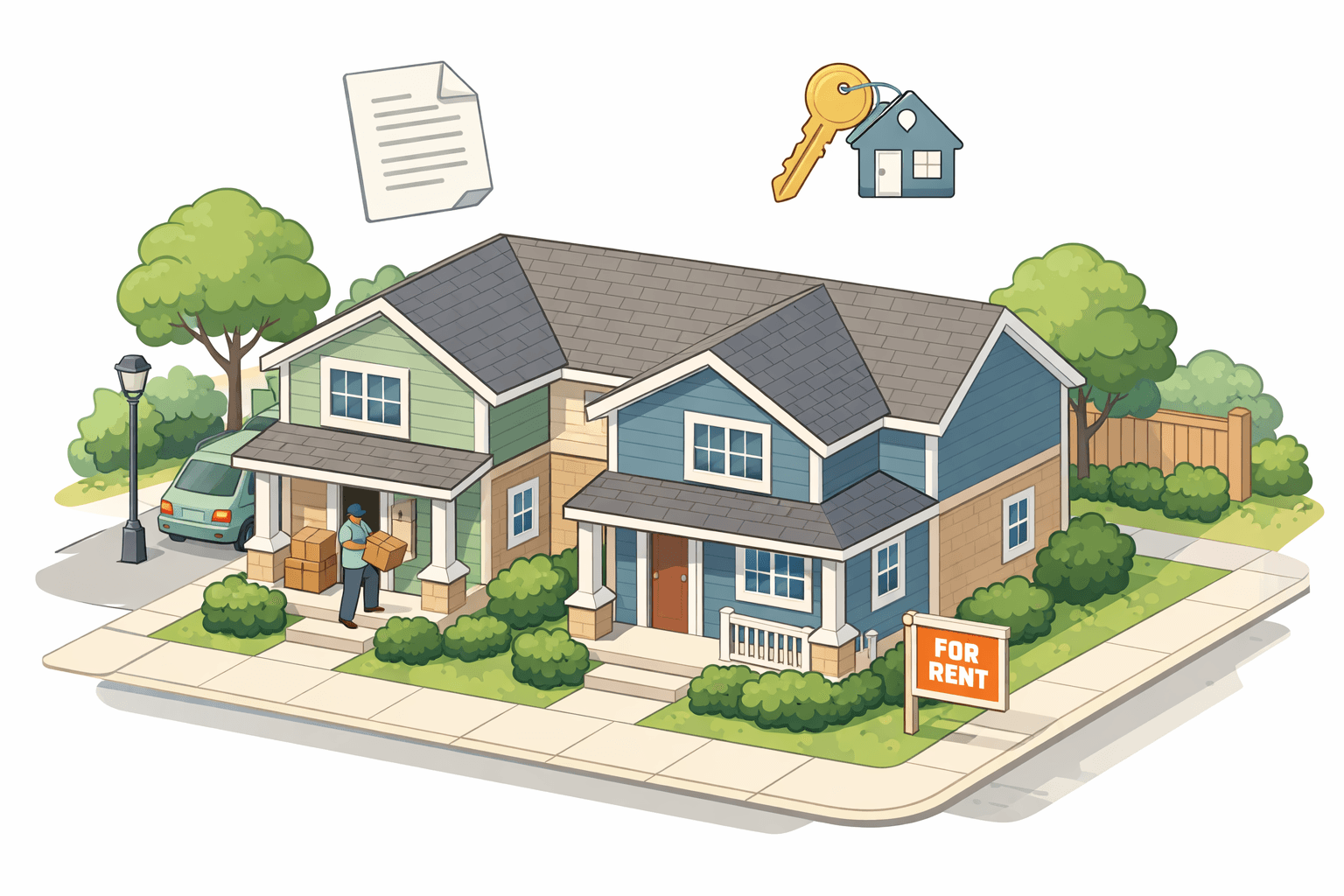
Buying a home is one of the biggest financial decisions most people will ever make. But what if that same purchase could also generate rental income? That's exactly the opportunity a duplex offers — and the FHA loan program makes it more accessible than many buyers realize. Understanding FHA loan limits for a duplex with owner-occupied unit requirements is an important first step for anyone considering this strategy. Whether you're a first-time homebuyer or a real estate investor looking for a low-down-payment entry point, the FHA multi-unit program may open doors you didn't know existed. This guide breaks it all down clearly so you can move forward with confidence.
What Makes the FHA Loan Program Unique for Multi-Unit Properties
The Federal Housing Administration (FHA) insures loans made by approved lenders, which allows those lenders to offer more flexible qualifying terms than conventional financing typically requires. Most people associate FHA loans with single-family homes, but the program actually extends to properties with up to four units — including duplexes, triplexes, and four-plexes — as long as the borrower intends to live in one of the units as their primary residence.
This owner-occupancy requirement is what sets FHA multi-family loans apart from investment property loans. It's also what keeps the down payment and credit requirements friendlier than what you'd encounter with a straight investment property purchase. For buyers who want to reduce their housing costs by renting out a second unit, this structure can be genuinely powerful.
The program is especially appealing because it allows borrowers to count a portion of the anticipated rental income from the other unit toward their qualifying income, potentially making it easier to meet debt-to-income ratio requirements. That said, lenders apply specific guidelines around how rental income is calculated, so it's worth discussing the details with a knowledgeable loan officer early in the process.
How FHA Multi-Family Loan Limits Are Set and Why They Vary
FHA loan limits are not one-size-fits-all. They're determined annually by the Department of Housing and Urban Development (HUD) and vary based on two factors: the number of units in the property and the county where the property is located. This means the maximum loan amount available for a duplex in a high-cost metro area will look very different from the limit in a lower-cost rural county.
The limits are tied to local median home prices. In higher-cost areas — such as major coastal cities — HUD sets "ceiling" limits that can be significantly higher than the national baseline or "floor" limits applied in lower-cost regions. These adjustments are designed to ensure the FHA program remains relevant and useful across a wide range of housing markets throughout the country.
For a duplex specifically, the FHA loan limit is higher than it would be for a single-family home in the same area. This makes sense, given that two-unit properties generally carry higher purchase prices. As a general rule, two-unit FHA limits are notably higher than single-family limits, and they increase further for three- and four-unit properties. Buyers should always verify the current limits for their specific county using HUD's official loan limit lookup tool, as these figures are updated annually and can change from year to year.
- Single-family homes: Baseline FHA limits apply at the lowest tier
- Duplexes (2 units): Limits are set higher to reflect two-unit property values
- Triplexes (3 units): Limits increase further at this level
- Four-plexes (4 units): The highest FHA limits apply to four-unit properties
The Owner-Occupant FHA Duplex Requirement Explained
The term owner-occupant FHA duplex refers to the core eligibility rule that governs how borrowers can use this program for two-unit properties. To qualify for FHA financing on a duplex, the borrower must intend to occupy one of the two units as their primary residence. This isn't just a formality — lenders and the FHA take this requirement seriously, and borrowers who misrepresent their occupancy intentions could face serious legal and financial consequences.
Living in one unit while renting out the other is sometimes called "house hacking," and it's a strategy that many first-time buyers find attractive because it effectively reduces their monthly housing costs. The rental income from the second unit can help offset the mortgage payment, property taxes, insurance, and maintenance expenses that come with owning a property.
It's worth noting that this requirement also means the property must be suitable for year-round residential occupancy. FHA appraisals on multi-unit properties will evaluate both units, and any safety or habitability concerns identified during the appraisal will typically need to be resolved before the loan can close. Buyers should budget for this possibility and work with an experienced FHA-approved lender who understands multi-unit property guidelines.
Credit, Down Payment, and Qualifying Basics for FHA Duplex Buyers
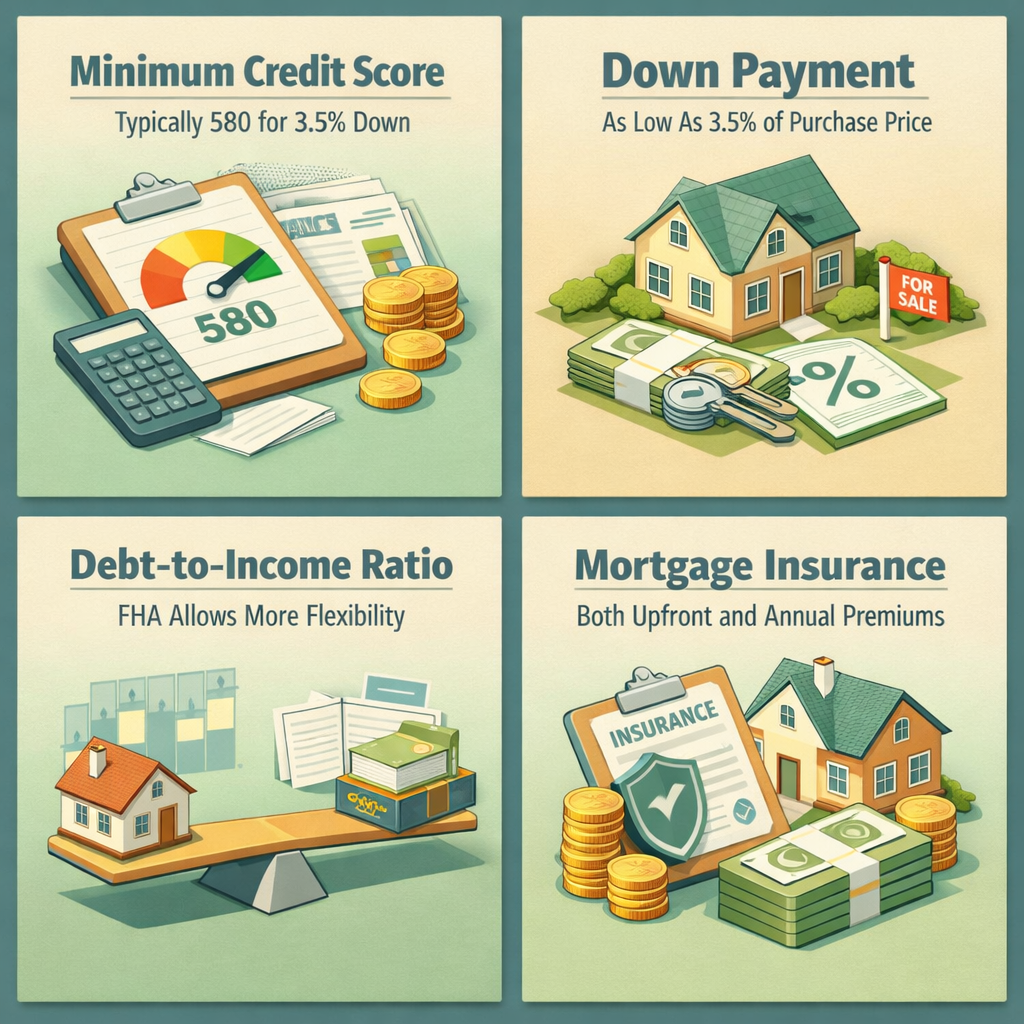
One of the most appealing aspects of FHA financing is the relatively accessible entry point it offers compared to conventional loans. For borrowers who meet the minimum credit score threshold — typically 580 or higher for the standard down payment option — FHA loans may allow a down payment as low as 3.5% of the purchase price. Borrowers with credit scores between 500 and 579 may still qualify but would generally be required to put down 10%.
These thresholds apply to multi-unit FHA purchases as well as single-family homes. However, it's important to understand that lender overlays — additional requirements that individual lenders impose on top of FHA minimums — could mean that some lenders require higher credit scores even for technically eligible borrowers. Shopping multiple FHA-approved lenders is always a smart move.
Debt-to-income (DTI) ratios are another key consideration. FHA guidelines generally allow for higher DTI ratios than conventional loans, which can help buyers qualify for larger loan amounts. When a portion of the duplex's rental income is counted toward the borrower's income — something lenders typically allow under specific documentation requirements — the effective buying power may increase meaningfully. A borrower's overall financial profile, including employment history, savings, and credit history, will all play a role in the final approval decision.
- Minimum credit score: Typically 580 for 3.5% down; 500–579 for 10% down
- Down payment: As low as 3.5% of the purchase price for eligible borrowers
- Debt-to-income ratio: FHA allows more flexibility than many conventional options
- Mortgage insurance: FHA loans require both upfront and annual mortgage insurance premiums
Using Rental Income to Strengthen Your FHA Duplex Application
One of the more nuanced aspects of buying a duplex with FHA financing is how rental income from the non-owner-occupied unit can be factored into the loan qualification process. This is a significant benefit, but it comes with specific documentation requirements that vary by lender and situation.
In general, lenders may allow borrowers to count a percentage of the market rent from the second unit as qualifying income. The exact percentage and the documentation required — such as a signed lease agreement, a rental income appraisal, or evidence of prior landlord experience — will depend on the lender's guidelines and the borrower's specific circumstances. Borrowers who are new to rental property ownership may find that some lenders apply more conservative standards around how much rental income they'll recognize.
Even with these limitations, the ability to use rental income at all is a meaningful advantage. It may allow buyers to qualify for a higher loan amount than they'd be eligible for based on their employment income alone, which could open up duplex options in more desirable neighborhoods or markets. Working with a lender who has experience in FHA multi-family transactions can make a significant difference in how smoothly this part of the process goes.
Common Pitfalls to Avoid When Applying for an FHA Multi-Family Loan
Even well-prepared buyers can run into challenges when applying for an FHA loan on a multi-unit property. Being aware of common pitfalls ahead of time can help you avoid delays and improve your chances of a smooth closing.
One frequent issue is underestimating the property condition requirements. FHA appraisals are more stringent than conventional appraisals and evaluate both the market value and the physical condition of the property. If either unit has safety issues, structural concerns, or major deferred maintenance, the lender may require repairs before the loan can be approved. Buyers should ideally have an independent home inspection done before submitting an offer, so they can identify potential issues early.
Another common misstep is failing to account for all the costs of ownership. While the down payment may be lower with FHA financing, buyers still need to budget for closing costs, upfront mortgage insurance premiums, ongoing annual mortgage insurance, property taxes, insurance, and maintenance for both units. Running the full numbers before committing to a purchase price range is essential for long-term financial stability.
- Property condition: FHA appraisals evaluate habitability and safety for all units
- Mortgage insurance costs: Both upfront and annual MIP add to the total loan cost
- Lender overlays: Some lenders impose stricter requirements than FHA minimums
- Occupancy documentation: Lenders will verify that the borrower genuinely intends to live in one unit
●Conclusion
For homebuyers who want to reduce their housing costs while building equity, the FHA duplex program offers a compelling path forward. Understanding FHA loan limits for a duplex with owner-occupied unit requirements is fundamental to making the most of this opportunity. Loan limits vary by county and are updated annually, so checking the current figures for your target market is always a smart first step. From there, working with an experienced FHA-approved lender who understands FHA multi-family loan limits and the nuances of the owner-occupant FHA duplex program can make the difference between a smooth transaction and an unnecessarily stressful one. At LoanWise, we're here to help you navigate every step of the process — from understanding your loan options to finding the right financing solution for your goals. Reach out today to get started.