
Inheriting a significant sum of money can open doors that once seemed out of reach — including the purchase of a luxury or high-value home through a jumbo mortgage. But if you're wondering how to qualify for a jumbo loan with recent inheritance for down payment funds, it's important to understand that lenders apply a uniquely rigorous approval process to these large loans. Unlike conventional conforming mortgages, jumbo loans exceed the limits set by the Federal Housing Finance Agency (FHFA) and are not backed by government-sponsored enterprises like Fannie Mae or Freddie Mac. That means lenders take on more risk — and they compensate by scrutinizing borrowers more carefully. The good news is that a well-documented inheritance can be a strong asset in your application. This guide walks you through everything you need to know to put your best foot forward.
Understanding What Makes Jumbo Loans Different
Before diving into how inheritance funds factor in, it helps to understand what sets jumbo loans apart from standard mortgages. A jumbo loan is any mortgage that exceeds the conforming loan limit, which the FHFA adjusts annually and which can vary by county. In most parts of the United States, any loan above roughly $766,550 (as of recent FHFA updates) is considered jumbo — though higher-cost areas may have elevated thresholds.
Because these loans aren't eligible for purchase by Fannie Mae or Freddie Mac, private lenders — typically banks, credit unions, and portfolio lenders — bear the full credit risk. This leads to stricter qualification standards across the board, including higher credit score requirements, lower debt-to-income (DTI) ratios, larger cash reserves, and more thorough documentation of all income and assets, including your down payment source.
For homebuyers targeting luxury properties, high-value home condos, or estate homes, jumbo financing is often the only viable path. Understanding the rules of this lending category from the outset can save considerable time and frustration during the application process.
Why Lenders Look Closely at Large Down Payment Sources
When you apply for any mortgage, lenders are required to verify where your down payment money comes from. This process — sometimes called "sourcing" funds — is especially strict with jumbo loans. Regulators and lenders alike want to confirm that large sums weren't borrowed without disclosure, received through undocumented transactions, or tied to any suspicious financial activity.
A large down payment jumbo loan application that includes inherited funds adds an extra layer of complexity. The money may have arrived recently in your account as a lump sum, which can raise questions if a lender doesn't see a clear paper trail. That's why proper documentation is absolutely essential when using a jumbo loan down payment from inheritance.
Lenders want to confirm two things above all: that the money is legally yours, and that it didn't come with repayment obligations that could affect your ability to make mortgage payments. An inheritance — properly documented — typically satisfies both concerns, since inherited assets are gifts with no expectation of repayment. The challenge lies in proving this clearly and efficiently.
Key Documentation You'll Need to Source Your Inheritance
If you're planning to use inherited funds for your down payment, gathering the right paperwork early can make a meaningful difference in how smoothly your loan application proceeds. While specific requirements may vary by lender, there are several documents that are commonly requested when sourcing inheritance-based assets.
- Estate or probate documents: These might include a copy of the will, letters testamentary, or probate court orders that confirm your legal right to receive the funds.
- Death certificate: Lenders may ask for proof that the estate has been settled and that the funds are genuinely inherited rather than gifted from a living person.
- Bank or brokerage transfer records: Statements showing the transfer from the estate account to your personal account help lenders trace the money's origin clearly.
- Attorney or executor letter: A signed letter from the estate attorney or executor explaining the nature and amount of the inheritance can be a powerful supporting document.
- Account statements showing seasoning: Some lenders prefer that large deposits have been sitting in your account for at least 60 to 90 days — a concept known as "seasoning." If the funds are very recent, you may need additional documentation.
It's worth noting that requirements can differ significantly between lenders. Working with a mortgage professional experienced in jumbo lending can help you anticipate and prepare for institution-specific document requests before they slow down your timeline.
How to Qualify for a Jumbo Loan With Recent Inheritance for Down Payment: Credit and Income Standards
Understanding how to qualify for a jumbo loan with recent inheritance for down payment funds isn't just about the money itself — it also means meeting the lender's broader financial standards. Even with a generous down payment, you'll typically need to demonstrate creditworthiness across several dimensions.
Credit Score Requirements
Most jumbo lenders look for a credit score of at least 700, and many prefer 720 or higher. Some lenders may require scores of 740 or above for the most competitive rates. If your credit history has any blemishes — late payments, high utilization, or collections — it's worth addressing these well before you apply. Jumbo lenders tend to have less flexibility than conforming loan programs in this area.
Debt-to-Income Ratio
Your debt-to-income (DTI) ratio — which compares your monthly debt obligations to your gross monthly income — is another critical factor. Jumbo lenders typically prefer a DTI at or below 43%, and many portfolio lenders target 38% to 40% or lower. Having a jumbo loan down payment could reduce your loan amount and improve your DTI, which is a genuine advantage worth highlighting in your application.
Income Verification
Unlike government-backed loans that may offer more flexibility, jumbo lenders generally require two years of consistent, verifiable income through W-2s, tax returns, and pay stubs. Self-employed borrowers may face additional scrutiny and may need to explore Non-QM or bank statement loan options if traditional income documentation presents challenges.
Cash Reserves: Why Lenders Want More Than Just the Down Payment
One aspect of jumbo loan qualification that surprises many buyers is the reserve requirement. Even after you've made a sizable down payment using your inheritance, lenders may want to see that you still have significant liquid assets remaining. This is designed to ensure that you can continue making mortgage payments even if your income were disrupted unexpectedly.
Reserve requirements for jumbo loans can range from six to twelve months' worth of mortgage payments — sometimes more for higher loan amounts or borrowers with other risk factors. These reserves typically need to be held in liquid or near-liquid accounts, such as checking, savings, money market accounts, or certain investment portfolios.
If your inheritance has already been drawn down significantly by the time you apply, this could create a challenge. One strategy is to plan your purchase timeline carefully, ensuring that even after the down payment, closing costs, and moving expenses, you'll still have sufficient reserves on hand. Speaking with a financial advisor before finalizing your home purchase budget can help you think through this holistically.
Strategies to Strengthen Your Jumbo Loan Application
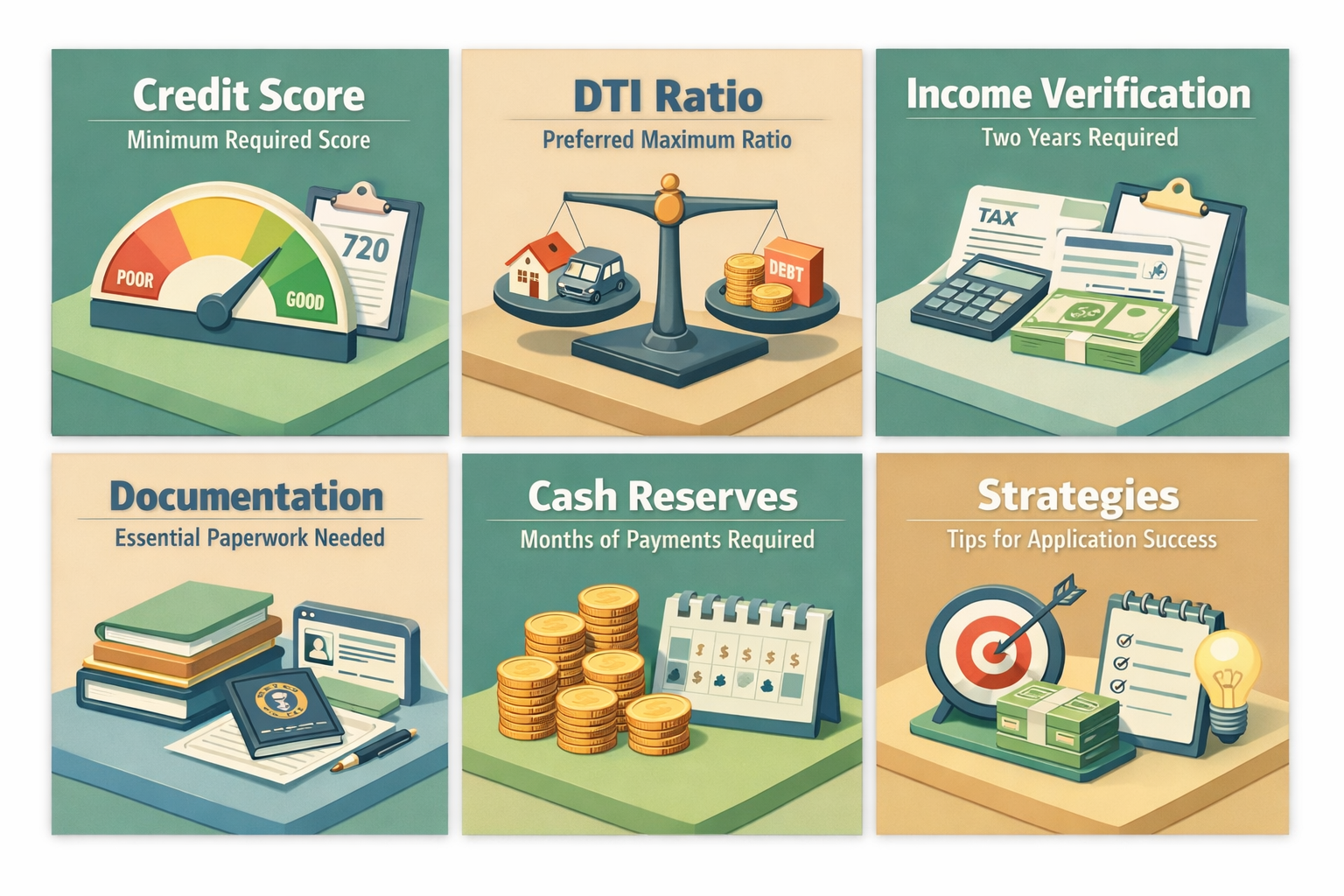
Using inheritance funds for a down payment is a strong starting point, but there are additional steps you can take to put together the most compelling jumbo loan application possible.
- Start the documentation process early: Inheritance paperwork can sometimes take time to gather, especially if the estate is complex or still being settled. Getting these documents organized well in advance prevents last-minute delays.
- Let funds season when possible: If you have some flexibility in your purchase timeline, allowing the inherited funds to sit in your account for at least 60 to 90 days may simplify the documentation process with some lenders.
- Pay down existing debt: Reducing outstanding balances on credit cards or other loans before applying can improve both your credit score and your DTI ratio — two key approval metrics for jumbo loans.
- Compare lenders carefully: Not all jumbo lenders have the same requirements. Portfolio lenders, private banks, and credit unions may offer more flexibility than large national banks, especially for borrowers with non-traditional financial profiles.
- Consider a larger down payment: Jumbo loans often require a minimum of 10% to 20% down, but putting down more — particularly when inheritance funds allow it — may result in better rates, lower monthly payments, and easier approval.
- Work with a mortgage broker: A broker with jumbo loan expertise can match you with lenders whose guidelines align with your financial profile, potentially saving you time and improving your odds of approval.
What to Expect During the Underwriting Process
Jumbo loan underwriting tends to be more detailed and time-consuming than conforming loan underwriting. Because these loans fall outside Fannie Mae and Freddie Mac guidelines, lenders apply their own internal risk models, which can vary considerably. Understanding what to expect can reduce stress and help you respond quickly to lender requests.
During underwriting, you may receive multiple requests for additional documentation — sometimes called "conditions." These might include clarifying letters explaining recent large deposits (your inheritance being a prime example), updated bank statements, or additional verification of assets. Responding promptly and completely to these requests can help keep your closing timeline on track.
It's also worth knowing that jumbo loans may take longer to close than conventional mortgages — sometimes 45 to 60 days or more, depending on the lender and the complexity of your file. If you're making an offer in a competitive real estate market, discussing your financing situation transparently with your real estate agent can help set realistic expectations with sellers.
Finally, appraisal standards for high-value properties can be more complex. Lenders may order multiple appraisals or use appraisers with specific luxury or high-value property experience. This is standard practice and not a cause for concern, but it is another factor that can extend your timeline.
●Conclusion
Receiving an inheritance is a meaningful financial event, and using those funds strategically — such as toward a jumbo loan down payment — can help you access a home that truly fits your lifestyle and long-term goals. The key to success lies in preparation: gathering the right documentation, understanding lender expectations, and ensuring your overall financial profile meets the elevated standards that jumbo mortgage programs require. If you're navigating this process, working with experienced mortgage professionals who specialize in jumbo and high-value home financing can make a significant difference. At LoanWise, we're here to help you explore your options, understand the requirements, and move forward with confidence. Reach out to our team today to start your jumbo loan conversation.