
If you're a homeowner looking for a way to lower your monthly mortgage payment without going through the full process of refinancing, mortgage recasting might be worth exploring. It's a lesser-known option that could offer real financial relief — particularly if you've recently come into a lump sum of money. Whether you've sold a previous home, received an inheritance, or accumulated savings over time, recasting your mortgage may help you stretch those funds in a meaningful way. In this article, we'll break down exactly what mortgage recasting is, how it compares to other strategies, and whether it could be a smart move for your financial goals.
Understanding the Basics of Mortgage Recasting
At its core, mortgage recasting — sometimes called a loan recast or reamortization — is a process where a homeowner makes a large lump-sum payment toward the principal balance of their existing loan. After that payment is applied, the lender recalculates, or "recasts," the remaining monthly payments based on the new, lower balance.
Here's what stays the same after a recast:
- Your interest rate
- Your loan term (the remaining repayment timeline)
- Your existing lender and loan agreement
And here's what changes:
- Your outstanding principal balance
- Your monthly payment principal and interest payment (which decreases)
This is what sets recasting apart from refinancing. When you refinance, you're essentially taking out a brand-new loan, which means new terms, a new interest rate, and often significant closing costs. With a recast, you're simply adjusting your existing loan's payment schedule. It's a relatively straightforward process that many lenders offer — though not all of them do, so it's important to check with your loan servicer first.
How the Mortgage Recasting Process Works Step by Step
If you're considering a mortgage recast, it helps to understand what the process typically looks like from start to finish. While procedures can vary by lender, the general steps are fairly consistent.
Step 1: Contact Your Loan Servicer
Not every lender or loan type supports recasting, so your first move should be to call or message your loan servicer directly. Ask whether they offer reamortization and what their specific requirements are.
Step 2: Confirm Eligibility Requirements
Most lenders require a minimum lump-sum payment — often ranging from $5,000 to $10,000 or more — before they'll agree to recast the loan. You'll also typically need to be current on your payments with no recent delinquencies.
Step 3: Submit the Lump-Sum Payment
Once approved, you'll make the principal payment as directed by your servicer. It's important that this payment is applied correctly to the principal — not as a regular monthly payment — so be sure to confirm this with your lender in writing.
Step 4: Pay the Recast Fee
Most lenders charge a modest administrative fee for processing a recast, which may typically range from around $150 to $500. This is significantly lower than refinancing costs, which can run into thousands of dollars.
Step 5: Receive Your New Payment Schedule
After processing — which may take a few weeks — your lender will issue a new amortization schedule reflecting your reduced monthly payment. You'll continue paying your mortgage under the same terms, just with a lower required payment going forward.
Mortgage Recasting vs. Refinancing: Key Differences to Know
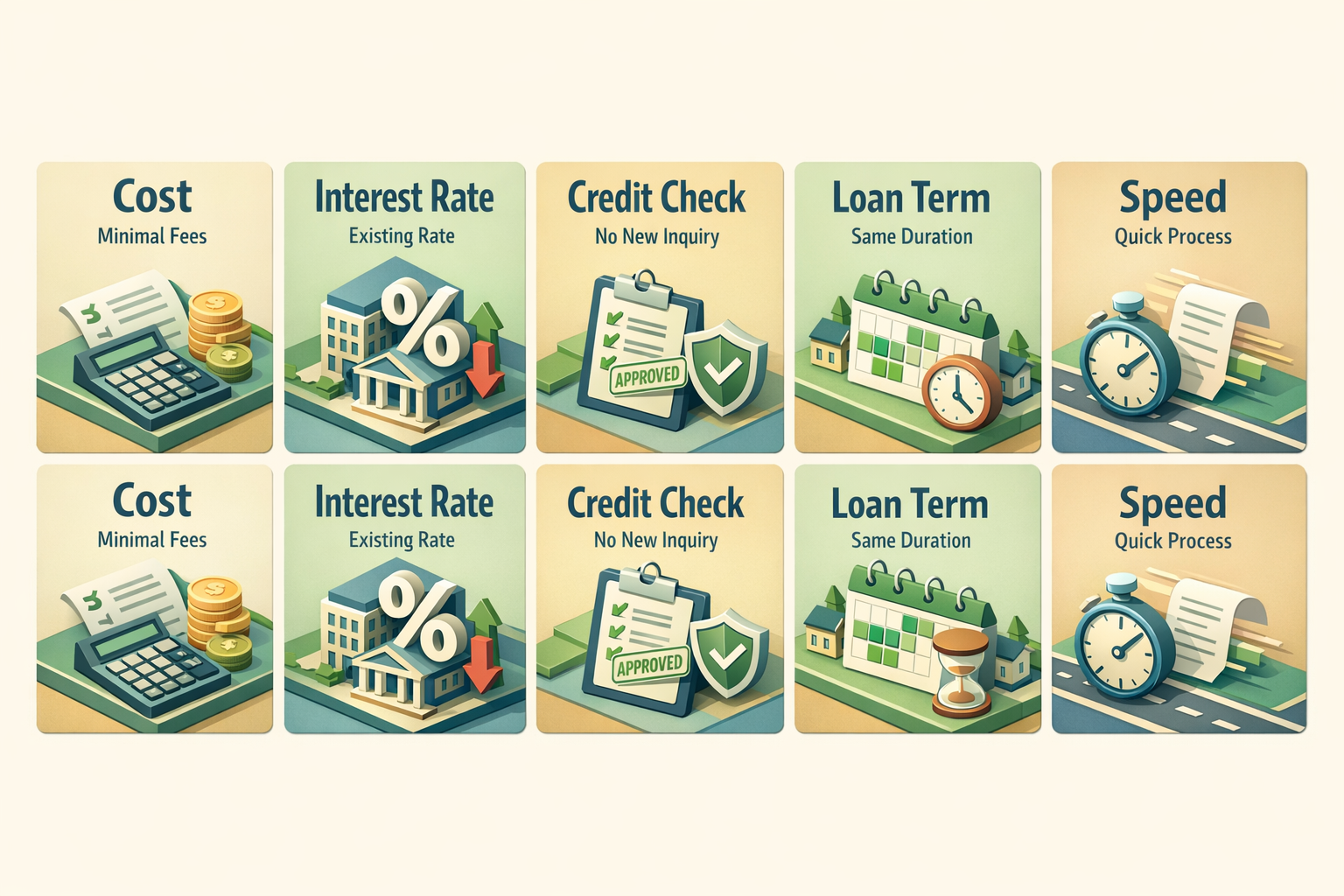
Both recasting and refinancing can help homeowners manage their mortgage more effectively, but they serve different purposes. Understanding the distinction can help you make the right choice for your situation.
- Cost: Refinancing typically involves closing costs of 2% to 5% of the loan balance, whereas recasting fees are generally minimal — often just a few hundred dollars.
- Interest rate: Refinancing allows you to potentially lock in a lower rate if market conditions are favorable. Recasting keeps your existing rate in place.
- Credit check: Refinancing requires a full credit application and underwriting process. Recasting generally does not require a new credit inquiry or income verification.
- Loan term: With refinancing, you can shorten or extend your repayment period. Recasting keeps your remaining term the same.
- Speed and simplicity: A recast is typically faster and involves less paperwork than a full refinance.
So when might recasting be the better choice? It could make sense if you're happy with your current interest rate, want to avoid the hassle of requalifying, and simply want to lower your monthly payment after coming into a lump sum. On the other hand, if rates have dropped significantly since you took out your loan, refinancing might offer greater long-term savings — even after accounting for closing costs.
Who Qualifies for a Mortgage Recast — and What Loan Types Are Eligible
One important limitation of mortgage recasting is that it's not available for every type of home loan. Generally speaking, recasting tends to be available for conventional loans — those not backed by a government agency. This means that FHA loans, VA loans, and USDA loans are typically not eligible for recasting. Jumbo loans may be eligible depending on the individual lender's policies.
Beyond loan type, lenders often look for the following from borrowers:
- A loan that is current and in good standing
- A minimum lump-sum payment that meets the lender's threshold
- The loan must not be in a probationary or recently modified status
If you currently have a government-backed mortgage and want to reduce your monthly payment, you may want to explore other options such as making extra principal payments over time (which won't lower your required payment but will shorten your loan term), or looking into refinancing into a conventional loan if it makes financial sense to do so.
It's also worth noting that even among conventional loan holders, not all lenders offer this feature. Always confirm directly with your servicer, as policies vary widely across financial institutions.
The Real Financial Benefits of Recasting Your Home Loan
When done strategically, mortgage recasting can deliver meaningful financial advantages for homeowners. Here's a closer look at some of the potential benefits:
Lower Monthly Cash Flow Pressure
Perhaps the most immediate benefit is a reduced monthly payment. If your budget has tightened — due to a career change, growing family expenses, or other financial shifts — having a lower required mortgage payment each month can provide welcome breathing room.
Interest Savings Over Time
By reducing your principal balance, you'll pay interest on a smaller amount going forward. While your interest rate doesn't change, the lower balance means less interest accrues with each passing month — which could translate to meaningful savings over the remaining life of the loan.
No New Credit Inquiry or Underwriting
Since recasting doesn't involve a new loan application, your credit score isn't affected. This can be particularly valuable if your credit profile has changed since you originally took out your mortgage, or if you'd prefer not to go through a full qualification process.
Simplicity and Low Cost
Compared to the paperwork, time, and fees involved in refinancing, a recast is a relatively simple administrative process. For homeowners who are satisfied with their loan terms and just want payment relief, this simplicity is a genuine advantage.
Potential Drawbacks and Situations Where Recasting May Not Be the Best Fit
Like any financial strategy, mortgage recasting isn't a perfect solution for everyone. There are a few important trade-offs to keep in mind before committing to this approach.
Your Lump Sum Becomes Illiquid
Once you apply a large sum toward your mortgage principal, that money is tied up in your home's equity. Unlike a savings account or investment portfolio, you can't easily access it in an emergency. Before recasting, it's worth asking whether that capital might serve you better elsewhere — such as in a high-yield savings account, investment account, or emergency fund.
Your Interest Rate Stays the Same
If mortgage rates have dropped since you took out your loan, recasting won't capture those savings. In a lower-rate environment, refinancing might be a more effective strategy even with the associated costs.
Not Available on Government-Backed Loans
As discussed earlier, FHA, VA, and USDA borrowers are generally not eligible for recasting, which limits who can take advantage of this option.
Loan Term Doesn't Shorten
If your goal is to pay off your home sooner, recasting won't achieve that. Your remaining loan term stays unchanged. If early payoff is your priority, making regular extra principal payments or refinancing to a shorter term might be more aligned with your objectives.
●Conclusion
Mortgage recasting can be a smart, low-cost strategy for homeowners who want to reduce their monthly payment without the complexity of refinancing. It works best for those who hold conventional loans, have access to a meaningful lump sum, and are comfortable with their existing interest rate and loan terms. That said, it's not the right fit for every borrower or every situation — especially for those with government-backed loans or those who might benefit more from refinancing in a favorable rate environment.
Before making any major financial decision, it's always a good idea to speak with a knowledgeable mortgage professional who can help you evaluate your options based on your specific goals and circumstances. At LoanWise, we're here to help you navigate those choices with clarity and confidence. Reach out today to speak with a lending expert who can help you determine whether a mortgage recast — or another smart strategy — is the right path forward for your homeownership goals.