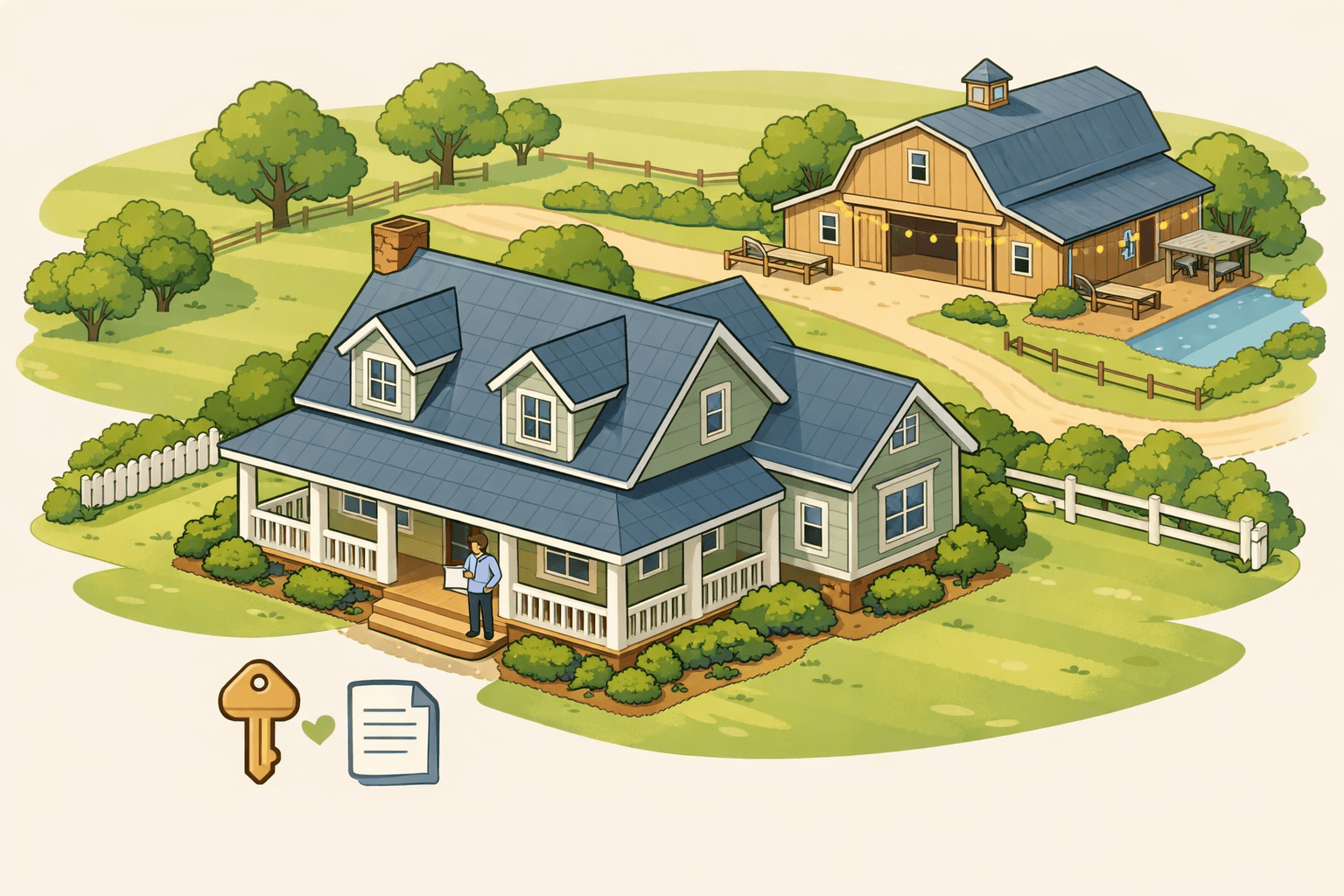
USDA loans are well known for helping homebuyers in rural areas achieve homeownership with little to no down payment. But what happens when the property you have in mind also functions as an event venue? Understanding how to qualify for a USDA loan with property used for an event venue is more nuanced than a standard home purchase — and getting the details right from the start could save you significant time and frustration. Whether you're a homebuyer looking to settle in the countryside or a homeowner exploring rural financing options, this guide walks you through the key eligibility factors, property rules, and practical strategies to help you move forward with confidence.
What Makes USDA Loans Unique for Rural Homebuyers
The USDA Single Family Housing Guaranteed Loan Program is designed to support homeownership in eligible rural and suburban communities. Backed by the U.S. Department of Agriculture, these loans typically offer zero down payment, competitive interest rates, and flexible credit guidelines — making them an attractive option for buyers who might not qualify for conventional financing.
Unlike FHA or conventional loans, USDA loans come with specific eligibility requirements tied to both the borrower and the property itself. The loan must be used to purchase or refinance a primary residence, and the property must be located within a USDA-designated rural area. These geographic and occupancy rules are central to understanding how event venue use could affect your eligibility.
It's also worth noting that USDA loans are income-restricted. Borrowers must fall within the program's household income limits, which vary by location and family size. If your household income exceeds the limit for your area, you may not qualify — regardless of your credit score or the property's condition.
The Core Challenge: Residential vs. Commercial Use
One of the most important things to understand when exploring USDA loan property for event venue scenarios is the program's strict focus on residential use. USDA loans are designed exclusively for primary residences — meaning the home must primarily serve as your main living space, not as a business operation.
When a property is used as an event venue, it may generate income through hosting weddings, corporate gatherings, private parties, or other functions. While this kind of agritourism or rural entrepreneurship is increasingly common, it introduces commercial activity that could conflict with USDA's residential-use requirements.
The key distinction lenders and USDA underwriters typically focus on is whether the commercial activity is incidental to the residential use or whether it fundamentally changes the nature of the property. A home where you occasionally host small gatherings on your property may be treated differently than a property with a dedicated event barn, paved parking lots, commercial kitchen facilities, or regular public access.
- Incidental use: Small-scale, infrequent events hosted on a primarily residential property may be viewed more favorably.
- Commercial-primary use: Properties with dedicated event infrastructure or zoned for commercial activity are likely to face disqualification under USDA guidelines.
- Mixed-use properties: These often require careful review and may not meet USDA's definition of a single-family residence.
If you're unsure how your intended use would be classified, consulting with a USDA-approved lender early in the process is strongly recommended.
USDA Property Eligibility Rules You Need to Know
Beyond the residential-use requirement, USDA loans carry a specific set of property requirements that could directly affect a property doubling as an event space. Understanding these rules can help you assess whether your target property is likely to qualify before you invest significant time in the application process.
Location Requirements
The property must be located in a USDA-eligible rural area. You can check a property's eligibility using the USDA's online mapping tool. Many areas on the outskirts of small towns and in true rural communities qualify, which may align well with the type of scenic, spacious properties often used for events.
Property Type and Condition
USDA loans require the property to be a single-family dwelling used as a primary residence. The home must be structurally sound, safe, and sanitary. Properties with significant outbuildings — such as barns, event halls, or large pavilions — may still be eligible, but the appraiser and underwriter will assess whether the residential component remains the dominant feature of the property.
Acreage Considerations
There's no strict acreage cap under USDA guidelines, but the land must be considered typical for the area and must not include parcels that would be used for income-producing agricultural activities. Large parcels associated with event venues could raise questions during underwriting, particularly if the land's primary value appears commercial rather than residential.
Appraisal and Valuation
The appraiser must confirm that the property's value is consistent with comparable residential properties in the area. If the event venue infrastructure significantly inflates the property's value beyond residential comps, it could affect the loan-to-value ratio and complicate approval.
Borrower Eligibility: Income, Credit, and Residency
Qualifying for a USDA loan involves meeting both property standards and personal financial requirements. Even if your property clears the eligibility hurdles, you'll still need to demonstrate that you meet the borrower criteria set by the program.
Income Limits
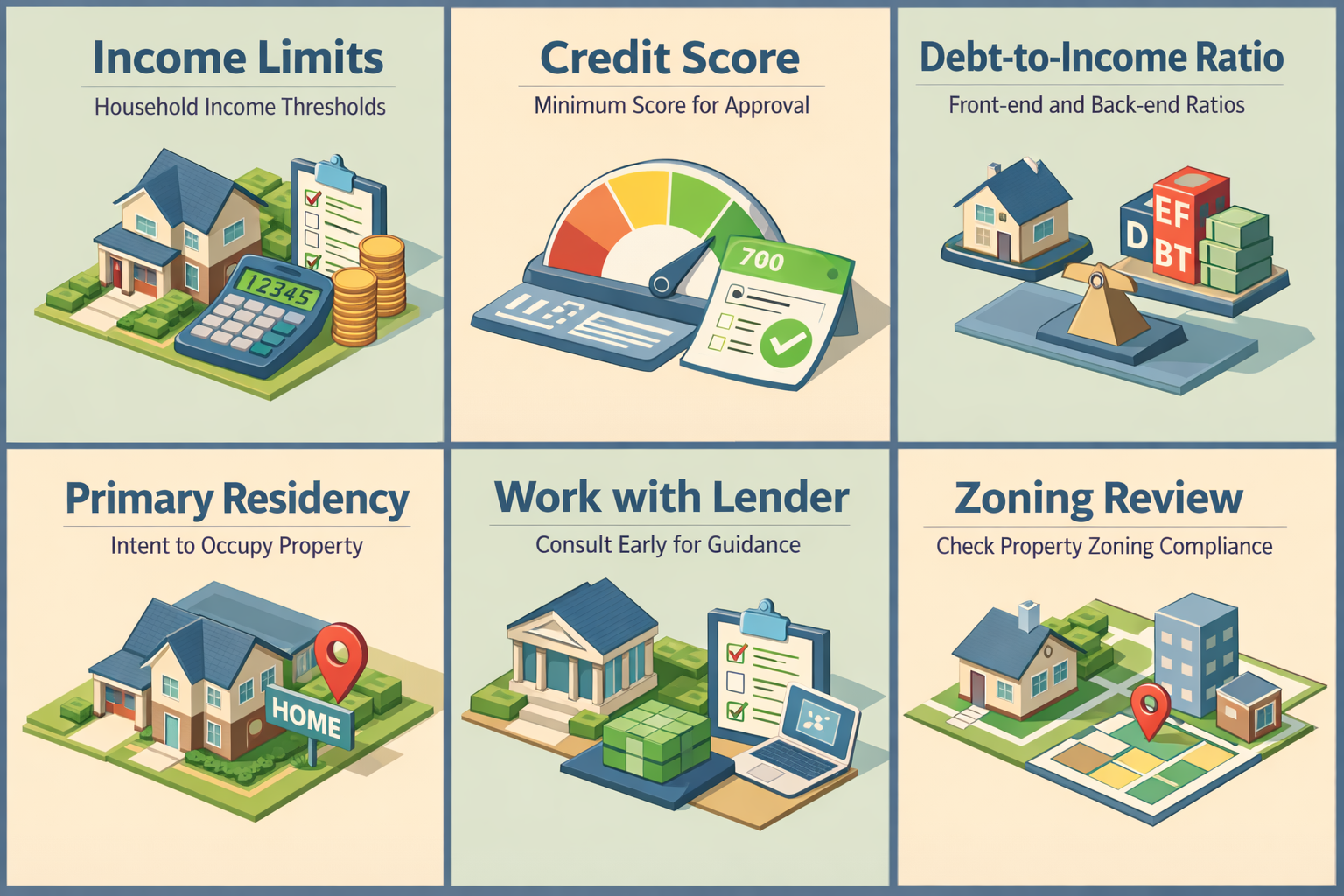
USDA loans are means-tested, meaning your household income must fall at or below 115% of the median income for your area. Income from all household members is typically counted, including rental or business income you might earn from event hosting. This is an important consideration — if your event venue generates substantial revenue, that income could push your household earnings above the qualifying threshold.
Credit Score and History
While USDA doesn't set a universal minimum credit score, most approved lenders look for a score of at least 640 to qualify for streamlined processing. Borrowers with scores below that threshold may still qualify but could face additional scrutiny and manual underwriting. A solid payment history and manageable debt levels will strengthen your application.
Debt-to-Income Ratio
Lenders typically look for a front-end debt-to-income (DTI) ratio of no more than 29% and a back-end DTI of no more than 41%, though some flexibility may exist with compensating factors. Business-related expenses tied to event operations could affect how your income and liabilities are calculated, so it's wise to work with a lender experienced in self-employed or mixed-income scenarios.
Primary Residency Requirement
You must intend to occupy the property as your primary residence. This means the home cannot be used solely or primarily as an event venue — you must actually live there. Demonstrating your intent to occupy the property full time is essential for maintaining USDA eligibility.
How to Qualify for USDA Loan with Property Used for Event Venue: Practical Steps
If you're committed to pursuing USDA financing for a property with event venue potential, there are several practical steps you can take to improve your chances of approval. The process requires thoughtful preparation and, in many cases, professional guidance.
- Work with a USDA-approved lender early: Not all lenders offer USDA loans, and fewer still have experience with mixed-use or event-related properties. Finding a lender who knows the nuances of the program could make a significant difference in how your application is structured and presented.
- Get a preliminary property eligibility check: Use the USDA's official eligibility map to confirm the property falls within a qualifying rural area before you make an offer. This is a simple but critical first step.
- Review local zoning: Check with the county or municipality to understand how the property is officially zoned. Residential zoning is more compatible with USDA guidelines than commercial or mixed-use zoning. If the property is zoned commercially, USDA financing may not be available regardless of how you plan to use it.
- Minimize commercial infrastructure on the property: If the event venue elements are prominent — such as a large event barn, permanent signage, or commercial restroom facilities — lenders may have concerns. Properties where the residential component is clearly dominant are more likely to receive favorable underwriting decisions.
- Document your primary residency intent clearly: Be transparent with your lender about how you plan to use the property. Providing a clear explanation of your living arrangements versus any event-hosting activity can help the underwriter understand the full picture.
- Consult a real estate attorney or advisor: Given the complexity of combining residential USDA financing with event venue use, getting professional advice before proceeding could help you avoid costly mistakes.
Alternative Financing Options Worth Considering
In some cases, a USDA loan may not be the right fit for a property that functions significantly as an event venue. If your property's commercial use is substantial, you might want to explore other financing options that better align with your financing situation.
Conventional Loans
Conventional mortgages don't carry the same residential-use restrictions as USDA loans. While you'll likely need a larger down payment and may face stricter credit requirements, conventional loans can offer more flexibility when the property has mixed residential and commercial characteristics.
USDA Business and Industry Loans
The USDA also administers a Business and Industry (B&I) Guaranteed Loan Program, which is designed to support rural businesses — including event venues. If your primary goal is the business operation rather than residential homeownership, this program may be a more appropriate path. It's a completely separate program from the home loan guarantee, with different lenders and underwriting standards.
Farm Service Agency (FSA) Loans
If the property has an agricultural component — such as a working farm that also hosts agritourism events — FSA loan programs may offer a complementary or alternative financing solution worth investigating.
Portfolio Lenders
Some local banks and credit unions hold loans in their own portfolios rather than selling them to secondary markets. These portfolio lenders often have more flexibility to underwrite unique properties that don't fit neatly into government-backed loan guidelines. If your property falls into a gray area, a portfolio lender may be able to craft a solution that works for your situation.
●Conclusion
Understanding how to qualify for a USDA loan with property used for an event venue requires careful attention to both the program's residential-use rules and the specific characteristics of the property in question. While USDA loans offer compelling benefits — including zero down payment and competitive rates — their strict focus on primary residential use means that properties with significant commercial event activity may face real eligibility challenges. The good news is that with thoughtful planning, the right lender, and a clear understanding of the guidelines, many homebuyers can still find a path forward. If USDA financing isn't the right fit, alternative programs may offer the flexibility you need. Whatever route you choose, connecting with an experienced mortgage professional early in the process is one of the smartest moves you can make. At LoanWise, we're here to help you evaluate your options and find the financing solution that fits your unique situation.