
Inheriting property can feel like a gift and a puzzle at the same time. When that inherited land comes with existing structures — a house, a barn, or even a commercial building — financing it through a conventional mortgage adds another layer of complexity. One of the first questions borrowers in this situation ask is: what are closing costs for conventional loan on inherited land with structures? The answer depends on several factors, including the property's title history, its appraised condition, and how the lender classifies the loan. This article breaks down every fee category you're likely to encounter, explains why inherited properties sometimes trigger additional costs, and offers practical strategies to keep your expenses manageable.
How Conventional Loans Work for Inherited Properties
A conventional loan is a mortgage that isn't backed by a government agency like the FHA or VA. Instead, it follows guidelines set by Fannie Mae or Freddie Mac. These loans are widely used for purchase transactions, refinances, and — increasingly — for borrowers who've inherited property and want to pull equity out or formally finance the asset.
When you inherit land with structures, you may need a conventional loan for one of several reasons. You might want to buy out co-heirs who also inherited a share of the property. You might want to refinance the estate's existing mortgage into your own name. Or you may want to tap the equity in the home for renovations or other financial goals. In each scenario, the lender treats this as a standard conventional transaction, but the inherited nature of the property introduces some unique underwriting considerations.
Lenders will typically require proof of legal ownership through probate records, a deed transfer, or a trust document. The title company will also conduct a thorough search to confirm there are no outstanding liens, unpaid taxes, or competing claims on the inherited property. These extra steps can influence both the timeline and the cost of closing.
Breaking Down the Closing Costs on Conventional Loan Inherited Land Transactions
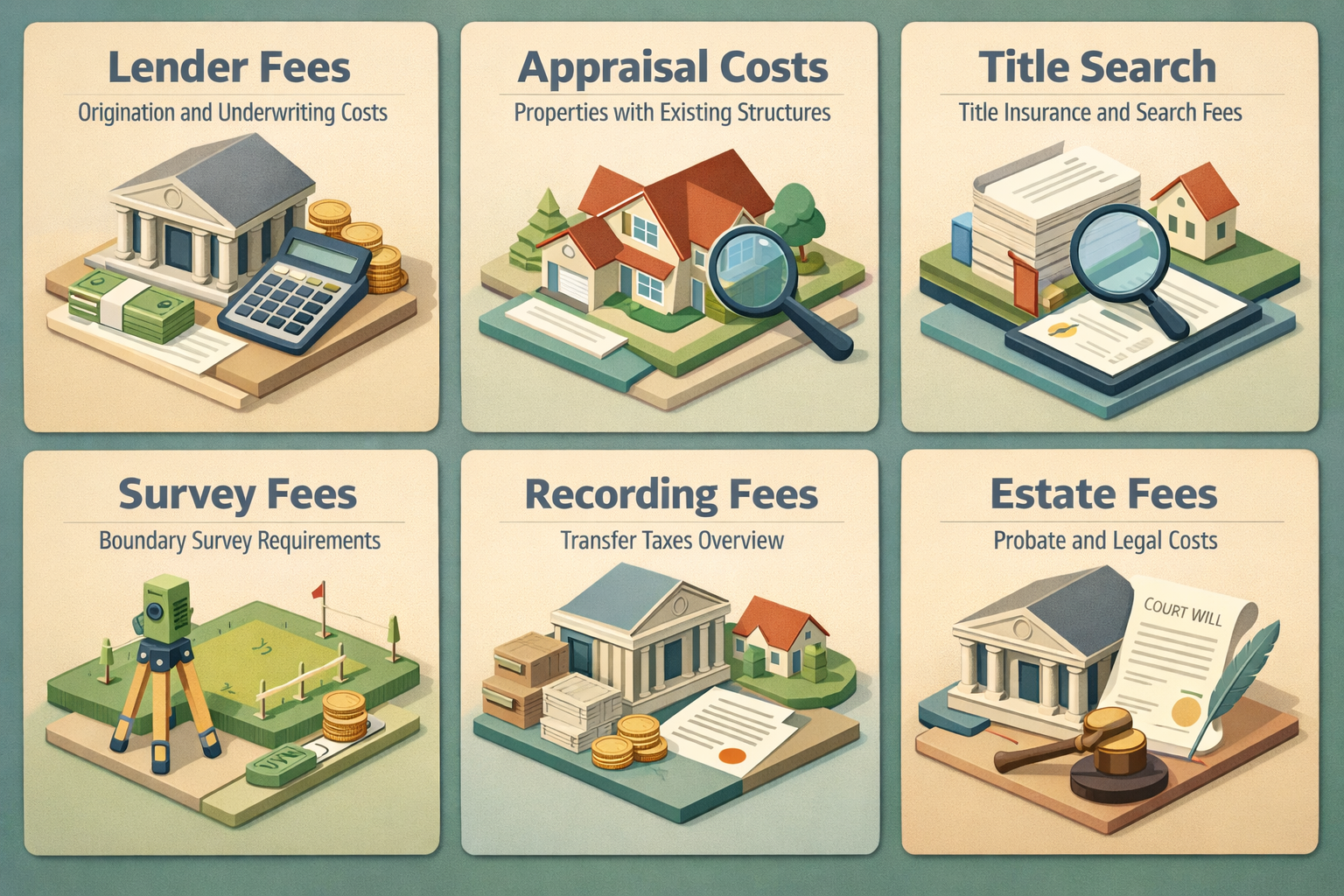
Understanding closing costs for conventional loan inherited land transactions starts with knowing the standard fee categories that apply to virtually every conventional mortgage, and then recognizing the additional charges that are specific to inherited or estate-owned properties.
Lender Origination and Underwriting Fees
Most lenders charge an origination fee, which may be expressed as a percentage of the loan amount or as a flat dollar figure. This fee covers the cost of processing and underwriting your application. On top of that, some lenders charge a separate underwriting fee. These fees can vary significantly from one lender to another, so it's worth shopping around before committing to a loan offer.
Appraisal Costs for Properties with Existing Structures
An appraisal is required on virtually every conventional loan. For inherited land with structures, the appraisal may be more involved than a standard single-family home review. The appraiser needs to assess the value of both the land and any buildings on it. If the structures are older, in disrepair, or non-conforming, the appraiser may flag issues that affect the loan-to-value ratio. In some cases, a second appraisal or a specialized inspection might be requested, which adds to the overall cost.
Title Search and Title Insurance
Title work is often one of the more expensive line items in an inherited property transaction. Because the property passed through an estate, the title company must trace ownership back through multiple parties, verify that probate was handled correctly, and confirm that all heirs have legally relinquished their claims. This extended research can increase the title search fee. You'll also need both lender's title insurance and, ideally, an owner's title insurance policy to protect yourself against future claims.
Survey Fees
If the inherited land hasn't been surveyed recently, or if the structures on it may have encroached on neighboring lots, the lender may require a new boundary survey. Survey costs vary by region and property size, but they can be a meaningful expense for rural or larger parcels.
Recording Fees and Transfer Taxes
When a deed is transferred as part of an inheritance and then a new mortgage is recorded, local governments charge recording fees. Some states also impose transfer taxes on certain types of property conveyances. The rates differ by jurisdiction, so it's important to check what applies in the county or state where the inherited property is located.
Estate-Specific Fees That Can Raise Your Total Closing Costs
Beyond the standard conventional loan fees, borrowers financing inherited land with structures may encounter charges tied directly to the estate settlement process. These aren't universal, but they're common enough that you should budget for them.
Probate and Legal Documentation Costs
If the estate hasn't been fully settled, you may need to complete probate before a lender will approve the loan. Attorney fees for probate work vary widely by state and estate complexity. Even if probate is finished, the lender may require certified copies of the will, letters testamentary, or a court order confirming the transfer — each of which may carry a small administrative cost.
Heir Buyout Transaction Fees
When multiple heirs inherit a property and one wants to retain sole ownership, a buyout transaction is necessary. This can involve additional legal fees, a partition agreement, and potentially a separate deed preparation cost. The lender will want clear documentation that all other heirs have been compensated and have released their interest in the property.
Environmental or Structural Inspections
Older structures on inherited land may trigger lender-required inspections for issues like lead paint, asbestos, underground storage tanks, or foundation integrity. Each inspection adds to your pre-closing costs. While these aren't technically closing costs in the traditional sense, they often appear on the closing disclosure as required conditions of the loan.
Estimating the Total Cost: What Are Closing Costs for Conventional Loan on Inherited Land with Structures?
So, what are closing costs for conventional loan on inherited land with structures in terms of a real dollar range? While it's difficult to give a precise number without knowing the loan amount, location, and property specifics, conventional loan closing costs typically range from about 2% to 5% of the loan amount for standard transactions. For inherited properties with structures, the total could trend toward the higher end of that range or even slightly above it, depending on the complexity of the title work, the condition of the structures, and any estate-related legal fees.
For example, on a $300,000 conventional loan for an inherited property, you might expect total closing costs somewhere between $6,000 and $15,000 or more, depending on your state's recording and transfer tax rules, the scope of the title search, and whether any specialty inspections are required. These are rough estimates — your Loan Estimate, which lenders are required to provide within three business days of your application, will give you a more accurate picture specific to your transaction.
It's also worth noting that some of these costs are negotiable or can be covered by the seller in a purchase scenario, while in a refinance or equity-out situation on inherited property, they'll typically fall entirely on the borrower.
Prepaid Items and Escrow Reserves: Often Overlooked Costs
Many borrowers focus only on third-party fees and forget about prepaid items, which are also listed on the closing disclosure. These aren't fees in the traditional sense — they're upfront payments for costs that will recur over the life of the loan.
Homeowner's Insurance Premiums
Lenders require you to prepay the first year of homeowner's insurance at closing. For inherited properties with older structures, insurance premiums may be higher than average due to the age, construction type, or condition of the buildings. Make sure you get insurance quotes early in the process so you're not surprised at the closing table.
Prepaid Mortgage Interest
You'll owe interest from your closing date to the end of the month. The amount depends on your loan balance, interest rate, and how many days are left in the month when you close. Closing earlier in the month means a larger prepaid interest charge.
Escrow Reserves for Taxes and Insurance
Most conventional lenders require you to fund an escrow account at closing to cover future property tax and insurance payments. For inherited land with structures — especially if the property has been in an estate and taxes may have accumulated — lenders may require a larger initial escrow deposit. Verify the current tax status of the property well before closing to avoid surprises.
Smart Strategies to Manage and Potentially Reduce Your Closing Costs
Closing costs on an inherited land transaction can feel overwhelming, but there are several practical approaches that may help reduce what you owe out of pocket.
- Shop multiple lenders: Origination fees and lender charges vary considerably. Getting at least two or three Loan Estimates side by side lets you compare total costs, not just interest rates.
- Negotiate with the title company: Some title companies offer reduced rates for simultaneous issue of lender's and owner's title insurance policies. Ask about bundled pricing.
- Roll costs into the loan: On a refinance, some lenders allow you to finance closing costs into the loan balance rather than paying them upfront. This increases your loan amount but preserves your cash reserves.
- Ask about lender credits: In exchange for accepting a slightly higher interest rate, some lenders will provide a credit that offsets a portion of your closing costs. This can be a smart trade-off if you plan to sell or refinance within a few years.
- Resolve estate issues early: The more cleanly the property title is transferred before you apply for the loan, the less work the title company has to do — and the lower your title fees are likely to be.
- Verify property tax status: Unpaid taxes from the estate period can surface as a surprise lien. Confirming and clearing any outstanding taxes before closing avoids costly delays and potential escrow holdbacks.
Working with the Right Lending Partner for Inherited Property Financing
Financing inherited land with structures isn't a cookie-cutter transaction. Not every lender has experience with the title complexities, estate documentation requirements, and appraisal nuances that come with this type of loan. Working with a lender who understands these dynamics can make the process smoother and may help you avoid costly missteps.
Look for a mortgage professional who asks detailed questions about how the property was transferred, whether probate is complete, and what the current condition of the structures is. These are signs that they've handled similar transactions before and know what documentation will be required. A knowledgeable loan officer can also help you anticipate which fees are fixed and which might be negotiable, so you can go into closing with realistic expectations.
It's also a good idea to work closely with a real estate attorney during the title transfer and estate settlement phase. The cleaner the legal record of ownership, the less the lender's title company has to untangle — which translates directly into lower costs and a faster closing timeline.
●Conclusion
Navigating the question of what are closing costs for conventional loan on inherited land with structures requires understanding both the standard fees that apply to any conventional mortgage and the additional charges that arise from the property's estate history. From title searches and appraisals to probate documentation and potential structural inspections, the cost picture can be broader than a typical home purchase. That said, with careful preparation, early resolution of estate matters, and the right lending partner, borrowers can manage these costs effectively. At LoanWise, we're here to help you understand every line on your closing disclosure and explore financing options tailored to your unique situation. Reach out to one of our mortgage specialists today to get started.