For many Americans dreaming of homeownership, the biggest hurdle is often saving enough for a down payment. That's where a USDA loan can make a meaningful difference. Backed by the U.S. Department of Agriculture, these government-supported mortgages are designed to help low- to moderate-income buyers purchase homes in eligible rural and suburban areas — often with no down payment required. If you've never heard of this financing option, you're not alone. USDA loans tend to fly under the radar compared to FHA or conventional mortgages, yet they could be one of the most powerful tools available to qualifying homebuyers. This article breaks down how USDA loans work, who may qualify, and what to expect throughout the process.
Understanding the USDA Loan Program and Its Purpose
The USDA loan program was established to encourage homeownership in areas outside major urban centers. The federal government, through the U.S. Department of Agriculture's Rural Development office, offers these loans as part of a broader effort to strengthen rural communities and expand access to safe, affordable housing.
There are two primary types of USDA home loans available to individual borrowers:
- USDA Direct Loans: Funded directly by the USDA and reserved for very low- and low-income applicants who may not qualify for conventional financing. These loans often come with subsidized interest rates to make payments more manageable.
- USDA Guaranteed Loans: Issued by approved private lenders and backed by the USDA. This is the more commonly used option and is available to a wider range of income levels, including moderate-income households.
It's worth noting that despite the name, USDA loans aren't just for farms or farmland. Eligible properties typically include single-family homes in designated rural and some suburban areas. The program's goal is straightforward — make homeownership achievable for people who might otherwise be priced out of the market.
Key Benefits That Make USDA Loans Stand Out
One of the most compelling reasons to consider a USDA loan is the opportunity to purchase a home without a down payment. This alone sets it apart from many conventional loan products, which typically require anywhere from 3% to 20% down. For buyers with steady income but limited savings, this feature can be a genuine game-changer.
Beyond the zero-down-payment advantage, USDA loans offer several other potential benefits worth knowing:
- Competitive interest rates: Because these loans carry a government guarantee, lenders may offer more favorable rates compared to some conventional products.
- Reduced mortgage insurance costs: USDA loans require a guarantee fee in place of private mortgage insurance (PMI), and these costs are often lower than what FHA loans charge in mortgage insurance premiums.
- Flexible credit guidelines: While lenders will still review your credit history, USDA programs can be more accommodating for borrowers with limited or imperfect credit compared to conventional loan standards.
- Ability to finance closing costs: In some cases, closing costs may be rolled into the loan amount or covered through seller concessions, reducing out-of-pocket expenses at closing.
These advantages combined make USDA financing a particularly attractive option for first-time homebuyers, rural residents, and those who have been saving but haven't yet reached a traditional down payment threshold.
Who Typically Qualifies for a USDA Home Loan
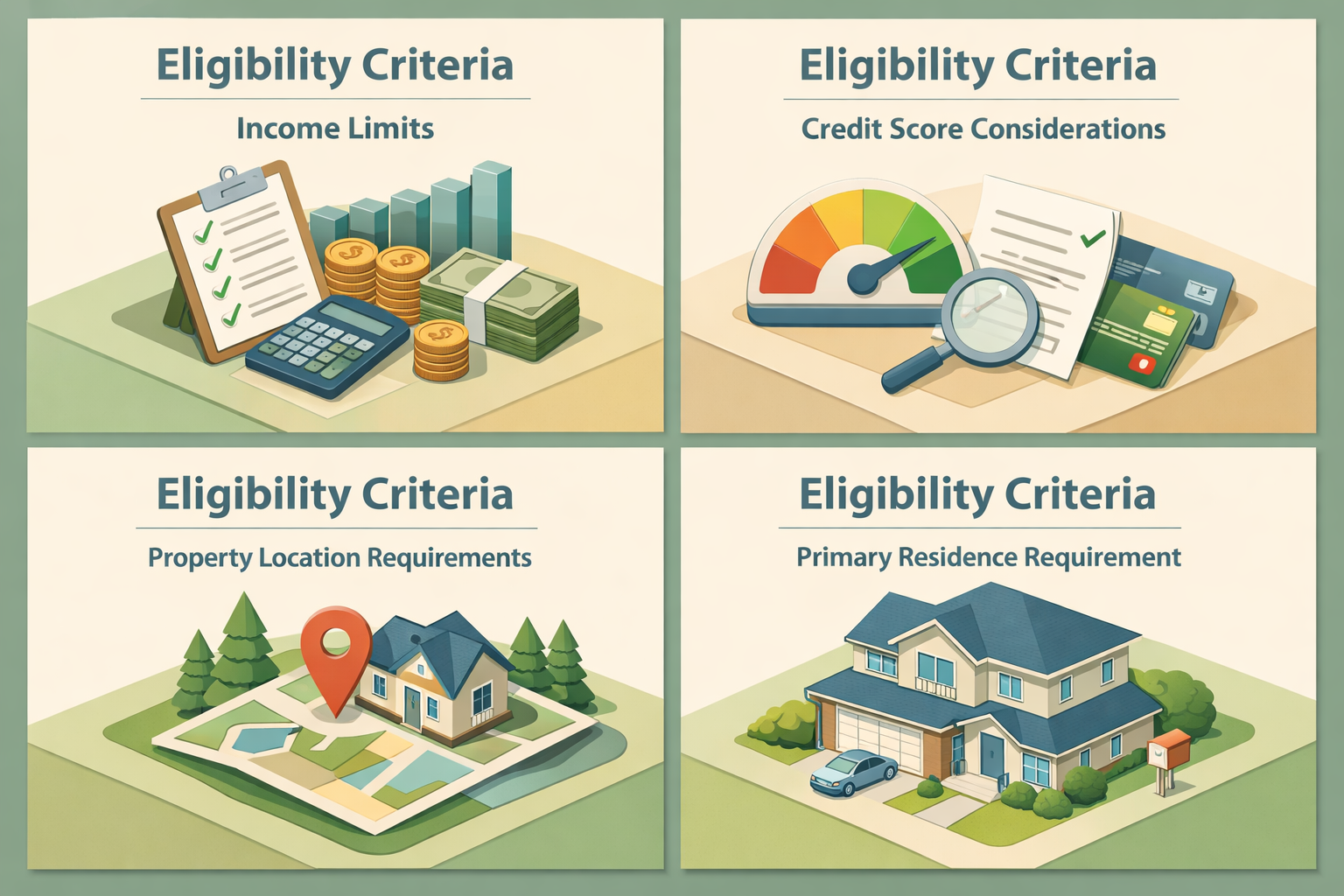
Qualifying for a USDA loan involves meeting a few distinct eligibility criteria. Unlike some loan programs that focus almost entirely on credit scores, USDA loans evaluate borrowers across several areas — including income, location, and intended use of the property.
Income Limits
USDA loans are income-capped, meaning your household income must fall at or below a certain threshold for your area. These limits vary by county and household size and are updated periodically by the USDA. Generally speaking, the program targets low- to moderate-income households, though the exact cutoff can be higher than many people expect — especially in areas with a higher cost of living.
Credit Score Considerations
Most lenders prefer a credit score of at least 640 for a streamlined USDA approval process. Borrowers with scores below that threshold may still qualify, but additional manual underwriting review is typically required. The emphasis tends to be on demonstrated ability to repay rather than a single number.
Property Location Requirements
The home you're purchasing must be located in a USDA-eligible area. This doesn't mean it has to be deep in the countryside — many smaller towns, suburban neighborhoods, and communities on the outskirts of metro areas may qualify. The USDA provides an online eligibility map that buyers can use to check whether a specific address qualifies.
Primary Residence Requirement
USDA loans are strictly for primary residences. Investment properties and vacation homes are not eligible. The buyer must also intend to occupy the home shortly after closing.
The USDA Loan Application Process Step by Step
Applying for a USDA loan follows a process similar to other government-backed mortgages, though there are a few additional steps tied to USDA-specific approvals. Here's a general overview of what to expect:
- Step 1 – Check your eligibility: Use the USDA's online tools to verify that the property you're interested in falls within an eligible area and that your household income meets the program's requirements.
- Step 2 – Choose a USDA-approved lender: Not all lenders offer USDA Guaranteed Loans. Look for lenders who are experienced with the program, as they'll be familiar with the additional documentation and submission requirements.
- Step 3 – Get pre-qualified or pre-approved: Your lender will review your income, credit, debts, and assets to determine how much you might be eligible to borrow. Pre-approval strengthens your position when making an offer on a home.
- Step 4 – Find an eligible property: Work with a real estate agent who understands USDA guidelines to identify homes in qualifying areas that meet program standards.
- Step 5 – Complete the loan application: Submit all required documentation, including tax returns, pay stubs, bank statements, and identification. Your lender will also order an appraisal to confirm the property's value and condition.
- Step 6 – USDA review and approval: After the lender completes their underwriting, the file may be submitted to the USDA for a final conditional commitment. This step can add some time to the overall process.
- Step 7 – Close on your home: Once all conditions are satisfied and final approval is granted, you'll proceed to closing and officially become a homeowner.
The full timeline can vary depending on lender workload and USDA processing times, but borrowers should generally plan for the process to take a bit longer than a conventional loan.
Costs and Fees Associated With USDA Financing
While USDA loans eliminate the need for a down payment, they're not entirely cost-free. Borrowers should be aware of two primary fees associated with the program:
Upfront Guarantee Fee
USDA Guaranteed Loans require an upfront guarantee fee, which is a percentage of the loan amount paid at closing. This fee helps fund the USDA program and is often rolled into the total loan balance, meaning you don't necessarily have to pay it out of pocket. The current fee structure is set by the USDA and may be subject to change.
Annual Fee
In addition to the upfront fee, borrowers pay an ongoing annual fee, which is calculated as a percentage of the remaining loan balance and is typically divided into monthly installments added to your mortgage payment. This is similar in concept to PMI on a conventional loan, though USDA fees are often considered more affordable than FHA mortgage insurance premiums.
Beyond these program-specific costs, standard closing costs still apply — including appraisal fees, title insurance, origination fees, and prepaid items like homeowners insurance and property taxes. As mentioned, some of these may be negotiated into the sale or financed, but it's smart to budget for them as part of your overall homebuying plan.
Common Misconceptions About USDA Loans
Despite the program's advantages, several myths tend to keep eligible buyers from exploring USDA financing. Let's address a few of the most common ones:
- "USDA loans are only for farmers." This is perhaps the biggest misconception. The USDA loan program is designed for any qualified buyer purchasing a home in an eligible area — not just agricultural workers or those buying farm properties.
- "Only very remote areas qualify." Many people assume USDA eligibility is limited to rural countryside locations. In reality, a surprising number of suburban communities and small towns within commuting distance of larger cities may fall within eligible boundaries.
- "You need perfect credit." While a higher credit score certainly helps, USDA loans are designed with flexibility in mind. Borrowers with modest credit histories may still find a path to approval with the right lender and documentation.
- "The process takes forever." While USDA loans can involve slightly longer processing times due to the additional government review step, working with an experienced lender can help keep things moving efficiently.
Understanding these realities can help homebuyers make a more informed decision about whether a USDA loan makes sense for their situation.
●Conclusion
USDA loans represent a genuinely valuable opportunity for homebuyers who meet the program's income and location requirements. The ability to purchase a home with no down payment, combined with competitive rates and reduced mortgage insurance costs, makes this one of the more accessible paths to homeownership available today. Whether you're a first-time buyer exploring your options, a rural resident ready to put down roots, or simply someone who wants to understand all the financing tools at your disposal, it's worth taking the time to see if a USDA loan could work for you. Speak with a knowledgeable mortgage professional at LoanWise to review your eligibility and get personalized guidance on your next step toward owning a home.