If you're considering purchasing a manufactured home with government-backed financing, one of the first questions you'll likely ask is: what are closing costs for FHA loan on a manufactured home? It's a fair and important question — and the answer is a bit more layered than many homebuyers expect. Manufactured homes, sometimes referred to as mobile homes, can be an affordable path to homeownership, but the financing process has its own set of rules, fees, and requirements. Understanding these costs upfront can help you budget wisely, avoid surprises at the closing table, and make confident decisions throughout the homebuying journey.
Understanding FHA Loans and Manufactured Housing
The Federal Housing Administration (FHA) insures loans made by approved lenders, allowing borrowers to qualify with lower down payments and more flexible credit requirements than conventional financing. When it comes to manufactured homes, the FHA offers specific loan programs designed to make this type of housing more accessible — particularly for first-time homebuyers and those with modest incomes.
To qualify under the FHA's manufactured housing guidelines, the home must meet certain standards. It must have been built after June 15, 1976, comply with HUD construction and safety standards, and be on a permanent foundation. The property also typically needs to be classified as real property rather than personal property — meaning the land and home are often treated as a single unit for financing purposes.
There are two primary FHA loan options for manufactured homes. The FHA Title I loan can be used to purchase just the manufactured home, even if you don't own the land. The FHA Title II loan, which is more commonly used, requires the home to be on a permanent foundation and titled as real estate. Each of these loan types comes with its own set of costs and requirements, so it's worth understanding which one applies to your situation before diving into the numbers.
What Are Closing Costs for FHA Loan on a Manufactured Home
Closing costs are the fees and expenses paid at the end of a real estate transaction, separate from your down payment. For an FHA loan on a manufactured home, these costs may include many of the same line items you'd find in a traditional home purchase — but with some important additions and nuances.
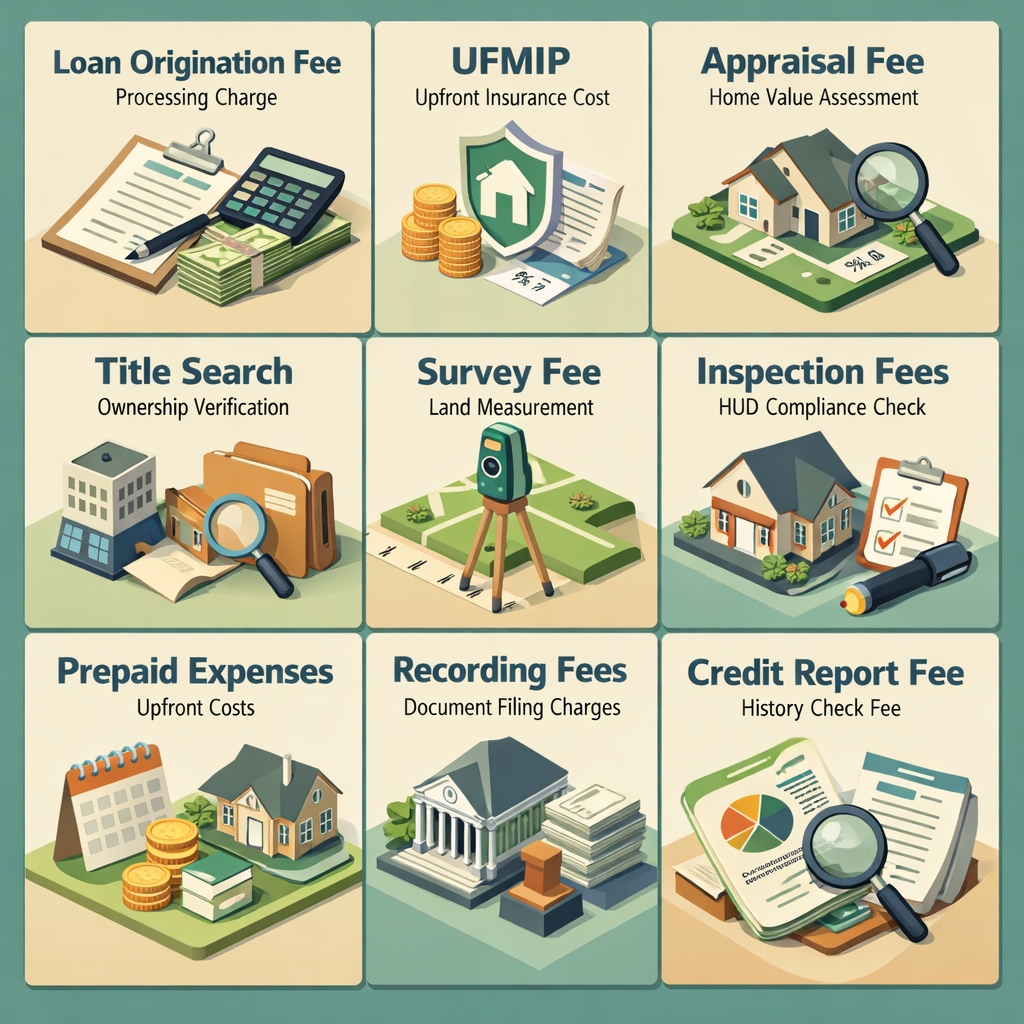
Here's a breakdown of the most common closing cost categories you might encounter:
- Loan Origination Fee: This is the lender's charge for processing your loan application. It's typically expressed as a percentage of the loan amount and may vary between lenders.
- FHA Upfront Mortgage Insurance Premium (UFMIP): One of the most distinctive FHA costs, the UFMIP is currently set at 1.75% of the base loan amount. This can be paid at closing or rolled into the loan balance.
- Appraisal Fee: FHA loans require an FHA-approved appraisal to determine the home's value and ensure it meets minimum property standards. Manufactured home appraisals can sometimes cost more than standard appraisals due to the specialized knowledge required.
- Title Search and Title Insurance: These fees confirm there are no liens or ownership disputes on the property. For manufactured homes that have been reclassified as real property, title work can be more complex and potentially more expensive.
- Survey Fee: Some lenders and title companies require a land survey, especially when the home is being placed on a permanent foundation for the first time.
- Inspection Fees: FHA loans may require specific inspections, including a foundation certification to verify the home meets HUD standards for permanent placement.
- Prepaid Expenses: These include prepaid homeowner's insurance, prepaid property taxes, and prepaid mortgage interest — costs that are collected upfront to establish your escrow account.
- Recording Fees: Local government charges for recording the deed and mortgage documents.
- Credit Report Fee: A small fee for pulling your credit history during the application process.
In general, total closing costs for FHA loans on manufactured homes could range from roughly 2% to 6% of the loan amount, though the actual figure will depend on your loan size, location, lender, and specific property circumstances. Manufactured home transactions may trend toward the higher end of that range due to additional inspections and title complexities.
FHA Loan Costs for Mobile Homes: What Makes Them Different
One thing that often surprises homebuyers is that FHA loan costs for mobile homes can differ meaningfully from those associated with site-built properties. Several factors drive these differences.
First, the appraisal process for manufactured homes is more specialized. Appraisers need to follow specific FHA guidelines for valuing manufactured housing, and in some markets, there are fewer comparable sales to reference. This can result in higher appraisal fees and, in some cases, a longer appraisal timeline.
Second, foundation certification is often required for FHA Title II loans. Before the loan can close, an engineer or inspector must certify that the manufactured home's foundation complies with HUD's Permanent Foundations Guide for Manufactured Housing. If the foundation doesn't meet current standards, repairs may be needed — adding to your overall transaction costs.
Third, the title conversion process can add complexity and expense. Many manufactured homes were originally titled as personal property (similar to a vehicle). To qualify for FHA Title II financing, the home typically needs to be retitled as real property. This process involves working with your state's titling agency and may require additional legal or recording fees.
Finally, manufactured home insurance can be more expensive or harder to obtain than standard homeowner's insurance, depending on the home's age, location, and construction type. Since FHA requires proof of adequate insurance before closing, you'll want to budget for this cost early in the process.
The Role of the Upfront Mortgage Insurance Premium
Among all FHA closing costs, the Upfront Mortgage Insurance Premium (UFMIP) deserves special attention because it's one of the largest single line items you'll see at closing. As of current FHA guidelines, the UFMIP is 1.75% of the base loan amount for most FHA loans, including those used for manufactured homes.
For example, on a $150,000 loan, the UFMIP would be $2,625. On a $200,000 loan, it would be $3,500. This can feel like a significant expense, but FHA does allow borrowers to roll the UFMIP into the loan amount rather than paying it out of pocket at closing. While this reduces your immediate cash burden, it does increase your loan balance and the total interest you'll pay over time.
In addition to the upfront premium, FHA loans also carry an Annual Mortgage Insurance Premium (MIP), which is paid monthly as part of your mortgage payment. For manufactured homes, both premiums apply under standard FHA guidelines. The annual MIP rate can vary based on your loan term, loan-to-value ratio, and loan amount, so it's worth discussing the full picture with your lender before committing.
Strategies to Reduce Your Out-of-Pocket Closing Costs
The good news is that there are several strategies homebuyers can use to reduce — or at least manage — closing costs on an FHA loan for a manufactured home.
- Negotiate seller concessions: FHA guidelines allow sellers to contribute up to 6% of the purchase price toward the buyer's closing costs. In a buyer's market or when the seller is motivated, this can meaningfully reduce your out-of-pocket expenses.
- Request lender credits: Some lenders offer to cover a portion of closing costs in exchange for a slightly higher interest rate. This trade-off may make sense if you're short on cash but plan to refinance or sell before the higher rate becomes costly over time.
- Roll the UFMIP into the loan: As mentioned earlier, financing the upfront mortgage insurance premium is a standard FHA option that reduces your immediate cash need at closing.
- Shop multiple lenders: Origination fees, discount points, and certain third-party service fees can vary significantly between lenders. Getting Loan Estimates from at least two or three FHA-approved lenders can help you identify the most competitive offer.
- Look for down payment assistance programs: Many state and local housing agencies offer programs that can help cover both down payment and closing costs for eligible buyers. Some of these programs specifically support manufactured housing purchases.
- Ask for a closing cost breakdown early: Requesting an itemized Loan Estimate as soon as possible gives you time to ask questions, compare fees, and identify any charges that seem unusually high.
Qualifying for an FHA Manufactured Home Loan: Key Requirements
Beyond closing costs, it helps to understand the broader qualification landscape for FHA loans on manufactured homes. Meeting these requirements is essential before you even get to the closing table.
Credit score requirements for FHA loans are generally more flexible than conventional financing. Borrowers with a credit score of 580 or higher may qualify for the standard 3.5% down payment. Those with scores between 500 and 579 may still be eligible but would typically need a 10% down payment. It's important to note that individual lenders may set their own overlays — meaning their minimum standards could be stricter than the FHA's baseline.
Debt-to-income (DTI) ratio is another key factor. FHA guidelines generally allow a DTI of up to 43%, though some lenders may approve higher ratios with strong compensating factors like significant cash reserves or a higher credit score.
The manufactured home itself must also meet specific standards. It must be at least 400 square feet in size, have been built after June 15, 1976, bear the HUD certification label, be on a permanent foundation, and be classified as real property. If the home doesn't currently meet these requirements, it may not be eligible for FHA financing without modifications.
Employment and income documentation requirements for FHA loans on manufactured homes are similar to any other FHA purchase — lenders will want to verify your income history, employment status, and ability to repay the loan.
●Conclusion
Understanding what are closing costs for FHA loan on a manufactured home is one of the most practical steps you can take before starting the homebuying process. These loans offer a meaningful path to homeownership for buyers who might not qualify for conventional financing, but they do come with a unique set of fees and requirements that are worth planning for carefully. From the FHA's upfront mortgage insurance premium to foundation certifications and title conversion costs, knowing what to expect helps you budget accurately and negotiate effectively. If you're ready to explore your options, connecting with an FHA-approved lender who has experience with manufactured housing can make the entire process smoother and less stressful. LoanWise is here to help you take that next step with clarity and confidence.