
If you've been a homeowner for a few years, there's a good chance you've built up meaningful equity in your property. That equity isn't just a number on a statement — it can be a powerful financial tool. A home equity loan allows you to borrow against that value, giving you access to funds for home improvements, debt consolidation, education costs, or other major expenses. But like any financing product, it comes with important considerations. This guide will walk you through everything you need to know about home equity loans, from how they work to how they compare with other borrowing options.
Understanding Home Equity and How It Builds Over Time
Before diving into how a home equity loan works, it helps to understand what home equity actually is. In simple terms, equity is the portion of your home that you truly "own" — the difference between your property's current market value and the outstanding balance on your mortgage.
For example, if your home is worth $400,000 and you still owe $250,000 on your mortgage, your equity is approximately $150,000. Over time, equity typically grows in two ways: through your regular mortgage payments reducing the loan balance, and through appreciation in your home's value.
Homeowners who purchased several years ago may have seen significant equity gains, particularly in markets where property values have risen steadily. This built-up equity is what lenders look at when evaluating a home equity loan application.
What Is a Home Equity Loan and How Does It Work?
A home equity loan is a type of second mortgage that allows you to borrow a lump sum of money using your home as collateral. Unlike a home equity line of credit (HELOC), which functions more like a revolving credit card, a home equity loan provides a fixed amount upfront, repaid over a set term with a fixed interest rate.
Here's a simplified look at how the process typically works:
- Application: You apply with a lender, who assesses your credit score, income, debt-to-income ratio, and available equity.
- Appraisal: The lender may order a home appraisal to confirm your property's current market value.
- Loan-to-value calculation: Lenders generally allow you to borrow up to a certain percentage of your home's value, minus what you still owe. This is often referred to as the combined loan-to-value (CLTV) ratio.
- Disbursement: Once approved, you receive the funds in a single lump sum.
- Repayment: You repay the loan in fixed monthly installments over the agreed term, which could range from five to thirty years depending on the lender and loan structure.
Because your home secures the loan, interest rates on home equity loans tend to be lower than those on unsecured personal loans or credit cards. However, this also means your home is at risk if you're unable to keep up with payments.
Key Qualification Factors Lenders Consider
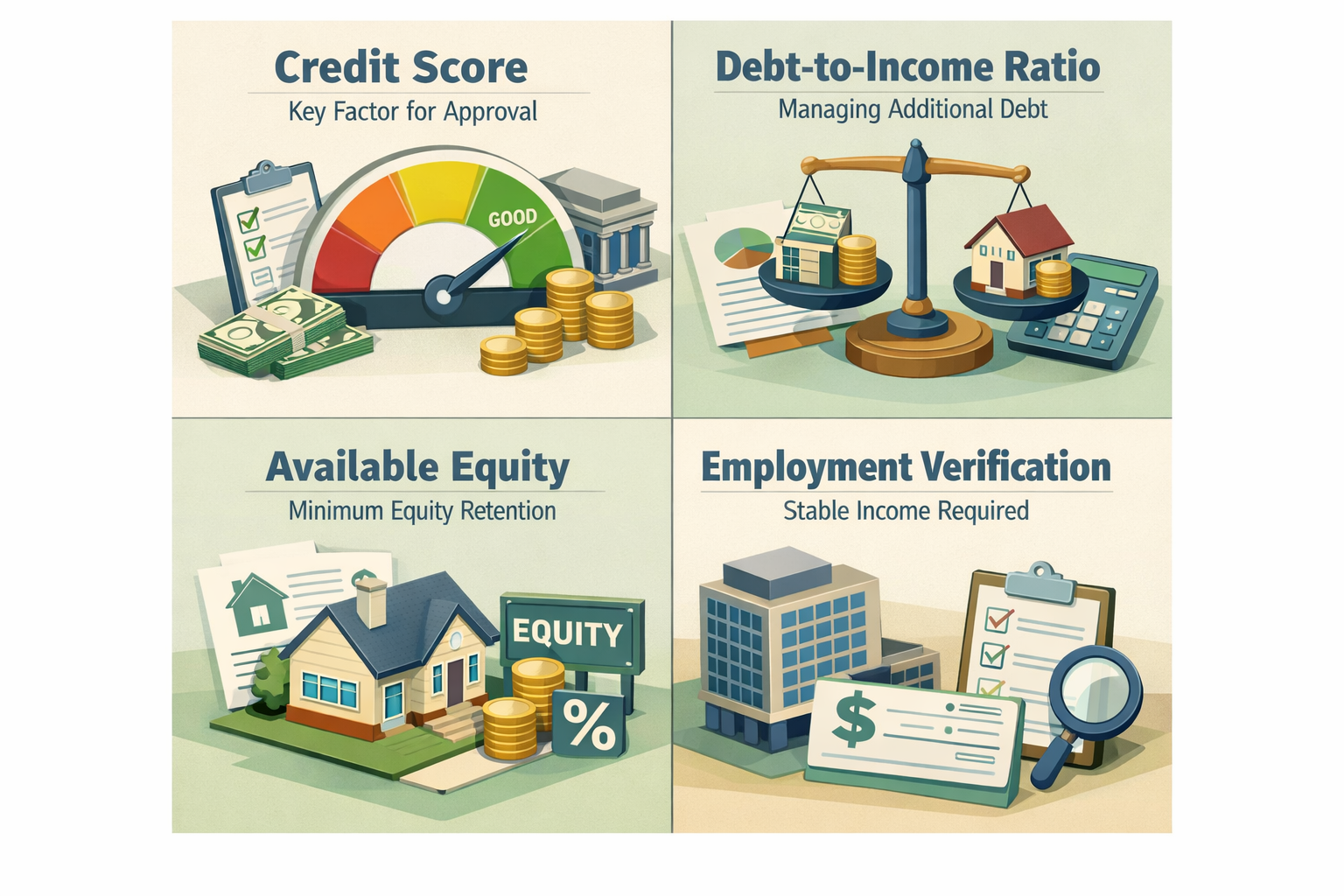
Qualifying for a home equity loan is similar in many ways to qualifying for a primary mortgage. Lenders typically evaluate several key factors before approving your application.
Credit Score
Your credit score plays a significant role in determining whether you qualify and what interest rate you'll receive. Generally speaking, a higher score may result in more favorable loan terms. Many lenders look for a minimum credit score, though requirements can vary from one lender to another.
Debt-to-Income Ratio
Your debt-to-income (DTI) ratio compares your monthly debt obligations to your gross monthly income. A lower DTI ratio signals to lenders that you're in a stronger position to manage additional debt. Most lenders prefer a DTI below a certain threshold, though this can differ by institution.
Available Equity
As a general rule, lenders may require you to retain a minimum amount of equity in your home after the loan is issued. This means you typically cannot borrow 100% of your available equity. Many lenders cap borrowing at around 80% to 85% of your home's total value when combining your primary mortgage and the new home equity loan.
Employment and Income Verification
Stable, verifiable income is important. Lenders will likely ask for pay stubs, tax returns, and other documentation to confirm your ability to repay the loan. Self-employed borrowers may need to provide additional records.
Home Equity Loan vs. HELOC: Understanding the Difference
Homeowners often confuse home equity loans with HELOCs, but the two products work quite differently. Understanding the distinction could help you choose the right option for your financial goals.
- Home Equity Loan: Provides a lump sum at a fixed interest rate. Monthly payments are predictable, making it easier to budget. It's often a good fit for one-time expenses with a known cost, such as a major renovation or debt payoff.
- HELOC: Works like a revolving line of credit with a variable interest rate. You draw funds as needed during a draw period and repay them over a repayment period. This flexibility can be useful for ongoing or unpredictable expenses.
If you value payment consistency and know exactly how much you need, a home equity loan may be the better choice. If your needs are more fluid or you anticipate drawing funds in multiple stages, a HELOC might offer more flexibility. Consulting with a lending professional can help you evaluate which structure aligns with your situation.
Common Uses for Home Equity Loan Funds
One of the appealing aspects of a home equity loan is its versatility. Borrowers use these funds for a wide range of purposes, including:
- Home improvements and renovations: Upgrading kitchens, bathrooms, or adding square footage can enhance your home's value while improving your living experience.
- Debt consolidation: Rolling high-interest credit card debt or personal loans into a single home equity loan with a potentially lower rate could reduce monthly payments and simplify your finances.
- Education expenses: Some homeowners use equity to fund college tuition or other educational costs.
- Medical expenses: Large, unexpected medical bills can sometimes be managed through a home equity loan.
- Emergency fund needs: In some situations, homeowners tap equity as a financial cushion during a major life event.
It's worth noting that using your home as collateral for discretionary spending carries real risk. If your financial situation changes and you can't make payments, your home could be at stake. Careful planning and a clear repayment strategy are essential before proceeding.
Potential Benefits and Risks to Weigh Carefully
Like any financial product, a home equity loan comes with both potential advantages and meaningful risks. Here's a balanced look at both sides.
Potential Benefits
- Lower interest rates: Secured by your home, these loans may offer lower rates than unsecured borrowing options.
- Fixed payments: A predictable monthly payment makes budgeting more manageable.
- Access to significant funds: Depending on your equity position, you may be able to access a substantial amount of capital.
- Possible tax considerations: In some cases, the interest paid on a home equity loan may be tax-deductible when used for home improvement purposes, though tax laws can be complex. Always consult a qualified tax advisor for guidance specific to your situation.
Risks to Consider
- Your home is collateral: Defaulting on the loan could lead to foreclosure, which is the most serious risk associated with this type of borrowing.
- Added debt burden: Taking on a second mortgage increases your overall debt load, which could affect your financial flexibility.
- Closing costs and fees: Home equity loans often come with origination fees, appraisal costs, and other closing expenses that should be factored into your decision.
- Market risk: If your home's value declines, you could end up owing more than your home is worth across both loans.
●Conclusion
A home equity loan can be a smart, cost-effective way to access the value you've built in your home — provided you go in with a clear plan and a realistic understanding of the risks involved. Whether you're looking to renovate, consolidate debt, or fund a major expense, this type of financing may offer favorable terms compared to other borrowing options. That said, every homeowner's financial situation is unique, and what works well for one borrower might not be the right fit for another. The best next step is to speak with a knowledgeable lending professional who can review your equity position, creditworthiness, and financial goals to help you make a confident, informed decision. At LoanWise, we're here to help you explore your options and find the right path forward.