Starting a bespoke artisanal soap business is an exciting venture. From sourcing natural ingredients to crafting signature scent profiles, there's real passion behind every bar. But turning that passion into a funded business takes more than a great recipe — it takes a solid loan application. If you've been wondering what documents are needed for a startup loan for a bespoke artisanal soap business, you're in the right place. Lenders want to see that you're organized, informed, and serious about your craft. This guide walks you through the key paperwork, explains why each document matters, and helps you approach lenders with confidence.
Why Startup Loan Documentation Matters More Than You Think
When a lender evaluates a startup application, they're essentially making a calculated bet. Unlike an established business with years of tax returns and consistent revenue, a new soap-making venture has little financial history to speak of. That's why your documentation becomes your story — it's the evidence that you've thought this through and that lending to you is a reasonable risk.
For soap making business funding, lenders aren't just looking at your credit score. They want to understand your market, your costs, your pricing strategy, and how you plan to repay the loan. A well-prepared application can make the difference between an approval and a rejection, even when your business idea is genuinely strong.
Most startup loan lenders — including SBA microloan providers, community development financial institutions (CDFIs), and online lenders — follow a similar documentation framework. Understanding that framework in advance gives you a real advantage.
Personal Financial Documents You'll Need to Gather First
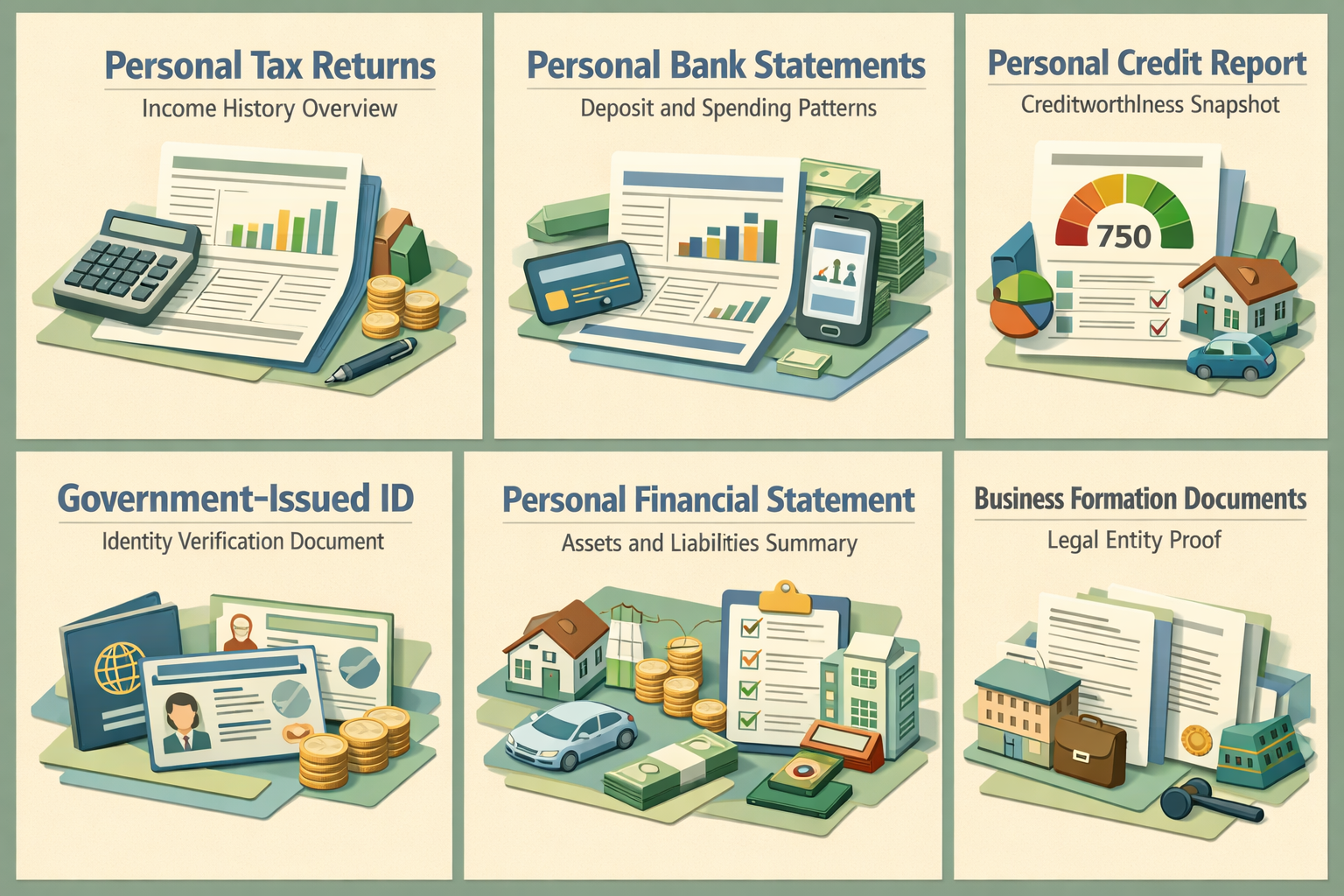
Since your soap business is a startup, lenders will lean heavily on your personal financial profile to assess creditworthiness. Here's what you should expect to provide:
- Personal tax returns: Typically the last two to three years. These give lenders a clear view of your income history and financial stability.
- Personal bank statements: Usually three to six months of recent statements. Lenders look for consistent deposits, responsible spending, and available cash reserves.
- Personal credit report: Most lenders pull this themselves, but it's wise to review yours beforehand. A score in the mid-600s or higher may be necessary for many startup loan programs, though requirements vary by lender.
- Government-issued ID: A driver's license or passport is standard for identity verification.
- Personal financial statement: A summary of your assets, liabilities, and net worth. Some lenders provide their own form; others accept a standard format.
These documents establish your baseline reliability as a borrower. If your personal finances show responsible management, lenders may be more willing to extend credit to a business that hasn't yet generated revenue.
Business Formation and Legal Documents for Your Soap Company
Even if your artisanal soap business is brand new, you'll need to show that it exists as a legal entity. Lenders want to lend to a business, not just an idea. Here are the legal documents typically required:
- Business formation documents: This could be your Articles of Incorporation, LLC Operating Agreement, or Partnership Agreement — depending on how you've structured the business.
- Employer Identification Number (EIN): Issued by the IRS, this is your business's tax identification number. It's free to obtain and required by most lenders.
- Business licenses and permits: Artisanal soap sold as a cosmetic product in the U.S. may fall under FDA guidelines. Having the appropriate local and state business licenses demonstrates compliance and seriousness.
- DBA (Doing Business As) certificate: If you're operating under a trade name different from your legal business name, this document is often required.
- Ownership agreements or buy-sell agreements: If there are multiple owners, lenders may request documentation that outlines ownership percentages and succession plans.
Getting your legal structure in place before applying isn't just a paperwork formality — it signals to lenders that your startup loan artisanal business is built on a proper foundation.
What Documents Are Needed for a Startup Loan for a Bespoke Artisanal Soap Business: The Business Plan
If there's one document that carries the most weight in a startup loan application, it's the business plan. This is your opportunity to demonstrate that you truly understand the artisanal soap market — and that you have a clear, realistic path to profitability.
A strong business plan for a bespoke soap business typically includes:
- Executive summary: A concise overview of your business concept, target market, and funding needs.
- Company description: What makes your soaps bespoke? Are they vegan, organic, locally sourced, or custom-blended? This section highlights your unique value proposition.
- Market analysis: Who are your customers? What's the competitive landscape? Referencing trends in the natural personal care industry can strengthen this section, though you should rely on credible, current sources.
- Products and services: Describe your soap lines, pricing tiers, packaging, and any custom or wholesale offerings.
- Marketing and sales strategy: Will you sell at farmers markets, through an e-commerce store, or via wholesale to boutiques? Lenders want to see a realistic customer acquisition plan.
- Operations plan: Outline your production process, sourcing relationships, workspace (home-based or commercial kitchen), and any regulatory compliance steps.
- Management summary: Your background, relevant skills, and any team members or advisors.
- Financial projections: Typically three to five years of projected income statements, cash flow statements, and balance sheets.
Your business plan is where you get to make the case that your artisanal soap venture is more than a hobby — it's a viable, fundable business.
Financial Projections and Supporting Schedules Lenders Expect
Because startups lack historical financials, projections become critical. Lenders understand they're looking at estimates, but they want those estimates to be grounded in realistic assumptions. Here's what to prepare:
- Projected income statement (profit and loss): Show expected revenue, cost of goods sold (raw materials, packaging, labor), and operating expenses month by month for year one, then annually for years two and three.
- Cash flow projection: Demonstrates when money comes in and goes out. This is especially important for seasonal businesses — artisanal soap can see spikes around the holidays, for example.
- Break-even analysis: At what sales volume does your business cover its costs? Lenders appreciate seeing that you've done this math.
- Startup cost schedule: An itemized list of what the loan funds will be used for — equipment, supplies, website development, initial inventory, certifications, and so on.
- Collateral documentation: If you're offering any assets as collateral (equipment, inventory, or personal assets), you may need appraisals or purchase documentation.
Being transparent about your assumptions — and explaining them — tends to build lender confidence. If you're projecting $80,000 in first-year revenue, show the math: how many units at what price point, through which channels.
Additional Supporting Documents That Strengthen Your Application
Beyond the core requirements, a few supplementary documents can significantly strengthen a startup loan application for a soap-making business:
- Letters of intent or pre-orders: If a local boutique or spa has expressed interest in carrying your products, a letter of intent can serve as early proof of demand.
- Supplier agreements or quotes: Documentation from ingredient suppliers shows that your cost projections are based on real pricing, not guesswork.
- Resumes or professional bios: Highlight any background in chemistry, cosmetic formulation, retail, e-commerce, or small business management.
- Certifications and training: Completion of a soap-making course, a natural cosmetics certification, or small business development training can all add credibility.
- Social media presence or website mockup: For consumer-facing brands, an active online presence or even a well-designed prototype website signals market readiness.
- Industry research or market data: Citing relevant trends in the natural and organic personal care space — from credible sources — can support your market opportunity claims.
Think of these documents as supporting actors in your loan application story. They reinforce the main narrative and fill in gaps that your financial projections alone can't address.
Choosing the Right Loan Type for Your Artisanal Soap Startup
Knowing what documents to prepare is only part of the equation. You'll also want to match your application to the right type of funding. Here are a few options that may be well-suited for a bespoke soap startup:
- SBA Microloans: Offered through nonprofit intermediaries and backed by the Small Business Administration, microloans of up to $50,000 are designed specifically for startups and small businesses. They often have more flexible requirements than traditional bank loans and may offer business training alongside funding.
- CDFI loans: Community Development Financial Institutions serve underbanked entrepreneurs and often work with early-stage businesses. They may place less emphasis on credit history and more on your business plan and character.
- Online lenders: Some fintech lenders offer startup-friendly products with streamlined applications. Terms and rates vary widely, so comparing options carefully is important.
- Grants for small businesses: While not a loan, small business grants — including those targeting women-owned, minority-owned, or artisan businesses — could supplement your funding strategy without adding debt.
- Personal loans for business use: In some cases, a personal loan might bridge early funding needs, though this approach carries its own risks and should be considered carefully.
Each loan type comes with its own documentation requirements and eligibility criteria. Researching the specific lender's checklist before applying can save significant time and help you tailor your package for the best possible outcome. For soap making business funding, exploring all available options ensures you find the most suitable path forward.
●Conclusion
Understanding what documents are needed for a startup loan for a bespoke artisanal soap business is the first real step toward turning your craft into a funded enterprise. From personal financial records and legal formation documents to a compelling business plan and realistic financial projections, each piece of paperwork tells a part of your story. The more clearly and completely you tell that story, the more confidence lenders can place in you as a borrower.
Preparation is your biggest competitive advantage as a startup entrepreneur. Start gathering your documents early, consider working with a Small Business Development Center (SBDC) or SCORE mentor for guidance, and explore the loan programs best aligned with your stage of business. At LoanWise, we're here to help small business owners and entrepreneurs navigate the lending landscape — so your handcrafted vision has the financial foundation it deserves.